





403 results for "CX3CL1/Fractalkine" in Products
CX3CL1/Fractalkine Products
CX3CL1/Fractalkine is a transmembrane adhesion protein with a chemokine domain separated from the membrane by a mucin stalk. It is upregulated on many cell types during inflammation. The chemokine and mucin regions can be shed as a soluble chemokine that signals through the receptor CX3CR1. During extravasation, membrane-bound CX3CL1 traps leukocytes, then is cleaved to allow diapedesis. Soluble CX3CL1 protects neurons from microglial neurotoxicity, recruits macrophages for wound healing, recruits osteoclast precursors for bone resorption, and contributes to pathogenesis in coronary artery disease.

| Reactivity: | Human |
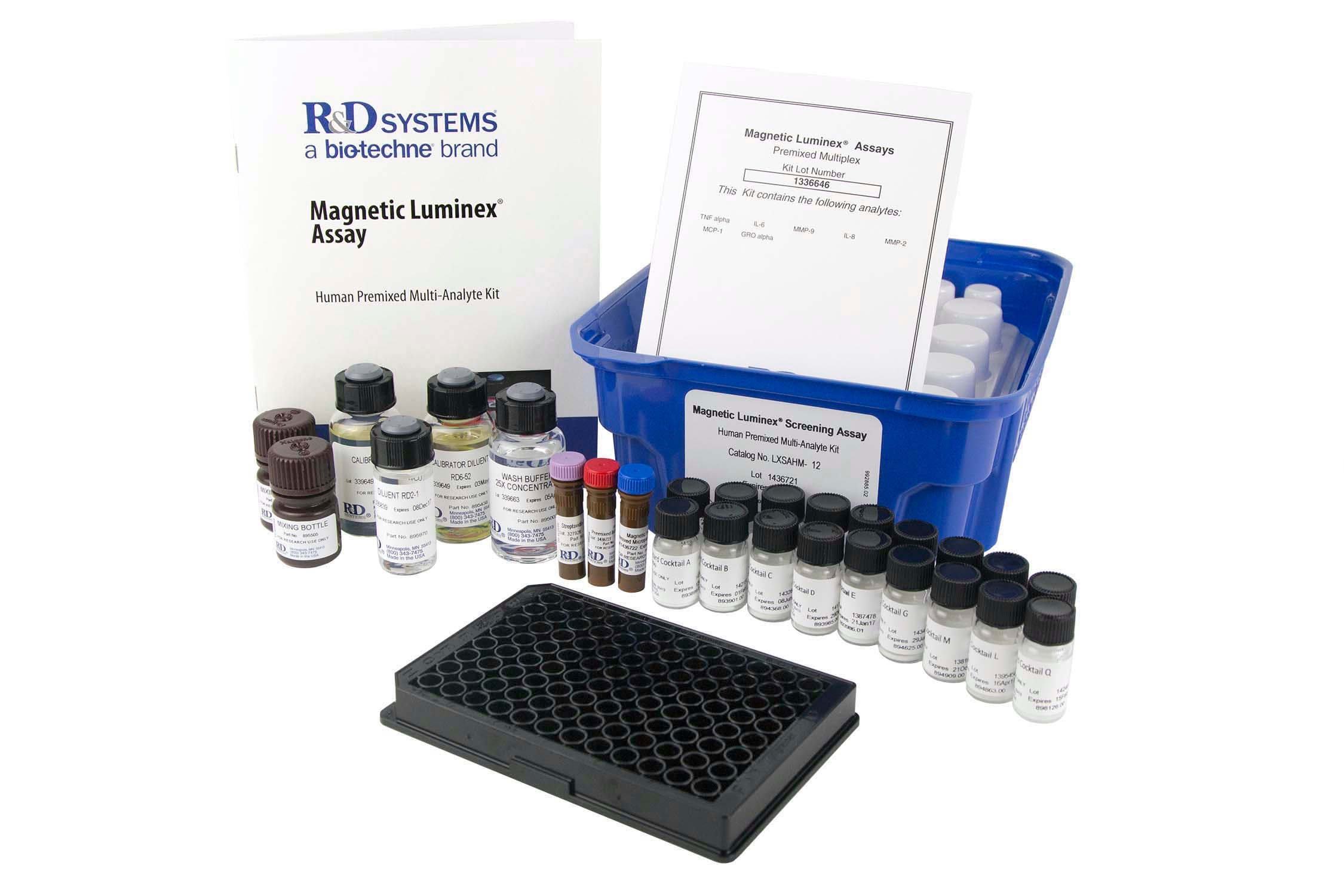
Build your own Luminex Assay with our Luminex Assay Customization Tool
| Reactivity: | Human |
| Sensitivity: | 0.072 ng/mL |
| Assay Range: | 0.156-10 ng/mL (Cell Culture Supernates, Serum, EDTA Plasma, Heparin Plasma, Saliva, Urine, Human Milk) |
| Applications: | ELISA |

| Reactivity: | Mouse |
| Sensitivity: | 0.32 ng/mL |
| Assay Range: | 0.62-40 ng/mL (Cell Culture Supernates, Tissue Homogenates, Serum, EDTA Plasma, Heparin Plasma) |
| Applications: | ELISA |

| Reactivity: | Human |
| Details: | Goat IgG Polyclonal |
| Applications: | WB, B/N |
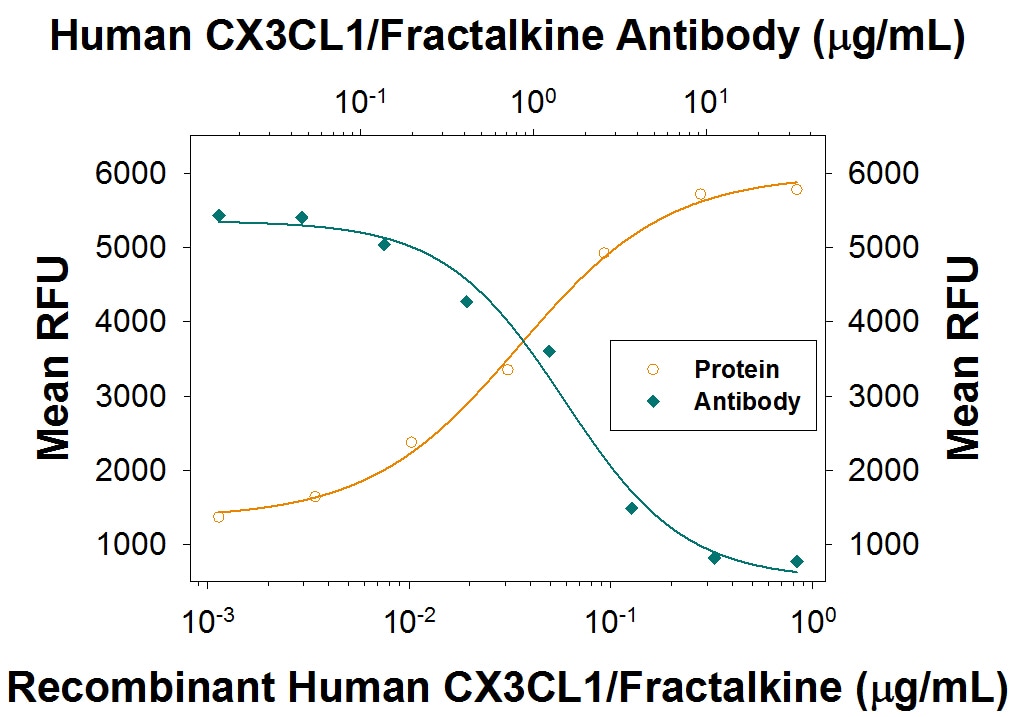
Simple Plex Human CX3CL1/Fractalkine assay kit for use on Ella instrument. Contains cartridge, sample diluent SD13, and wash buffer. Sample type indicated with PS (Plasma/Serum).
| Reactivity: | Human |
| Applications: | Simple Plex |
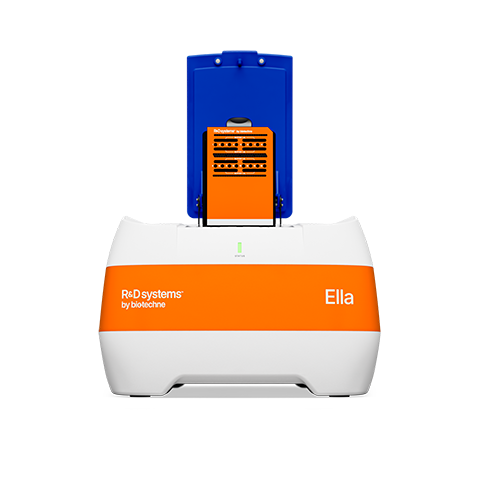
| Reactivity: | Human |
| Source: | NS0 |
| Accession #: | P78423 |
| Applications: | Bioactivity |

| Reactivity: | Rat |
| Details: | Goat IgG Polyclonal |
| Applications: | IHC, WB, ELISA(Cap), B/N |

| Reactivity: | Human |
| Assay Range: | 0.625-20 ng/mL |
| Applications: | ELISA |

| Reactivity: | Mouse |
| Details: | Goat IgG Polyclonal |
| Applications: | WB, B/N |
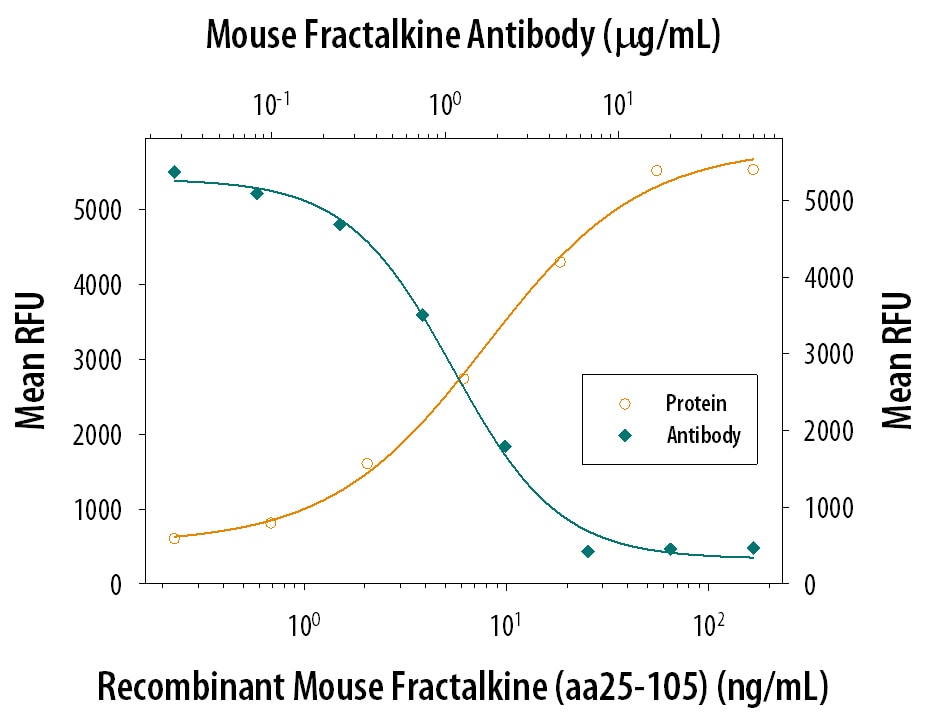
| Reactivity: | Mouse |
| Details: | Rat IgG2A Monoclonal Clone #126315 |
| Applications: | WB, ELISA(Cap), B/N |

Contains 4 membranes-each spotted in duplicate with 111 different cytokine antibodies
| Reactivity: | Mouse |
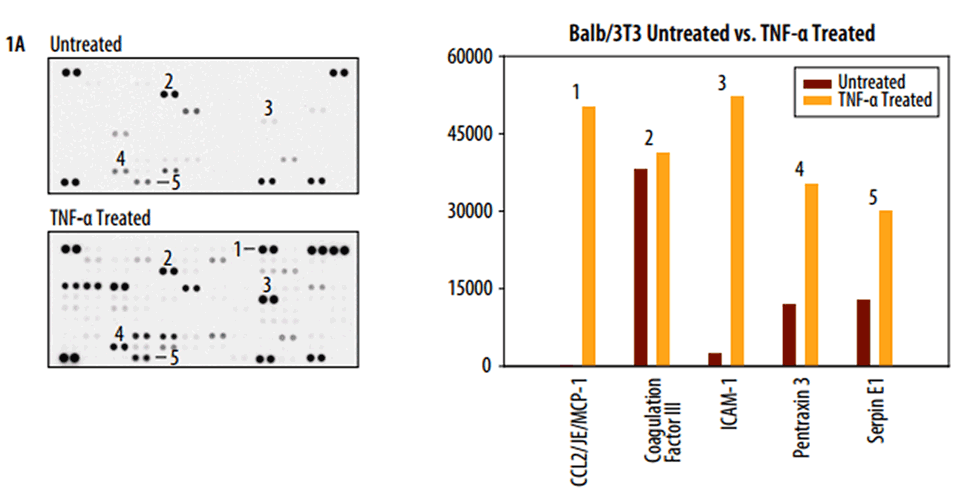
| Reactivity: | Human |
| Details: | Mouse IgG1 Monoclonal Clone #81513 |
| Applications: | IHC, WB |

| Reactivity: | Mouse |
| Source: | E. coli |
| Accession #: | O35188 |
| Applications: | Bioactivity |
| Reactivity: | Mouse |
| Source: | Sf 21 (baculovirus) |
| Accession #: | O35188 |
| Applications: | Bioactivity |
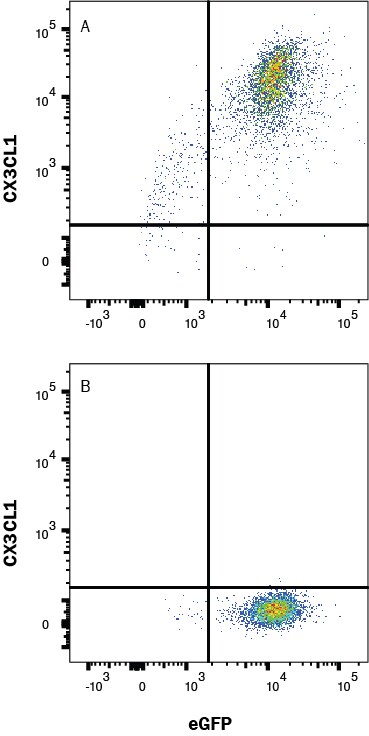
| Reactivity: | Human |
| Details: | Mouse IgG1 Monoclonal Clone #81506 |
| Applications: | ELISA(Cap), B/N, Flow, CyTOF-ready |
| Reactivity: | Mouse |
| Assay Range: | 0.391-25 ng/mL |
| Applications: | ELISA |

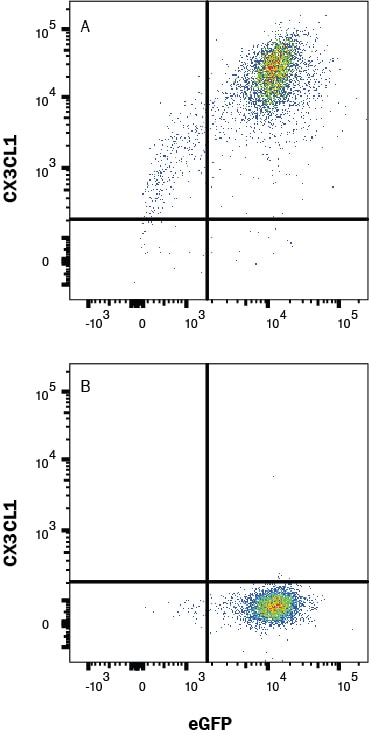
| Reactivity: | Human |
| Details: | Mouse IgG1 Monoclonal Clone #51637 |
| Applications: | Flow, CyTOF-ready |
| Reactivity: | Human |
| Source: | E. coli |
| Accession #: | Q6I9S9 |
| Applications: | Bioactivity |
| Reactivity: | Rat |
| Source: | E. coli |
| Accession #: | O55145 |
| Applications: | Bioactivity |
| Reactivity: | Rat |
| Assay Range: | 195-12500 pg/mL |
| Applications: | ELISA |

Recombinant Monoclonal Antibody.
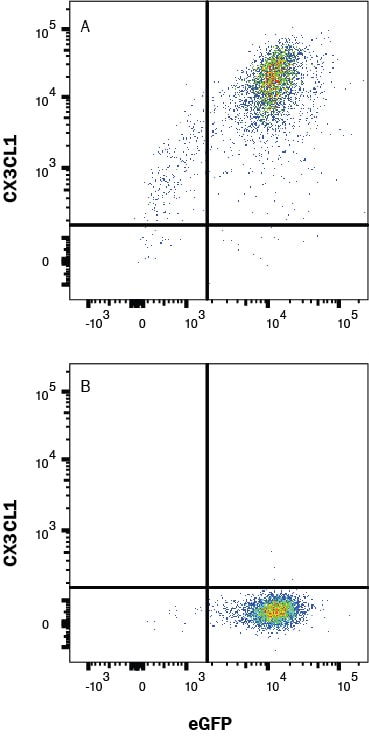
| Reactivity: | Human |
| Details: | Mouse IgG1 Monoclonal Clone #81506R |
| Applications: | B/N, Flow, CyTOF-ready |
| Reactivity: | Human |
| Details: | Mouse IgG1 Monoclonal Clone #51637 |
| Applications: | Flow |
| Reactivity: | Rat |
| Source: | Sf 21 (baculovirus) |
| Accession #: | O55145 |
| Applications: | Bioactivity |
| Reactivity: | Mouse |
| Source: | E. coli |
| Accession #: | AAB71763 |
| Applications: | Bioactivity |
| Reactivity: | Human |
| Details: | Mouse IgG1 Monoclonal Clone #51637 |
| Applications: | WB, ELISA(Det) |