
p62/SQSTM1 Antibody - BSA Free
Novus Biologicals | Catalog # NBP1-42821

![Western Blot: p62/SQSTM1 AntibodyBSA Free [NBP1-42821]](https://resources.rndsystems.com/images/products/p62-SQSTM1-Antibody-Western-Blot-NBP1-42821-img0007.jpg "Western Blot: p62/SQSTM1 AntibodyBSA Free [NBP1-42821]")
Scientific images may be resized, cropped, or adjusted for brightness or contrast for presentation purposes. These updates are limited to presentation and do not affect the underlying scientific interpretation of the data. Where available, additional source data may be provided upon request.
Key Product Details
Validated by
Biological Validation
Species Reactivity
Validated:
Human, Mouse, Rat
Cited:
Human, Mouse, Rat
Applications
Validated:
Western Blot, Immunocytochemistry/ Immunofluorescence
Cited:
Western Blot
Label
Unconjugated
Antibody Source
Polyclonal Rabbit IgG
Format
BSA Free
Loading...
Product Specifications
Immunogen
A synthetic peptide made to an internal region of the human p62/SQSTM1 protein (within residues 350-400). [Swiss-Prot Q13501]
Localization
Cytoplasm. Late endosome. Nucleus.
Clonality
Polyclonal
Host
Rabbit
Isotype
IgG
Theoretical MW
47 kDa.
Disclaimer note: The observed molecular weight of the protein may vary from the listed predicted molecular weight due to post translational modifications, post translation cleavages, relative charges, and other experimental factors.
Disclaimer note: The observed molecular weight of the protein may vary from the listed predicted molecular weight due to post translational modifications, post translation cleavages, relative charges, and other experimental factors.
Scientific Data Images for p62/SQSTM1 Antibody - BSA Free
Western Blot: p62/SQSTM1 AntibodyBSA Free [NBP1-42821]
Western Blot: p62/SQSTM1 Antibody [NBP1-42821] - HeLa cells were treated with (+) or without 50 uM (-) of Chloriquine (CQ) for 24 hours. Total cell lysates were prepared and separated on a 12% gel by SDS-PAGE. Protein was transferred to PVDF membrane and blocked in 5% non-fat milk. The membrane was then probed with 2 ug/ml anti-p62/SQSMT1 in 1% milk and detected with an anti-rabbit HRP secondary antibody using chemiluminescence. Note the upregulation of p62 (arrowhead) in response to chloroquine treatment and the blockage of autophagy.![Immunocytochemistry/ Immunofluorescence: p62/SQSTM1 Antibody - BSA Free [NBP1-42821]](https://resources.rndsystems.com/images/products/p62-SQSTM1-Antibody-Immunocytochemistry-Immunofluorescence-NBP1-42821-img0006.jpg "Immunocytochemistry/ Immunofluorescence: p62/SQSTM1 Antibody - BSA Free [NBP1-42821]")
Immunocytochemistry/ Immunofluorescence: p62/SQSTM1 Antibody - BSA Free [NBP1-42821]
Immunocytochemistry/Immunofluorescence: p62/SQSTM1 Antibody [NBP1-42821] - Confocal immunofluorescent analysis of HeLa cells using p62/SQSTM1 antibody (NBP1-42821, 1:5). An Alexa Fluor 488-conjugated Goat to rabbit IgG was used as secondary antibody (green). Actin filaments were labeled with Alexa Fluor 568 phalloidin (red). DAPI was used to stain the cell nuclei (blue).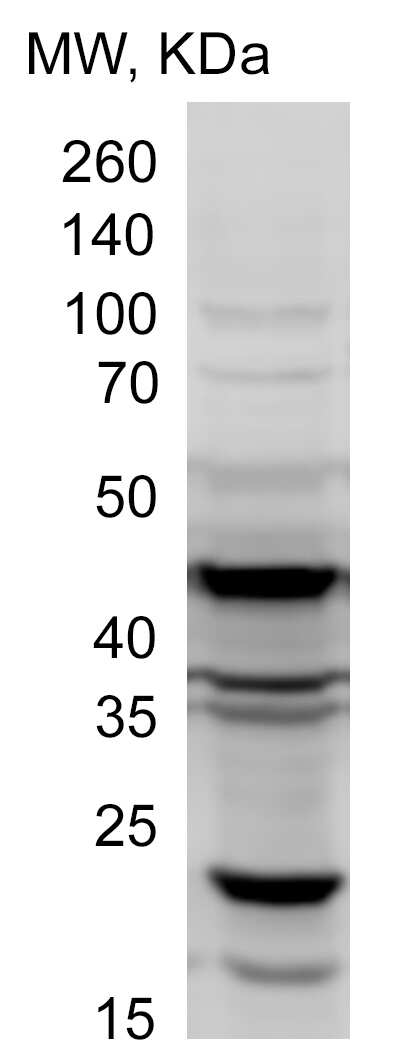
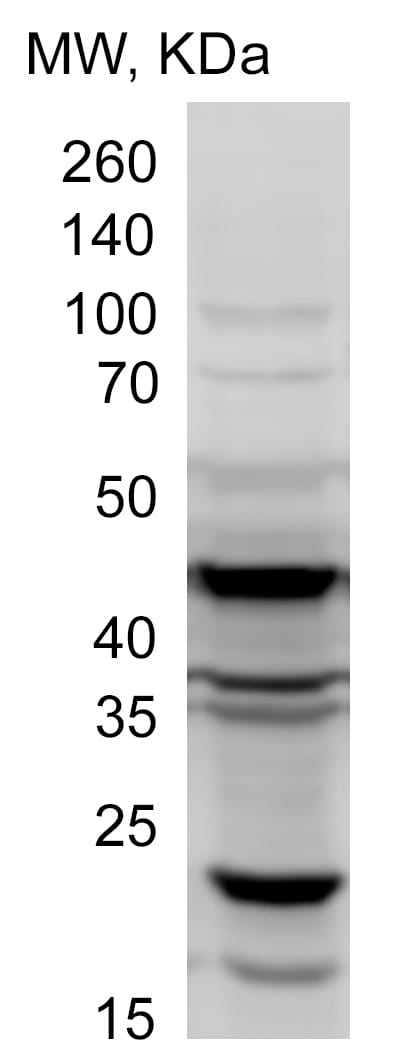
Western Blot: p62/SQSTM1 Antibody [NBP1-42821] -
Western Blot: p62/SQSTM1 Antibody [NBP1-42821] - Western Blot of the lysate from primary rat hepatocytes. Image from verified customer review.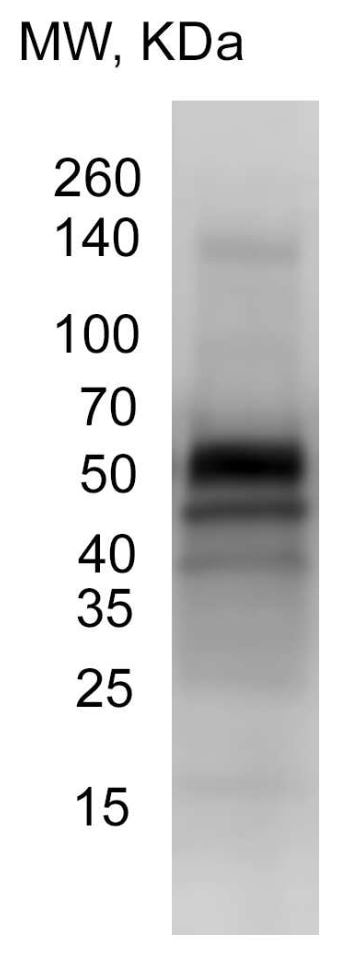
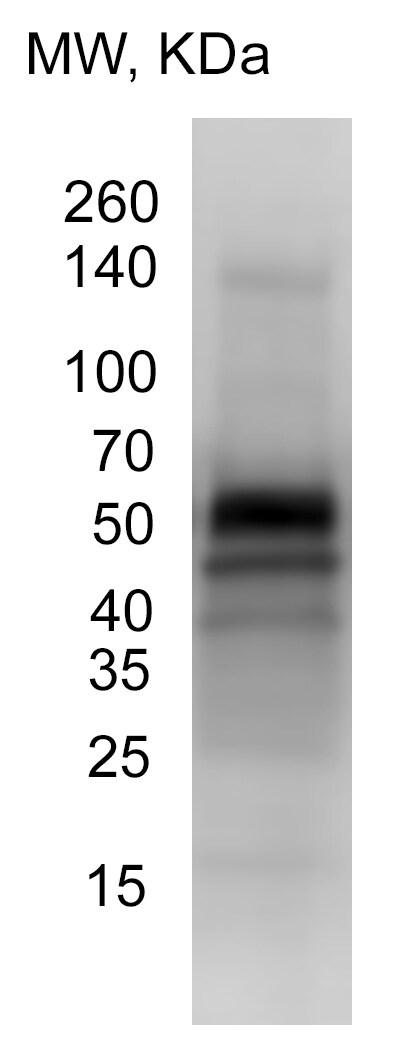
Western Blot: p62/SQSTM1 Antibody [NBP1-42821] -
Western Blot: p62/SQSTM1 Antibody [NBP1-42821] - Western Blot of the lysate from mice hepatocytes. Image from verified customer review.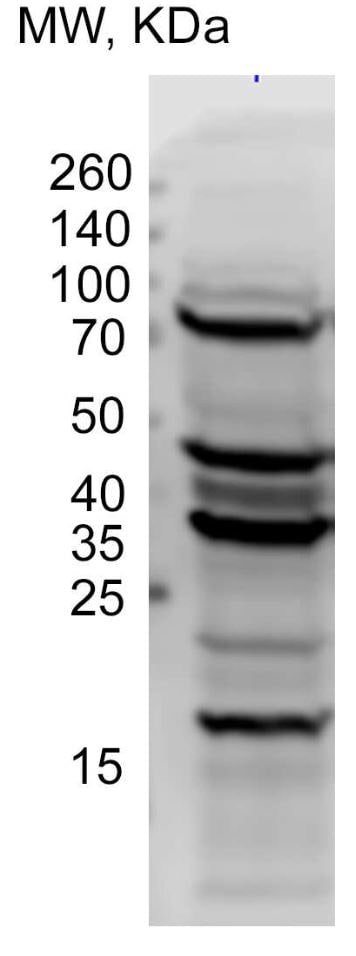
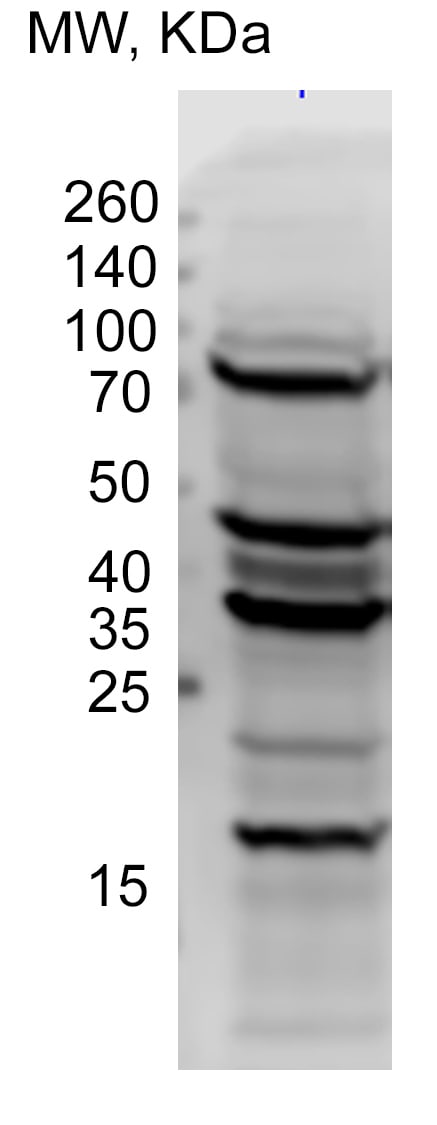
Western Blot: p62/SQSTM1 Antibody [NBP1-42821] -
Western Blot: p62/SQSTM1 Antibody [NBP1-42821] - Western Blot of the lysate of HepG2 cells. Image from verified customer review.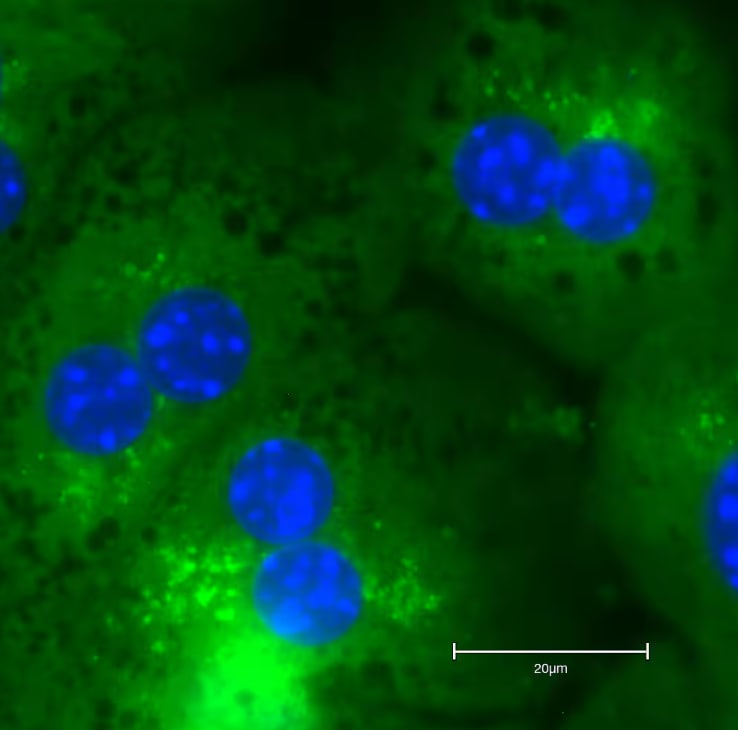
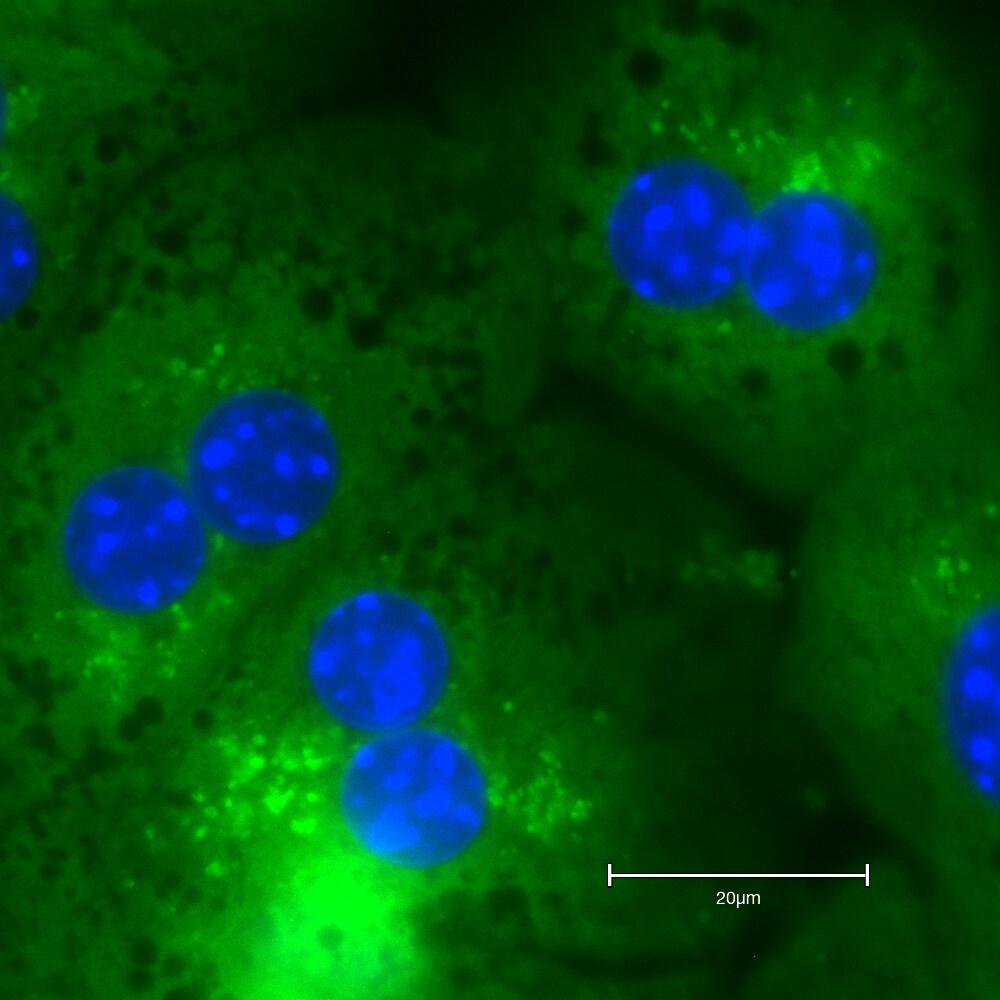
Immunocytochemistry/Immunofluorescence: Rabbit Polyclonal p62/SQSTM1 Antibody [NBP1-42821]
Immunocytochemistry/Immunofluorescence: Rabbit Polyclonal p62/SQSTM1 Antibody [NBP1-42821] - Mouse hepatocytes stained with p62/SQSTM1 Antibody. Image from a verified customer review.Applications for p62/SQSTM1 Antibody - BSA Free
Application
Recommended Usage
Immunocytochemistry/ Immunofluorescence
1:50
Western Blot
0.5 ug/mL
Reviewed Applications
Read 5 reviews rated 5 using NBP1-42821 in the following applications:
Formulation, Preparation, and Storage
Purification
Immunogen affinity purified
Formulation
PBS, 30% Glycerol
Format
BSA Free
Preservative
0.1% Sodium Azide
Concentration
1 mg/ml
Shipping
The product is shipped with polar packs. Upon receipt, store it immediately at the temperature recommended below.
Stability & Storage
Store at 4C short term. Aliquot and store at -20C long term. Avoid freeze-thaw cycles.
Background: p62/SQSTM1
Abnormal function of p62/SQSTM1 is associated with a range of disease states such as neurodegeneration, cancer, and metabolic disorders (2). Mutations in the p62/SQSTM1 sequence have been linked to Paget's disease of the bone, amyotrophic lateral sclerosis, and frontotemporal lobar degeneration. In Parkinson's disease, p62/SQSTM1 has been linked to microglia activation and subsequent neuroinflammation (3). Functionally, p62/SQSTM1 is involved in a broad range of cellular processes such as amino acid sensing by interaction with mTORC1, oxidative stress response through interaction with Keap1, and targeting cargo for autophagy by interacting with ubiquitin labeled proteins (1).
To induce selective autophagy, p62/SQSTM1 forms long oligomers or helical filaments which interact with LC3 and ubiquitin labeled proteins and lead to the initiation of the autophagosome formation (2). p62/SQSTM1 is not only a selective autophagy receptor but also an autophagy substrate, as its engulfed by the autophagosome and degraded by the autophagolysosome. Monitoring LC3 levels is the standard for assessing autophagic flux, however monitoring p62/SQSTM1 levels by Western blot in the presence and absence of autophagy inhibitors (e.g., Chloroquine) is also a common practice (4). Besides its activity as a selective autophagy receptor, p62/SQSTM1 also plays a role as an adaptor in signaling cascades leading to NFkB activation downstream of TNF-R, IL-1 beta R, TrkA and p75NTR. Briefly, for NFkB signaling downstream of the TNF-R activation, p62/SQSTM1 engages RIP1 kinase and PKC iota/lambda through the ZZ and PB1 domains, respectively (5).
References
1.Katsuragi, Y., Ichimura, Y., & Komatsu, M. (2015). P62/SQSTM1 functions as a signaling hub and an autophagy adaptor. FEBS Journal. https://doi.org/10.1111/febs.13540
2. Sanchez-Martin, P., & Komatsu, M. (2018). p62/SQSTM1 - Steering the cell through health and disease. Journal of Cell Science. https://doi.org/10.1242/jcs.222836
3. Yao, L., Zhu, Z., Wu, J., Zhang, Y., Zhang, H., Sun, X.,... Lu, G. (2019). MicroRNA-124 regulates the expression of p62/p38 and promotes autophagy in the inflammatory pathogenesis of Parkinson's disease. The FASEB Journal. https://doi.org/10.1096/fj.201900363r
4 Klionsky, D. J., Abdelmohsen, K., Abe, A., Abedin, M. J., Abeliovich, H., Arozena, A. A.,... Zughaier, S. M. (2016). Guidelines for the use and interpretation of assays for monitoring autophagy (3rd edition). Autophagy. https://doi.org/10.1080/15548627.2015.1100356
5. Bitto, A., Lerner, C. A., Nacarelli, T., Crowe, E., Torres, C., & Sell, C. (2014). p62/SQSTM1 at the interface of aging, autophagy, and disease. Age. https://doi.org/10.1007/s11357-014-9626-3
Long Name
Sequestosome 1
Alternate Names
A170, EBIAP, ORCA, OSIL, PDB3, Sequestosome 1, SQSTM1, ZIP3
Gene Symbol
SQSTM1
UniProt
Additional p62/SQSTM1 Products
Product Documents for p62/SQSTM1 Antibody - BSA Free
Certificate of Analysis
To download a Certificate of Analysis, please enter a lot or batch number in the search box below.
Product Specific Notices for p62/SQSTM1 Antibody - BSA Free
This product is for research use only and is not approved for use in humans or in clinical diagnosis. Primary Antibodies are guaranteed for 1 year from date of receipt.
Related Research Areas
Citations for p62/SQSTM1 Antibody - BSA Free
 Powered by Bioz
Customer Reviews for p62/SQSTM1 Antibody - BSA Free (5)
5 out of 5
5 Customer Ratings
Have you used p62/SQSTM1 Antibody - BSA Free?
Submit a review and receive an Amazon gift card!
$25/€18/£15/$25CAN/¥2500 for a review with an image
$10/€7/£6/$10CAN/¥1110 for a review without an image
Submit a review
Customer Images
-(01-ml)_NBP1-42821_8226.bmp)
Showing
1
-
5 of
5 reviews
Showing All
Filter By:
-
Application: ImmunofluorescenceSample Tested: Primary mouse hepatocytesSpecies: MouseVerified Customer | Posted 11/19/2024Mouse hepatocytes stained with NBP1-42821

-
Application: Western BlotSample Tested: Rat hepatocytesSpecies: RatVerified Customer | Posted 06/27/2023W-B of the lysate from primary rat hepatocytes
-
Application: Western BlotSample Tested: Primary mouse hepatocytesSpecies: MouseVerified Customer | Posted 06/27/2023W-B of the lysate from mice hepatocytes
-
Application: Lysate of HepG2 cellsSample Tested: HepG2Species: HumanVerified Customer | Posted 06/27/2023W-B of the lysate of HepG2 cells
-
Application: ImmunocytochemistrySample Tested:Species: HumanVerified Customer | Posted 06/12/2014Confocal immunofluorescent analysis of HeLa cells using p62/SQSTM1 antibody (NBP1-42821, 1:5).
There are no reviews that match your criteria.
Protocols
View specific protocols for p62/SQSTM1 Antibody - BSA Free (NBP1-42821):
p62/SQSTM1 Antibody:
Procedure Guide for NBP1-42821 - SQSTM1 Antibody
Western Blot Protocol
1. Perform SDS-PAGE (4-12% MOPS) on samples to be analyzed, loading 40 ug of total protein per lane.
2. Transfer proteins to Nitrocellulose according to the instructions provided by the manufacturer of the transfer
apparatus.
3. Rinse membrane with dH2O and then stain the blot using Ponceau S for 1-2 minutes to access the transfer of
proteins onto the nitrocellulose membrane. Rinse the blot in water to remove excess stain and mark the lane locations
and locations of molecular weight markers using a pencil.
4. Rinse the blot in TBS for approximately 5 minutes.
5. Block the membrane using 5% BSA in TBS + Tween, 1 hour at RT.
6. Rinse the membrane in dH2O and then wash the membrane in wash buffer [TBS + 0.1% Tween] 3 times for 10
minutes each.
7. Dilute the rabbit anti-SQSTM1 primary antibody (NBP1-42821) in blocking buffer and incubate 1 hour at room
temperature.
8. Rinse the membrane in dH2O and then wash the membrane in wash buffer [TBS + 0.1% Tween] 3 times for 10
minutes each.
9. Apply the diluted rabbit-IgG HRP-conjugated secondary antibody in blocking buffer (as per manufacturers
instructions) and incubate 1 hour at room temperature.
10. Wash the blot in wash buffer [TBS + 0.1% Tween] 3 times for 10 minutes each (this step can be repeated as
required to reduce background).
11. Apply the detection reagent of choice in accordance with the manufacturers instructions (Pierce ECL).
Note: Tween-20 can be added to the blocking or antibody dilution buffer at a final concentration of 0.05-0.2%, provided
it does not interfere with antibody-antigen binding.
Procedure Guide for NBP1-42821 - SQSTM1 Antibody
Western Blot Protocol
1. Perform SDS-PAGE (4-12% MOPS) on samples to be analyzed, loading 40 ug of total protein per lane.
2. Transfer proteins to Nitrocellulose according to the instructions provided by the manufacturer of the transfer
apparatus.
3. Rinse membrane with dH2O and then stain the blot using Ponceau S for 1-2 minutes to access the transfer of
proteins onto the nitrocellulose membrane. Rinse the blot in water to remove excess stain and mark the lane locations
and locations of molecular weight markers using a pencil.
4. Rinse the blot in TBS for approximately 5 minutes.
5. Block the membrane using 5% BSA in TBS + Tween, 1 hour at RT.
6. Rinse the membrane in dH2O and then wash the membrane in wash buffer [TBS + 0.1% Tween] 3 times for 10
minutes each.
7. Dilute the rabbit anti-SQSTM1 primary antibody (NBP1-42821) in blocking buffer and incubate 1 hour at room
temperature.
8. Rinse the membrane in dH2O and then wash the membrane in wash buffer [TBS + 0.1% Tween] 3 times for 10
minutes each.
9. Apply the diluted rabbit-IgG HRP-conjugated secondary antibody in blocking buffer (as per manufacturers
instructions) and incubate 1 hour at room temperature.
10. Wash the blot in wash buffer [TBS + 0.1% Tween] 3 times for 10 minutes each (this step can be repeated as
required to reduce background).
11. Apply the detection reagent of choice in accordance with the manufacturers instructions (Pierce ECL).
Note: Tween-20 can be added to the blocking or antibody dilution buffer at a final concentration of 0.05-0.2%, provided
it does not interfere with antibody-antigen binding.
Find general support by application which include: protocols, troubleshooting, illustrated assays, videos and webinars.
- Appropriate Fixation of IHC/ICC Samples
- Cellular Response to Hypoxia Protocols
- ClariTSA™ Fluorophore Kits
- Detection & Visualization of Antibody Binding
- ICC Cell Smear Protocol for Suspension Cells
- ICC Immunocytochemistry Protocol Videos
- ICC for Adherent Cells
- Immunocytochemistry (ICC) Protocol
- Immunocytochemistry Troubleshooting
- Immunofluorescence of Organoids Embedded in Cultrex Basement Membrane Extract
- Immunohistochemistry (IHC) and Immunocytochemistry (ICC) Protocols
- Preparing Samples for IHC/ICC Experiments
- Preventing Non-Specific Staining (Non-Specific Binding)
- Primary Antibody Selection & Optimization
- Protocol for VisUCyte™ HRP Polymer Detection Reagent
- Protocol for the Fluorescent ICC Staining of Cell Smears - Graphic
- Protocol for the Fluorescent ICC Staining of Cultured Cells on Coverslips - Graphic
- Protocol for the Preparation and Fluorescent ICC Staining of Cells on Coverslips
- Protocol for the Preparation and Fluorescent ICC Staining of Non-adherent Cells
- Protocol for the Preparation and Fluorescent ICC Staining of Stem Cells on Coverslips
- Protocol for the Preparation of a Cell Smear for Non-adherent Cell ICC - Graphic
- R&D Systems Quality Control Western Blot Protocol
- TUNEL and Active Caspase-3 Detection by IHC/ICC Protocol
- The Importance of IHC/ICC Controls
- Troubleshooting Guide: Western Blot Figures
- Western Blot Conditions
- Western Blot Protocol
- Western Blot Protocol for Cell Lysates
- Western Blot Troubleshooting
- Western Blot Troubleshooting Guide
- View all Protocols, Troubleshooting, Illustrated assays and Webinars
Loading...