
Get More from Your Maurice: Three Innovations Driving High-Throughput Protein Characterization
Biotherapeutic pipelines continue to grow as novel therapeutics continue to emerge with promise. Such expansions invariably increase the demand for resources – space, time, capital, and skill. Often, the assessment and allocation of resources invites the question “What more can we do with what we already have?” As far as capillary electrophoresis methods go, three innovations were designed for Maurice™ platforms so that you could analyze more samples and get your results faster without looking for an entirely new instrument or sacrificing data quality.
Recent innovations for the Maurice™ platform are designed to help labs do more with the systems they already have. From faster CE-SDS separations to higher-capacity icIEF cartridges and a newly published accelerated icIEF method, Maurice users now have multiple ways to boost throughput without sacrificing data quality—or making a new capital investment.
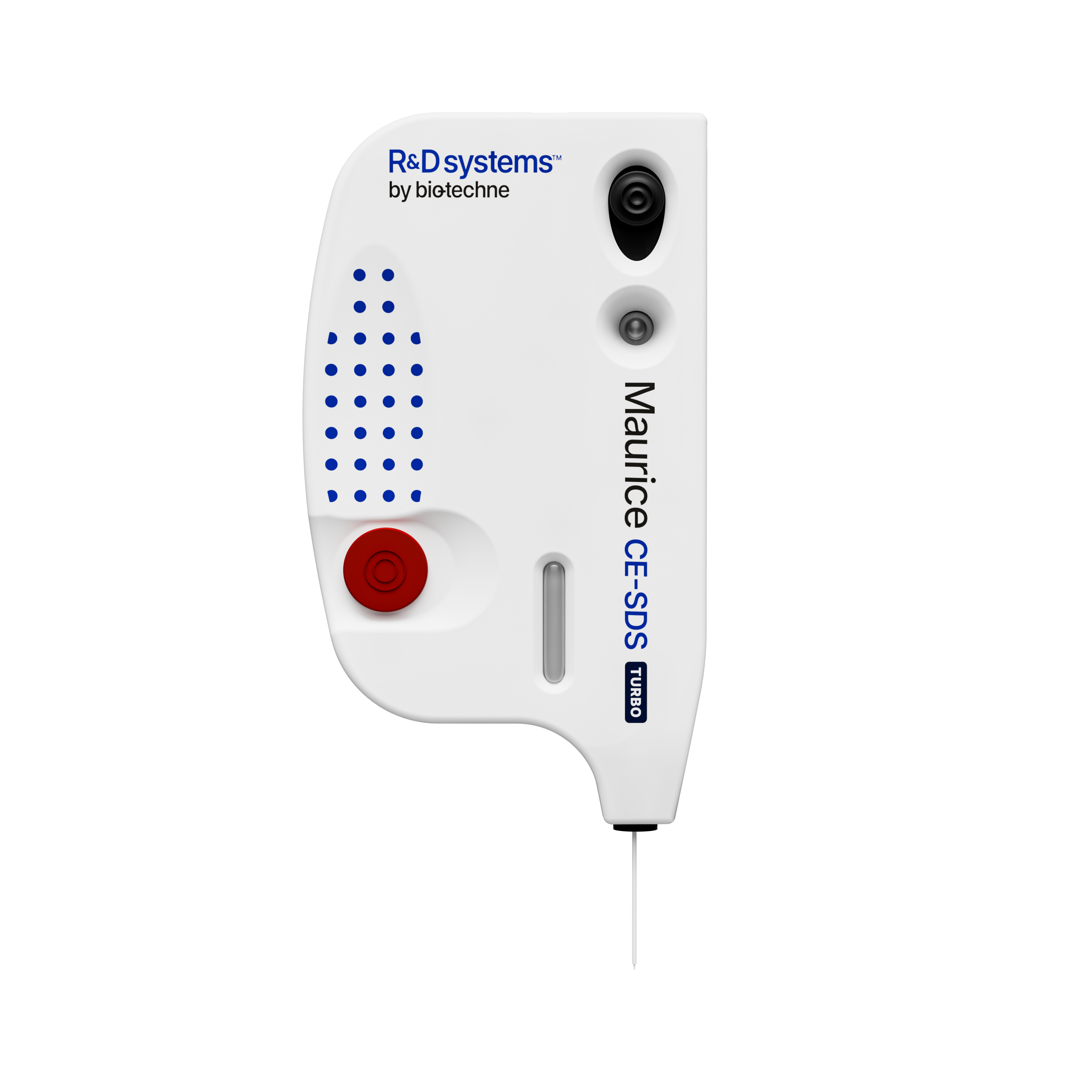
Turbo CE-SDS: The Fast Lane for Size Analysis
For many laboratories, CE-SDS analysis can become a throughput constraint when sample numbers begin to scale. The Maurice Turbo CE-SDS Cartridge was developed to address exactly that challenge. It completes reduced analyses as quickly as 5.5 minutes and non-reduced analyses in approximately 8 minutes per sample while maintaining the resolution needed to characterize intact proteins, fragments, and aggregates, and on a variety of biotherapeutics1,2,3. Because Turbo CE-SDS runs on existing Maurice systems, your lab can dramatically increase productivity without changing platforms, retraining users, or purchasing additional instrumentation. Method transfer across labs and between the Turbo CE-SDS and CE-SDS PLUS cartridges is seamless, as both produce highly comparable results4.
icIEF 400: Same Workflow, Double the Capacity
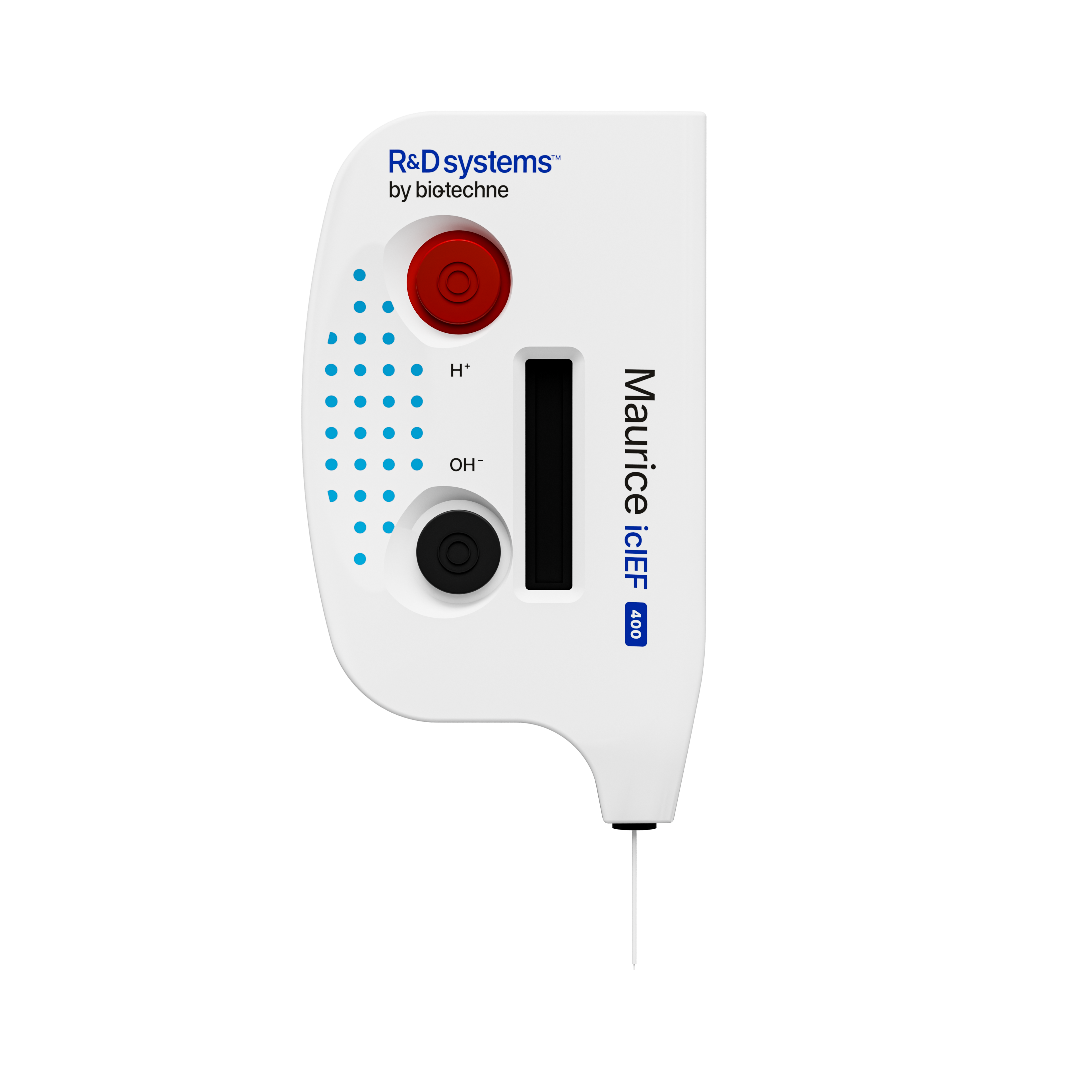
Increasing throughput isn't always about speed, but capability. The Maurice icIEF 400 Cartridge doubles injection capacity from 200 to 400 injections and increases batch capacity from 20 to 40 batches while maintaining the same workflow, reagents, and analysis protocols used with standard icIEF cartridges.
If you’re processing large sample sets, using the icIEF 400 cartridge means fewer cartridge changes, fewer consumables, and more uninterrupted analysis time. Importantly, performance remains highly comparable across both Maurice icIEF cartridges, once again simplifying method transfer and delivering the reproducibility and charge variant resolution Maurice users expect while lowering the cost per injection5.
SupersonicIEF: A Faster Method Using Reagents You Already Have
Perhaps the most exciting innovation is one that doesn't require new hardware at all! The recently published SupersonicIEF method leverages ampholytic blockers and optimized voltage stepping to accelerate charge variant analysis on Maurice, delivering approximately 2.5× faster icIEF analysis while maintaining data comparability to conventional methods6.
Using standard reagents already compatible with Maurice systems, the method can enable up to 96 injections in 12 hours, making it particularly attractive for high-throughput method development, clone screening, and large analytical characterization studies7.
And for labs using the MauriceFlex™ System for charge variant fractionation, similar principles to the SupersonicIEF method can be applied. By combining faster focusing with an optimized mobilization strategy that uses acetic acid buffered with arginine and formamide, the enhanced method has been shown to reduce total fractionation time by approximately 40 minutes, while still supporting collection of distinct charge variants for downstream characterization6.
Innovation That Extends the Life of Your Platform
An increase in throughput demands can be met without extending available capital, and the innovations described in this blog offer some options for getting more out of your Maurice instrument. With Turbo CE-SDS, the icIEF 400 cartridge, and the SupersonicIEF method, users can dramatically increase productivity for size and charge analysis while continuing to use the same instrument, software ecosystem, and proven workflows. More Samples, faster answers, same Maurice.
References
- Application Note: Analysis of IgM Proteins with Turbo CE-SDS
- Application Note: AAV Characterization with Turbo CE-SDS
- Application Note: Analysis of Fusion Proteins with Turbo CE-SDS
- Application Note: Comparing the Performance of Turbo CE-SDS and CE-SDS PLUS Cartridges
- Application Note: Comparing the icIEF 400 and Standard icIEF Cartridges
- Assay Guide: Accelerating icIEF and Fractionation Workflows with SupersonicIEF
- McElroy, W., & Heger, C. D. (2024). Development of the SupersonicIEF Method for High-Throughput Charge Variant Analysis. Electrophoresis, 45(21-22), 1968–1975. https://doi.org/10.1002/elps.202400117
- Application Note: Integrating Upstream Production with Downstream Rapid Characterization for High Throughput Antibody Development