
Myosin Phosphatase Antibody [DyLight 680]
Novus Biologicals | Catalog # NB110-38889FR

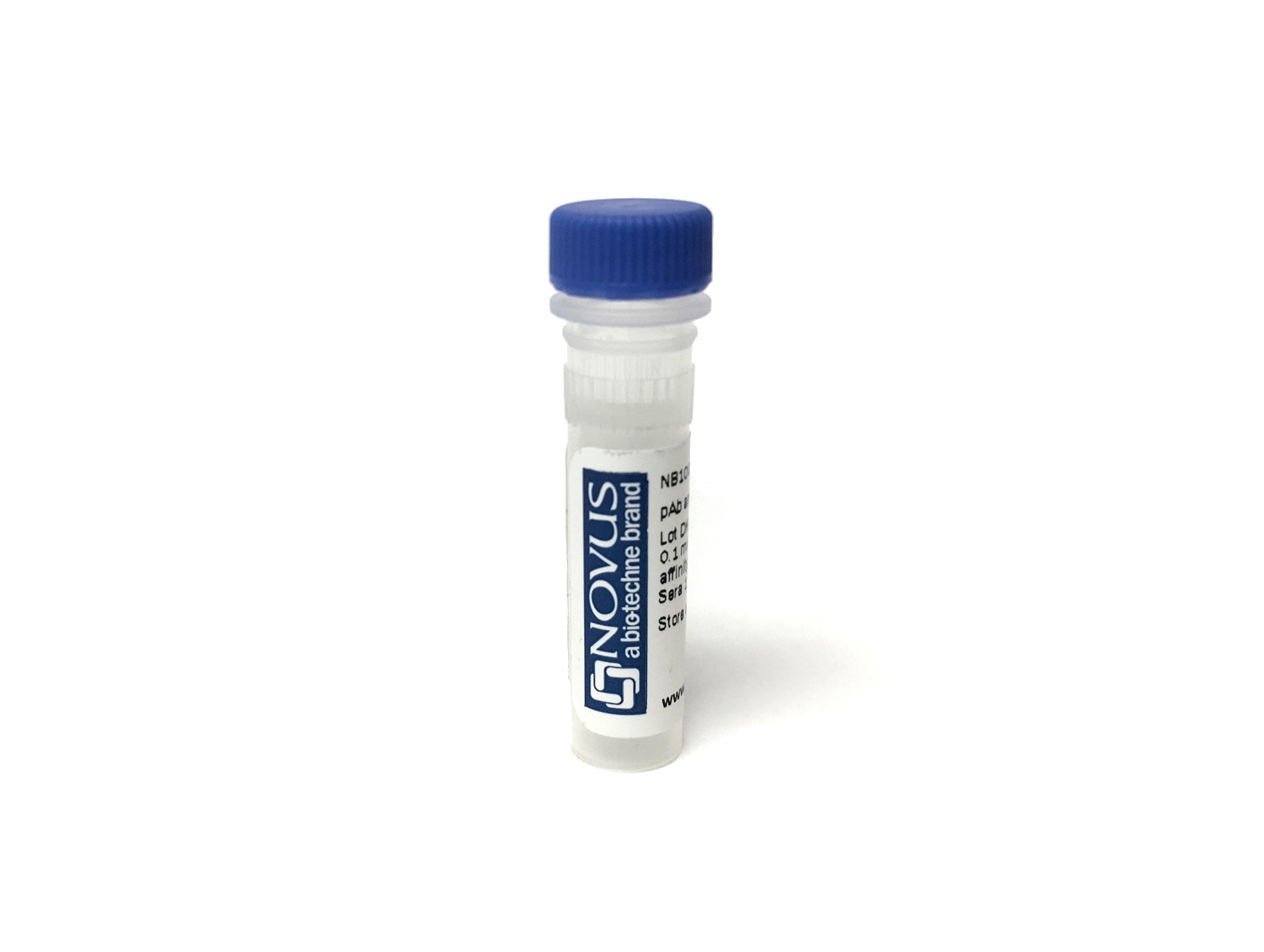
Key Product Details
Species Reactivity
Human
Applications
Western Blot, Immunoprecipitation
Label
DyLight 680 (Excitation = 692 nm, Emission = 712 nm)
Antibody Source
Polyclonal Rabbit IgG
Loading...
Product Specifications
Immunogen
The immunogen recognized by this antibody maps to a region between residue 400 and 450 of human Myosin Phosphatase Target Subunit 1 (Protein Phosphatase 1, Regulatory Subunit 12A) using the numbering given in entry NP_002471.1
Clonality
Polyclonal
Host
Rabbit
Isotype
IgG
Description
This conjugate is made on demand and is not held in inventory. Each order represents a unique lot. All conjugates are generated using validated conjugation protocols and meet strict degree of labeling (F/P) specifications; additional information is available upon request. The antibody concentration is provided on the individual product label.
For specialized conjugation needs, like large quantities, specific concentrations, and defined F/P ratios, bulk and custom antibody conjugation services are available.
For specialized conjugation needs, like large quantities, specific concentrations, and defined F/P ratios, bulk and custom antibody conjugation services are available.
Applications for Myosin Phosphatase Antibody [DyLight 680]
Application
Recommended Usage
Immunoprecipitation
Optimal dilutions of this antibody should be experimentally determined.
Western Blot
Optimal dilutions of this antibody should be experimentally determined.
Application Notes
Recommended applications are based on validated applications from the unconjugated base product NB110-38889. This conjugated antibody is not kept in inventory and is made to order using validated conjugation protocols.
Formulation, Preparation, and Storage
Purification
Immunogen affinity purified
Formulation
50mM Sodium Borate
Preservative
0.05% Sodium Azide
Concentration
Please see the vial label for concentration. If unlisted please contact technical services.
Shipping
The product is shipped with polar packs. Upon receipt, store it immediately at the temperature recommended below.
Stability & Storage
Store at 4C in the dark.
Background: Myosin Phosphatase
Alternate Names
MBSmyosin phosphatase, target subunit 1, MGC133042, Myosin phosphatase target subunit 1, Myosin phosphatase-targeting subunit 1, MYPT1protein phosphatase 1 regulatory subunit 12A, protein phosphatase 1, regulatory (inhibitor) subunit 12A, Protein phosphatase myosin-binding subunit
Gene Symbol
PPP1R12A
Additional Myosin Phosphatase Products
Product Documents for Myosin Phosphatase Antibody [DyLight 680]
Certificate of Analysis
To download a Certificate of Analysis, please enter a lot or batch number in the search box below.
Product Specific Notices for Myosin Phosphatase Antibody [DyLight 680]
DyLight (R) is a trademark of Thermo Fisher Scientific Inc. and its subsidiaries.
This product is for research use only and is not approved for use in humans or in clinical diagnosis. Primary Antibodies are guaranteed for 1 year from date of receipt.
Customer Reviews for Myosin Phosphatase Antibody [DyLight 680]
There are currently no reviews for this product. Be the first to review Myosin Phosphatase Antibody [DyLight 680] and earn rewards!
Have you used Myosin Phosphatase Antibody [DyLight 680]?
Submit a review and receive an Amazon gift card!
$25/€18/£15/$25CAN/¥2500 for a review with an image
$10/€7/£6/$10CAN/¥1110 for a review without an image
Submit a review
Protocols
Find general support by application which include: protocols, troubleshooting, illustrated assays, videos and webinars.
- Cellular Response to Hypoxia Protocols
- Immunoprecipitation Protocol
- R&D Systems Quality Control Western Blot Protocol
- Troubleshooting Guide: Western Blot Figures
- Western Blot Conditions
- Western Blot Protocol
- Western Blot Protocol for Cell Lysates
- Western Blot Troubleshooting
- Western Blot Troubleshooting Guide
- View all Protocols, Troubleshooting, Illustrated assays and Webinars
Loading...