
B7-CD28 Family of Immune Checkpoint Proteins

Members of the B7:CD28 family represent the most widely studied immune checkpoint regulators. The ability of cancer cells to develop mechanisms to evade the host’s immune system often involves overexpression of certain immune checkpoint proteins. These proteins recognize and bind to receptors on immune cells that initiate a negative signaling cascade allowing the tumor to go on living undetected. However, this clever cloaking device used by cancer cells has opened up an exciting new opportunity to fight cancer. Nobel Prize winning discoveries by James Allison and Tasuku Honjo for their breakthrough discoveries in cancer immunotherapy have sparked great interest in the field. They showed that by targeting and disrupting these protein-protein interactions, the immune system can now recognize and attack the tumor. Blocking antibodies that specifically disrupt these protein-protein interactions have produced remarkable results in certain cancers. So far, three cancer immunotherapies have been approved by the FDA, Ipilimumab (anti-CTLA-4, Bristol-Myers Squibb), nivolumab (anti-PD-1, Bristol-Myers Squibb), and pembrolizumab (anti-PD-1, Merck), with many more in clinical trials. Several new promising targets have been identified that exhibit inhibitory effects on immune cells similar to PD-1:PD-L1. These next generation proteins may unlock new opportunities in the fight against cancer.
In addition to the well-known immune checkpoint proteins PD-1, PD-L1, CTLA-4, and CD28, there are many more cell surface proteins that exhibit similar immunomodulatory behavior. The B7 family now comprises 10 members, B7-1/CD80, B7-2/CD86, PD-L1/B7-H1, PD-L2/B7-DC, B7-H2, B7-H3, B7-H4, B7-H5/VISTA/PD-1H, B7-H6, and B7-H7/HHLA2. As the world’s leading recombinant protein company, R&D Systems exclusively offers a comprehensive range of bioactive B7:CD28 proteins in a variety of different species as well as an expanding line of Avi-tag biotinylated proteins.

B7:CD28 Family Proteins
| B7 Family Ligands | CD28 Family Receptors | ||
|---|---|---|---|
| B7-1/CD80 | B7-H3 | BTLA | TIMD2/CD28H |
| B7-2/CD86 | B7-H4 | CD28 | |
| PD-L1/B7-H1 | B7-H5/VISTA/PD-1H | CTLA-4 | |
| PD-L2/B7-DC | B7-H6 | ICOS | |
| B7-H2 | B7-H7/HHLA2 | PD-1 | |
QC Tested for Bioactivity

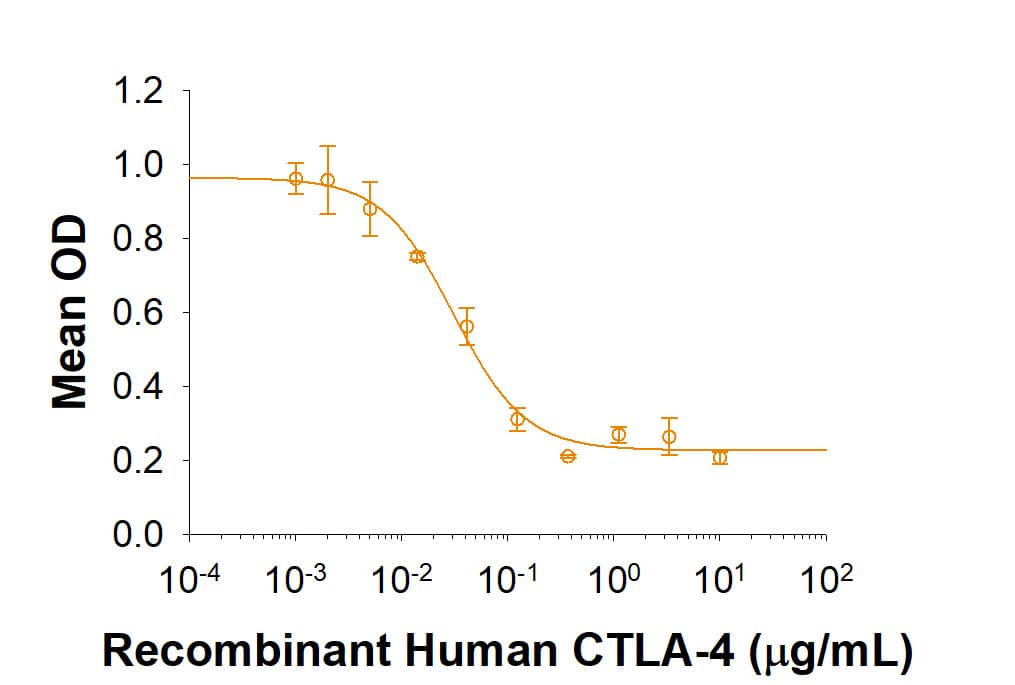

Recombinant Human PD-L1/B7-H1 Fc Chimera (Catalog # 156-B7) inhibits anti-CD3 antibody-induced IL-2 secretion in human T lymphocytes. The ED50 for this effect is 0.075-0.75 μg/mL in the presence of Goat Anti-Human IgG Fc Polyclonal Antibody (Catalog # G-102-C).
Recombinant Human B7‑1/CD80 Fc Chimera (Catalog #10133-B1) induces IL-2 secretion by Jurkat human acute T cell leukemia cells in the presence of PHA. The ED50 for this effect is 0.025-0.15 µg/mL.
Protein Characterization Using SEC-MALS Analysis

Recombinant Human PD-L1/B7-H1 Fc Chimera Protein SEC-MALS. Recombinant human B7-H1/Fc (Catalog # 156-B7) has a molecular weight (MW) of 135.0 kDa as analyzed by SEC-MALS, suggesting that this protein is a homodimer. MW may differ from predicted MW due to post-translational modifications (PTMs) present (i.e. Glycosylation).
| SEC-MALS Data | Result |
| Retention Time | 14.8-15.2 min |
| MW-Predicted (Monomer) | 52.0 kDa |
| MW-MALS | 135.0 kDa |
| Polydispersity | 1.001 |
| System Suitability: BSA Monomer 66.4 ± 3.32 kDa | Pass |
Protein-Protein Interaction Data
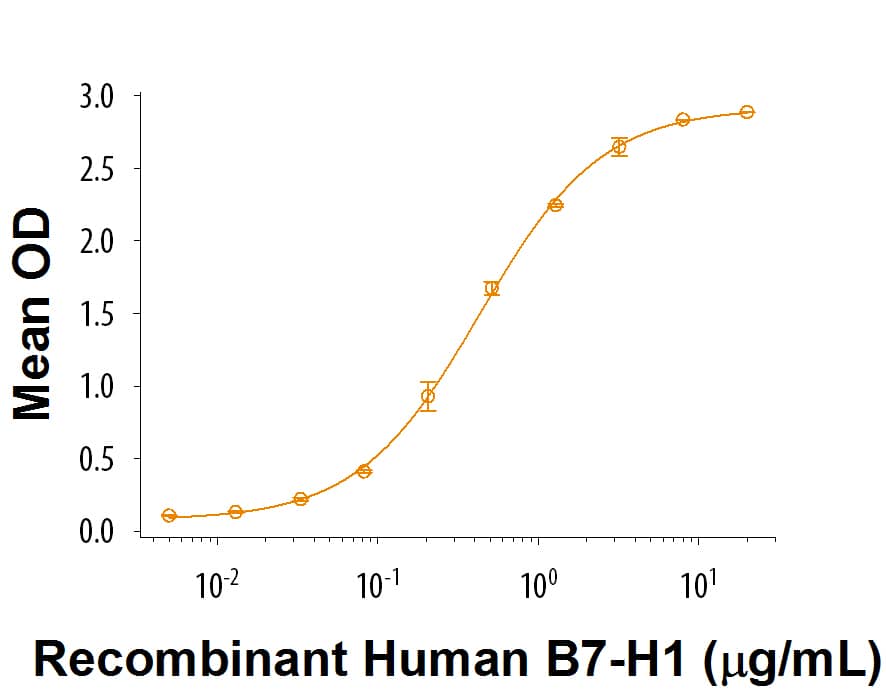


When Recombinant Human PD-1 Fc Chimera (Catalog # 1086-PD) is coated at 0.1 μg/mL, Recombinant Human B7-H1/PD‑L1 Fc Chimera (Catalog # 156-B7) binds with a typical ED50 of 0.15-0.75 µg/mL.
When serially diluted Biotinylated Recombinant Human VISTA/B7-H5/PD-1H His-tag Avi-tag Protein (Catalog # AVI9057) is immobilized onto an Even Coat Streptavidin coated plate (Catalog # CP004), it binds to Recombinant Human VSIG3 Fc Chimera (Catalog # 9229-VS) with an ED50 of 75-450 ng/mL.
When Recombinant Human PD‑1 Fc Chimera (Catalog # 1086-PD) is immobilized at 1 µg/mL, Biotinylated Recombinant Human PD-L2/B7-DC His-tag Avi-tag (Catalog # AVI9075) binds with an ED50 of 0.2-1.6 µg/mL.


Recombinant Human PD-L1/B7-H1 Fc protein (Catalog # 156-B7) was immobilized on a Biacore Sensor Chip CM5, and binding to Recombinant Human PD-1 His protein (Catalog # 8986-PD) was measured at a concentration range between 6.0 nM and 3.05 uM. The double-referenced sensorgram was fit to a 1:1 binding model to determine the binding kinetics and affinity, with an affinity constant of KD=1.70 uM.
Recombinant Human PD-L2/B7-DC Fc protein (Catalog # 1224-PL) was immobilized on a Biacore Sensor Chip CM5, and binding to Recombinant Human PD-1 His protein (Catalog # 8986-PD) was measured at a concentration range between 6.0 nM and 3.05 uM. The double-referenced sensorgram was fit to a 1:1 binding model to determine the binding kinetics and affinity, with an affinity constant of KD=0.274 uM.
SDS-PAGE

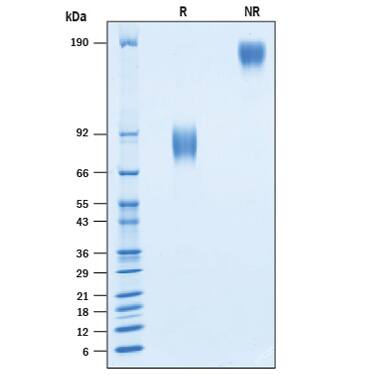
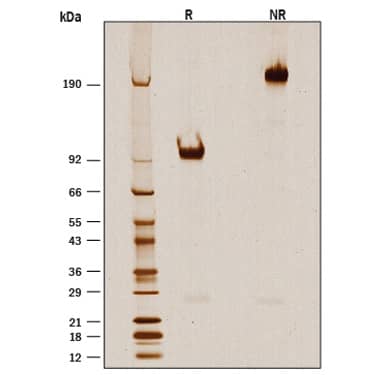
1 µg/lane of Recombinant Mouse PD-L1/B7-H1 Fc Chimera was resolved with SDS-PAGE under reducing (R) and non-reducing (NR) conditions and visualized by silver staining, showing bands at 79 kDa and 150 kDa, respectively.
2 µg/lane of Recombinant Human B7-1/CD80 Fc Chimera (Catalog # AVI10107) was resolved with SDS-PAGE under reducing (R) and non-reducing (NR) conditions and visualized by Coomassie® Blue staining, showing bands at 77-89 kDa and 150-180 kDa, respectively.
1 µg/lane of Recombinant Cynomolgus Monkey B7-H7/HHLA2 Fc Chimera (Catalog # 10108-B7) was resolved with SDS-PAGE under reducing (R) and non-reducing (NR) conditions and visualized by silver staining, showing bands at 92-109 kDa and 180-220 kDa, respectively.
Other Resources
- Current and Emerging Immune Checkpoint Targets for Immuno-Oncology Research eBook
- Immunotherapy topics
- Recombinant Proteins
- Targeting Myeloid-Derived Suppressor Cells (MDSCs) for Cancer Immunotherapy
- Cancer Immunotherapy: Tumor Microenvironment
- Non-Human Primate Recombinant Proteins