Human EPCR Quantikine ELISA Kit

Human EPCR Quantikine ELISA Kit Summary
Product Summary
Precision
Cell Culture Supernates
| Intra-Assay Precision | Inter-Assay Precision | |||||
|---|---|---|---|---|---|---|
| Sample | 1 | 2 | 3 | 1 | 2 | 3 |
| n | 20 | 20 | 20 | 40 | 40 | 40 |
| Mean (pg/mL) | 5.2 | 11.7 | 21.5 | 5.26 | 10.7 | 21 |
| Standard Deviation | 0.2 | 0.6 | 1.7 | 0.3 | 0.7 | 1.3 |
| CV% | 4.8 | 4.9 | 7.7 | 5.4 | 6.4 | 6 |
Recovery
The recovery of human EPCR spiked to three levels throughout the range of the assay was evaluated.
| Sample Type | Average % Recovery | Range % |
|---|---|---|
| Cell Culture Samples (n=6) | 93 | 86-99 |
Linearity
Product Datasheets
Preparation and Storage
Background: EPCR
EPCR (the Endothelial Protein C Receptor), also known as CD201, is a transmembrane glyoprotein expressed on vascular endothelial cells. EPCR inhibits thrombosis through its interactions with Protein C, activated Protein C (APC), and Coagulation Factors VII, and VIIa. It enhances the activation of Protein C in response to complexes of Thrombin-Thrombomodulin. A soluble form of EPCR inhibits the anti-coagulant activity of APC. EPCR binds to CD11b/CD18 (Mac-1) on monocytes and mediates monocyte adhesion to the vascular endothelium. In addition, it binds to the antigen receptor on gamma/delta T cells, promotes hematopoietic stem cell retention in the bone marrow, and contributes to malaria pathogenicity through binding surface proteins on Plasmodium.
Assay Procedure
Refer to the product- Prepare all reagents, standard dilutions, and samples as directed in the product insert.
- Remove excess microplate strips from the plate frame, return them to the foil pouch containing the desiccant pack, and reseal.
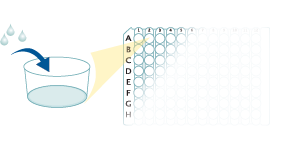
- Add 50 µL of Assay Diluent to each well.
- Add 50 µL of Standard, control, or sample to each well. Cover with a plate sealer, and incubate at room temperature for 2 hours on a horizontal orbital microplate shaker.
- Aspirate each well and wash, repeating the process 3 times for a total of 4 washes.
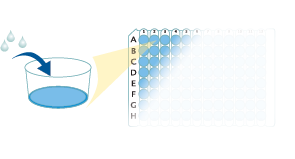
- Add 100 µL of Conjugate to each well. Cover with a new plate sealer, and incubate at room temperature for 2 hours on the shaker.
- Aspirate and wash 4 times.
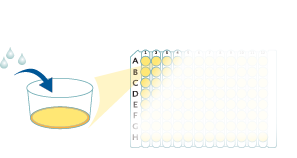
- Add 100 µL Substrate Solution to each well. Incubate at room temperature for 30 minutes on the benchtop. PROTECT FROM LIGHT.
- Add 100 µL of Stop Solution to each well. Read at 450 nm within 30 minutes. Set wavelength correction to 540 nm or 570 nm.
Citation for Human EPCR Quantikine ELISA Kit
R&D Systems personnel manually curate a database that contains references using R&D Systems products. The data collected includes not only links to publications in PubMed, but also provides information about sample types, species, and experimental conditions.
1 Citation: Showing 1 - 1
-
Cellular regulation of blood coagulation: a model for venous stasis.
Authors: Campbell JE, Brummel-Ziedins KE, Butenas S
Blood, 2010-09-23;116(26):6082-91.
Species: Human
Sample Types: Cell Lysates
FAQs
No product specific FAQs exist for this product, however you may
View all ELISA FAQsReviews for Human EPCR Quantikine ELISA Kit
There are currently no reviews for this product. Be the first to review Human EPCR Quantikine ELISA Kit and earn rewards!
Have you used Human EPCR Quantikine ELISA Kit?
Submit a review and receive an Amazon gift card.
$25/€18/£15/$25CAN/¥75 Yuan/¥2500 Yen for a review with an image
$10/€7/£6/$10 CAD/¥70 Yuan/¥1110 Yen for a review without an image


