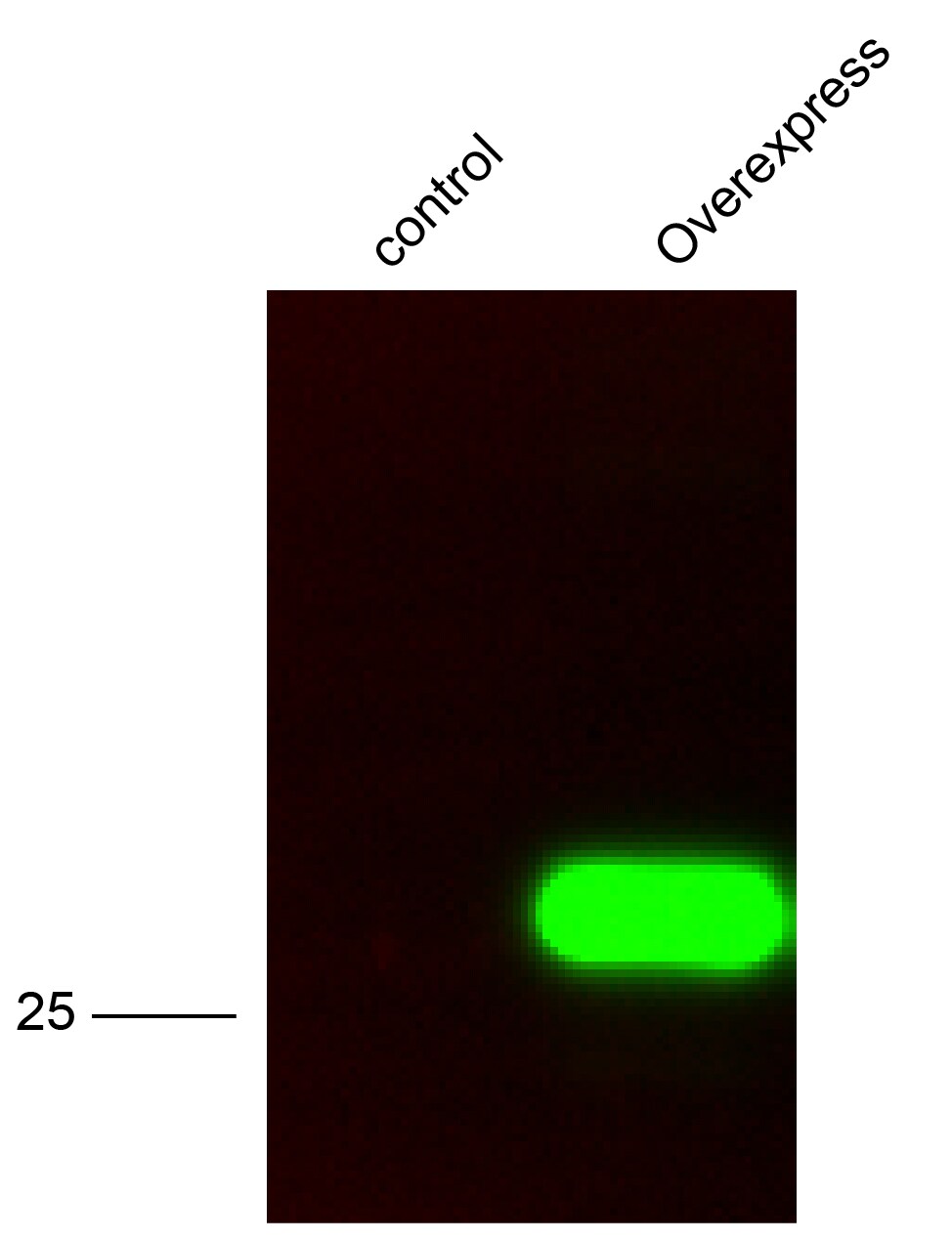
PDGF was originally discovered as a major mitogenic factor in serum but not in plasma. PDGF is stored in platelet alpha granules and released upon platelet activation. Besides megakaryocytes, other cell types, including endothelial cells, monocyte/macrophages, vascular smooth muscle cells, fibroblasts, cytotrophoblasts and a variety of transformed or neoplastic cells, have been shown to produce PDGF. PDGFs are disulfide-linked dimers. The subunits of the PDGF dimers are homologous polypeptides designated PDGF-A and PDGF-B chains. Natural PDGFs can exist either as homodimers (PDGF-AA, PDGF-BB) or heterodimers (PDGF-AB). Although all three isoforms of PDGF exist in human platelets, R&D Systems hPDGF consists predominantly of hPDGF-AB heterodimers.
Two distinct PDGF receptors, the alpha -receptor and the beta -receptor, have been identified. The two receptors are structurally related, with an extracellular portion containing five immunoglobulin-like domains, a single transmembrane region, and an intracellular portion with a protein-tyrosine kinase domain. The alpha -receptor binds both the A and B chains with high affinity whereas the beta -receptor binds only the B-chain with high affinity. Receptor dimerization is induced upon ligand binding.
In addition to being a potent mitogen for cells of mesenchymal origin, PDGF has also been shown to be a potent chemoattractant for mesenchymal cells, mononuclear cells and neutrophils and has been reported to be important in the modification of cellular matrix constituents.
 Powered by Bioz