
TNF-alpha (Tumor necrosis factor alpha) plays a central role in inflammation, immune system development, apoptosis, and lipid metabolism. TNF-alpha was first identified as a cytotoxic factor produced by macrophages capable of killing mouse tumor cells. It is the prototypic ligand and along with Lymphotoxin-alpha, were identified as the first members of the TNF superfamily. Active TNF-alpha and other members of the TNF superfamily exist as a homotrimer with high structural homology. Receptor binding occurs at the interface of two TNF-alpha monomers. And receptor activation occurs when all three monomer interfaces are engaged with a receptor. For TNF-alpha, receptor binding and activation occurs through TNF R1 or TNF RII, and subsequently leads to activation of NF-kB or MAPK signaling pathways. Another pathway that TNF-alpha can activate utilizes the death domain of TNF RI to induce apoptosis. TNF-alpha promotes the inflammatory response largely through NF-kB signaling, and inhibition of TNF-alpha has proven successful in treating many autoimmune disorders. TNF-alpha is also present on the cell surface as membrane-bound TNF-alpha can induce the lysis of neighboring tumor cells and virus infected cells. TNF-alpha protein is translated as a type II transmembrane protein containing an N-terminal transmembrane domain. The soluble cytokine is released from its cell-anchoring TM domain by proteolytic processing by metalloproteases.
Mouse TNF-alpha Quantikine ELISA Kit
R&D Systems | Catalog # MTA00

Loading...
Product Specifications
Measurement
Quantitative ELISA
Detection Method
Colorimetric - 450nm (TMB)
Species
Mouse
Cross-reactivity
< 0.5% cross-reactivity observed with available related molecules. < 50% cross-species reactivity observed with species tested.
Interference
No significant interference observed with available related molecules.
Sample Values
Serum - Forty individual mouse serum samples were evaluated for detectable levels of
mouse TNF- in this assay. Thirty-eight measured less than the lowest mouse TNF-
standard, 23.4 pg/mL. The other two samples read 38 pg/mL and 28 pg/mL.
Cell Culture Supernates -
Mouse splenocytes (2 x 10⁶ cells/mL) were cultured in RPMI supplemented with 10% fetal
calf serum and stimulated with lipopolysaccharide for 3 days. The cell culture supernate was
assayed for mouse TNF- and measured 118 pg/mL.
Mouse thymoma cells (EL-4; 9 x 10⁵ cells/mL) were cultured for 2 days in DMEM
supplemented with 10% fetal calf serum and stimulated with 10 g/mL PHA and 10 ng/mL
PMA. The cell culture supernate was assayed for mouse TNF- and measured 1.98 ng/mL.
Linearity

Scientific Data Images for Mouse TNF-alpha Quantikine ELISA Kit

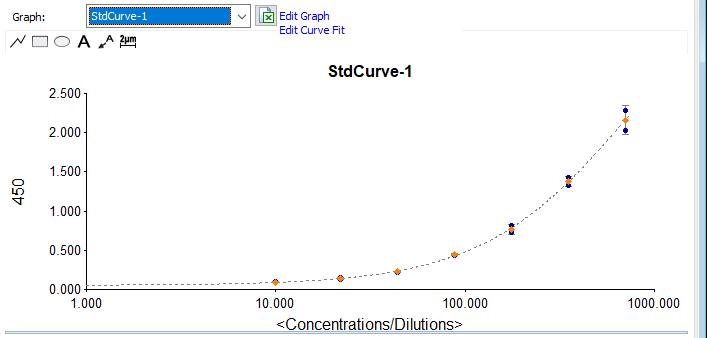
Mouse TNF-alpha ELISA Cell Culture Supernate Standard Curve

Mouse TNF-alpha ELISA Serum/Plasma Standard Curve
Preparation and Storage
Shipping
The product is shipped at ambient temperature. Upon receipt, store it immediately at the temperature recommended below.
Stability & Storage
Store the unopened product at -20 to -70 °C. Use a manual defrost freezer and avoid repeated freeze-thaw cycles. Do not use past expiration date.
Background: TNF-alpha
Long Name
Tumor Necrosis Factor alpha
Alternate Names
Cachetin, DIF, TNF, TNF-A, TNFA, TNFalpha, TNFG1F, TNFSF1A, TNFSF2
Entrez Gene IDs
Gene Symbol
TNF
Additional TNF-alpha Products
Product Documents for Mouse TNF-alpha Quantikine ELISA Kit
Certificate of Analysis
To download a Certificate of Analysis, please enter a lot or batch number in the search box below.
Note: Certificate of Analysis not available for kit components.
Product Specific Notices for Mouse TNF-alpha Quantikine ELISA Kit
For research use only
Related Research Areas
Citations for Mouse TNF-alpha Quantikine ELISA Kit
 Powered by Bioz
Customer Reviews for Mouse TNF-alpha Quantikine ELISA Kit (2)
5 out of 5
2 Customer Ratings
Have you used Mouse TNF-alpha Quantikine ELISA Kit?
Submit a review and receive an Amazon gift card!
$25/€18/£15/$25CAN/¥2500 Yen for a review with an image
$10/€7/£6/$10CAN/¥1110 Yen for a review without an image
Submit a review
Customer Images
Showing
1
-
2 的
2 reviews
Showing All
Filter By:
-
Sample Tested: SerumVerified Customer | Posted 08/10/2021

-
Sample Tested: EDTA PlasmaVerified Customer | Posted 03/23/2018
There are no reviews that match your criteria.
Loading...
Associated Pathways
 Apoptosis Signaling Pathway
 Dendritic Cell Lineage Development Pathways
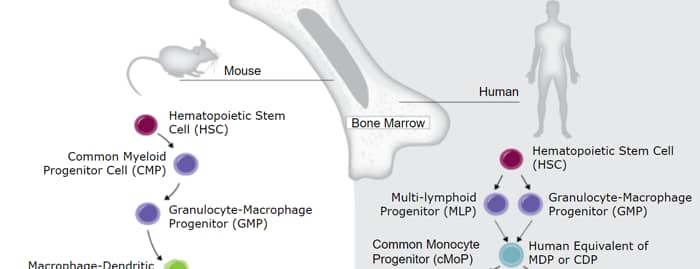 Hematopoietic Stem Cell Differentiation Pathways & Lineage-specific Markers
 IL-2 Signaling Pathways and their Primary Biological Effects in Different Immune Cell Types

IL-15 Signaling Pathways and their Primary Biological Effects in Different Immune Cell Types
 Innate Lymphoid Cell Differentiation Pathways
 mTOR Signaling Pathway
 NOD-like Receptor Signaling Pathways
 Th1 Differentiation Pathway
 TNF Superfamily Pathway: Human Ligand-Receptor Interactions & their Associated Functions
 Toll-Like Receptor Signaling Pathways

Innate Lymphoid Cell Differentiation Pathways
mTOR Signaling Pathway
NOD-like Receptor Signaling Pathways
Th1 Differentiation Pathway
TNF Superfamily Pathway: Human Ligand-Receptor Interactions & their Associated Functions
Toll-Like Receptor Signaling Pathways