
A Successful Evaluation of Maurice Replacing iCE3: Fujifilm's Story
Fujifilm is a large and successful CDMO that operates in multiple countries. One of their mandates is to continuously improve efficiencies, which includes reviewing the technologies they use globally. Fujifilm in Morrisville, NC conducted a study to evaluate the Maurice™ system from R&D Systems (previously ProteinSimple) as a potential platform to replace the iCE3 system (also from ProteinSimple) for icIEF analysis and another commercial instrument that performs CE-SDS analysis. The potential benefits of standardizing on the Maurice system included improved efficiencies and reduced training for scientists, reduced capital investment over time, and better data integrity. This spotlight focuses on the iCE3 and Maurice icIEF application.
The Study
5 monoclonal antibodies (mAb1, mAb2, mAb3, mAb4, and mAb5) were each analyzed on Maurice and iCE3 system. Maurice was assessed for its intra- and inter-assay reproducibility (inter-cartridge and inter-day).Two cartridges were used, and experiments were run on 3 consecutive days. The relative standard deviation (RSD) values for the percent peak area and isoelectric point (pI) were calculated, with a passing criterion of ≤10% for the main peak groups.
Results
Figures 1A and 1B are representative electropherograms from the study, shown for mAb1 and mAb3 respectively. For each sample, data from iCE3 and Maurice are overlaid and demonstrate excellent comparability. Furthermore, all three peak groups—acidic, main, and basic—for all 5 samples tested on Maurice show comparable results to those from iCE3, as shown in Figure 2. The RSD values of percent peak areas on Maurice and iCE3 are also comparable (2.50% and 2.05% respectively), as summarized in Tables 1 and 2, and the mean and standard deviation of the pI values from both systems is reported in Table 3. Overall, the %RSD values were found to be under 10%, thus meeting the passing criterion set for this study.
Figure 1A. Representative electropherograms of mAb1 from iCE3 (blue) and Maurice (black).
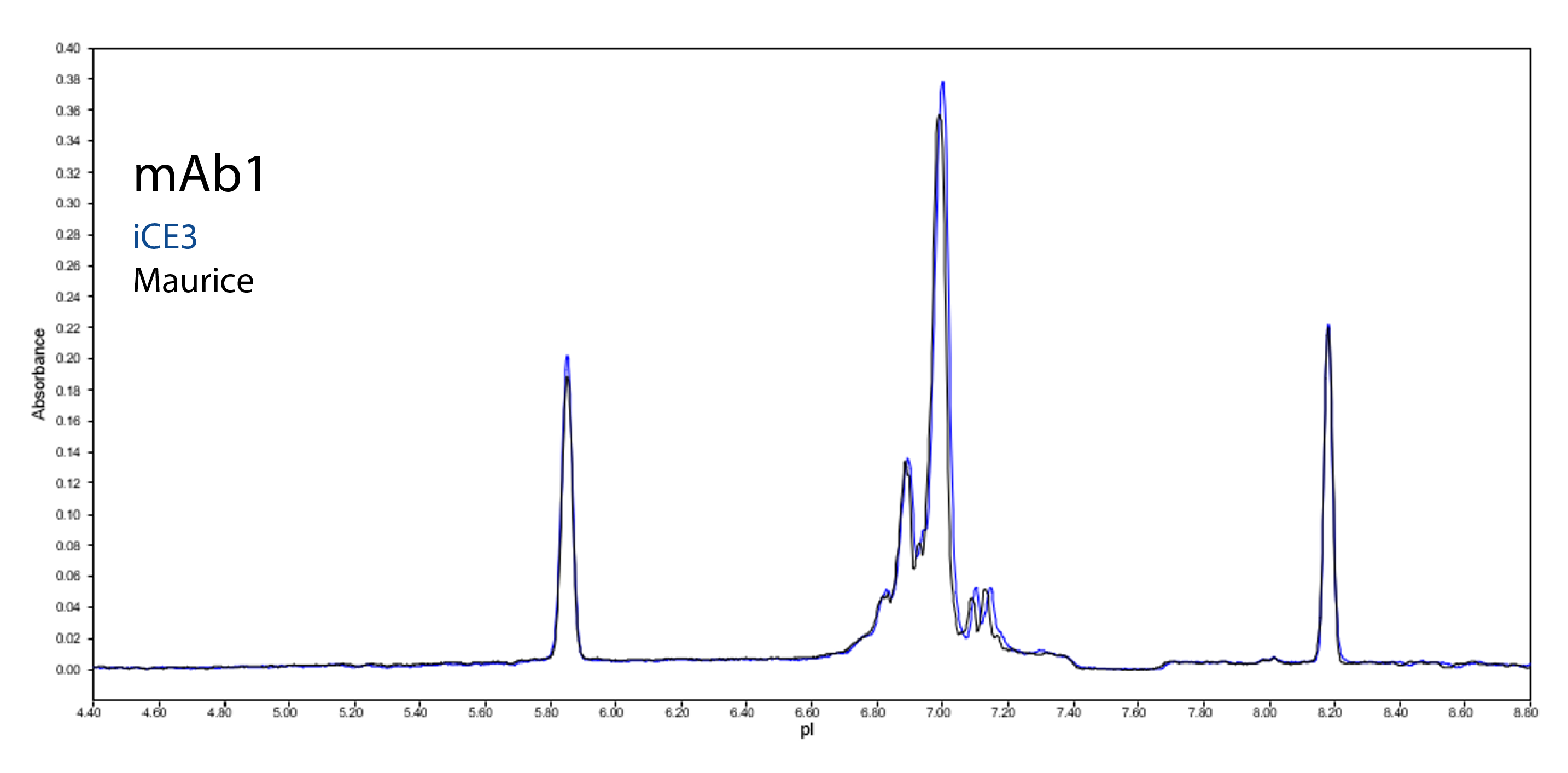
Figure 1B. Representative electropherograms of mAb3 from iCE3 (blue) and Maurice (black).
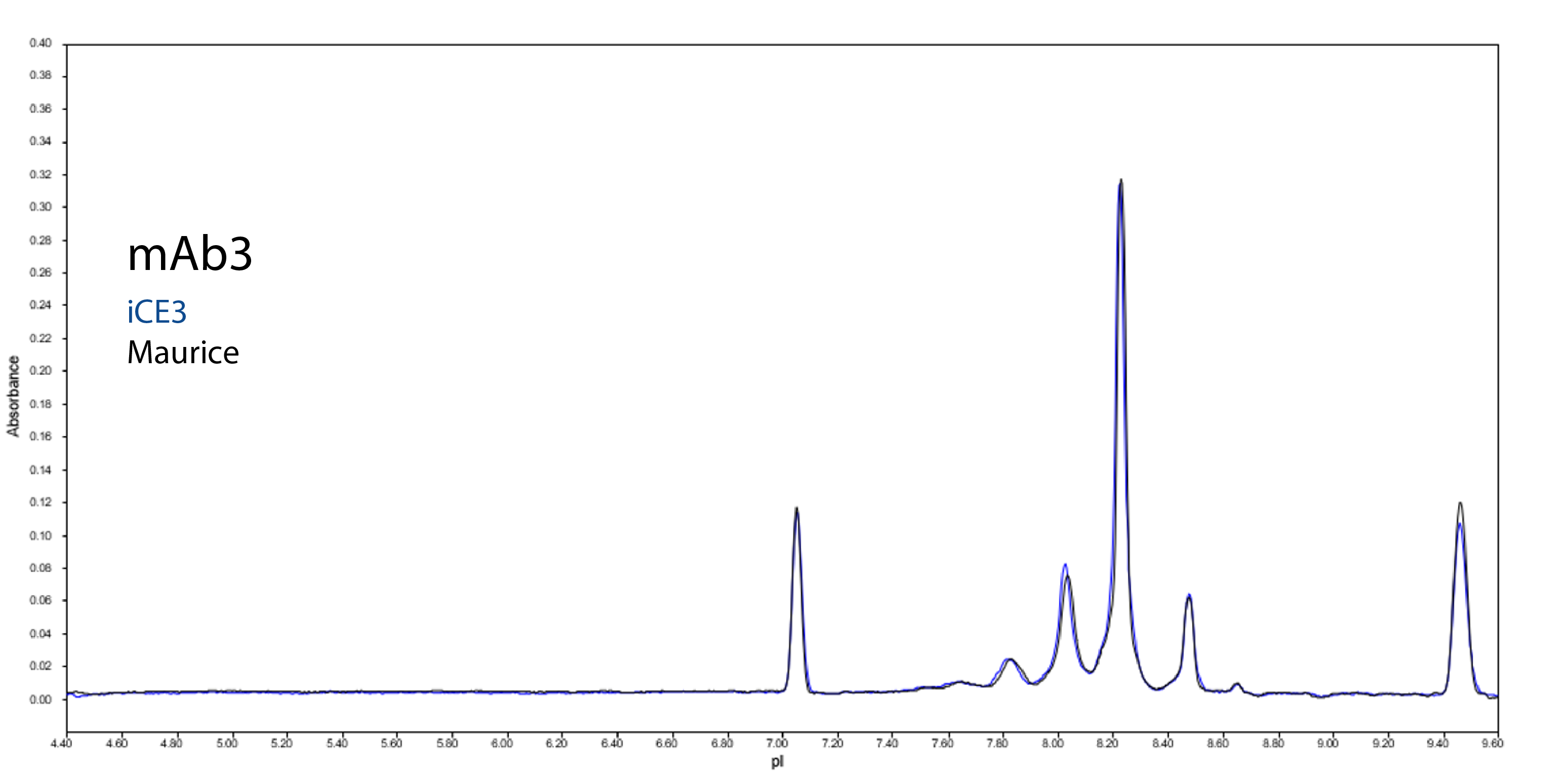
Table 1. % Peak Area with the Maurice System
| Sample | Maurice | ||
| Acidic | Main | Basic | |
| mAb1 | 2.0 | 0.9 | 3.7 |
| mAb2 | 1.4 | 1.3 | - |
| mAb3 | 1.1 | 1.0 | 3.3 |
| mAb4 | 3.8 | 2.3 | 1.3 |
| mAb5 | 2.1 | 1.8 | 5.5 |
Table 2. % Peak Area with the iCE3 System
| Sample | iCE3 | ||
| Acidic | Main | Basic | |
| mAb1 | 1.6 | 0.7 | 2.1 |
| mAb2 | 2.5 | 2.3 | - |
| mAb3 | 1.5 | 0.7 | 2.7 |
| mAb4 | 2.5 | 0.8 | 0.4 |
| mAb5 | 2.1 | 1.7 | 7.2 |
Figure 2. A comparison of the average percent peak area of acidic, main, and basic peaks for all five mAbs tested on Maurice and iCE3
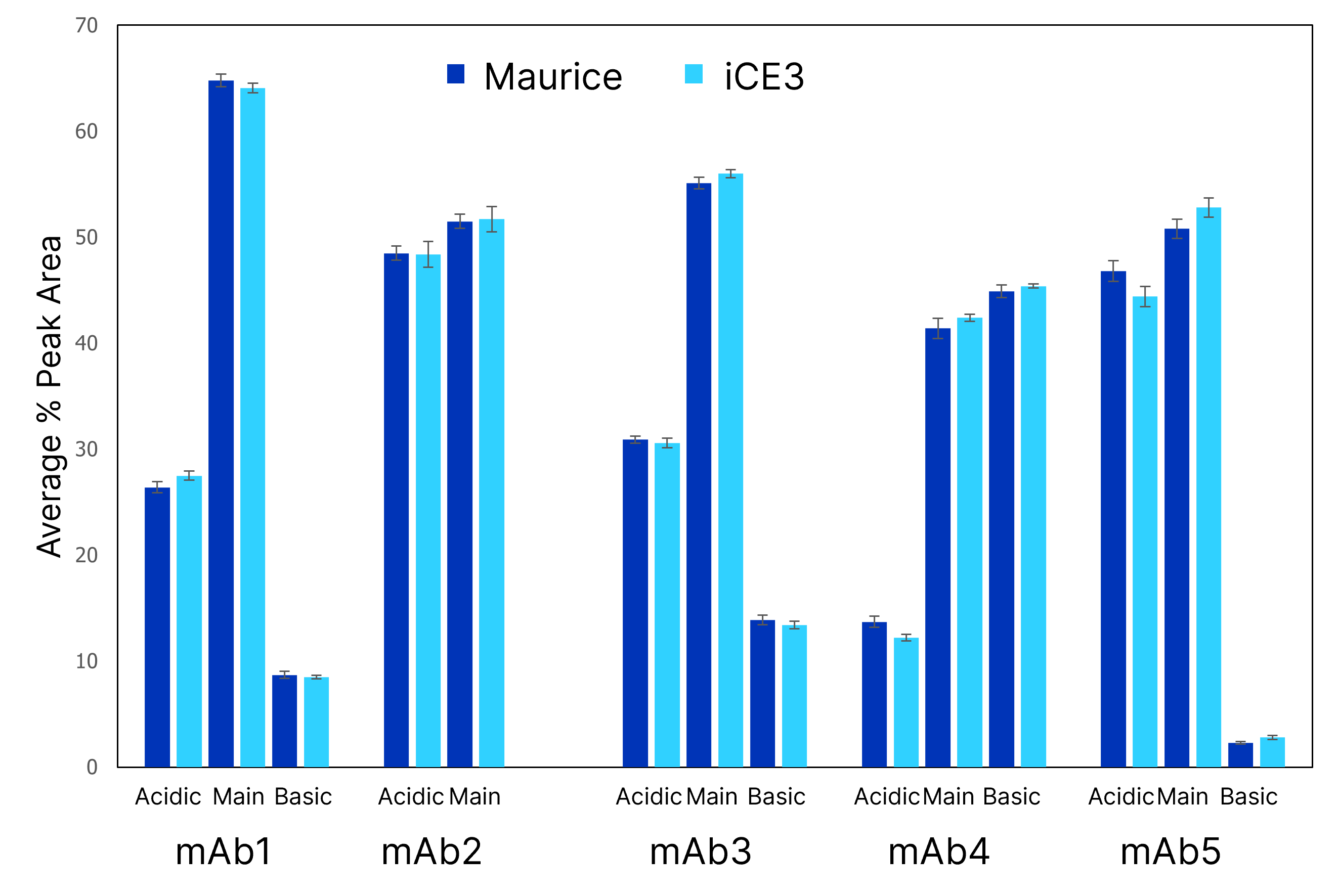
Table 3. The mean and standard deviation reported for the pI values observed on Maurice and iCE3 systems.
| Sample | Maurice | iCE3 | ||
| Mean | SD | Mean | SD | |
| mAb1 | 6.98 | 0.01 | 6.99 | 0.00 |
| mAb2 | 7.48 | 0.00 | 7.49 | 0.00 |
| mAb3 | 8.22 | 0.01 | 8.21 | 0.01 |
| mAb4 | 7.57 | 0.00 | 7.56 | 0.00 |
| mAb5 | 9.17 | 0.01 | 9.15 | 0.01 |
Leveraging native fluorescence detection on the Maurice system
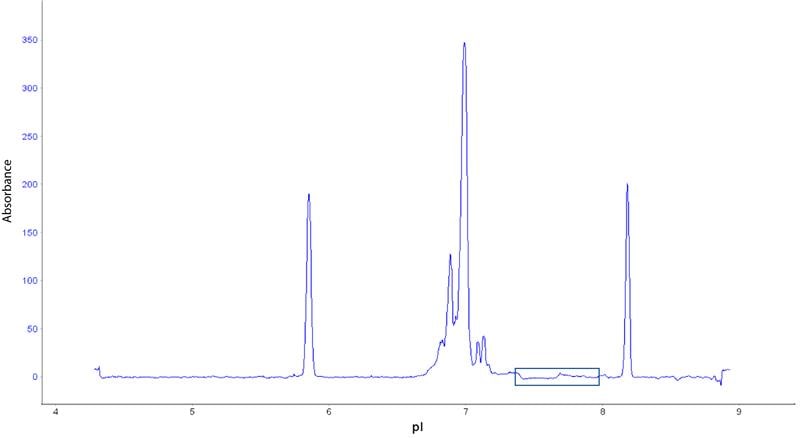
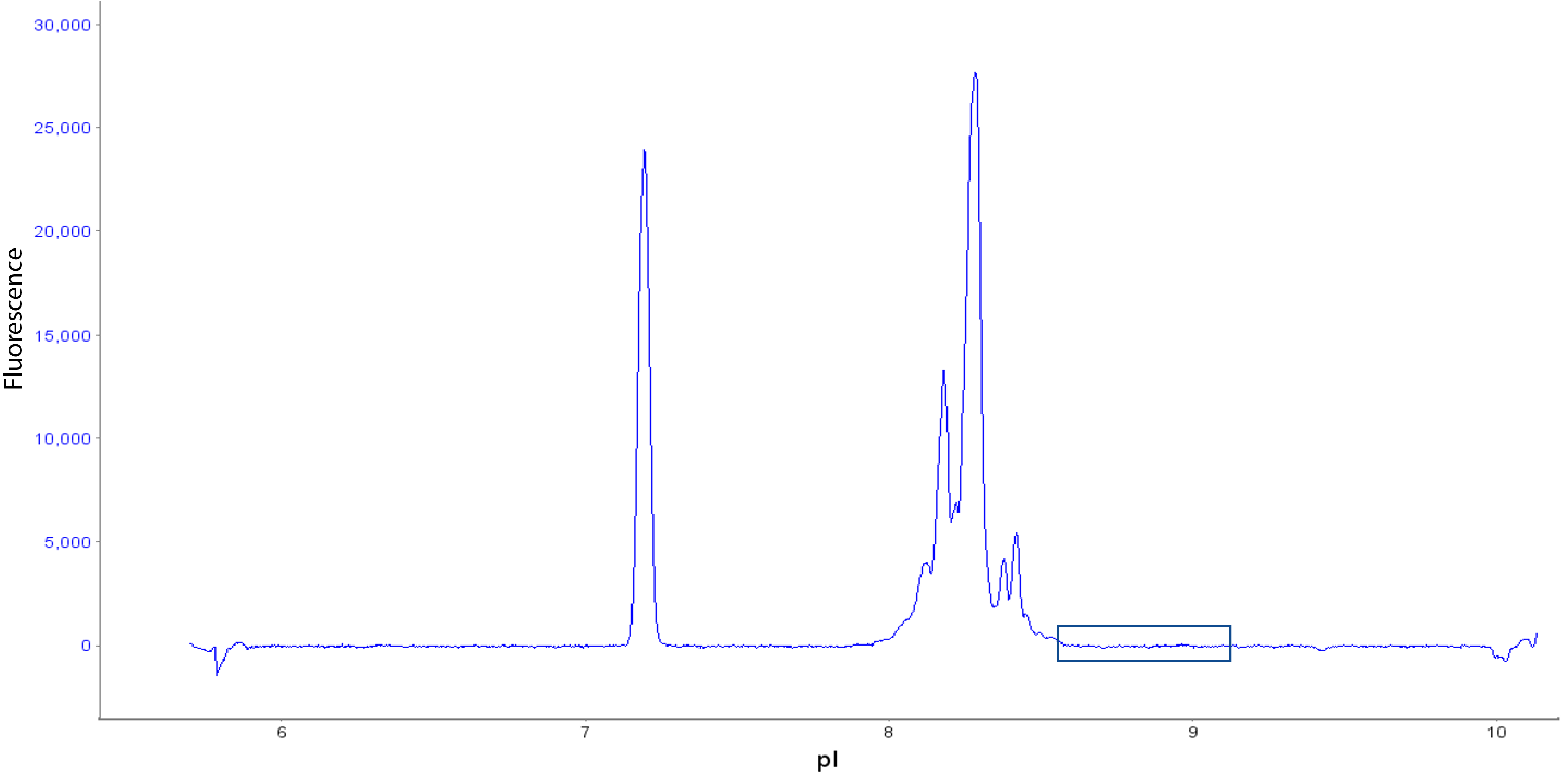
Another benefit of the Maurice system leveraged in this study was the native fluorescence (NF) detection mode. Being 4-20X more sensitive than absorbance, NF typically requires a lower amount of sample for analysis. It also produces cleaner baselines compared to absorbance. Figure 3 shows a comparison between the charge profiles of mAb1 with absorbance and NF detection, where the histidine dip produced by absorbance is not observed in NF.
Figure 3. A comparison of absorbance and NF profiles with Maurice icIEF.
The highlighted region shows a histidine dip that is seen through absorbance, while a clean baseline is produced with NF for the same sample. NF can eliminate baseline disturbances often seen with absorbance detection.
Conclusion
The team at Fujifilm analyzed 5 different mAbs on iCE3 and Maurice system and found that the data were comparable between the two instruments. Not only did this provide confidence in the latter's performance, but it also demonstrated ease of method transfer, which is one of the biggest considerations in adopting a new analytical instrument. The team also experienced shorter run times, operator training times, and fewer errors. As highlighted earlier, Fujifilm’s objective was to evaluate Maurice system as a replacement for iCE3 for icIEF applications and they successfully did so while gaining the numerous advantages that Maurice offers. Speak to one of our experts to learn about how to make the transition from iCE3 to Maurice.