
Neuroscience
Neuroscience is the study of the nervous system, one of the major mammalian systems responsible for sustaining life. The central nervous system (CNS) and peripheral nervous system (PNS) work in concert to coordinate basic functions such as moving and breathing, as well as 'higher order' functions including thought, speech and emotion.
Neuroscientists aim at understanding the complex cellular and molecular mechanisms that govern behavior, cognition, sensation, and movement. With approximately 90 billion neurons connected through vast networks of synapses, the nervous system relies on highly coordinated synaptic biology and neural signaling to process information and regulate every aspect of human function. Researchers use neural biomarkers to better understand healthy brain activity and to investigate the biological changes associated with neurodegenerative diseases, developmental neuroscience, and neuroinflammation. By exploring how neural circuits develop, communicate, adapt, and malfunction, neuroscientists aim to uncover the mechanisms underlying brain function, cognitive function, learning and memory, neurological disorders, psychiatric conditions, and age-related decline.
R&D Systems™ portfolio of tools and resources supports neuroscience research across the entire research workflow, from basic discovery to translational applications. Our solutions enable scientists to investigate key areas including Developmental Neuroscience, Synaptic Biology and Neural Signaling, Neuroinflammation, and Neurodegenerative Diseases such as Alzheimer's disease, Parkinson's disease, Amyotrophic Lateral Sclerosis (ALS), and multiple sclerosis. With high-quality reagents and instruments researchers can study processes ranging from neural development, synaptic function, neuronal survival, and disease progression.
Antibodies for Detecting Disease Associated Targets
Detect and localize important neurological disease proteins with our extensive portfolio of high-quality, IHC-validated primary antibodies and fluorescent dyes and probes for neuroscience imaging.
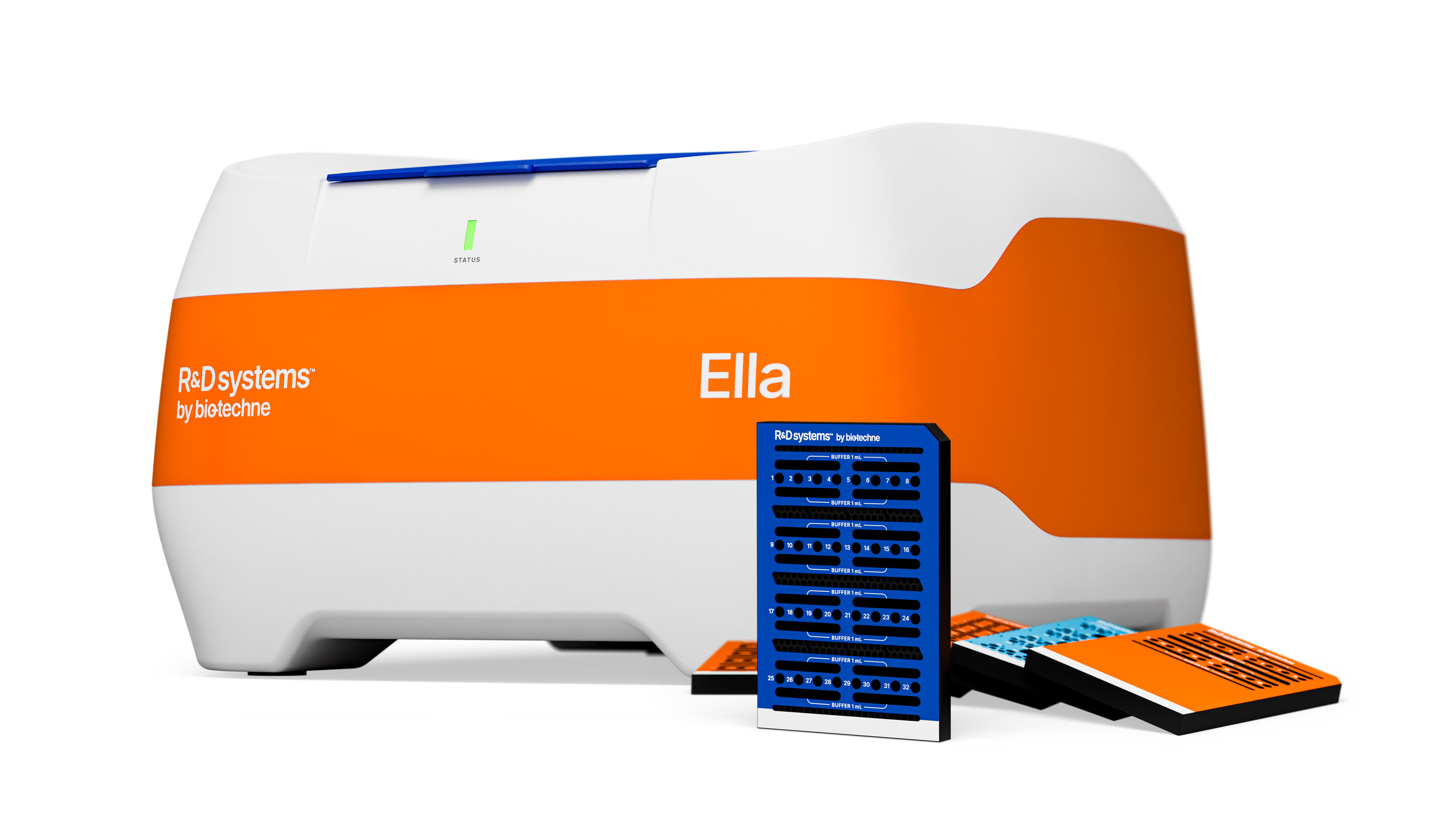
Simple Plex™ Immunoassays
Detect neurological biomarkers with exceptional precision, efficiency and low cross-reactivity. Enhance neurological disease research by enabling the rapid, large-scale collection of biomarker data.
Neurotransmitters, Neuroactive Molecules and Associated Enzymes
Study biological signaling cascades related to neurotransmitter molecules including dopamine, gamma-aminobutyric acid (GABA), glutamate and many more.
Neurodegenerative diseases are a group of progressive disorders characterized by the gradual loss of neuronal structure and function, leading to cognitive, motor, and behavioral decline. Major conditions include Alzheimer’s Disease, Parkinson’s Disease, Amyotrophic Lateral Sclerosis (ALS), and Huntington’s Disease, which collectively affect millions of people worldwide. Browse our portfolio of neuroscience products based on your disease of interest.
Psychiatric and behavioral disorders encompass a broad range of conditions that affect mood, cognition, perception, behavior, and social functioning, including depression, stress and anxiety disorders, schizophrenia, bipolar disorder, autism spectrum disorders, and substance use disorders. Explore R&D Systems reagents and Tocris small molecules by your disease of interest.
Neurological and neuroinflammatory disorders encompass a diverse group of conditions that affect the brain, spinal cord, peripheral nerves, and neuromuscular systems. These disorders may arise from abnormal neuronal activity, injury, vascular dysfunction, genetic factors, immune-mediated mechanisms, or other underlying causes. Key areas of neuroscience research include Multiple Sclerosis, Stroke, and peripheral neuropathies, which may disrupt sensory, cognitive, motor, or autonomic functions depending on the affected neural pathways.
Developmental neuroscience explores the processes that drive the formation, growth, and maturation of the nervous system, from embryonic development through adulthood. Research in this area also helps scientists understand the molecular mechanisms underlying neurodevelopmental disorders including autism spectrum disorders and other conditions that affect cognitive and behavioral development. Discover the R&D Systems neural development research areas:
Synaptic Biology and Neural Signaling focuses on the mechanisms that enable neurons to communicate, process information, and coordinate complex brain functions. Through the release of neurotransmitters and neuropeptides, activation of receptors, and downstream signaling pathways, neurons form dynamic networks that regulate cognition, learning, memory, sensation, movement, and behavior.
Neuroinflammation and neuroimmune interactions involve communication between cells of the nervous system and immune components, often influenced by blood-brain barrier permeability changes. R&D Systems portfolio provides reagents and assays to support research on these processes, helping to advance understanding of neuroinflammatory mechanisms and CNS disorders.
Neural biomarkers are measurable indicators of nervous system function, injury, and disease. They provide critical insights into neuronal health, synaptic activity, neuroinflammation, and neurodegeneration helping to identify therapeutic targets, and monitor treatment responses.
Understanding sensory processing, nociception, and neuronal responses to injury and disease is key in pain research. R&D Systems portfolio provides high-quality reagents and tools tailored for pain and related neuroscience studies.
Key Product Categories






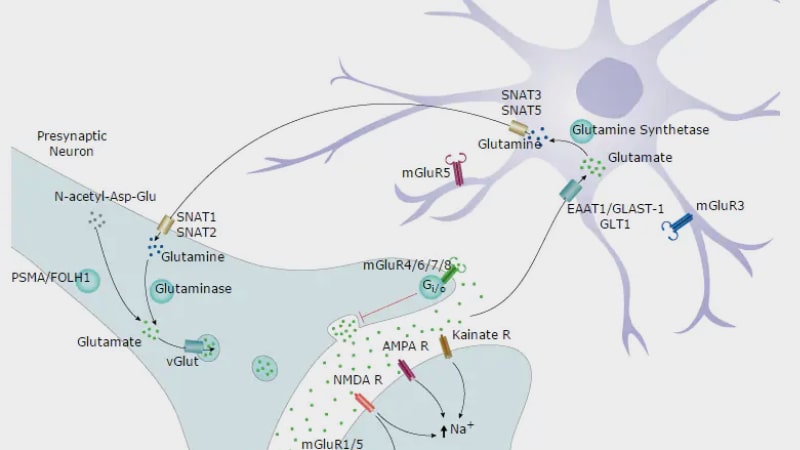
Synaptic Neurotransmission: Glutamatergic Excitation
Glutamatergic excitation plays a central role in synaptic plasticity, which forms the basis for learning and memory functions. Read more about the glutamatergic excitation signaling.
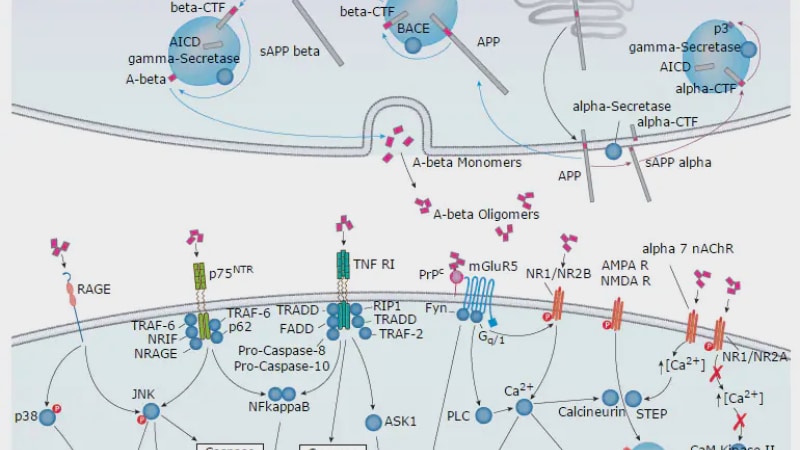
A-beta Signaling Pathways
Soluble A-beta oligomers are neurotoxic and associated with early stage Alzheimer’s disease. Learn more about the putative receptors activated by A-beta and how A-beta signaling contributes to neurodegeneration.
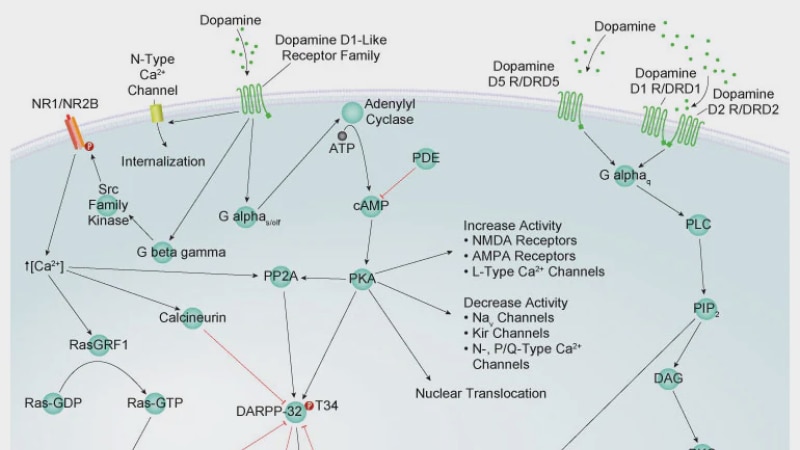
Dopamine D1-Like Receptor Family Signaling Pathways
Dopamine levels contribute to numerous neurological and psychiatric disorders. Explore the receptors and signaling molecules activated by dopamine and the effects of these pathways.
View All Neuroscience Signaling Pathways
Browse interactive neuroscience-related signaling pathways:
Featured Resources
Handboook

IHC Handbook
This recently updated handbook offers a thorough introduction to IHC and will serve as a handy reference for designing, performing, optimizing, and troubleshooting IHC protocols.
Application Note
Differentiation and Characterization of Human iPSC-Derived Midbrain Dopaminergic Neuron Progenitors for Parkinson’s Disease
R&D Systems reagents and instruments supporting PD research.
Product Guide
Neural Stem Cell Workflow Solutions Product Guide
Explore reagents to promote efficient and consistent expansion, differentiation, and characterization of neural stem cells.
Additional Resources for Neuroscience Research
Neuroscience Literature

- Alzheimer’s Disease Pathway Poster
- Microglia Activation During Neuroinflammation
- Autophagy in Neurodegenerative Disease White Paper
- Immunoassay Solutions for Neuroinflammation Product Guide
- Neurotransmitter Receptors in the Retina
- Neurotransmitter Receptors in the Substantia Nigra & the Tuberomammillary Nucleus
Neuroscience Protocols

- Immunocytochemistry Video Protocol
- ISH-IHC Protocol for Chromogenic Detection of Formalin Fixed Paraffin Embedded (FFPE) Tissue
- Protocol for the Preparation and Fluorescent IHC Staining of Frozen Tissue Protocol
- Protocol for the Preparation and Fluorescent IHC Staining of Paraffin-Embedded Tissue Sections

Neuroscience Background Information
Two major areas of neuroscience research, molecular and cellular neuroscience and developmental neuroscience, have provided the foundation for understanding brain disease mechanisms and developing therapeutic approaches for a wide range of conditions including neurodegenerative and neuroinflammatory diseases. Neurodegenerative diseases, or conditions leading to the irreversible loss of nerves and concomitant loss of function, impact the health of millions of people around the globe. Among these, Alzheimer’s and Parkinson’s disease constitute the leading cause of dementia worldwide.
Molecular and Cellular Neuroscience focuses on the molecules and genes controlling brain cellular function.
Synaptic Transmission
Neurotransmission, or synaptic transmission, refers to the passage of signals from one neuron to another, allowing the spread of information via the propagation of action potentials. This process is the basis of communication between neurons within, and between, the peripheral and central nervous systems, and is vital for memory and cognition, muscle contraction and co-ordination of organ function.
The majority of neurotransmission occurs across chemical synapses, where an endogenous neurotransmitter is released by the presynaptic neuron and detected by receptors on the postsynaptic neuron. Neurotransmitters can be broadly split into three categories; amino acids including glutamate and glycine, amines including dopamine (DA), serotonin (5-HT; ) and norepinephrine (NE), and peptides such as dynorphin, the enkephalins and neuropeptide Y.
While the amino acids glutamate and glycine are found in all cells of the body, other neurotransmitters are only synthesized by neurons. Following synthesis, neurotransmitters are taken up and stored in synaptic vesicles, ready for release. The release of a neurotransmitter is triggered by the arrival of action potentials in the axon terminal of the presynaptic neuron, opening voltage-gated calcium channels, (Ca v channels)and allowing influx of ions. The resulting elevation in intracellular Ca 2+ concentration causes synaptic vesicles to merge with the presynaptic membrane, releasing the neurotransmitter into the synaptic cleft by exocytosis.
Neurotransmitters cross the synaptic cleft and bind to their specific receptors. These maybe ligand-gated ion channels (LGICs) or G protein-coupled receptors (GPCRs), with some neurotransmitters having receptors in both categories. Binding of a neurotransmitter to a LGIC causes a conformational change in the structure of the protein, allowing the passage of ions through the channel. Passage of ions through channels that are selective for positively-charged cations results in depolarization of the postsynaptic membrane and initiation of an action potential in the postsynaptic neuron. In contrast, passage of ions through negatively-charged, anion selective channels results in hyperpolarization of the postsynaptic membrane, so inhibiting action potential initiation. Binding of a neurotransmitter to a GPCR results in the activation of G proteins, which are then able to act on enzymes to modulate intracellular signaling pathways. The end result of this is the modulation of activity of other proteins, including ion channels and enzymes.
Once a neurotransmitter has bound to its receptor, it is cleared from the synaptic cleft to allow another wave of synaptic transmission. Neurotransmitter molecules are taken up by the presynaptic neuron, or by other cell types such as astrocytes, via specific reuptake transporters. Neurotransmitters may then be metabolized to be reused for further production, or they can be recycled into synaptic vesicles.
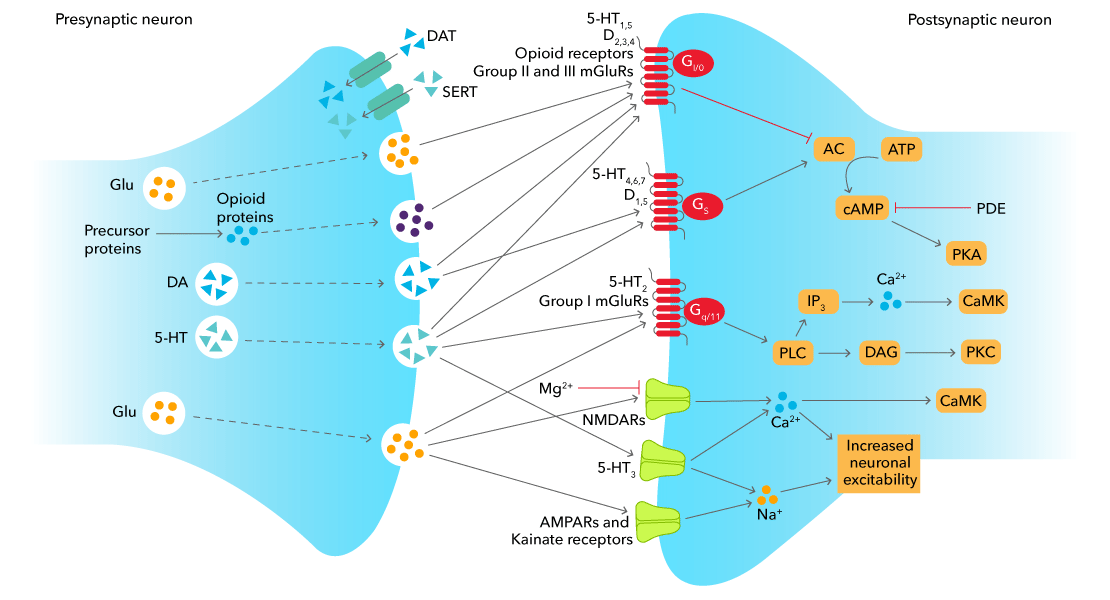
This above schematic shows the main events during dopaminergic, glutamatergic, opioid peptide and serotonergic neurotransmission. DA and 5-HT are both biogenic amines that are derived from amino acids, while glutamate itself is an amino acid and opioid peptides are cleaved from precursor proteins. All neurotransmitters undergo exocytosis from the presynaptic membrane and cross the synaptic cleft where they bind to their specific receptors. These receptors may be ligand-gated ion channels, such as ionotropic glutamate receptors, or G protein-coupled receptors, such as all subtypes of opioid receptor. Passage of ions through a ligand gated ion channel alters the excitability of a neuron. The action of neurotransmitters at GPCRs alters intracellular signaling pathways, with the specific pathway being dependent on the G protein-coupled to the receptor.
Action Potentials
An action potential is the signal that conveys information along a neuron and is also the trigger for release of a neurotransmitter at a synapse. Physically, an action potential is the rapid reversal of the resting membrane potential, caused by opening and closing of voltage-gated ion channels. At rest, the cytosol of a neuron is negatively charged (polarized) with respect to extracellular fluid, due to the distribution of ions across the cell membrane.
An action potential is initiated by the opening of voltage-gated sodium channels (Na v channels) allowing influx of Na + down its concentration gradient. This depolarizes the cell membrane past the threshold for action potential initiation. As Na v channels become inactivated, preventing the flow of Na + , voltage-gated potassium channels (K v channels) open allowing the efflux of K + . This causes repolarization of the cell membrane, as the balance of ion movement across the membrane leads to the cytosol being more negatively charged than extracellular fluid. When K v channels are open the cell membrane is highly permeable to K + , but permeability to Na+ is low as Na v channels are still inactivated. This leads to a period of hyperpolarization until K v channel close, and the resting membrane potential is re-established.
Propagation of an action potential occurs as a wave of depolarization that spreads along an axon. When an area of the membrane becomes depolarized, it opens neighboring Na v channels, which then allow depolarization of that section of the membrane. The inactivation of Na v channels in the preceding section of membrane ensures that an action potential travels in only one direction alone an axon. Some axons in the central nervous system have a sheath around them, composed of myelin, which acts as an electrical insulator. Na v and K v channels are localized on gaps in the myelin sheath, known as nodes of Ranvier. Myelination increases that speed of action potential propagation as the action potential effectively ‘hops’ along an axon, occurring only at nodes of Ranvier in a process known as saltatory conduction.
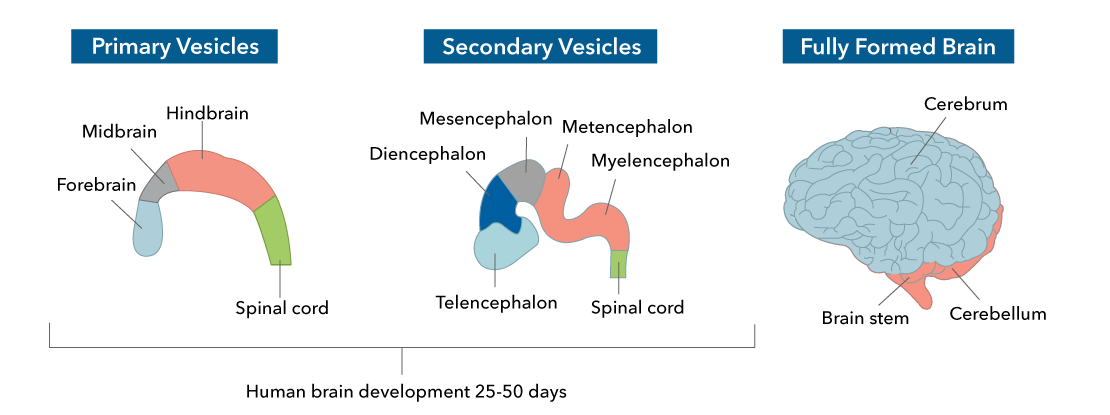
Developmental neuroscience studies the formation of the nervous system, from cellular components to how these are organized in major functional networks.
Cognitive Neuroscience and Brain Function
Cognitive neuroscience investigates the neural mechanisms underlying brain function, cognition, learning, memory, attention, language, and decision-making. By integrating concepts from neuroscience and psychology, researchers seek to understand how neural circuits support cognitive function and complex behaviors. Areas of study include social cognition, social neuroscience, emotional processing, and the biological mechanisms that contribute to both normal brain function and neurological disorders.
Neurogenetics and Neurodevelopmental Disorders
Neurogenetics examines how genetic variation influences nervous system development, neuronal function, and disease susceptibility. Neurogenetic research has improved understanding of inherited neurological disorders and neurodevelopmental disorders by identifying genes and signaling pathways that regulate brain development, synaptic function, and neural circuit formation.
Preclinical Models in Neuroscience Research
Animal models are widely used to study nervous system development, neurodegeneration, neuroinflammation, synaptic function, and therapeutic interventions. These models provide valuable insights into disease mechanisms, biomarker discovery, and translational neuroscience research, helping researchers evaluate potential treatments before clinical investigation. Researchers also use 3D cell culture systems, neural spheroids, and organoid models to investigate nervous system development, cell-cell interactions, disease mechanisms, and therapeutic responses in controlled in vitro environments. Together, these complementary model systems support neuroscience research from basic discovery through translational applications.
Classification of Disease
Neurological diseases can be classified according to their etiology. They can be caused by:
- Genetic mutations (e.g. Huntington's disease)
- Development abnormalities (e.g. spina bifida)
- Degeneration (e.g. Alzheimer's disease)
- Diseases of the blood vessels that supply the nervous system (e.g. stroke)
- Trauma
- Malignancy
- Infection (e.g. encephalitis)
At present, pharmacological interventions for many neurological diseases, especially the degenerative conditions, are limited and predominantly restricted to alleviation of symptoms. The understanding of the nervous system, and prevention and treatment of neurological disorders represents one of the critical goals of medical research today. Alzheimer's disease, Parkinson's disease, amyotrophic lateral sclerosis and multiple sclerosis are currently the focus of intense neuroscience research.