E-Cadherin/Cadherin-1 (ECAD) Is a transmembrane cell adhesion protein. It forms homophilic clusters between epithelial cells and is a critical component of adherens junctions. These junctions are critical for the maintenance of the epithelial barrier and epithelial tissue homeostasis. Decreased E-Cadherin is associated with physiological and pathological epithelial-to-mesenchymal transition (EMT) and cell migration, and E-Cadherin loss contributes to cancer metastasis. The shed ECD is released as a soluble factor that enhances cancer cell motility and EGFR-dependent survival and proliferation.
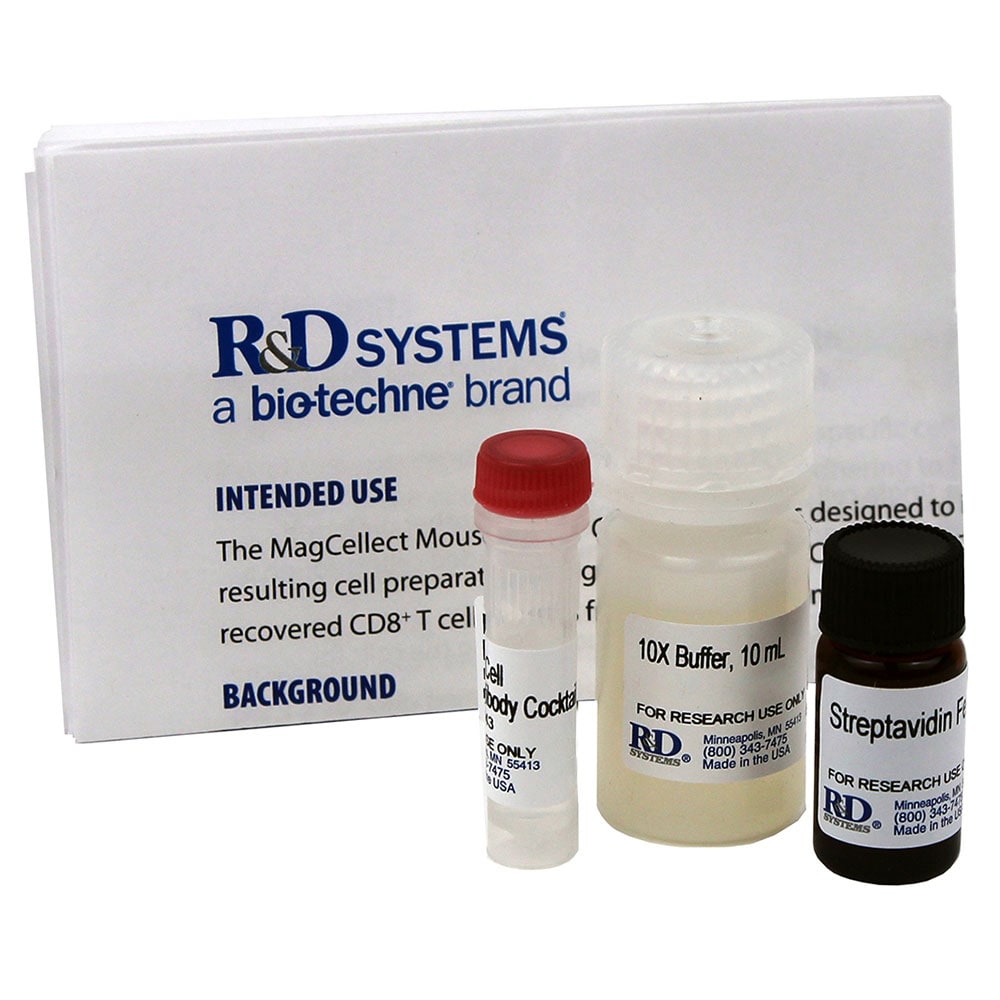
MagCellect Plus Human E-Cadherin+ Cell Isolation Kit
R&D Systems | Catalog # MAGH123

Discontinued Product
MAGH123 has been discontinued.
View all E-Cadherin products.
Key Product Details
Species
Human
Loading...
Formulation, Preparation, and Storage
Shipping
The product is shipped with polar packs. Upon receipt, store it immediately at the temperature recommended below.
Storage
Store the unopened product at 2 - 8 °C. Do not use past expiration date.
Background: E-Cadherin
Alternate Names
Arc-1, CAD1, Cadherin-1, CD324, CDH1, Cell-CAM120/80, ECAD, ECadherin, L-CAM, Uvomorulin
Gene Symbol
CDH1
Additional E-Cadherin Products
Product Documents for MagCellect Plus Human E-Cadherin+ Cell Isolation Kit
Certificate of Analysis
To download a Certificate of Analysis, please enter a lot or batch number in the search box below.
Note: Certificate of Analysis not available for kit components.
Product Specific Notices for MagCellect Plus Human E-Cadherin+ Cell Isolation Kit
For research use only
Customer Reviews for MagCellect Plus Human E-Cadherin+ Cell Isolation Kit
There are currently no reviews for this product. Be the first to review MagCellect Plus Human E-Cadherin+ Cell Isolation Kit and earn rewards!
Have you used MagCellect Plus Human E-Cadherin+ Cell Isolation Kit?
Submit a review and receive an Amazon gift card!
$25/€18/£15/$25CAN/¥2500 for a review with an image
$10/€7/£6/$10CAN/¥1110 for a review without an image
Submit a review
FAQs for MagCellect Plus Human E-Cadherin+ Cell Isolation Kit
Showing
1
-
1 of
1 FAQ
Showing All
-
Q: When using MacCellect Cell Isolation kits (MAGM*** or MAGH***), why is it important to lyse red blood cells before starting the cell isolation protocol?
A: It is important to remove red blood cells before the isolation protocol using MagCellect isolation kits because not doing so can cause a poorer yield of selected cells. Red blood cells become sticky during the incubation protocols and may interfere with the interactions needed for removal of unwanted populations.
Loading...
Associated Pathways