Read interviews from your peers, to find out how scientists like you are driving pioneering research and diagnostics forward using R&D Systems reagents, kits and instruments.
Our testimonials cover a range of research areas and applications, using everything from gold standard to GMP reagents, and revolutionary, award-winning instruments.
Simply filter in the left-hand menu and see what your peers have to say.
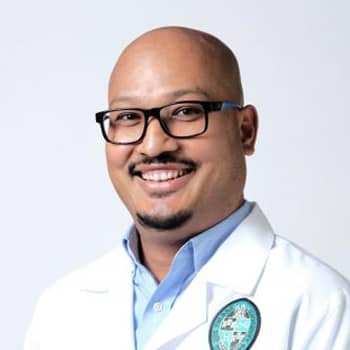
Dr. Jagannath Padmanabhan
Research Fellow at Stanford University in the Department of Plastic and Reconstructive Surgery
From a Postdoc’s Perspective: Dr. Jagannath Padmanabhan
"Science is the best tool we have at our disposal to solve some of the world's most pressing problems. Science is our best bet to gain an objective understanding of ourselves and the world around us."
Assistant Professor in the Department of Physiology at Emory School of Medicine
Dr. Timothy Sampson
"It is my belief that future discoveries in the field [of neurological disorders] will not solely rely on the study of the brain, but through the broad and multidisciplinary exploration of our microbial inhabitants."
National STP Training Lead at The Francis Crick Institute
Derek Davies
"We are very keen here at the Crick to train all users to do their own cytometry; it is a great transferable skill and by giving users the understanding of the tools they are using, they will be producing better and more reproducible data."
Professor of Neuroscience at Baylor College of Medicine
Dr. Benjamin Deneen
"As a mentor, it's critical to remember that your success is directly tied to their success. If you want to have a successful lab, then you have to invest in your mentee's success and recognize that you need them as much (if not more!) than they need you."
Postdoctoral fellow at Oxford University in the laboratory of Professor Alison Simmons
From a Postdoc’s Perspective: Dr. Hannah Chen
"I think this is something all immunologists can agree on - trusted sources of research tools/reagents can be the difference between a high impact publication and no publication/delayed publication."
Assistant Professor in Microbiology, Immunology, and Cancer Biology at the University of Virginia
Dr. Melanie Rutkowski
"It is important to establish a balance between working harder than you have ever worked in your life and knowing when to move forward or away from questions/projects that are not scientifically sound or novel."
Postdoctoral fellow at the Department of Pathology, University of California, San Francisco, in the lab of Jayanta Debnath, M.D.
From a Postdoc’s Perspective: Dr. Andrew Leidal
"Teaching and mentoring are great ways to learn boundaries of understanding on a specific topic or concept because inevitably you will be asked something that you can't answer."