
Memantine hydrochloride
Tocris Bioscience | Catalog # 0773

Key Product Details
Description
Product Description
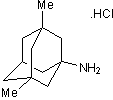
Memantine hydrochloride is an antagonist at the NMDA receptor (IC50 = 0.5 -1.5 μM in vitro), binding to the ion channel site. Memantine increases BDNF protein and mRNA levels in the brain in vivo. In an animal model of Alzheimer's disease, memantine improves spatial learning and decreases deposition of Aβ plaques. Memantine has neuroprotective effects in dopaminergic neurons; stimulates release of neurotrophic factor from astroglia and reduces microglia inflammation in vitro.
Product Specifications for Memantine hydrochloride
Molecular Weight
Formula
Storage
Chemical Name
CAS Number
PubChem ID
InChI Key
SMILES
The technical data provided above is for guidance only. For batch specific data refer to the Certificate of Analysis.
Solubility
| Solvent | Max Conc. mg/mL | Max Conc. mM | |
|---|---|---|---|
| Solubility | |||
| water | 100 |
Preparing Stock Solutions for Memantine hydrochloride
The following data is based on the product molecular weight 215.77.
Batch specific molecular weights may vary from batch to batch due to the degree of hydration, which all affect the solvent volumes required to prepare stock solutions.
| Concentration / Solvent Volume / Mass | 1 mg | 5 mg | 10 mg |
|---|---|---|---|
| 1 mM | 4.63 mL | 23.17 mL | 46.35 mL |
| 5 mM | 0.93 mL | 4.63 mL | 9.27 mL |
| 10 mM | 0.46 mL | 2.32 mL | 4.63 mL |
| 50 mM | 0.09 mL | 0.46 mL | 0.93 mL |
Calculators
Background References
References are publications that support the biological activity of the product. See our Citations tab to view 46 publications citing the usage of this product.
- Wu Novel neuroprotective mechanisms of memantine: increase in neurotrophic factor release from astroglia and anti-inflammation by preventing microglial activation. Neuropsychopharmacology 2009 PMID: 19536110
- Dong Effects of memantine on neuronal structure and conditioned fear in the Tg2576 mouse model of Alzheimer's disease. Neuropsychopharmacology 2008 PMID: 18418360
- Parsons Mem.: A NMDA receptor antagonist that improves memory by restoration of homeostasis in the glutamatergic system - too little activation is bad, too much is even worse. Neuropharmacology 2007 PMID: 17904591
- Minkeviciene Memantine improves spatial learning in a transgenic mouse model of Alzheimer's disease. J.Pharmacol.Exp.Ther. 2004 PMID: 15192085
- Parsons Mem. is a clinically well tolerated N-MthD.-aspartate (NMDA) receptor antagonist - a review of preclinical data. Neuropharmacology 1999 PMID: 10465680
- Chen Neuroprotective concentrations of the N-MthD.-aspartate open-channel blocker Mem. are effective without cytoplasmic vacuolation following post-ischemic administration and do not block maze learning or long-term potentiation. Neuroscience 1998 PMID: 9697119
- Zajaczkowski Uncompetitive NMDA receptor antagonists attenuate NMDA-induced impairment of passive avoidance learning and LTP. Neuropharmacology 1997 PMID: 9257940
Product Documents for Memantine hydrochloride
Certificate of Analysis
To download a Certificate of Analysis, please enter a lot or batch number in the search box below.
Product Specific Notices for Memantine hydrochloride
For research use only
Related Research Areas
Citations for Memantine hydrochloride
 Powered by Bioz
Customer Reviews for Memantine hydrochloride (2)
Have you used Memantine hydrochloride?
Submit a review and receive an Amazon gift card!
$25/€18/£15/$25CAN/¥2500 for a review with an image
$10/€7/£6/$10CAN/¥1110 for a review without an image
Submit a review
Customer Images
-
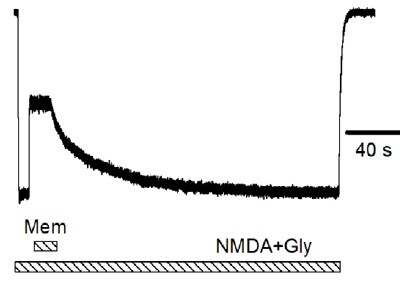
Species: HumanCell Line/Tissue: Stem cell - derived neuronsVerified Customer | Posted 10/15/2020Memantine was used as a use-dependent blocker of NMDA receptors in nucleated patches pulled from stem-cell-derived dopamine neurons. Application of 0.5 µM memantine induced a significant decrease of NMDA receptors response. Washout for 4-5 minutes commonly returned the response amplitude to control values (see illustration).

-
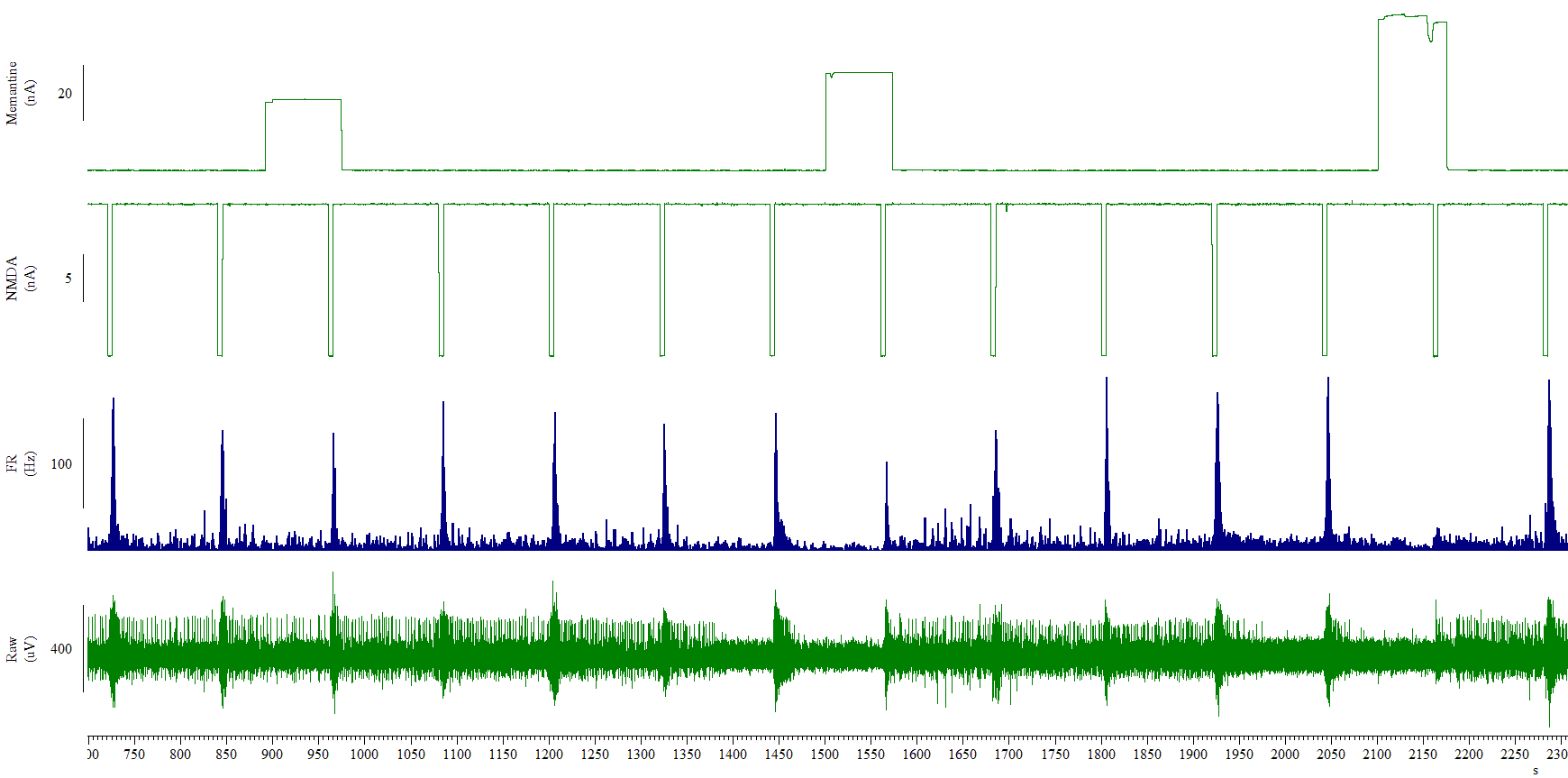
Species: RatAssay Type: In VivoVerified Customer | Posted 03/01/2019It is recommended to always perform an initial experiment for the assessment of the dose-response curve, and not to rely on available literature data regarding suggested suitable doses, since the effect of memantine may substantially differ in different assays or behavioral paradigms.We have been using memantine hydrochloride from Tocris for behavioral pharmacology and in vivo electrophysiology in rats. In electrophysiology experiments, memantine was delivered with microiontophoresis into the close vicinity of the neurons during recording in the rat cerebral cortex. Memantine was successfully applied from glass micropipettes of multi-barrel electrodes with positive constant currents at acidic pH, and it exerted the expected effect on hippocampal neurons (see attached figure of a representative recording). In behavioral experiments, memantine enhanced cognitive function in scopolamine-induced transient amnesia in rats. However, we found that memantine was effective at substantially lower doses compared to most of the publications from other laboratories.
There are no reviews that match your criteria.