


Interleukin 5 is a T cell-derived factor that promotes the proliferation, differentiation and activation of eosinophils. In mice, IL-5 has also been shown to be a growth and differentiation factor for B cells. Various names previously used to describe IL-5 include: T cell replacing factor (TRF), B cell growth factor II (BCGFII), B cell differentiation factor μ (BCDF μ), eosinophil differentiation factor (EDF) and eosinophil colony-stimulating factor (Eo-CSF). Biologically active IL-5 is a disulfide-linked homodimer. The cDNAs formurine, human and rat IL-5 encode precursor proteins with signal peptides that are cleaved to form mature proteins containing 113, 115, and 113 amino acid residues, respectively. Rat IL-5 is 94% and 70% identical to mouse and human IL-5, respectively. The genes for human and mouse IL-5 have been mapped to chromosome 5 and chromosome 11, respectively; closely linked tothe genes for IL-3, IL-4 and GM-CSF.
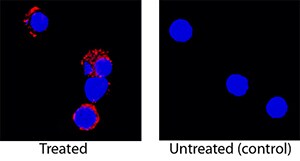
IL-5 exerts its activity on target cells by binding to specific cell surface receptors. The functional high-affinity receptor for human IL-5 has been shown to be composed of a low-affinity IL-5 binding alpha -subunit and a non-binding common beta -subunit that is sharedwith the high-affinity receptors for GM-CSF and IL-3.



