
EphB4, also known as Htk, Myk1, Tyro11, and Mdk2, is a member of the Eph receptor tyrosine kinase family and binds Ephrin-B2. The A and B class Eph proteins have a common structural organization (1 - 4). The human EphB4 cDNA encodes a 987 amino acid precursor that includes a 15 amino acid (aa) signal sequence, a 524 aa extracellular domain (ECD), a 21 aa transmembrane segment, and a 427 aa cytoplasmic domain (5). The ECD contains an N-terminal globular domain, a cysteine-rich domain, and two fibronectin type III domains. The cytoplasmic domain contains a juxtamembrane motif with two tyrosine residues which are the major autophosphorylation sites, a kinase domain, and a conserved sterile alpha motif (SAM) (5). Activation of kinase activity occurs after membrane-bound or clustered ligand recognition and binding. The ECD of human EphB4 shares 89% aa sequence identity with mouse EphB4 and 42 - 45% aa sequence identity with human EphB1, 2, and 3. EphB4 is expressed preferentially on venous endothelial cells (EC) and inhibits cell-cell adhesion, chemotaxis, and angiogenesis. Opposing effects are induced by signaling through Ephrin-B2 expressed on arterial EC: adhesion, endothelial cell migration, and vessel sprouting (6). EphB4 singaling contributes to new vascularization by guiding venous EC away from Ephrin-B2 expressing EC. Ephrin-B2 signaling induces arterial EC to migrate towards nascent EphB4 expressing vessels (6). The combination of forward signaling through EphB4 and reverse signaling through Ephrin-B2 promotes in vivo mammary tumor growth and tumor-associated angiogenesis (7). EphB4 promotes the differentiation of megakaryocytic and erythroid progenitors but not granulocytic or monocytic progenitors (8, 9).
Recombinant Human EphB4 Protein, CF
R&D Systems | Catalog # 3038-B4


Loading...
Key Product Details
- R&D Systems NS0-derived Recombinant Human EphB4 Protein (3038-B4)
- Quality control testing to verify active proteins with lot specific assays by in-house scientists
- All R&D Systems proteins are covered with a 100% guarantee
Source
NS0
Accession Number
Applications
Binding Activity
Loading...
Product Specifications
Source
Mouse myeloma cell line, NS0-derived human EphB4 protein
Leu16-Ala539, with a C-terminal 6-His tag
Leu16-Ala539, with a C-terminal 6-His tag
Purity
>95%, by SDS-PAGE under reducing conditions and visualized by silver stain.
Endotoxin Level
<0.10 EU per 1 μg of the protein by the LAL method.
N-terminal Sequence Analysis
Leu16
Predicted Molecular Mass
57.9 kDa
SDS-PAGE
70-75 kDa, under reducing conditions.
Activity
Measured by its binding ability in a functional ELISA.
Immobilized rhEphB4 at 2 µg/mL (100 µL/well) can bind rmEphrin-B2/Fc Chimera with a linear range of 0.0780- 5.00 ng/mL.
Immobilized rhEphB4 at 2 µg/mL (100 µL/well) can bind rmEphrin-B2/Fc Chimera with a linear range of 0.0780- 5.00 ng/mL.
Reviewed Applications
Read 1 review rated 5 using 3038-B4 in the following applications:
Formulation, Preparation, and Storage
3038-B4
| Formulation | Lyophilized from a 0.2 μm filtered solution in PBS. |
| Reconstitution | Reconstitute at 100 μg/mL in sterile PBS.
Loading...
|
| Shipping | The product is shipped at ambient temperature. Upon receipt, store it immediately at the temperature recommended below. |
| Stability & Storage | Use a manual defrost freezer and avoid repeated freeze-thaw cycles.
|
Calculators
Background: EphB4
References
- Poliakov, A. et al. (2004) Dev. Cell 7:465.
- Surawska, H. et al. (2004) Cytokine Growth Factor Rev. 15:419.
- Pasquale, E.B. (2005) Nat. Rev. Mol. Cell Biol. 6:462.
- Davy, A. and P. Soriano (2005) Dev. Dyn. 232:1.
- Bennett, B.D. et al. (1994) J. Biol. Chem. 269:14211.
- Fuller, T. et al. (2003) J. Cell Sci. 116:2461.
- Noren, N.K. et al. (2004) Proc. Natl. Acad. Sci. 101:5583.
- Wang, Z. et al. (2002) Blood 99:2740.
- Inada, T. et al. (1997) Blood 89:2757.
Long Name
Eph Receptor B4
Alternate Names
Htk, Mdk2, Myk1, Tyro11
Gene Symbol
EPHB4
UniProt
Additional EphB4 Products
Product Documents for Recombinant Human EphB4 Protein, CF
Certificate of Analysis
To download a Certificate of Analysis, please enter a lot or batch number in the search box below.
Note: Certificate of Analysis not available for kit components.
Product Specific Notices for Recombinant Human EphB4 Protein, CF
For research use only
Related Research Areas
Citations for Recombinant Human EphB4 Protein, CF
 Powered by Bioz
Customer Reviews for Recombinant Human EphB4 Protein, CF (1)
5 out of 5
1 Customer Rating
Have you used Recombinant Human EphB4 Protein, CF?
Submit a review and receive an Amazon gift card!
$25/€18/£15/$25CAN/¥2500 for a review with an image
$10/€7/£6/$10CAN/¥1110 for a review without an image
Submit a review
Customer Images
Showing
1
-
1 的
1 review
Showing All
Filter By:
-
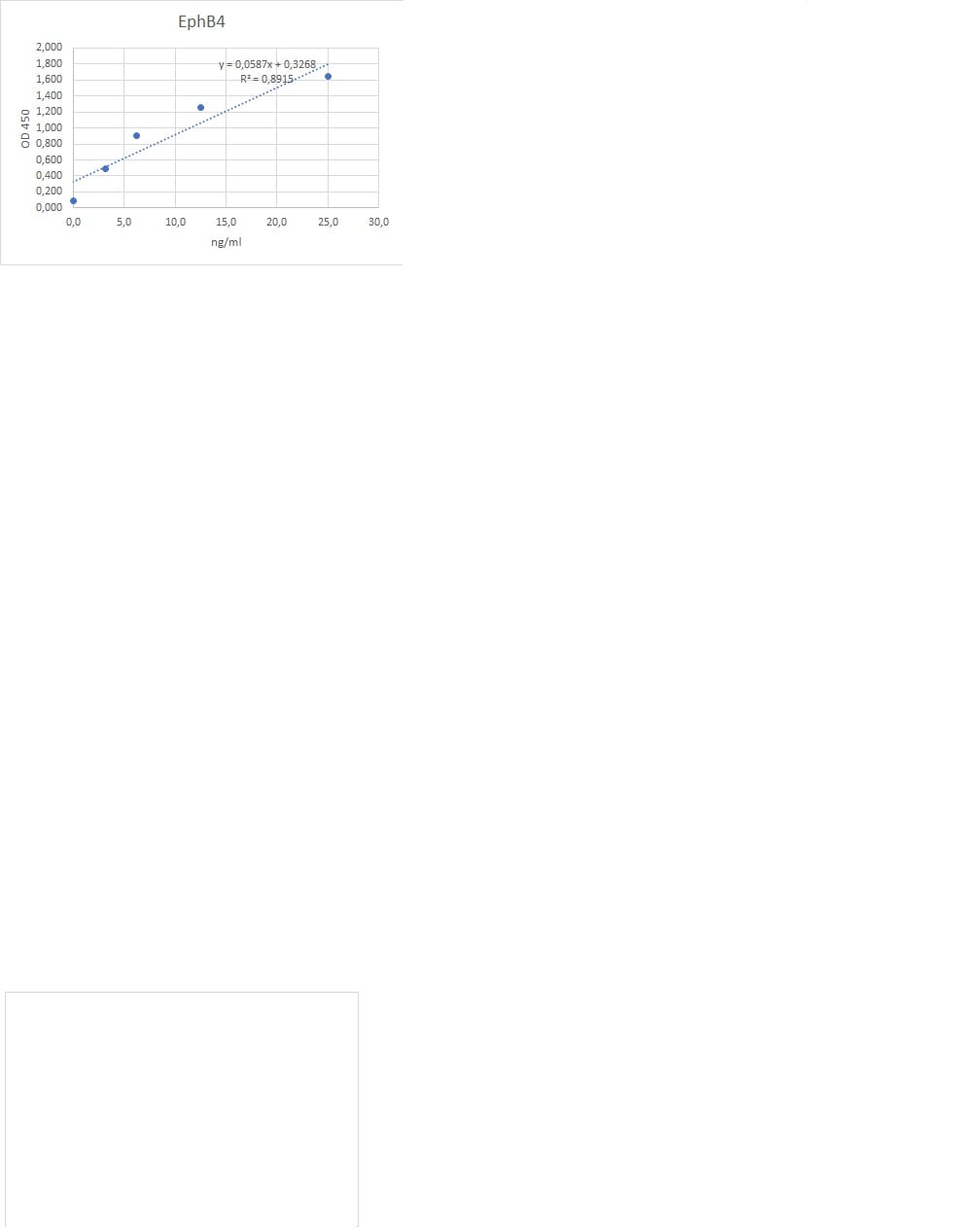
Application: Immunoassay StandardVerified Customer | Posted 07/05/2022good standard for ELISA

There are no reviews that match your criteria.
Loading...