
Macrophage stimulating protein receptor (MSP R), encoded by the human Ron and the mouse Stk, is one of a small family of receptor tyrosine kinases (RTKs) that also includes human Met (the receptor for hepatocyte growth factor) and chicken Sea (1, 2). This family of receptors is synthesized as a single-chain precursors that are cleaved into a mature disulfide-linked heterodimers composed of an extracellular alpha chain and a membrane spanning beta chain with intrinsic tyrosine kinase activity. Biologically active ligands (MSP and HGF) for this family of receptors are also disulfide-linked alpha -beta heterodimers. Human MSP R cDNA encodes a 1400 amino acid (aa) residue precursor protein with a 24 aa signal peptide, a 285 aa residue alpha chain (Glu25-Arg309) and a 1091 aa residue transmembrane beta chain (Gly310-Thr1400). The extracellular domain of MSP R is comprised of an N-terminal sema domain, a PSI (plexin semaphorins integrins) domain, followed by four immunoglobulin-like folds shared by plexins and transcription factors (3). The soluble sema domain binds MSP and inhibits the MSP R-dependent signaling pathways. MSP receptor is expressed in multiple tissues including specific areas of the central and peripheral nervous systems, epithelial cells along the digestive tract, skin and lung, and in subpopulations of the mononuclear phagocyte lineage (1, 2). Although free MSP alpha or beta chains have been shown to bind MSP R, only the heterodimeric MSP can induce receptor activation and cause biological activity (4, 5). MSP R associates with other transmembrane molecules including integrins, cadherins and other cytokine receptors. Transactivation and signaling crosstalk between MSP R and its associated transmembrane receptors have been demonstrated (6-8). Human MSP R shares 72% amino acid sequence identity with mouse MSP R.
Recombinant Human MSPR/Ron Protein, CF
R&D Systems | Catalog # 1947-MS


Loading...
Key Product Details
- R&D Systems NS0-derived Recombinant Human MSPR/Ron Protein (1947-MS)
- Quality control testing to verify active proteins with lot specific assays by in-house scientists
- All R&D Systems proteins are covered with a 100% guarantee
Source
NS0
Accession Number
Structure / Form
Disulfide-linked heterodimer
Applications
Binding Activity
Loading...
Product Specifications
Source
Mouse myeloma cell line, NS0-derived human MSP R/Ron protein
Glu25-Leu571 (single chain) & Gly310-Leu571 (beta), with a C-terminal 10-His tag; Glu25-Arg309 (alpha)
Glu25-Leu571 (single chain) & Gly310-Leu571 (beta), with a C-terminal 10-His tag; Glu25-Arg309 (alpha)
Purity
>90%, by SDS-PAGE under reducing conditions and visualized by silver stain.
Endotoxin Level
<0.10 EU per 1 μg of the protein by the LAL method.
N-terminal Sequence Analysis
Glu25 & Gly310
Predicted Molecular Mass
60 kDa (single chain), 29.7 kDa ( alpha subunit), 29.6 kDa ( beta subunit)
SDS-PAGE
75 kDa, 40 kDa and 38 kDa, reducing conditions
Activity
Measured by its binding ability in a functional ELISA.
When Recombinant Human MSP R/Ron is immobilized at 100 ng/mL (100 μL/well), the concentration of recombinant human MSP/MST1 that produces 50% optimal binding response is found to be 8-40 ng/mL.
When Recombinant Human MSP R/Ron is immobilized at 100 ng/mL (100 μL/well), the concentration of recombinant human MSP/MST1 that produces 50% optimal binding response is found to be 8-40 ng/mL.
Reviewed Applications
Read 1 review rated 4 using 1947-MS in the following applications:
Formulation, Preparation, and Storage
1947-MS
| Formulation | Lyophilized from a 0.2 μm filtered solution in PBS. |
| Reconstitution | Reconstitute at 100 μg/mL in sterile PBS.
Loading...
|
| Shipping | The product is shipped at ambient temperature. Upon receipt, store it immediately at the temperature recommended below. |
| Stability & Storage | Use a manual defrost freezer and avoid repeated freeze-thaw cycles.
|
Calculators
Background: MSPR/Ron
References
- Gaudino, G. et al. (1994) EMBO J. 13:3524.
- Wang, M-H. et al. (1994) Science 266:117.
- Angelonis, D. et al. (2004) J. Biol. Chem. 279:3726.
- Wang, M-H. et al. (1997) J. Biol. Chem. 272:16999.
- Danilkovitch, A. et al. (1999) J. Biol. Chem. 274:29937.
- Danilkovitch-Miagkova, A. et al. (2000) J. Biol. Chem. 275:14783.
- Danilkovitch-Miagkova, A. and A. Leonard (2001) Histol. Histopathol. 16:623.
- Santora, M. et al. (2003) Devel. Cell 2:257.
Long Name
Macrophage Stimulating Protein Receptor
Alternate Names
CD136, MSP R, MST1R, Ron
Gene Symbol
MST1R
UniProt
Additional MSPR/Ron Products
Product Documents for Recombinant Human MSPR/Ron Protein, CF
Certificate of Analysis
To download a Certificate of Analysis, please enter a lot or batch number in the search box below.
Note: Certificate of Analysis not available for kit components.
Product Specific Notices for Recombinant Human MSPR/Ron Protein, CF
For research use only
Related Research Areas
Citations for Recombinant Human MSPR/Ron Protein, CF
 Powered by Bioz
Customer Reviews for Recombinant Human MSPR/Ron Protein, CF (1)
4 out of 5
1 Customer Rating
Have you used Recombinant Human MSPR/Ron Protein, CF?
Submit a review and receive an Amazon gift card!
$25/€18/£15/$25CAN/¥2500 for a review with an image
$10/€7/£6/$10CAN/¥1110 for a review without an image
Submit a review
Customer Images
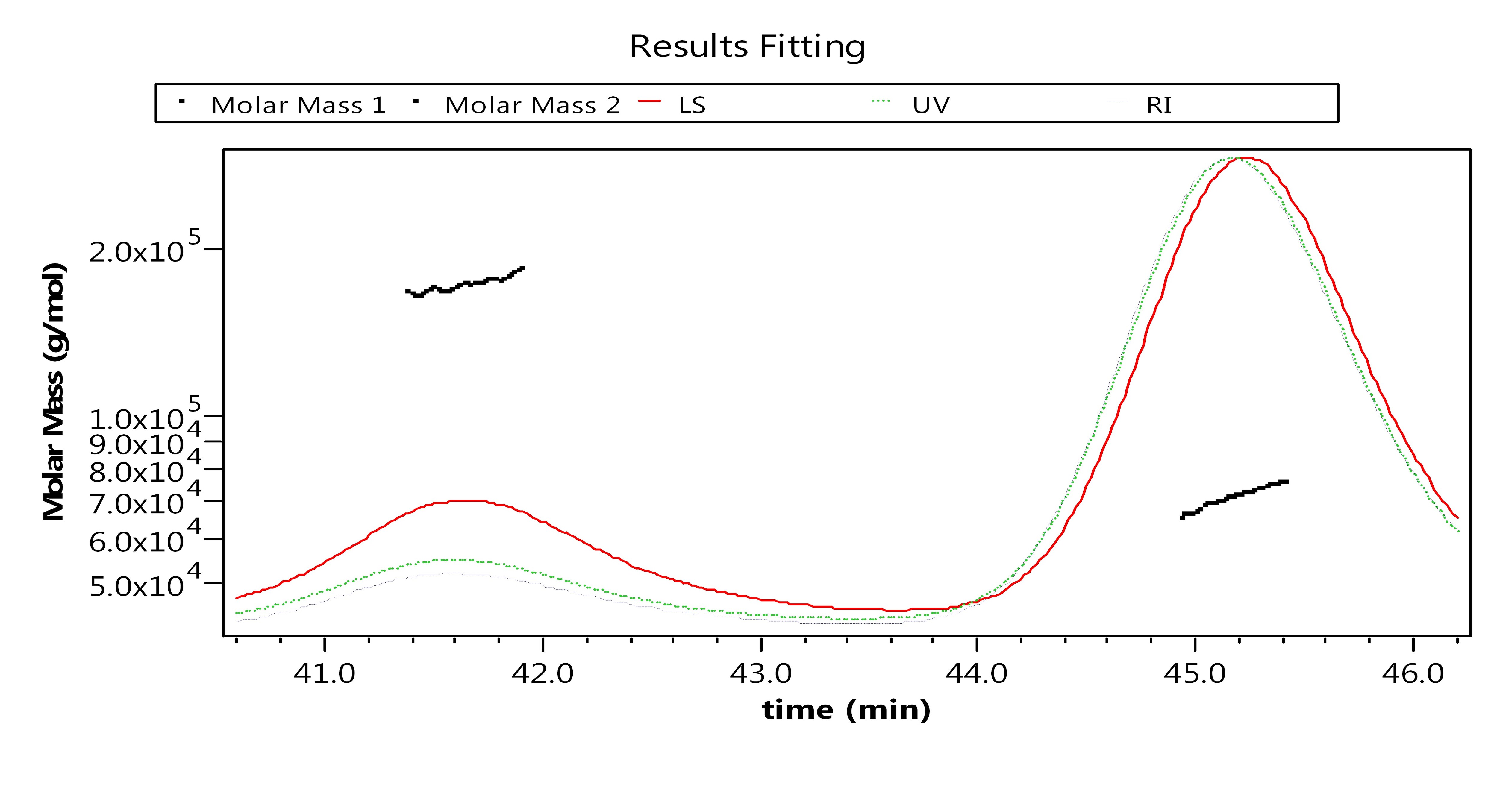
Showing
1
-
1 的
1 review
Showing All
Filter By:
-
Application: Binding assay/Protein-protein interactionVerified Customer | Posted 10/24/2017

There are no reviews that match your criteria.
Loading...