
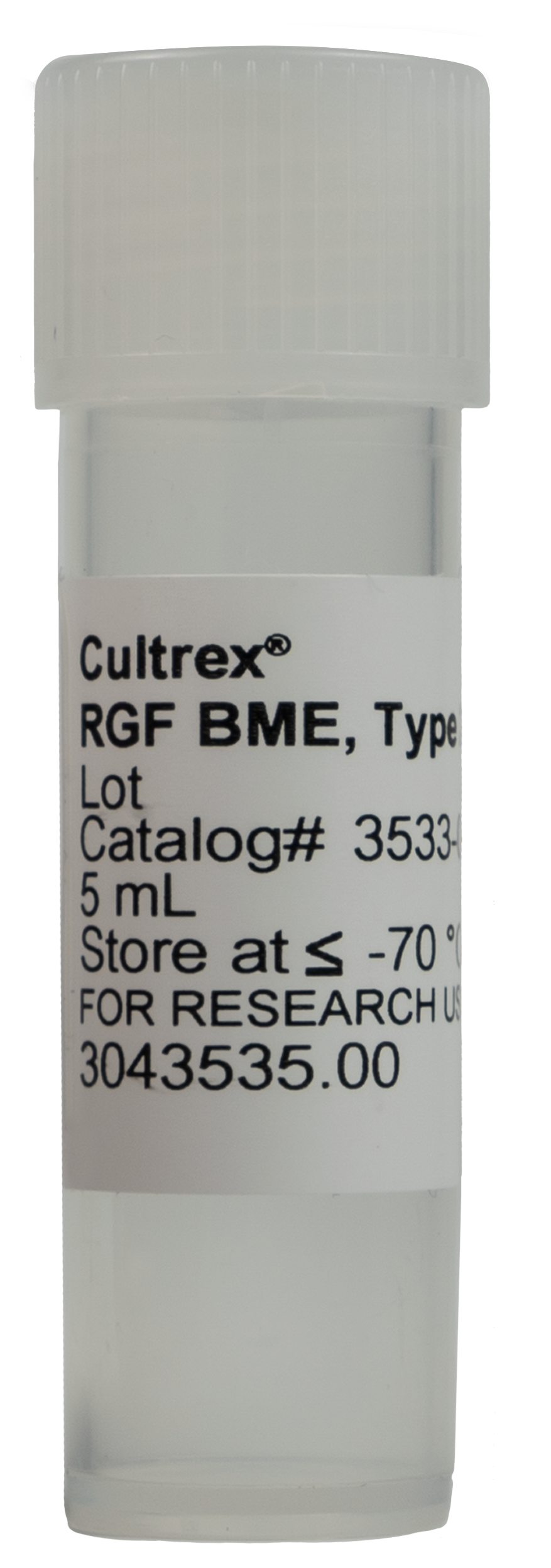
Basement membrane extract (BME) is a type of extracellular matrix (ECM) derived from Engelbreth-Holm-Swarm mouse sarcomas. BME is commonly used in cell culture and tissue engineering to provide a 2-D or 3-D scaffold for cells, allowing them to grow, differentiate, and interact in an environment that closely mimics the native ECM. This makes BME invaluable for modeling the behavior of cells in vivo. All Cultrex BME formulations are rigorously tested to ensure performance, quality, and lot-to-lot consistency.
Best Seller
Cultrex Reduced Growth Factor Basement Membrane Extract, PathClear
R&D Systems | Catalog # 3433-010-01
Reduced Growth Factor Basement Membrane Extract
Try it on your cultures! Request a Sample of Cultrex RGF BME

Loading...
Key Product Details
Features
Cultrex Reduced Growth Factor Basement Membrane Extract (RGF BME) is an extracellular matrix hydrogel that has been used extensively in general cell culture applications to study cell attachment, proliferation, and invasion. It is ideal for cultures that require limited reduced growth factor conditions.
Cultrex Reduced Growth Factor Basement Membrane Extract (Catalog # 3433-010-01) is equivalent to Geltrex™ LDEV-Free Reduced Growth Factor Basement Membrane Matrix (Catalog # A1413201 and A1413202).
Cultrex Reduced Growth Factor Basement Membrane Extract (Catalog # 3433-010-01) is equivalent to Geltrex™ LDEV-Free Reduced Growth Factor Basement Membrane Matrix (Catalog # A1413201 and A1413202).
Key Benefits
- Ideal for general cell culture application
- Reduced growth factor formulation provides a more defined culture system
- Polymerizes at 37°C to form a reconstituted basement membrane
- Quality controlled for peformance consistency
Species
Mouse
Product Summary for Cultrex Reduced Growth Factor Basement Membrane Extract, PathClear
Why Use Cultrex RGF BME?
Cultrex Reduced Growth Factor Basement Membrane Extract (RGF BME) is a soluble form of basement membrane purified from Engelbreth-Holm-Swarm (EHS) tumor. It is processed to reduce matrix-associated growth factors to provide a matrix that can be used to create a more defined model system. This extract provides a natural extracellular matrix hydrogel that polymerizes at 37°C to form a reconstituted basement membrane. Cultrex RGF BME can be used in multiple applications, including maintaining growth or promoting differentiation of primary endothelial, epithelial, smooth muscle, stem cells, and organoid/3-D cell cultures. It can also be utilized in cell attachment, neurite outgrowth, angiogenesis, in vitro cell invasion, and in vivo tumorigenicity assays.
Basement membranes are continuous sheets of specialized extracellular matrix that form an interface between endothelial, epithelial, muscle, or neuronal cells and their adjacent stroma and that play an essential role in tissue organization by influencing cell adhesion, migration, proliferation, and differentiation. The major components of BME include laminin, collagen IV, entactin, and heparin sulfate proteoglycans.
Basement membranes are continuous sheets of specialized extracellular matrix that form an interface between endothelial, epithelial, muscle, or neuronal cells and their adjacent stroma and that play an essential role in tissue organization by influencing cell adhesion, migration, proliferation, and differentiation. The major components of BME include laminin, collagen IV, entactin, and heparin sulfate proteoglycans.
Loading...
Product Specifications
Source
Murine Engelbreth-Holm-Swarm (EHS) tumor
Protein Concentration
8-12 mg/mL as determined by Lowry assay
Endotoxin Level
≤ 8 EU/mL by Limulus Amoebocyte Lysate (LAL) assay
Sterility Testing
No bacterial or fungal growth detected following 14 days in culture
Viral Testing
Tested negative by PCR test for a total of 31 organisms and viruses, including: mycoplasma, 17 bacterial and virus strains typically included in mouse antibody production (MAP) testing, and 13 additional murine infectious agents including LDEV.
Scientific Data Images for Cultrex Reduced Growth Factor Basement Membrane Extract, PathClear
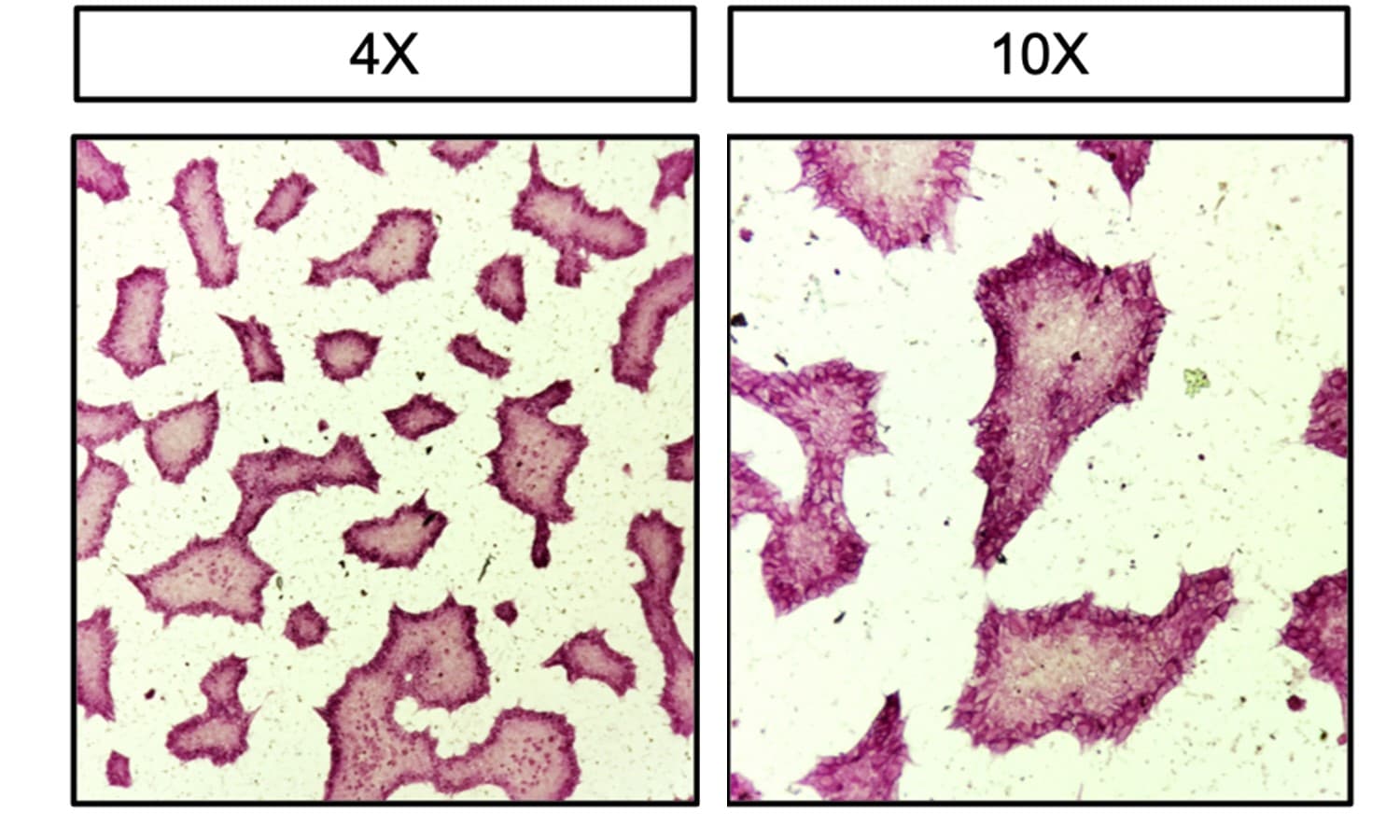
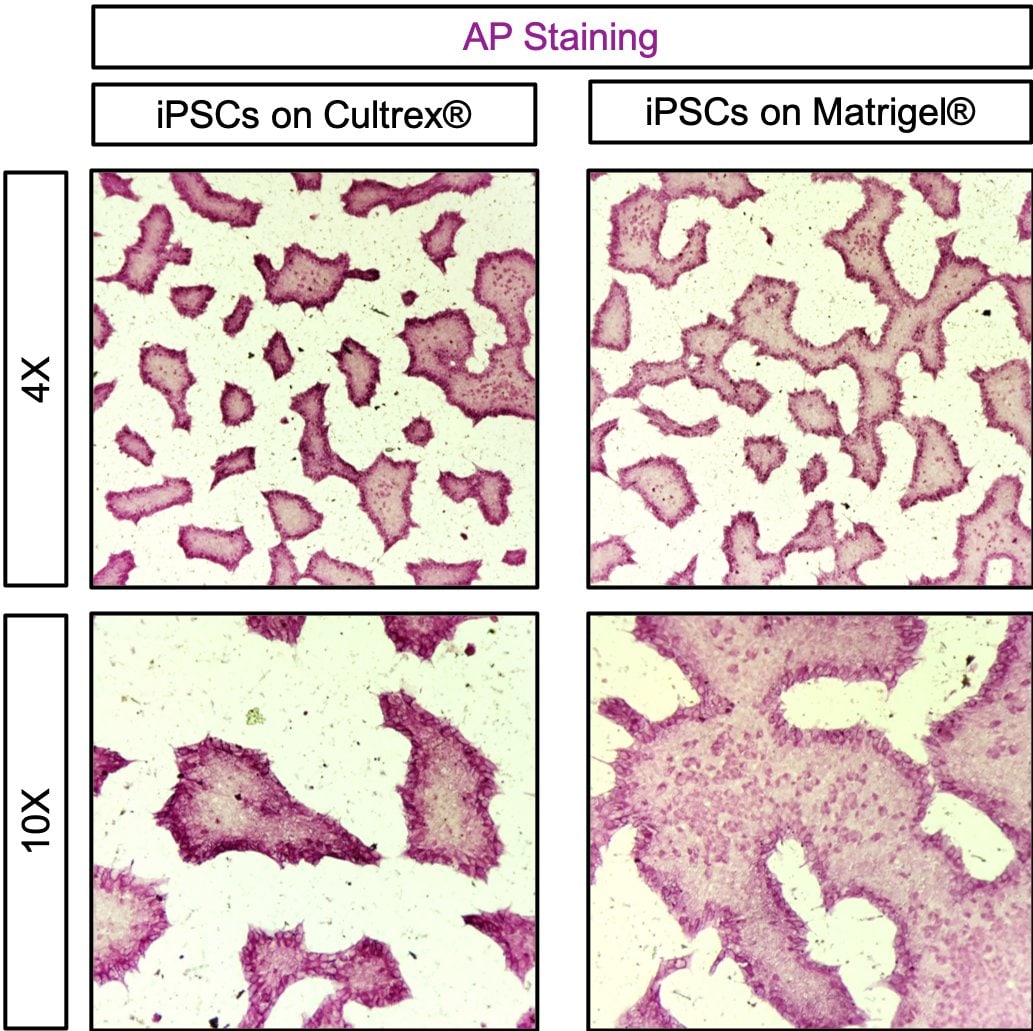
Assessment of Pluripotency on Cultrex RGF BME.
Alkaline Phosphatase (AP) staining was used to characterize the pluripotency of human induced pluripotent stem (iPS) cells cultured on Cultrex Reduced Growth Factor BME (Catalog # 3433-010-01). Images are shown in 4X and 10X magnification. Data courtesy of GABAeron.Formulation, Preparation, and Storage
Shipping
The product is shipped with dry ice or equivalent. Upon receipt, store it immediately at the temperature recommended on the product label.
Storage
Store the unopened product at -70 °C. Use a manual defrost freezer and avoid repeated freeze-thaw cycles.
Stability
Product is stable for at least two years from date of manufacture when stored at ≤ -70 °C. See lot specific Certificate of Analysis for expiration date.
Background: Basement Membrane Extracts
Additional Basement Membrane Extracts Products
Product Documents for Cultrex Reduced Growth Factor Basement Membrane Extract, PathClear
Certificate of Analysis
To download a Certificate of Analysis, please enter a lot or batch number in the search box below.
Note: Certificate of Analysis not available for kit components.
Citations for Cultrex Reduced Growth Factor Basement Membrane Extract, PathClear
 Powered by Bioz
Customer Reviews for Cultrex Reduced Growth Factor Basement Membrane Extract, PathClear (8)
4.8 out of 5
8 Customer Ratings
Have you used Cultrex Reduced Growth Factor Basement Membrane Extract, PathClear?
Submit a review and receive an Amazon gift card!
$25/€18/£15/$25CAN/¥2500 Yen for a review with an image
$10/€7/£6/$10CAN/¥1110 Yen for a review without an image
Submit a review
Customer Images
Showing
1
-
5 of
8 reviews
Showing All
Filter By:
-
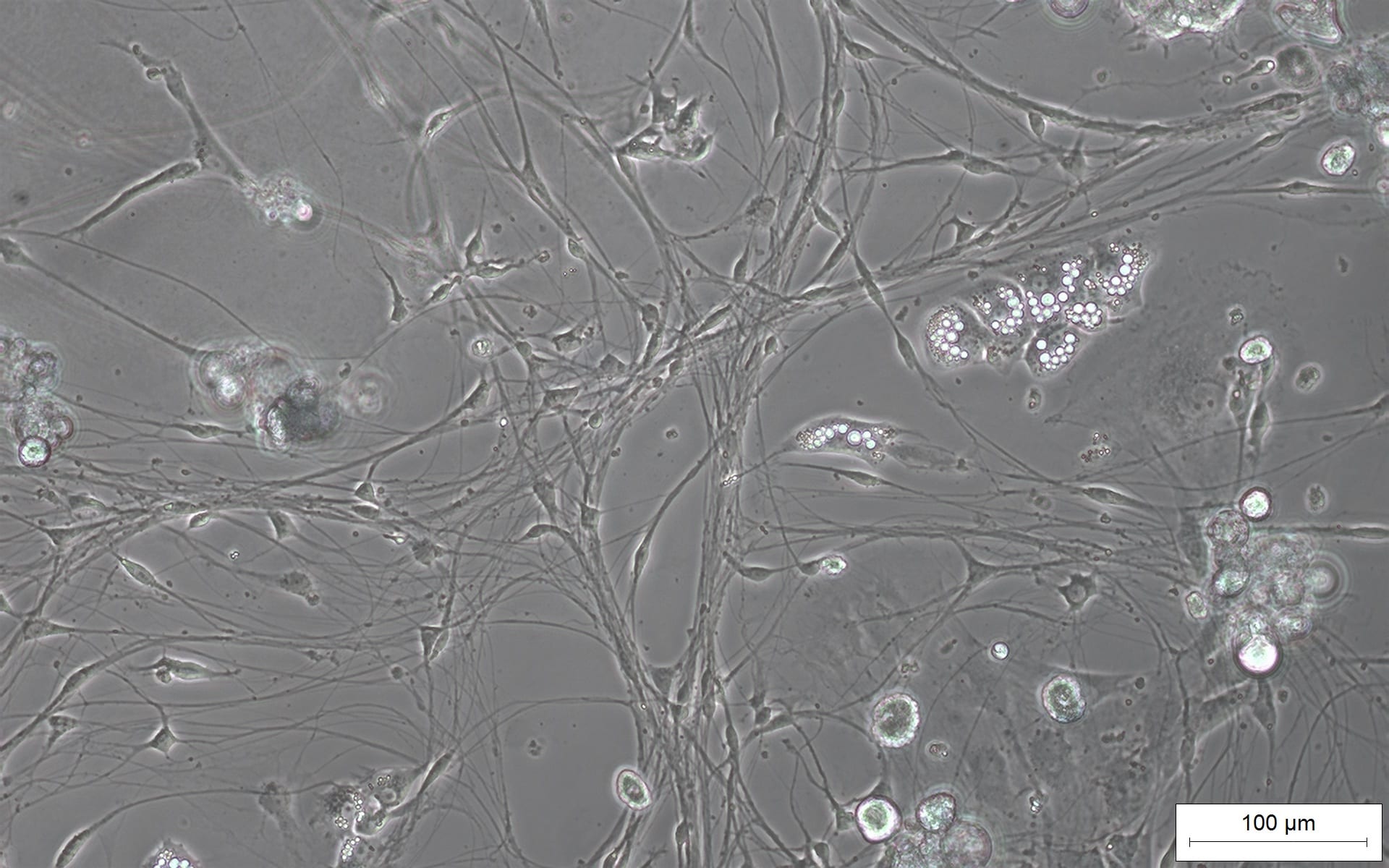
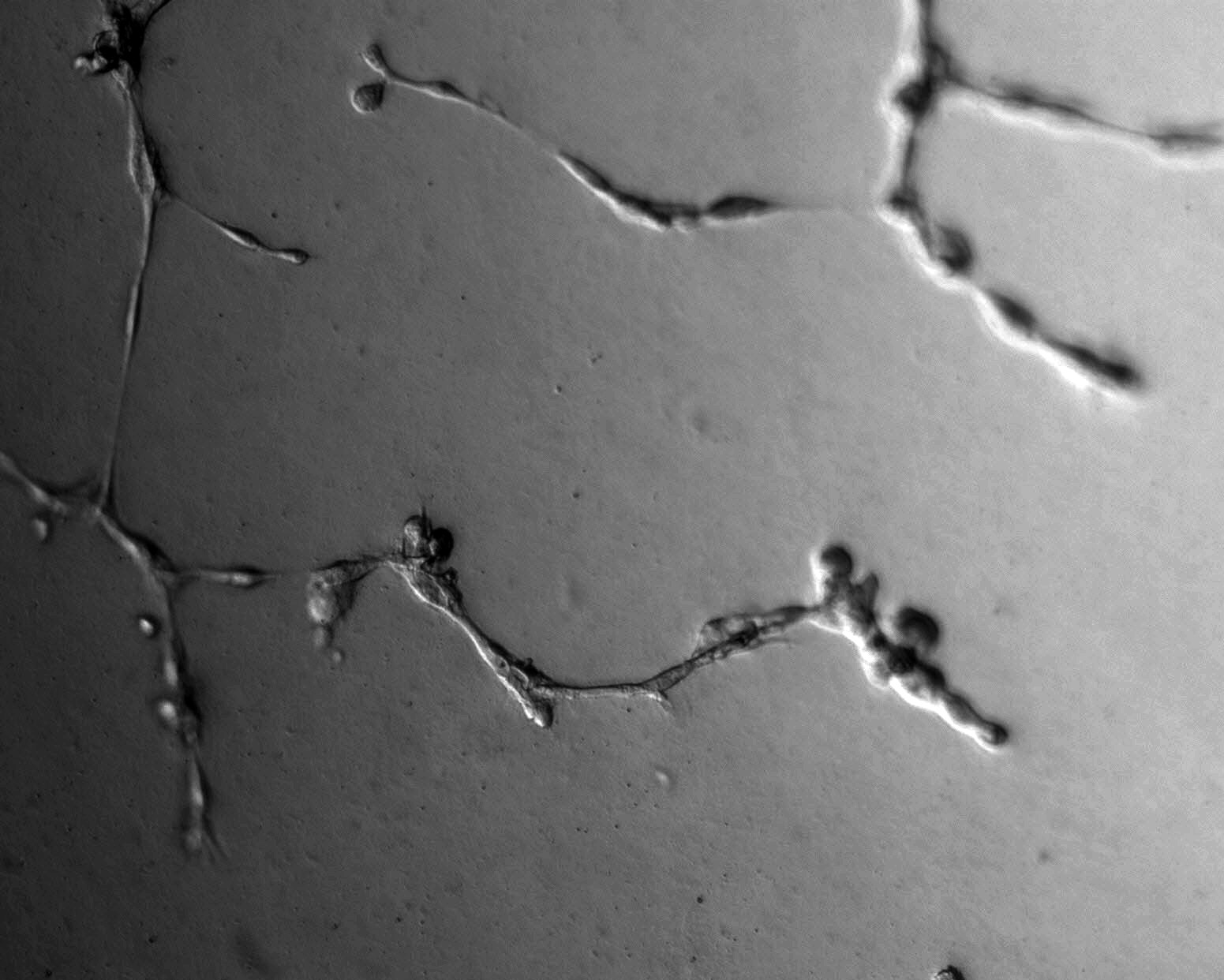
Verified Customer | Posted 03/23/2023The hydrogel formed a great three-dimensional matrix allowing Schwann cell growth and DRG neuron neurite outgrowth.

-
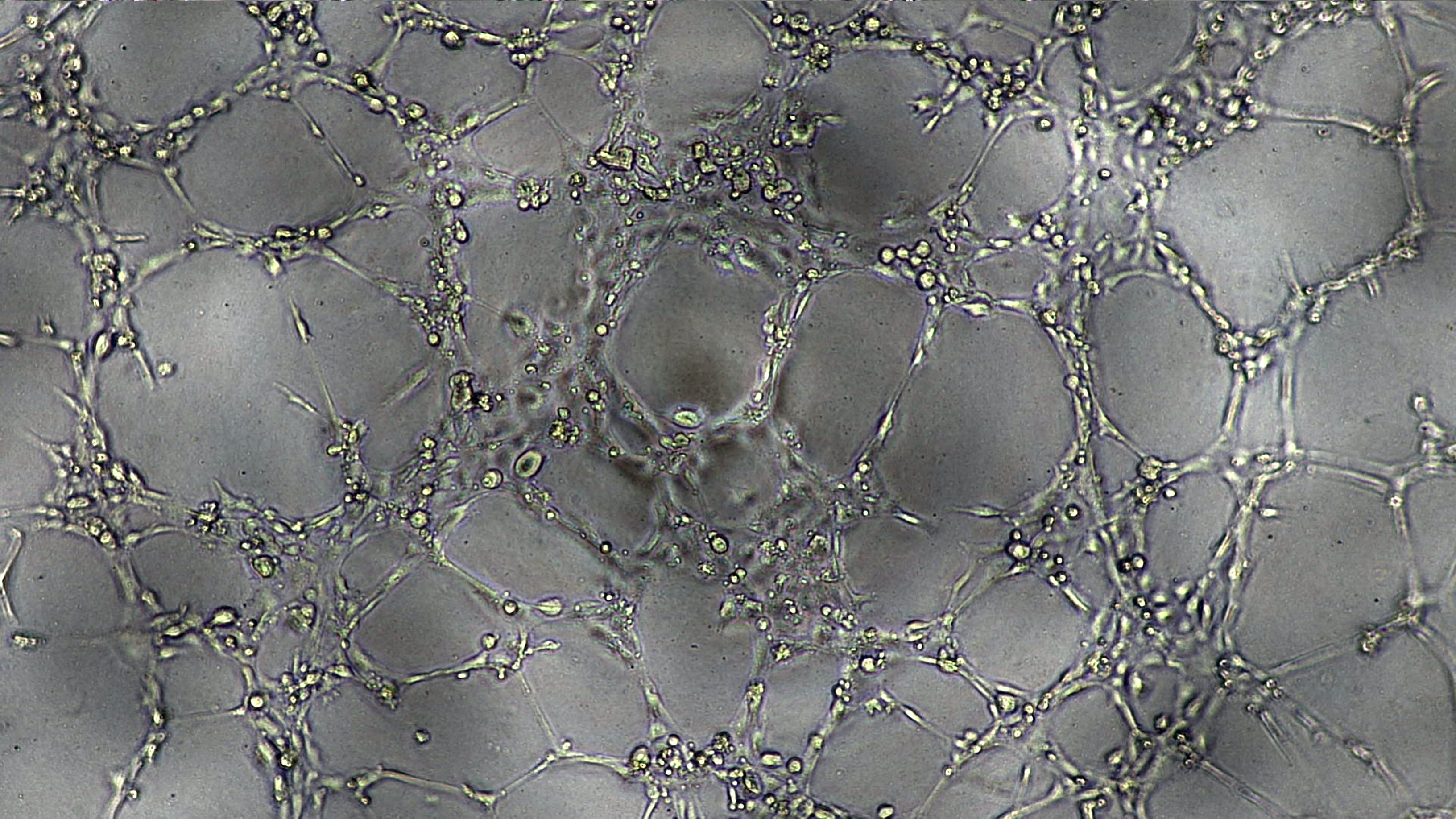
Verified Customer | Posted 02/21/2022Tube formation of Human Coronary Artery Endothelial cells imaged 6 hours after seeding.
-
Verified Customer | Posted 12/02/2020
-
Verified Customer | Posted 03/09/2020
-
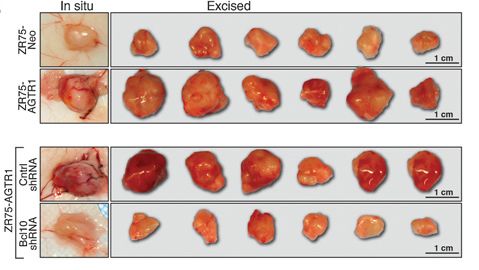
Application: In vivo studyVerified Customer | Posted 01/13/2020
-
Application: In vivo studyVerified Customer | Posted 05/27/2019
-
Application: In vivo studyVerified Customer | Posted 05/27/2019
-
Application: Stem cell culture and maintenanceVerified Customer | Posted 02/08/2019
There are no reviews that match your criteria.
FAQs for Cultrex Reduced Growth Factor Basement Membrane Extract, PathClear
Showing
1
-
1 of
1 FAQ
Showing All
-
Q: How does Cultrex® Basement Membrane Extract (BME) promote cell differentiation?
A: All epithelial and endothelial cells are in contact with a basement membrane matrix on at least one of their surfaces. By providing them with their natural matrix in vitro as a substrate for the cells that provides biological cues, the cells can assume a more physiological morphology (i.e. correct shape) and begin expression of cell-lineage specific proteins. Two-dimensional plastic surfaces, in combination with serum-containing media, cause cells to flatten, proliferate and de-differentiate.
Loading...