
Tenascin C, also known as hexabrachion, cytotactin, neuronectin, GMEM, JI, myotendinous antigen, glioma-associated-extracellular matrix antigen, and GP 150-225, is a member of the Tenascin family of extracellular matrix proteins. It is secreted as a disulfide-linked homohexamer whose subunits can vary in size from approximately 200 kDa to over 300 kDa due to differences in glycosylation (1). Rotary-shadowed electron micrographs of the purified molecule show six strands joined to one another at one end in a globular domain with each arm terminating in a knob-like structure (2-3). The human Tenascin C monomer is synthesized as a precursor with a 22 amino acid (aa) signal sequence and a 2179 aa mature chain (SwissProt # P24821). The mature chain consists of a coiled-coil region (aa 118-145), followed by 15 EGF-like domains, 15 fibronectin type-III domains, and a fibrinogen C-terminal domain. In addition, there are 23 potential sites of N-linked glycosylation. Alternative splicing within the fibronectin type-III repeats produces six isoforms for human Tenascin C. Mature human Tenascin C (isoform 1) shares 84% aa sequence identity with mature mouse Tenascin C. In the developing embryo, Tenascin C is expressed during neural, skeletal, and vascular morphogenesis (1, 2). In the adult, it virtually disappears with continued basal expression detectable only in tendon-associated tissues (1, 2). However, greatup-regulation in expression occurs in tissues undergoing remodeling processes seen during wound repair and neovascularization or in pathological states such as inflammation or tumorigenesis (1, 4-5). Biologically, Tenascin C functions as an adhesion-modulatory extracellular matrix protein (1, 4-8). Specifically, it antagonizes the adhesive effects of fibronectin, and impacts the ability of fibroblasts to deposit and contract the matrix by affecting the morphology and signaling pathways of adherent cells (5-7). Tenascin C acts by blocking syndecan-4 binding at the edges of the wound and by suppressing fibronectin-mediated activation of RhoA and focal adhesion kinase (FAK) (4-8). Tenascin C thus promotes epidermal cell migration and proliferation during wound repair.
Best Seller
Recombinant Human Tenascin C Protein, CF
R&D Systems | Catalog # 3358-TC

Loading...
Key Product Details
- R&D Systems NS0-derived Recombinant Human Tenascin C Protein (3358-TC)
- Quality control testing to verify active proteins with lot specific assays by in-house scientists
- All R&D Systems proteins are covered with a 100% guarantee
Source
NS0
Accession Number
Applications
Bioactivity
Loading...
Product Specifications
Source
Mouse myeloma cell line, NS0-derived human Tenascin C protein
Gly23-Pro625, with a C-terminal 6-His tag
Gly23-Pro625, with a C-terminal 6-His tag
Purity
>95%, by SDS-PAGE visualized with Silver Staining and quantitative densitometry by Coomassie® Blue Staining.
Endotoxin Level
<0.10 EU per 1 μg of the protein by the LAL method.
N-terminal Sequence Analysis
Gly23
Predicted Molecular Mass
65.3 kDa
SDS-PAGE
97 kDa, reducing conditions
Activity
Measured by the ability of the immobilized protein to block Fibronectin-mediated adhesion of NIH‑3T3 mouse embryonic fibroblast cells.
rhTenascin-C immobilized at 15 μg/mL, in the presence of 0.1 μg/mL human Fibronectin, will block approximately 70%-90% NIH3/T3 cell adhesion (5 x 10⁴ cells/well, 100 μL/well).
rhTenascin-C immobilized at 15 μg/mL, in the presence of 0.1 μg/mL human Fibronectin, will block approximately 70%-90% NIH3/T3 cell adhesion (5 x 10⁴ cells/well, 100 μL/well).
Reviewed Applications
Read 1 review rated 4 using 3358-TC in the following applications:
Formulation, Preparation, and Storage
3358-TC
| Formulation | Lyophilized from a 0.2 μm filtered solution in PBS. |
| Reconstitution | Reconstitute at 500 μg/mL in sterile PBS.
Loading...
|
| Shipping | The product is shipped at ambient temperature. Upon receipt, store it immediately at the temperature recommended below. |
| Stability & Storage | Use a manual defrost freezer and avoid repeated freeze-thaw cycles.
|
Calculators
Background: Tenascin C
References
- Hsia, H.C. and J.E. Schwarzbauer (2005) J. Biol. Chem. 280:26641.
- Nies, D.E. et al. (1991) J. Biol. Chem. 266:2818.
- Erickson, H.P and J.L. Iglesias (1984) Nature 311:267.
- Orend, G. et al. (2003) Oncogene 22:3917.
- Wenk, M.B. et al. (2000) J. Cell Biol. 150:913.
- Midwood, K.S. et al. (2004) Mol. Biol. Cell 15:5670.
- Midwood, K.S. and J. E. Schwarzbauer (2002) Mol. Biol. Cell 13:3601.
- Hsia, H.C. and J.E. Schwarzbauer (2006) J. Surg. Res. 136:92.
Alternate Names
Cytotactin, HXB, Tenascin J1, TNC
Gene Symbol
TNC
UniProt
Additional Tenascin C Products
Product Documents for Recombinant Human Tenascin C Protein, CF
Certificate of Analysis
To download a Certificate of Analysis, please enter a lot or batch number in the search box below.
Note: Certificate of Analysis not available for kit components.
Product Specific Notices for Recombinant Human Tenascin C Protein, CF
For research use only
Related Research Areas
Citations for Recombinant Human Tenascin C Protein, CF
 Powered by Bioz
Customer Reviews for Recombinant Human Tenascin C Protein, CF (1)
4 out of 5
1 Customer Rating
Have you used Recombinant Human Tenascin C Protein, CF?
Submit a review and receive an Amazon gift card!
$25/€18/£15/$25CAN/¥2500 for a review with an image
$10/€7/£6/$10CAN/¥1110 for a review without an image
Submit a review
Customer Images
Showing
1
-
1 of
1 review
Showing All
Filter By:
-
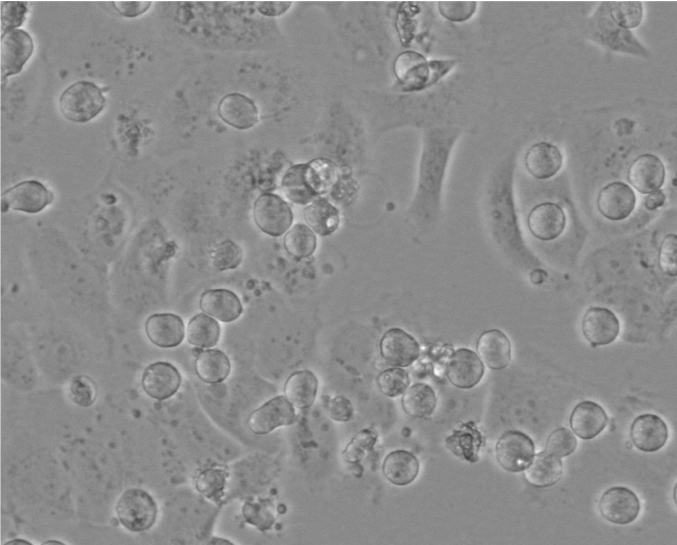
Application: Growing CellsVerified Customer | Posted 03/12/2019

There are no reviews that match your criteria.
Loading...