
Small Molecules & Peptides
Small molecules and peptides are essential tools in biomedical research, drug discovery, and therapeutic development.
These compounds—typically under 1 kDa for small molecules and up to 50 amino acids for peptides—play critical roles in applications such as 2D and 3D cell culture, fluorescent imaging, and assay developments.
Home to the full Tocris portfolio, R&D Systems offers researchers a comprehensive catalog of bioactive small molecules and research peptides that cover research areas such as Stem Cell research, Cell Therapy, Neuroscience, Cancer, Endocrinology and Immunology and include receptor agonists and antagonists, enzyme inhibitors or activators, PROTACs and molecular glues, fluorescent probes and dyes and GMP grade Small Molecules.
This extensive catalog, curated by our expert scientists for biological relevance, gives you access to the latest products to support current and emerging research trends. The collection includes over 3500 small molecules and research peptides that ideally complement R&D Systems proteins, ELISAs, and antibodies, can scale up with research needs, and provide scientists with a complete reagent package for their workflows and experiments.





Stem Cells & Organoids
Stem cells and organoids play an increasingly important role in biomedical applications. In addition to basic developmental biology research, stem cell culture and organoids are used to generate more biologically relevant human disease models, study drug candidates, investigate toxicology, and devise regenerative cell-replacement strategies.
The ability to steadily culture, differentiate, and reprogram cells into different cell lineages lies at the heart of stem cell applications. Small molecule and peptide reagents represent some essential ingredients needed to make specialized media growth conditions in vitro.
Stem Cell Reagents
Tocris portfolio offers a collection of small molecule and peptide reagents for stem cell proliferation, differentiation, reprogramming, signaling, and gene editing.
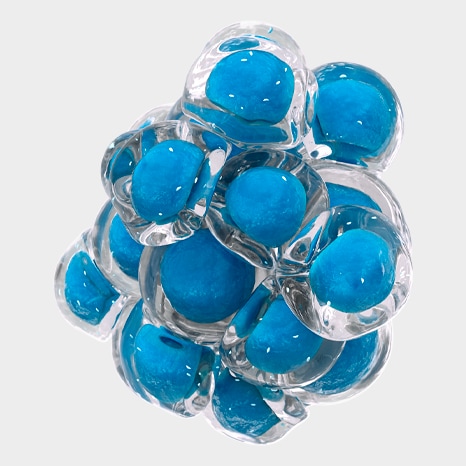
CEPT Cocktail
The combination of Chroman 1, Emricasan, Polyamines, and Trans-ISRIB for promoting the viability and fitness of self-renewing pluripotent stem cells and the differentiated progeny in key applications of stem cell research.
Organoid Reagents
Organoid and 3D cell culture is becoming a key tool for researchers looking to study human cell responses in more complex systems that provide unique advantages over both 2D cell systems and animal models.
Tocris website has accumulated a leading small molecule reagent catalog for organoid creation, maintenance, and analysis. This portfolio includes products for organoid formation, 3D growth matrices, differentiation media, lineage-specific inhibitors, reprogramming, transduction enhancement, and post-cryogenesis survival.
Viral Transduction Enhancers
Transduction enhancers are a class of small molecules that improve the stable introduction of foreign genetic material, thereby increasing target gene expression. In turn, enhancers can help streamline cell and gene therapy research.
Tocris offers a wide range of small molecule enhancers for improving retrovirus, lentivirus, and adeno-associated virus transduction, including those specific for introducing TCR and CAR genes into T-cells and NK-cells.
GMP and Ancillary Material Small Molecules
Beyond our research offerings, Tocris supplies GMP and ancillary material grade compounds for cell and gene therapy manufacturing. Both follow animal-free processes (TSE/BSE Certification) in controlled manufacturing zones and ISO-7 cleanrooms.
Guided by a risk-based approach to manufacturing, our GMP products strictly follow ICH Q7 guidelines and rigorous ISO 9001-adherent QC, including endotoxin and bioburden testing.
Fluorescent Dyes and Probes
Fluorescent and bioluminescent reagents offer highly sensitive and selective tools for visualizing intracellular structures, and biological events—from single-molecule tracking in vitro to complex in vivo imaging applications. Tocris provides a comprehensive portfolio of fluorescent dyes and probes, as well as related reagents, designed to support the imaging of sub-cellular structures in both live and fixed cells, as well as organoids.
Fluorescent Dyes
Fluorescent dyes, or fluorophores, enable researchers to identify, probe, and visualize specific biological molecules with advanced imaging applications. Our range of fluorescent dyes includes the Janelia Fluor® Dyes, which are bright, photostable fluorophores for a broad range of applications, including super-resolution microscopy like PALM and SMLM. Also included in our portfolio are novel fluorophores in the near-infrared range, for deep tissue and in vivo imaging studies. Together with a comprehensive palette of gold-standard dyes, we have products for all your imaging requirements.
Fluorescent Probes and Stains
Fluorescent probes and stains allow for the visualization and analysis of cellular and sub-cellular structures by selectively targeting specific biomolecules, organelles, or cells. In addition to structural imaging, they can provide functional readouts—such as distinguishing live from dead cells—or monitor environmental conditions like pH or polarity. With high sensitivity and selectivity, these tools enable the study of complex biomolecular assemblies to gain insights into cell structure and function. Tocris offers a comprehensive range of fluorescent probes with high specificity, including next-generation organelle-specific stains, cell viability markers, and bacterial imaging probes that support cutting-edge research in bacterial biology and antibiotic development.
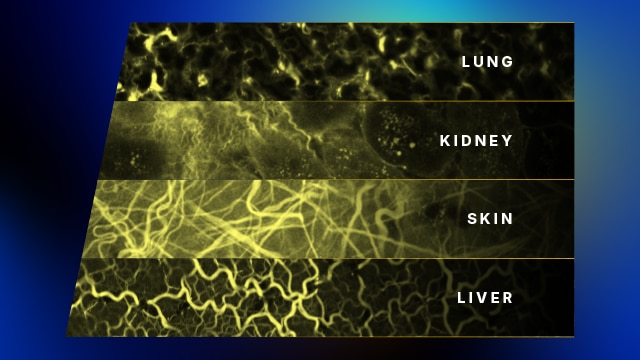
Wash-free Imaging of Extracellular Matrix in Live Tissues
With Rhobo6 ECM Dye, a cell-impermeable glycan-binding fluorophore
Imaging Reagents
Tocris also provides imaging reagents and their associated technologies to support innovation in biology, drug design, discovery, and drug development. Among these are the aptamer-based RNA imaging reagents, but also our Tyramide Signal Amplification (TSA) reagents and kits, which offer a powerful method for enhancing signal strength and detection sensitivity in low-abundance targets across immunocytochemistry (ICC), immunohistochemistry (IHC), and in situ hybridization (ISH) applications.
Our portfolio also includes fluorogenic dye ligands for self-labeling tags—genetically encoded protein tags designed to create fusion proteins with a protein of interest (POI). These tags allow for selective labeling with ligands such as fluorescent dyes, enabling live cell imaging of the POI by fluorescence microscopy.
In addition, we offer a range of bioluminescent substrates, ideal for non-invasive monitoring of biological processes through bioluminescence imaging in both in vivo and in vitro settings.
| Antifade Reagents | Aptamer-based RNA imaging | Tyramide Signal Amplification (TSA) Reagents & Kits |
| Self-labeling Tags | Bioluminescent Substrates |
Imaging Applications
Tocris offers an extensive range of fluorescent and bioluminescent dyes, probes, indicators, buffers, and more to support all your fluorescent imaging needs. We have grouped all the main dyes, counterstains, and buffers according to the applications below.
TR-FRET and FP Assay Reagents
TR-FRET (Time-Resolved Fluorescence Resonance Energy Transfer) and FP (Fluorescence Polarization) assays are widely used in biology and open access to new drug discovery, study protein-protein interactions, enzyme kinetics, receptor-ligand binding and measuring small molecules binding affinity. Tocris offers a range of high-affinity fluorescent probes suitable for the development of TR-FRET and FP assays.
Targeted Protein Degradation
Targeted Protein Degradation (TPD) refers to the use of heterobifunctional small molecule "Degraders", such as PROTAC® Degraders, to achieve knockdown of target proteins within cells. Degraders and “molecular glues” harness the endogenous ubiquitin-proteasome system to knockdown a protein of interest.
Discover our full range of products and services for Targeted Protein Degradation research and development.
PROTAC® is a registered trademark of Arvinas Operations, Inc., and is used under license.
For more information about Targeted Protein Degradation, read our Targeted Protein Degradation and Induced Proximity Product Guide.
Bulk Requests - Discount for large orders
Batch to batch consistency is key for reproducible results and to generate data you can trust. For the past 50 years, R&D Systems scientists have focused on developing and producing high quality products that meet the needs of the scientific community. Don't compromise on reagent quality when purchasing large quantities to scale up your experiments.
R&D Systems is now home to an expanded catalog of Tocris receptor agonists and antagonists, enzyme inhibitors PROTACs and molecular glues, fluorescent dyes and probes, and GMP grade small molecules supporting applications such as cell culture, pharmacology, imaging, assay development, and targeted protein degradation. We are able to offer competitive discounts on Tocris bioactive small molecules, typically applied at five times the standard unit size and progressively rise as the quantity increases.
If you already know the reagent you need, request a quote by completing the form linked below. If not, explore the full Tocris portfolio, find your product and click the blue "Bulk Orders" button for your quote.
Featured Content
Tocris Stem Cell Reagents in Solution
Ready-to-use 10 mM sterile solutions: CHIR 99021, LDN 193189, and ROCK inhibitor Y-27632 now available.
Buy Reagents in Bulk & SAVE
Get the reagents you need with competitive discounts on bulk orders of single or multiple items.
Organoid Handbook
This handbook includes protocols, reagents, and recommendations for culturing, and imaging different types of organoids.
Small Molecules for Stem Cell Research Guide

This guide highlights the use of small molecules in stem cell research and cell therapy and lists relevant products.
Fluorescent Dyes and Probes Product Guide

For a detailed overview of Fluorescent Dyes and Probes, read our product guide.
Targeted Protein Degradation and Induced Proximity Product Guide

This brochure includes tools and services to support your Targeted Protein Degradation and Induced Proximity research.