
The Organoid Culture Handbook
Product Guides and ListingsProduct Guides and Listings Summary
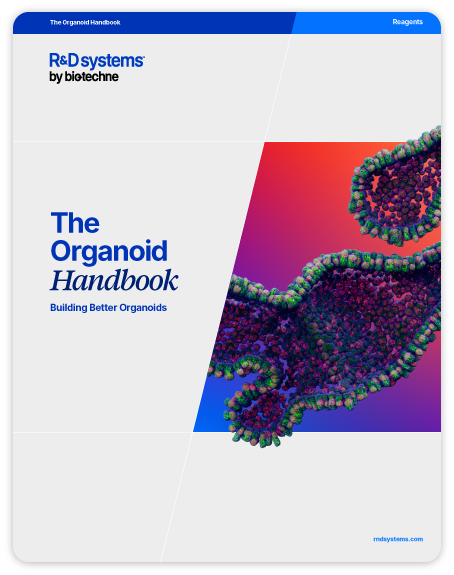
An organoid is a miniaturized version of an organ produced in vitro that shows realistic micro-anatomy, is capable of self-renewal and self-organization, and exhibits similar functionality as the tissue of origin.
Organoids can be generated from adult tissue-derived stem cells (ASCs) or from embryonic (ESCs) and induced pluripotent stem cells (iPSCs). Organoid culture offers advancements over classical 3D systems, such as spheroids, because they can develop into complex multi-cellular tissues with self-organized compartmentalized regions, including the potential for vasculature and immune cells.
Researchers have devised methods to generate physiologically relevant organoid models for many organs, including the intestines, lung, brain, liver, lung, pancreas, and heart. While techniques and protocols for generating, processing, and imaging organoids are still evolving, they are being accepted as the standard models for interrogating basic organ biology, disease modeling, and tissue regeneration.
The Organoid Handbook provides a tissue-specific overview of:
- Landmark publications highlighting organoid technology
- Key reagents for organoid and 3D cell culture
- Protocols for organoid models
- Troubleshooting organoid cultures
- And more!
Related Information
Serum-Free and Animal-Free Cell Culture
New ExCellerate™ iPSC Expansion Medium
Organoid and 3-D Cell Culture Resources and Reagents
Induced Pluripotent Stem Cell (iPSC) Reagents
Cultrex Basement Membrane Extracts and Extracellular Matrices
Request Literature
To access this literature content please fill out the form below.