
HSD17B13 Antibody - Azide and BSA Free
Novus Biologicals | Catalog # NBP3-04837

![Western Blot: HSD17B13 AntibodyAzide and BSA Free [NBP3-04837]](https://resources.rndsystems.com/images/products/HSD17B13-Antibody-Western-Blot-NBP3-04837-img0004.jpg "Western Blot: HSD17B13 AntibodyAzide and BSA Free [NBP3-04837]")
Scientific images may be resized, cropped, or adjusted for brightness or contrast for presentation purposes. These updates are limited to presentation and do not affect the underlying scientific interpretation of the data. Where available, additional source data may be provided upon request.
Key Product Details
Species Reactivity
Applications
Label
Antibody Source
Format
Product Specifications
Immunogen
Clonality
Host
Isotype
Theoretical MW
Disclaimer note: The observed molecular weight of the protein may vary from the listed predicted molecular weight due to post translational modifications, post translation cleavages, relative charges, and other experimental factors.
Scientific Data Images for HSD17B13 Antibody - Azide and BSA Free
Western Blot: HSD17B13 AntibodyAzide and BSA Free [NBP3-04837]
Western Blot: HSD17B13 Antibody [NBP3-04837] - Analysis of extracts of various cell lines, using HSD17B13 antibody at 1:1000 dilution. Secondary antibody: HRP Goat Anti-Rabbit IgG (H+L) at 1:10000 dilution.Lysates/proteins: 25ug per lane. Blocking buffer: 3% nonfat dry milk in TBST.Detection: ECL Basic Kit. Exposure time: 180s.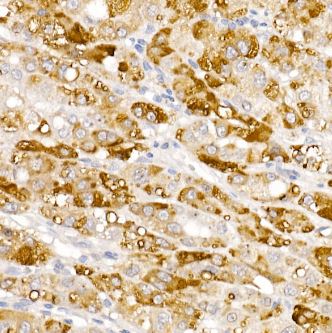
Immunohistochemistry-Paraffin: HSD17B13 Antibody [NBP3-04837] -
Immunohistochemistry-Paraffin: HSD17B13 Antibody [NBP3-04837] -Human liver cancer using HSD17B13 Rabbit pAb at dilution of 1:100 (40x lens). High pressure antigen retrieval performed with 0.01M Citrate Buffer (pH 6.0) prior to IHC staining.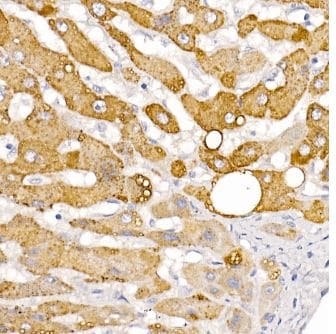
Immunohistochemistry-Paraffin: HSD17B13 Antibody [NBP3-04837] -
Immunohistochemistry-Paraffin: HSD17B13 Antibody [NBP3-04837] - Human liver using HSD17B13 Rabbit pAb at dilution of 1:100 (40x lens). High pressure antigen retrieval performed with 0.01M Citrate Buffer (pH 6.0) prior to IHC staining.
Immunocytochemistry/ Immunofluorescence: HSD17B13 Antibody - Azide and BSA Free [HSD17B13] -
Immunocytochemistry/ Immunofluorescence: HSD17B13 Antibody - Azide and BSA Free [HSD17B13] - Immunofluorescence analysis of paraffin-embedded human liver using HSD17B13 Rabbit pAb at dilution of 1:20 (40x lens). Secondary antibody: Cy3-conjugated Goat anti-Rabbit IgG (H+L) at 1:500 dilution. Blue: DAPI for nuclear staining.
Immunocytochemistry/ Immunofluorescence: HSD17B13 Antibody - Azide and BSA Free [HSD17B13] -
Immunocytochemistry/ Immunofluorescence: HSD17B13 Antibody - Azide and BSA Free [HSD17B13] - Immunofluorescence analysis of paraffin-embedded rat liver using HSD17B13 Rabbit pAb at dilution of 1:20 (40x lens). Secondary antibody: Cy3-conjugated Goat anti-Rabbit IgG (H+L) at 1:500 dilution. Blue: DAPI for nuclear staining.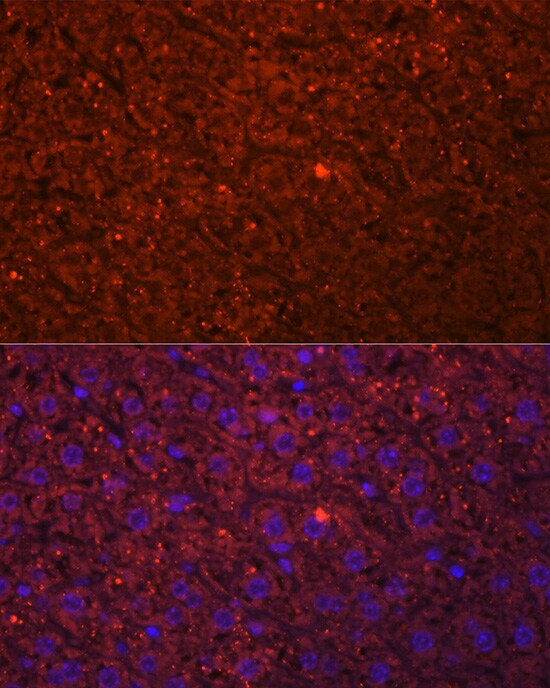
Immunocytochemistry/ Immunofluorescence: HSD17B13 Antibody - Azide and BSA Free [HSD17B13] -
Immunocytochemistry/ Immunofluorescence: HSD17B13 Antibody - Azide and BSA Free [HSD17B13] - Immunofluorescence analysis of paraffin-embedded mouse liver using HSD17B13 Rabbit pAb at dilution of 1:20 (40x lens). Secondary antibody: Cy3-conjugated Goat anti-Rabbit IgG (H+L) at 1:500 dilution. Blue: DAPI for nuclear staining.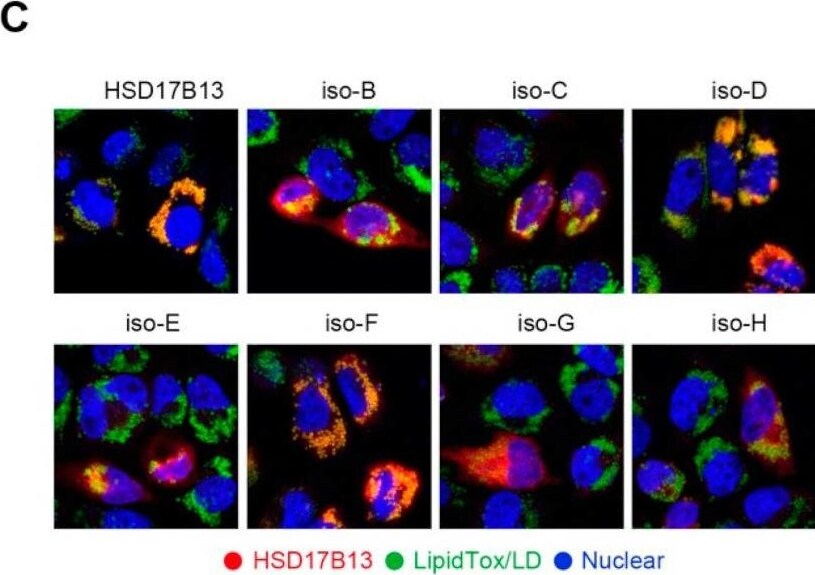
Immunocytochemistry/ Immunofluorescence: HSD17B13 Antibody - Azide and BSA Free [NBP3-04837] -
HSD17B13 promotes the accumulation of intracellular lipid droplets and causes hepatocyte injury. (A) mRNAs in palmitate-treated cells were measured by qRT-PCR. (B) Schematic of full-length or truncated transcripts of HSD17B13. (C) Representative confocal images of L02 cells transfected with His-tagged HSD17B13 transcripts (red) and LDs (green) after being induced by OA (400 μM) for 24 h. Nuclei were labeled with DAPI (blue). (D,E) Representative immunofluorescence staining images for LDs (red) (D) and relative intracellular Nile red positive areas were quantified (E) in L02 cells transfected with HSD17B13 transcripts after OA (400 μM) challenge for 24 h, the slides were counterstained with DAPI. (F) Schematic of the experimental design for investigating the effect of HSD17B13 on intracellular TGs, the contents of TGs were detected and the half-life of TGs was calculated. (G,H) Levels of ALT (G) and AST (H) in supernatants and cell lysates of Huh7 cells transfected with the plasmids of HSD17B13 for 24 h. (I) mRNA of proinflammatory markers in L02 cells transfected with plasmids of HSD17B13 for 24 h. Results are expressed as mean +/- SEM. OA, oleic acid; LDs, lipid droplets; TGs, triglycerides; PLIN2, perilipin 2; ALT, alanine transaminase; AST, aspartate transaminase; TGF-beta 1, transforming growth factor-beta 1; IL-6, interleukin 6; CXCL3, C-X-C motif chemokine ligand 3. Image collected and cropped by CiteAb from the following open publication (https://pubmed.ncbi.nlm.nih.gov/35628360), licensed under a CC-BY license. Not internally tested by Novus Biologicals.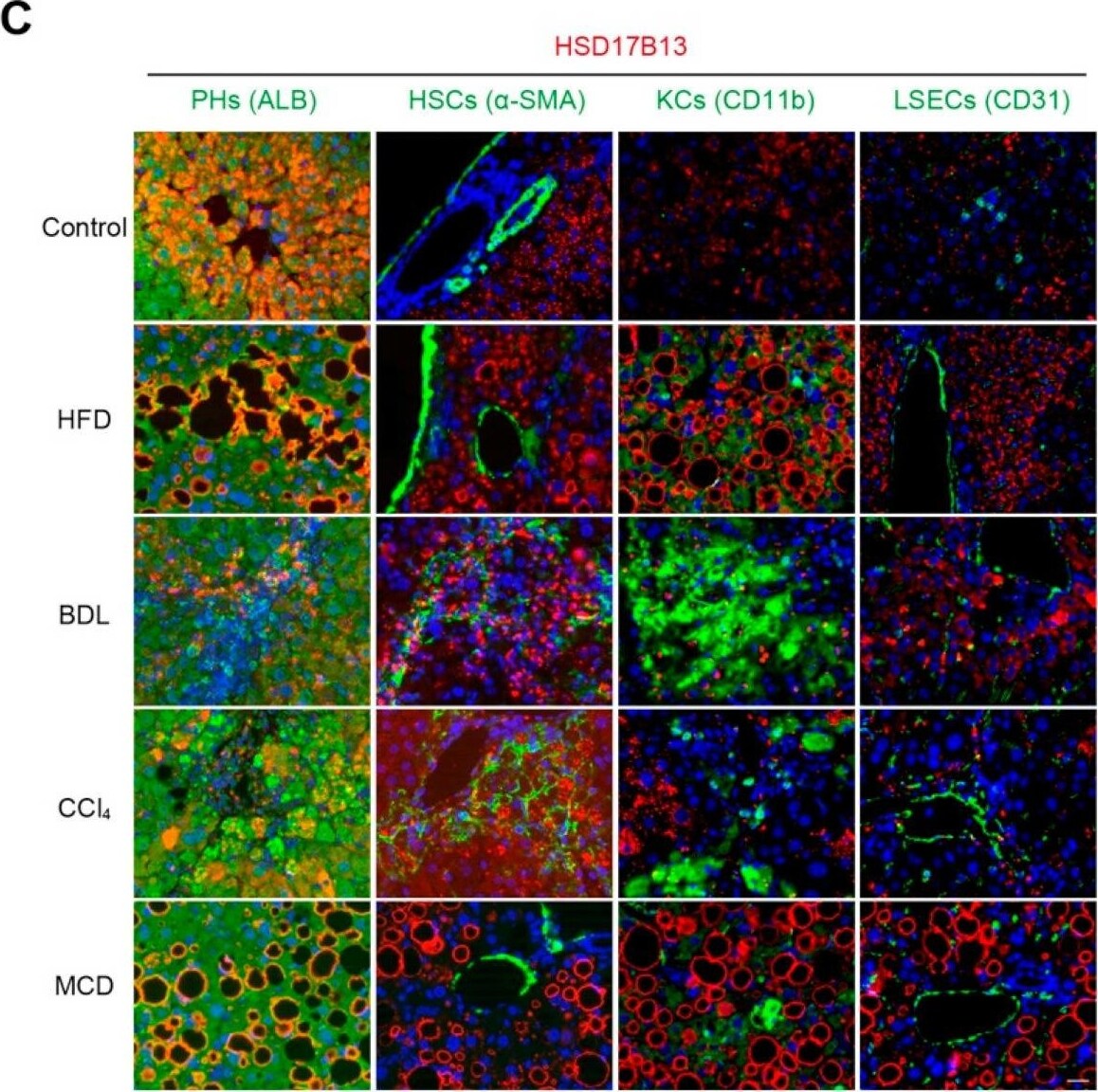
Immunocytochemistry/ Immunofluorescence: HSD17B13 Antibody - Azide and BSA Free [NBP3-04837] -
Higher HSD17B13 expression is mainly in hepatocytes and directly induced by etiological agents. (A,B) Protein (A) and mRNA (B) were detected in mouse primary cells. (C) Liver samples from NAFLD mice induced by HFD, BDL, CCl4, and MCD were processed with immunofluorescence co-staining for HSD17B13 with ALB (hepatocyte marker), CD31 (endothelial marker), alpha -SMA (activated HSC marker), or CD11b (macrophage marker). Slides were counterstained with DAPI (Scale bars, 50 μm). (D) L02 cells were treated by palmitate, OA, CCl4 lipopolysaccharide, or TGF-beta 1 for 24 h, mRNA was measured by qRT-PCR. (E,F) Huh7.5 cells were infected with HCV, RNAs were measured by qRT-PCR (E), and proteins were measured by Western blotting (F) at 72 h. (G) Huh7.5 cells were infected by HCV (MOI = 0.1) and mRNA was measured by qRT-PCR at designated days post-infection. (H) mRNA in respective host cells infected by HCV, H1N1 and EV71 was measured by qRT-PCR. Results are expressed as mean +/- SEM. HSCs, hepatic stellate cells; KCs, Kupffer cells; LSECs, liver sinusoidal endothelial cells; PHs, hepatic parenchymal cells; HFD, high-fat diet; BDL, bile-duct ligation; CCl4, carbon tetrachloride; MCD, methionine-choline-deficient diet; OA, oleic acid; TGF-beta 1, transforming growth factor-beta 1; MOI, multiplicity of infection; HCV, hepatitis C virus; H1N1, influenza A virus; EV71, enterovirus type 71. Image collected and cropped by CiteAb from the following open publication (https://pubmed.ncbi.nlm.nih.gov/35628360), licensed under a CC-BY license. Not internally tested by Novus Biologicals.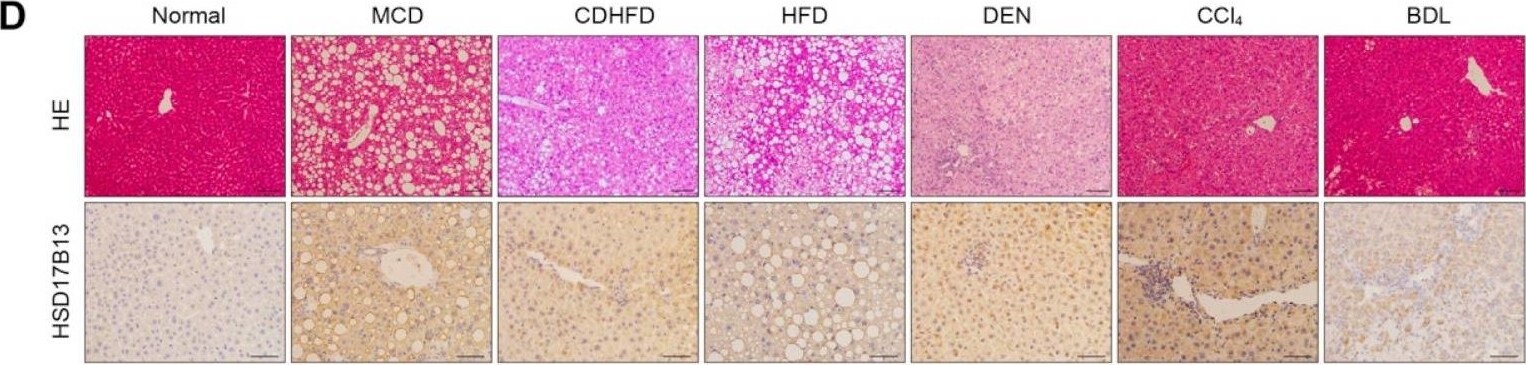
Immunohistochemistry: HSD17B13 Antibody - Azide and BSA Free [NBP3-04837] -
HSD17B13 expression is increased in the liver tissues of patients and murine models with NAFLD. (A–C) Representative H&E and immunohistochemical staining and the statistical summary in a human liver tissue array (A), the results were re-distinguished between man and woman (B), the results were re-distinguished with or without HBV infection (C). (D) C57BL/6 mice or SD rats were treated with pathogenic agents accordingly. Representative H&E and immunohistochemical staining of the murine livers. (E,F) mRNA (E) and protein (F) in the murine livers were measured by qRT-PCR and Western blotting, respectively. Results are expressed as mean +/- SEM. (scale bars, 50 μm). NASH, non-alcoholic steatohepatitis; HCC, hepatocellular carcinoma; HBV, hepatitis B virus; MCD, methionine choline deficient diet; CDHFD, choline deficient and high-fat diet; HFD, high-fat diet; DEN, diethylnitrosamine; CCl4, carbon tetrachloride; BDL, bile-duct ligation. Image collected and cropped by CiteAb from the following open publication (https://pubmed.ncbi.nlm.nih.gov/35628360), licensed under a CC-BY license. Not internally tested by Novus Biologicals.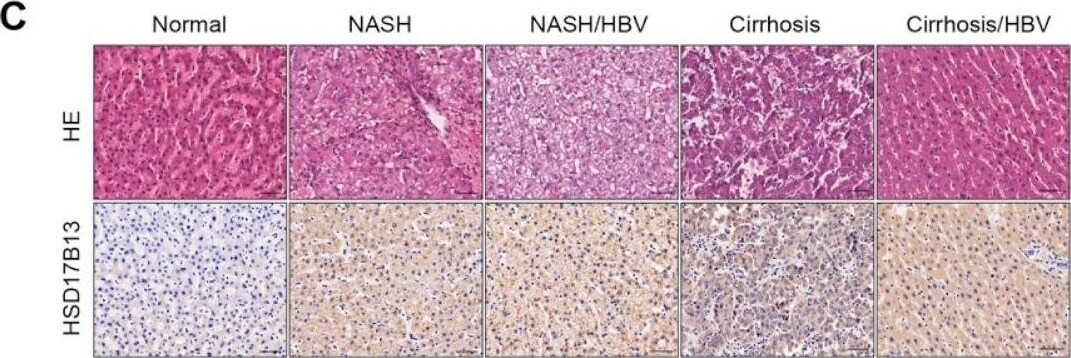
Immunohistochemistry: HSD17B13 Antibody - Azide and BSA Free [NBP3-04837] -
HSD17B13 expression is increased in the liver tissues of patients and murine models with NAFLD. (A–C) Representative H&E and immunohistochemical staining and the statistical summary in a human liver tissue array (A), the results were re-distinguished between man and woman (B), the results were re-distinguished with or without HBV infection (C). (D) C57BL/6 mice or SD rats were treated with pathogenic agents accordingly. Representative H&E and immunohistochemical staining of the murine livers. (E,F) mRNA (E) and protein (F) in the murine livers were measured by qRT-PCR and Western blotting, respectively. Results are expressed as mean +/- SEM. (scale bars, 50 μm). NASH, non-alcoholic steatohepatitis; HCC, hepatocellular carcinoma; HBV, hepatitis B virus; MCD, methionine choline deficient diet; CDHFD, choline deficient and high-fat diet; HFD, high-fat diet; DEN, diethylnitrosamine; CCl4, carbon tetrachloride; BDL, bile-duct ligation. Image collected and cropped by CiteAb from the following open publication (https://pubmed.ncbi.nlm.nih.gov/35628360), licensed under a CC-BY license. Not internally tested by Novus Biologicals.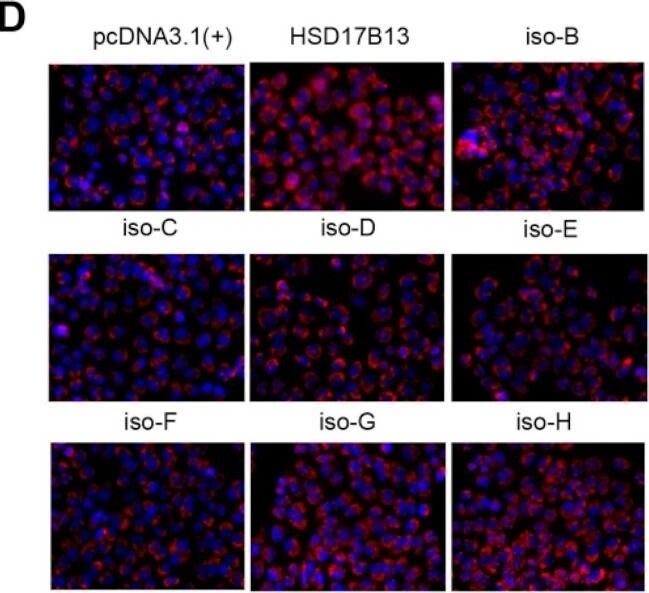
Immunocytochemistry/ Immunofluorescence: HSD17B13 Antibody - Azide and BSA Free [NBP3-04837] -
HSD17B13 promotes the accumulation of intracellular lipid droplets and causes hepatocyte injury. (A) mRNAs in palmitate-treated cells were measured by qRT-PCR. (B) Schematic of full-length or truncated transcripts of HSD17B13. (C) Representative confocal images of L02 cells transfected with His-tagged HSD17B13 transcripts (red) and LDs (green) after being induced by OA (400 μM) for 24 h. Nuclei were labeled with DAPI (blue). (D,E) Representative immunofluorescence staining images for LDs (red) (D) and relative intracellular Nile red positive areas were quantified (E) in L02 cells transfected with HSD17B13 transcripts after OA (400 μM) challenge for 24 h, the slides were counterstained with DAPI. (F) Schematic of the experimental design for investigating the effect of HSD17B13 on intracellular TGs, the contents of TGs were detected and the half-life of TGs was calculated. (G,H) Levels of ALT (G) and AST (H) in supernatants and cell lysates of Huh7 cells transfected with the plasmids of HSD17B13 for 24 h. (I) mRNA of proinflammatory markers in L02 cells transfected with plasmids of HSD17B13 for 24 h. Results are expressed as mean +/- SEM. OA, oleic acid; LDs, lipid droplets; TGs, triglycerides; PLIN2, perilipin 2; ALT, alanine transaminase; AST, aspartate transaminase; TGF-beta 1, transforming growth factor-beta 1; IL-6, interleukin 6; CXCL3, C-X-C motif chemokine ligand 3. Image collected and cropped by CiteAb from the following open publication (https://pubmed.ncbi.nlm.nih.gov/35628360), licensed under a CC-BY license. Not internally tested by Novus Biologicals.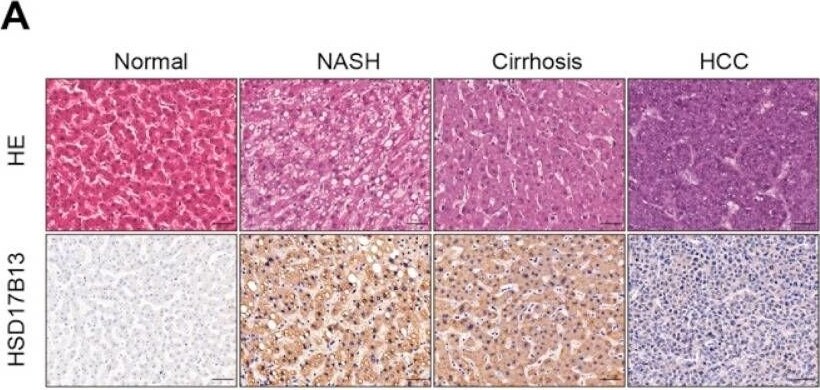
Immunohistochemistry: HSD17B13 Antibody - Azide and BSA Free [NBP3-04837] -
HSD17B13 expression is increased in the liver tissues of patients and murine models with NAFLD. (A–C) Representative H&E and immunohistochemical staining and the statistical summary in a human liver tissue array (A), the results were re-distinguished between man and woman (B), the results were re-distinguished with or without HBV infection (C). (D) C57BL/6 mice or SD rats were treated with pathogenic agents accordingly. Representative H&E and immunohistochemical staining of the murine livers. (E,F) mRNA (E) and protein (F) in the murine livers were measured by qRT-PCR and Western blotting, respectively. Results are expressed as mean +/- SEM. (scale bars, 50 μm). NASH, non-alcoholic steatohepatitis; HCC, hepatocellular carcinoma; HBV, hepatitis B virus; MCD, methionine choline deficient diet; CDHFD, choline deficient and high-fat diet; HFD, high-fat diet; DEN, diethylnitrosamine; CCl4, carbon tetrachloride; BDL, bile-duct ligation. Image collected and cropped by CiteAb from the following open publication (https://pubmed.ncbi.nlm.nih.gov/35628360), licensed under a CC-BY license. Not internally tested by Novus Biologicals.Applications for HSD17B13 Antibody - Azide and BSA Free
ELISA
Immunocytochemistry/ Immunofluorescence
Immunohistochemistry
Immunohistochemistry-Paraffin
Western Blot
Formulation, Preparation, and Storage
Purification
Formulation
Format
Preservative
Concentration
Shipping
Stability & Storage
Background: HSD17B13
Alternate Names
Gene Symbol
Additional HSD17B13 Products
Product Documents for HSD17B13 Antibody - Azide and BSA Free
Certificate of Analysis
To download a Certificate of Analysis, please enter a lot or batch number in the search box below.
Product Specific Notices for HSD17B13 Antibody - Azide and BSA Free
This product is for research use only and is not approved for use in humans or in clinical diagnosis. Primary Antibodies are guaranteed for 1 year from date of receipt.
Customer Reviews for HSD17B13 Antibody - Azide and BSA Free
There are currently no reviews for this product. Be the first to review HSD17B13 Antibody - Azide and BSA Free and earn rewards!
Have you used HSD17B13 Antibody - Azide and BSA Free?
Submit a review and receive an Amazon gift card!
$25/€18/£15/$25CAN/¥2500 for a review with an image
$10/€7/£6/$10CAN/¥1110 for a review without an image
Submit a review
Protocols
Find general support by application which include: protocols, troubleshooting, illustrated assays, videos and webinars.
- Antigen Retrieval Protocol (PIER)
- Antigen Retrieval for Frozen Sections Protocol
- Appropriate Fixation of IHC/ICC Samples
- Cellular Response to Hypoxia Protocols
- Chromogenic IHC Staining of Formalin-Fixed Paraffin-Embedded (FFPE) Tissue Protocol
- Chromogenic Immunohistochemistry Staining of Frozen Tissue
- ClariTSA™ Fluorophore Kits
- Detection & Visualization of Antibody Binding
- ELISA Sample Preparation & Collection Guide
- ELISA Troubleshooting Guide
- Fluorescent IHC Staining of Frozen Tissue Protocol
- Graphic Protocol for Heat-induced Epitope Retrieval
- Graphic Protocol for the Preparation and Fluorescent IHC Staining of Frozen Tissue Sections
- Graphic Protocol for the Preparation and Fluorescent IHC Staining of Paraffin-embedded Tissue Sections
- Graphic Protocol for the Preparation of Gelatin-coated Slides for Histological Tissue Sections
- How to Run an R&D Systems DuoSet ELISA
- How to Run an R&D Systems Quantikine ELISA
- How to Run an R&D Systems Quantikine™ QuicKit™ ELISA
- ICC Cell Smear Protocol for Suspension Cells
- ICC Immunocytochemistry Protocol Videos
- ICC for Adherent Cells
- IHC Sample Preparation (Frozen sections vs Paraffin)
- Immunocytochemistry (ICC) Protocol
- Immunocytochemistry Troubleshooting
- Immunofluorescence of Organoids Embedded in Cultrex Basement Membrane Extract
- Immunofluorescent IHC Staining of Formalin-Fixed Paraffin-Embedded (FFPE) Tissue Protocol
- Immunohistochemistry (IHC) and Immunocytochemistry (ICC) Protocols
- Immunohistochemistry Frozen Troubleshooting
- Immunohistochemistry Paraffin Troubleshooting
- Preparing Samples for IHC/ICC Experiments
- Preventing Non-Specific Staining (Non-Specific Binding)
- Primary Antibody Selection & Optimization
- Protocol for Heat-Induced Epitope Retrieval (HIER)
- Protocol for Making a 4% Formaldehyde Solution in PBS
- Protocol for VisUCyte™ HRP Polymer Detection Reagent
- Protocol for the Fluorescent ICC Staining of Cell Smears - Graphic
- Protocol for the Fluorescent ICC Staining of Cultured Cells on Coverslips - Graphic
- Protocol for the Preparation & Fixation of Cells on Coverslips
- Protocol for the Preparation and Chromogenic IHC Staining of Frozen Tissue Sections
- Protocol for the Preparation and Chromogenic IHC Staining of Frozen Tissue Sections - Graphic
- Protocol for the Preparation and Chromogenic IHC Staining of Paraffin-embedded Tissue Sections
- Protocol for the Preparation and Chromogenic IHC Staining of Paraffin-embedded Tissue Sections - Graphic
- Protocol for the Preparation and Fluorescent ICC Staining of Cells on Coverslips
- Protocol for the Preparation and Fluorescent ICC Staining of Non-adherent Cells
- Protocol for the Preparation and Fluorescent ICC Staining of Stem Cells on Coverslips
- Protocol for the Preparation and Fluorescent IHC Staining of Frozen Tissue Sections
- Protocol for the Preparation and Fluorescent IHC Staining of Paraffin-embedded Tissue Sections
- Protocol for the Preparation of Gelatin-coated Slides for Histological Tissue Sections
- Protocol for the Preparation of a Cell Smear for Non-adherent Cell ICC - Graphic
- Quantikine HS ELISA Kit Assay Principle, Alkaline Phosphatase
- Quantikine HS ELISA Kit Principle, Streptavidin-HRP Polymer
- R&D Systems Quality Control Western Blot Protocol
- Sandwich ELISA (Colorimetric) – Biotin/Streptavidin Detection Protocol
- Sandwich ELISA (Colorimetric) – Direct Detection Protocol
- TUNEL and Active Caspase-3 Detection by IHC/ICC Protocol
- The Importance of IHC/ICC Controls
- Troubleshooting Guide: ELISA
- Troubleshooting Guide: Immunohistochemistry
- Troubleshooting Guide: Western Blot Figures
- Western Blot Conditions
- Western Blot Protocol
- Western Blot Protocol for Cell Lysates
- Western Blot Troubleshooting
- Western Blot Troubleshooting Guide
- View all Protocols, Troubleshooting, Illustrated assays and Webinars