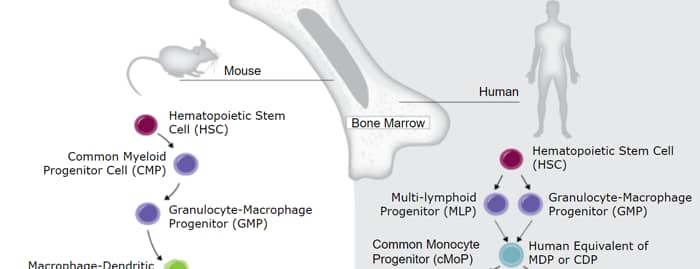
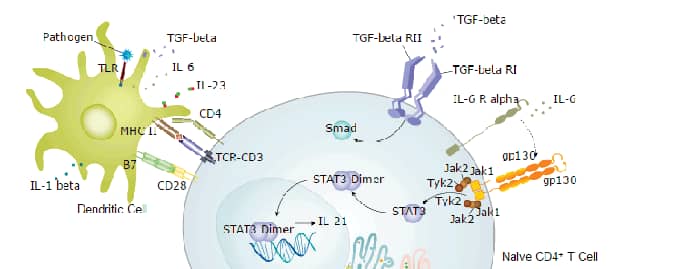
TLR9 (Toll‑like receptor 9), designated CD289, is a member of the TLR family of innate immune receptors that is mainly expressed by colonic epithelium, CD123+ plasmacytoid predendritic cells (pDC), and splenic transitional B cells (1‑9). TLR9 responds to unmethylated DNA CpG motifs that occur mainly in bacteria and viruses (1, 2). Mouse TLR9 cDNA encodes a 1032 amino acid (aa) type I transmembrane glycoprotein with a 793 aa extracellular domain (ECD) that contains 26 leucine‑rich repeats (LRRs, aa 26‑818), and a 193 aa cytoplasmic domain with a TIR sequence that dimerizes with signaling adaptors such as MyD88 (1). The mouse TLR9 ECD shares 87% aa sequence identity with rat and 71‑74% with human, feline, canine, equine, porcine, bovine and ovine TLR9. Predicted splice forms vary at the N‑terminus by initiating either upstream or downstream of the standard site. The full-length 150 kDa form, which is ligand‑binding but nonsignaling, is found in the endoplasmic reticulum. It undergoes accessory protein-mediated translocation either to the cell membrane or to lysosomes (1‑3). TLR9 is cleaved to remove LRR1‑14, producing an 80 kDa signaling fragment within acidic endolysosomes where it encounters microbial CpG DNA rather than self-DNA (2, 10, 11). However, immune complexes of self‑DNA with lupus erythematosus anti‑DNA antibodies can induce TLR9 activation and IFN‑ alpha production in pDC (4). A soluble form also found in endosomes includes all 26 LRRs and negatively regulates active TLR9 (12). Activation of TLR9 contributes to splenocyte proliferation, pDC maturation, macrophage inflammatory cytokine production, Th1 inflammatory responses, NK cell activation and recruitment, B cell surface MHC class II up‑regulation and immunoglobulin production, and generation and maintenance of memory B cells (1, 5‑9).
Mouse TLR9 Antibody (1138D)
R&D Systems | Catalog # MAB7960

Scientific images may be resized, cropped, or adjusted for brightness or contrast for presentation purposes. These updates are limited to presentation and do not affect the underlying scientific interpretation of the data. Where available, additional source data may be provided upon request.
Key Product Details
Species Reactivity
Applications
Label
Antibody Source
Product Specifications
Immunogen
Leu26-Asp818
Accession # AAK29625
Specificity
Clonality
Host
Isotype
Scientific Data Images for Mouse TLR9 Antibody (1138D)
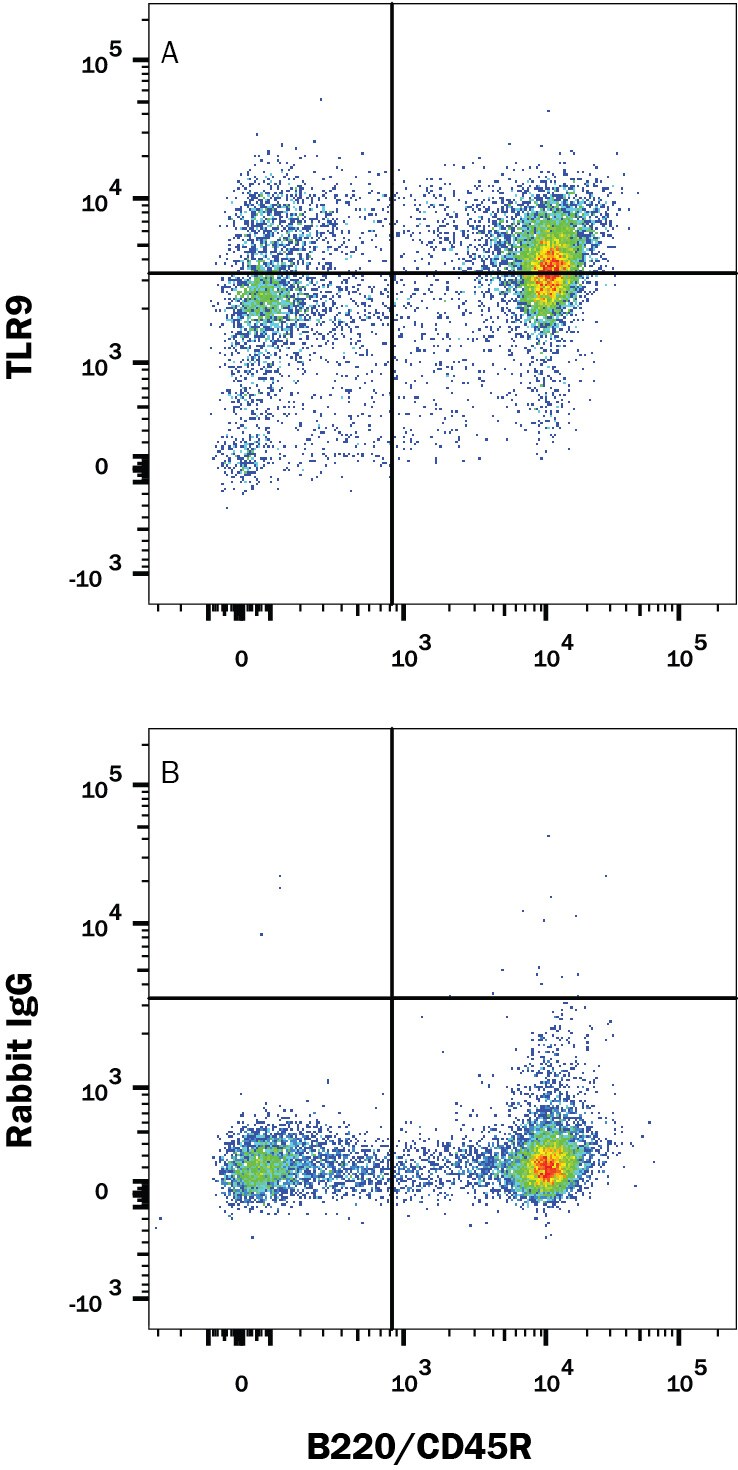
Detection of TLR9 in Mouse Splenocytes by Flow Cytometry.
Mouse splenocytes were stained with Rat Anti-Mouse B220/CD45R APC-conjugated Monoclonal Antibody (Catalog # FAB1217A) and either (A) Rabbit Anti-Mouse TLR9 Monoclonal Antibody (Catalog # MAB7960) or (B) Normal Rabbit IgG Control (Catalog # AB-105-C) followed by Phycoerythrin-conjugated Anti-Rabbit IgG Secondary Antibody (Catalog # F0110). To facilitate intracellular staining, cells were fixed and permeabilized with FlowX FoxP3 Fixation & Permeabilization Buffer Kit (Catalog # FC012). View our protocol for Staining Intracellular Molecules.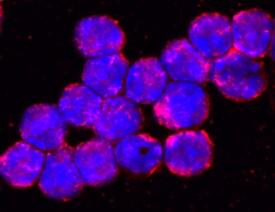
TLR9 in Mouse Splenocytes.
TLR9 was detected in immersion fixed mouse splenocytes using Rabbit Anti-Mouse TLR9 Monoclonal Antibody (Catalog # MAB7960) at 0.5 µg/mL for 3 hours at room temperature. Cells were stained using the NorthernLights™ 557-conjugated Anti-Rabbit IgG Secondary Antibody (red; Catalog # NL004) and counterstained with DAPI (blue). Specific staining was localized to cell surfaces and cytoplasm. View our protocol for Fluorescent ICC Staining of Non-adherent Cells.Applications for Mouse TLR9 Antibody (1138D)
Immunocytochemistry
Sample: Immersion fixed mouse splenocytes
Intracellular Staining by Flow Cytometry
Sample: Mouse splenocytes fixed and permeabilized with FlowX FoxP3 Fixation & Permeabilization Buffer Kit (Catalog # FC012)
Flow Cytometry Panel Builder
Bio-Techne Knows Flow Cytometry
Save time and reduce costly mistakes by quickly finding compatible reagents using the Panel Builder Tool.
Advanced Features
- Spectra Viewer - Custom analysis of spectra from multiple fluorochromes
- Spillover Popups - Visualize the spectra of individual fluorochromes
- Antigen Density Selector - Match fluorochrome brightness with antigen density

Formulation, Preparation, and Storage
Purification
Reconstitution
Reconstitute at 0.5 mg/mL in sterile PBS For liquid material, refer to CoA for concentration.
Formulation
Shipping
Stability & Storage
- 12 months from date of receipt, -20 to -70 °C as supplied.
- 1 month, 2 to 8 °C under sterile conditions after reconstitution.
- 6 months, -20 to -70 °C under sterile conditions after reconstitution.
Calculators
Background: TLR9
References
- Hemmi, H. et al. (2000) Nature 408:740.
- Barton, G.M. et al. (2006) Nat. Immunol. 7:49.
- Latz, E. et al. (2004) Nat. Immunol. 5:190.
- Barrat, F.J. et al. (2005) J. Exp. Med. 202:1131.
- Krieg, A.M. et al. (1995) Nature 374:546.
- Aranburu, A. et al. (2010) J. Immunol. 185:7293.
- Guerrier, T. et al. (2012) J. Autoimmun. 39:173.
- Guillerey, C. et al. (2012) Blood 120:90.
- Cunningham-Rundles, C. et al. (2006) J. Immunol. 176:1978.
- Ewald, S.E. et al. (2008) Nature 456:658.
- Park, B. et al. (2008) Nat. Immunol. 9:1407.
- Chockalingam, A. et al. (2011) Eur. J. Immunol. 41:2176.
Long Name
Alternate Names
Gene Symbol
UniProt
Additional TLR9 Products
Product Documents for Mouse TLR9 Antibody (1138D)
Certificate of Analysis
To download a Certificate of Analysis, please enter a lot or batch number in the search box below.
Note: Certificate of Analysis not available for kit components.
Product Specific Notices for Mouse TLR9 Antibody (1138D)
For research use only
Customer Reviews for Mouse TLR9 Antibody (1138D)
There are currently no reviews for this product. Be the first to review Mouse TLR9 Antibody (1138D) and earn rewards!
Have you used Mouse TLR9 Antibody (1138D)?
Submit a review and receive an Amazon gift card!
$25/€18/£15/$25CAN/¥2500 for a review with an image
$10/€7/£6/$10CAN/¥1110 for a review without an image
Submit a review
Protocols
Find general support by application which include: protocols, troubleshooting, illustrated assays, videos and webinars.
- 7-Amino Actinomycin D (7-AAD) Cell Viability Flow Cytometry Protocol
- Appropriate Fixation of IHC/ICC Samples
- Cellular Response to Hypoxia Protocols
- ClariTSA™ Fluorophore Kits
- Detection & Visualization of Antibody Binding
- Extracellular Membrane Flow Cytometry Protocol
- Flow Cytometry Protocol for Cell Surface Markers
- Flow Cytometry Protocol for Staining Membrane Associated Proteins
- Flow Cytometry Staining Protocols
- Flow Cytometry Troubleshooting Guide
- ICC Cell Smear Protocol for Suspension Cells
- ICC Immunocytochemistry Protocol Videos
- ICC for Adherent Cells
- Immunocytochemistry (ICC) Protocol
- Immunocytochemistry Troubleshooting
- Immunofluorescence of Organoids Embedded in Cultrex Basement Membrane Extract
- Immunohistochemistry (IHC) and Immunocytochemistry (ICC) Protocols
- Intracellular Flow Cytometry Protocol Using Alcohol (Methanol)
- Intracellular Flow Cytometry Protocol Using Detergents
- Intracellular Nuclear Staining Flow Cytometry Protocol Using Detergents
- Intracellular Staining Flow Cytometry Protocol Using Alcohol Permeabilization
- Intracellular Staining Flow Cytometry Protocol Using Detergents to Permeabilize Cells
- Preparing Samples for IHC/ICC Experiments
- Preventing Non-Specific Staining (Non-Specific Binding)
- Primary Antibody Selection & Optimization
- Propidium Iodide Cell Viability Flow Cytometry Protocol
- Protocol for Liperfluo
- Protocol for VisUCyte™ HRP Polymer Detection Reagent
- Protocol for the Characterization of Human Th22 Cells
- Protocol for the Characterization of Human Th9 Cells
- Protocol for the Fluorescent ICC Staining of Cell Smears - Graphic
- Protocol for the Fluorescent ICC Staining of Cultured Cells on Coverslips - Graphic
- Protocol for the Preparation and Fluorescent ICC Staining of Cells on Coverslips
- Protocol for the Preparation and Fluorescent ICC Staining of Non-adherent Cells
- Protocol for the Preparation and Fluorescent ICC Staining of Stem Cells on Coverslips
- Protocol for the Preparation of a Cell Smear for Non-adherent Cell ICC - Graphic
- Protocol: Annexin V and PI Staining by Flow Cytometry
- Protocol: Annexin V and PI Staining for Apoptosis by Flow Cytometry
- TUNEL and Active Caspase-3 Detection by IHC/ICC Protocol
- The Importance of IHC/ICC Controls
- Troubleshooting Guide: Fluorokine Flow Cytometry Kits
- View all Protocols, Troubleshooting, Illustrated assays and Webinars
Associated Pathways