
Follistatin-like 1 (FSTL1 or FSL1), also known as FRP (follistatin-related protein), Flik (follistatin-like), and TSC-36 (TGF-beta 1-stimulated clone 36), is a secreted 45‑55 kDa extracellular glycoprotein belonging to the BM-40/SPARC/Osteonectin family (1-3). The mouse FSTL1 cDNA encodes 306 amino acids (aa), including an 18 aa signal sequence, a cysteine-rich Follistatin (EGF- and kazal-like) domain, two apparently nonfunctional EF-hand calcium-binding motifs, and a von Willebrand Factor C homology domain (1, 3). Mature mouse FSTL1 shares 94%, 96%, 94%, 93% and 93% aa identity with human, rat, equine, bovine and canine FSTL1, respectively. FSTL1 was first identified as a TGF-beta -induced protein from a mouse osteoblast cell line (4). It is ubiquitously expressed in early mouse development, but is mainly mesenchymal later in development (5). In vitro, FSTL1 interacts directly with BMP-4, while in vivo, it regulates BMP-4 signaling during normal lung development, as demonstrated by lethal respiratory failure in mice deleted for FSTL1 (6). In humans, FSTL1 is a common rheumatoid arthritis autoantigen (2). It is reported to be either proinflammatory due to promoting inflammatory cytokine secretion, or to prevent autoimmune arthritis by inhibiting matrix metalloproteinase (MMP) and prostaglandin expression (7-10). In muscle and heart, it appears to be protective and promotes endothelial cell functions such as revascularization after ischemia, probably due to promoting expression and activation of the protein kinase AKT1 (11, 12). Cardiac and circulating FSTL1 is generally increased in conditions such as heart failure and acute coronary syndrome (12-14). FSTL1 also appears to be a tumor suppressor, showing down‑regulated expression in many human cancers (4, 15, 16). In vitro, it slows proliferation and MMP-dependent migration, and increases FAS-dependent apoptosis of tumor cell lines (15).
Recombinant Mouse Follistatin-like 1 Protein, CF
R&D Systems | Catalog # 1738-FN


Loading...
Key Product Details
- R&D Systems NS0-derived Recombinant Mouse Follistatin-like 1 Protein (1738-FN)
- Quality control testing to verify active proteins with lot specific assays by in-house scientists
- All R&D Systems proteins are covered with a 100% guarantee
Source
NS0
Accession Number
Applications
Bioactivity
Loading...
Product Specifications
Source
Mouse myeloma cell line, NS0-derived mouse Follistatin-like 1/FSTL1 protein
Glu19-Ile306, with a C-terminal Asp-Ile and 6-His tag
Glu19-Ile306, with a C-terminal Asp-Ile and 6-His tag
Purity
>95%, by SDS-PAGE under reducing conditions and visualized by silver stain.
Endotoxin Level
<0.10 EU per 1 μg of the protein by the LAL method.
N-terminal Sequence Analysis
Glu19
Predicted Molecular Mass
33.5 kDa
SDS-PAGE
43-50 kDa, reducing conditions
Activity
Measured by its binding ability in a functional ELISA.
When Recombinant Mouse Follistatin‑like 1/FSTL1 is coated at 5 μg/mL (100 μL/well), the concentration of Recombinant Mouse BMP‑4 (Catalog # 5020-BP) that produces 50% of the optimal binding response is approximately 30-150 ng/mL.
When Recombinant Mouse Follistatin‑like 1/FSTL1 is coated at 5 μg/mL (100 μL/well), the concentration of Recombinant Mouse BMP‑4 (Catalog # 5020-BP) that produces 50% of the optimal binding response is approximately 30-150 ng/mL.
Reviewed Applications
Read 1 review rated 5 using 1738-FN in the following applications:
Formulation, Preparation, and Storage
1738-FN
| Formulation | Lyophilized from a 0.2 μm filtered solution in PBS. |
| Reconstitution | Reconstitute at 500 μg/mL in PBS.
Loading...
|
| Shipping | The product is shipped at ambient temperature. Upon receipt, store it immediately at the temperature recommended below. |
| Stability & Storage | Use a manual defrost freezer and avoid repeated freeze-thaw cycles.
|
Calculators
Background: Follistatin-like 1/FSTL1
References
- Zwijsen, A. et al. (1994) Eur. J. Biochem. 225:937.
- Tanaka, M. et al. (1998) Int. Immunol. 10:1305.
- Hambrook, H.O. et al. (2004) J. Biol. Chem. 279:11727.
- Shibanuma, M. et al. (1993) Eur. J. Biochem. 217:13.
- Adams, D. et al. (2007) Gene Expr. Patterns 7:491.
- Geng, Y et al. (2011) Proc. Natl. Acad. Sci. USA 108:7058.
- Clutter, S.D. et al. (2009) J. Immunol. 182:234.
- Miyamae, T. et al. (2006) J. Immunol. 177:4758.
- Kawabata, D. et al. (2004) Arthritis Rheum. 50:660.
- Tanaka, M. et al. (2003) Int. Immunol. 15:71.
- Ouchi, N. et al. (2008) J. Biol. Chem. 283:32802.
- Oshima, Y. et al. (2008) Circulation 117:3099.
- Lara-Pezzi, E. et al. (2008) Endocrinology 149:5822.
- Widera, C. et al. (2009) Clin. Chem. 55:1794.
- Chan, Q.K. et al. (2009) Carcinogenesis 30:114.
- Mashimo, J. et al. (1997) Cancer Lett. 113:213.
Alternate Names
Flik, Follistatin-related Protein, FRP, FSL1, FSTL1, TSC-36
Gene Symbol
FSTL1
UniProt
Additional Follistatin-like 1/FSTL1 Products
Product Documents for Recombinant Mouse Follistatin-like 1 Protein, CF
Certificate of Analysis
To download a Certificate of Analysis, please enter a lot or batch number in the search box below.
Note: Certificate of Analysis not available for kit components.
Product Specific Notices for Recombinant Mouse Follistatin-like 1 Protein, CF
For research use only
Related Research Areas
Citations for Recombinant Mouse Follistatin-like 1 Protein, CF
 Powered by Bioz
Customer Reviews for Recombinant Mouse Follistatin-like 1 Protein, CF (1)
5 out of 5
1 Customer Rating
Have you used Recombinant Mouse Follistatin-like 1 Protein, CF?
Submit a review and receive an Amazon gift card!
$25/€18/£15/$25CAN/¥2500 for a review with an image
$10/€7/£6/$10CAN/¥1110 for a review without an image
Submit a review
Customer Images
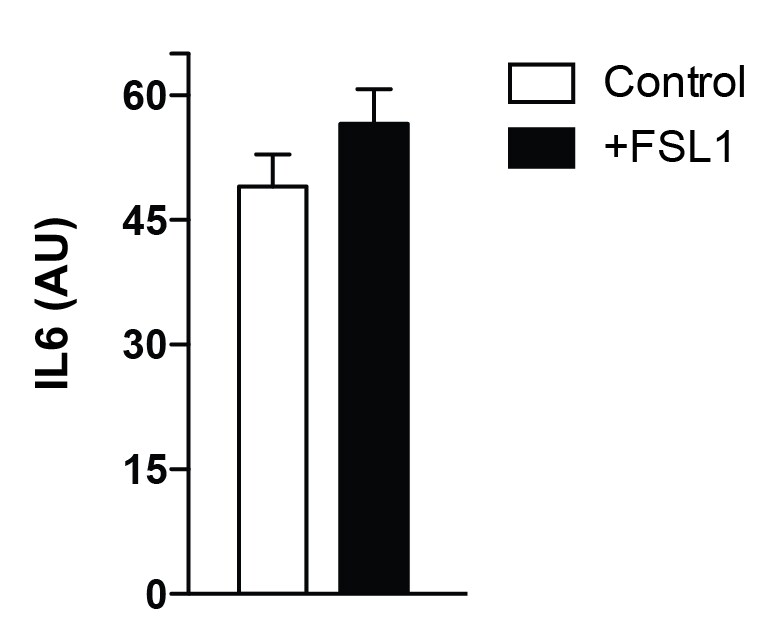
Showing
1
-
1 的
1 review
Showing All
Filter By:
-
Application: In vitro bioactivity in cell cultureVerified Customer | Posted 10/21/2016

There are no reviews that match your criteria.
Loading...