
Abby System





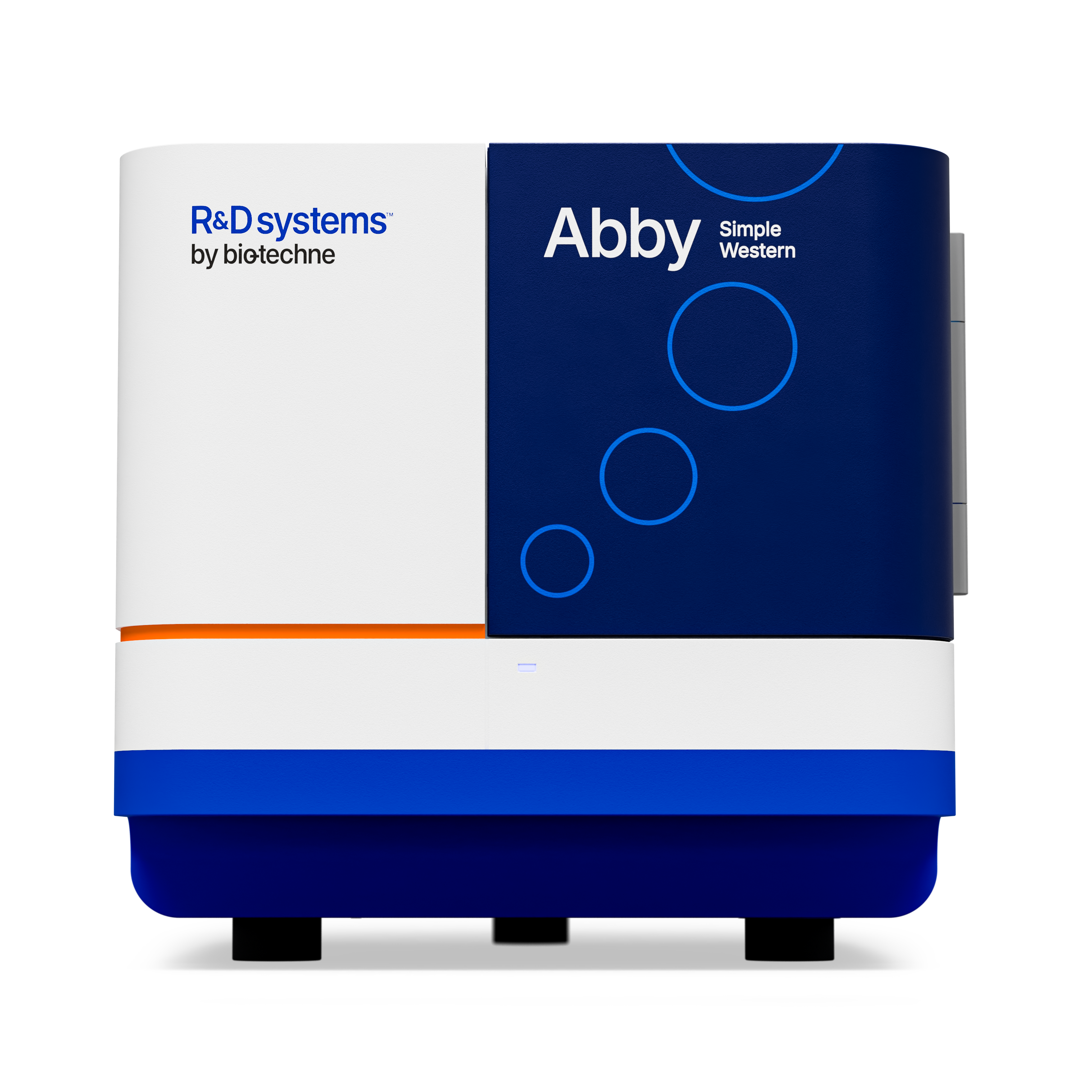
Abby Provides Fast, Publication-ready Western Results
The Abby™ System, powered by Simple Western™ technology, is designed to streamline your workflow and deliver publication-ready data with exceptional speed and reliability. Abby automates protein size separation and immunodetection for up to 25 capillaries per run, providing fully analyzed results in as little as 3 hours. With picogram-level sensitivity and true handsfree automation, Abby removes the variability and time-consuming steps of traditional Western blots. It’s the simple, modern path to faster, more consistent, reproducible Western results—so you’ll never want to run a manual western blot again.
How Does Abby Work?
Abby automates the protein separation and immunodetection of traditional Western blotting, eliminating many of the tedious, error-prone steps. Just load your samples and reagents into the microplate, and Abby does the rest. Abby separates your proteins by size and precisely manages antibody additions, incubations, washes, detection steps, and even the analysis. Come back to fully analyzed and quantitated results of 24 samples in as little as 3 hours. With Abby’s chemiluminescent detection you’ll get picogram-level sensitivity, letting you maximize the data you get from your sample. Best of all, you get reliable and reproducible results with target normalization to the amount of protein loaded.
How Can Abby Help You?
Accelerates Time to Publication-ready Data
Abby automates protein separation, immunoprobing, detection, and data analysis for up to 24 samples in as little as 3 hours of hands‑free runtime. Precise control of sample loading, incubations, and washes minimizes user‑dependent variability and removes inconsistencies common to manual Western blotting. The system delivers intra‑assay CVs <15%, providing the reproducibility and data confidence needed for faster scientific decision-making and publication.
Delivers Picogram-level Sensitivity
With chemiluminescence detection, Abby gets you down to picogram-level sensitivity with just 3 µL of starting material, enabling reliable detection of low abundance targets— even for proteins in complex samples like whole cell lysates.

Maximize Insights from Precious Sample
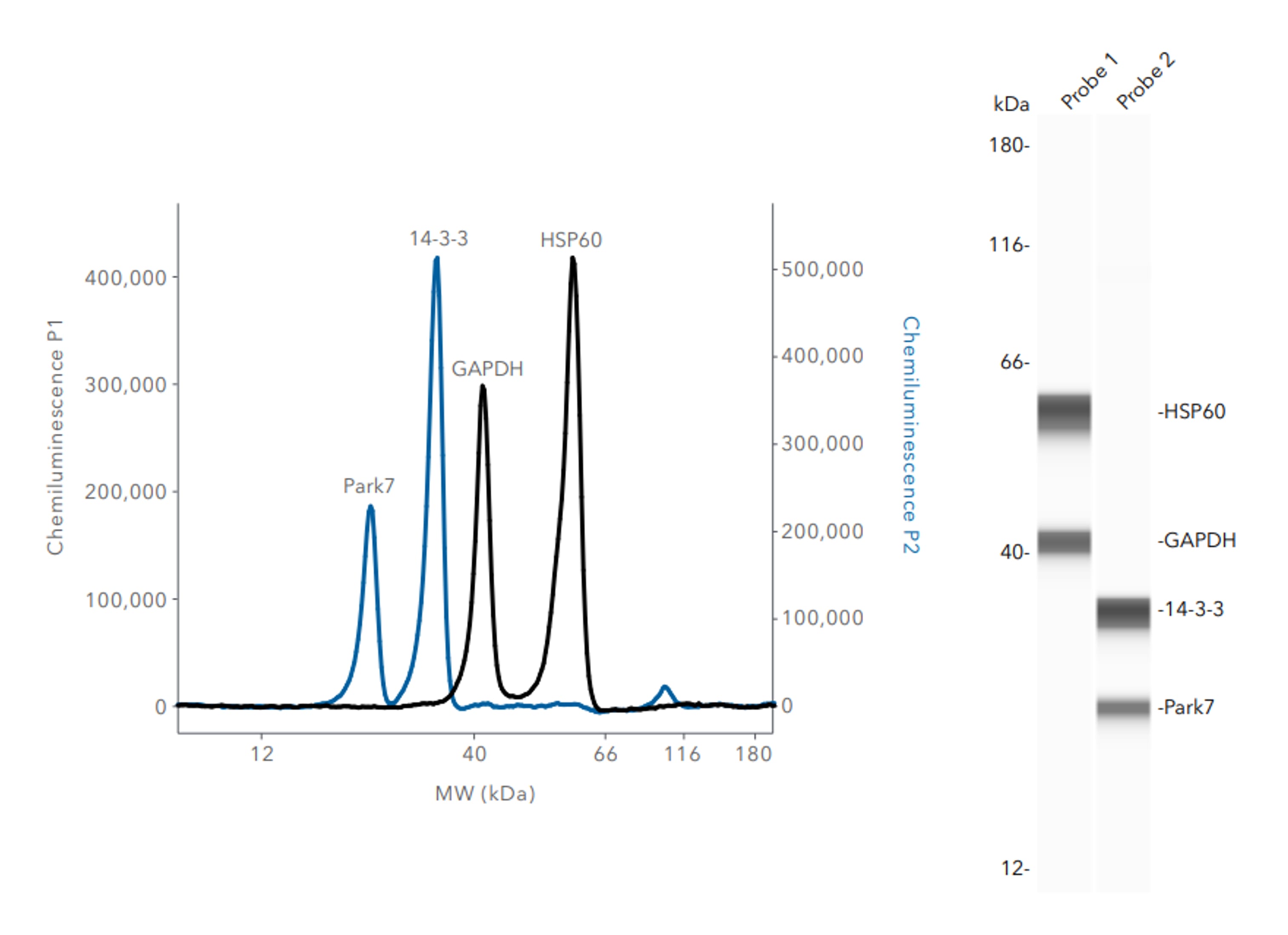
With the RePlex™ feature on Abby, you can run two immunoassays in the same capillary, unlocking deeper protein characterization from a single precious sample. Generate more insights, conserve more material, and streamline your workflow with every run.
Figure, Right: RePlex was employed to detect 4 targets in the same sample and capillary. Graph view (left) and lane view (right) of HSP60, GAPDH, 14-3-3, and Park7 detection performed across the two probing cycles of RePlex.
Normalization with Total Protein Using RePlex
RePlex on Abby also gives you an easy way to see if your samples contain a consistent total protein load by measuring all your proteins immobilized in the same capillary as your immunoassay. Increase confidence in your results through total protein normalization.

Detect Total / Phospho Targets with Ease
Abby allows you to detect total / phospho targets within the same capillary using RePlex.
Figure, Right:This figure highlights Abby’s ability to use total and phospho-specific antibody pairs in a single sample using RePlex. Lane view shows strong total EGFR signal was observed in EGF-treated (+) and untreated (-) samples while phospho-EGFR signal only appeared in the EGF-treated sample, as expected.

Instrument Specifications
| Description | Total Protein with Chemiluminescence Detection | Chemiluminescence Detection |
| Sample required+ | 0.3-1.2 µg | 0.3-1.2 µg |
| Volume required | 3 µL/well | |
| Size range | Molecular weight (MW) ladder ranges from 2-440 kDa | |
| Sizing CV | <10% | |
| Intra-assay CV | <15% | |
| Inter-assay CV | N/A | <20%* |
| Resolution (± percent difference in MW) | ± 10% for MW >20 kDa ± 15-20% for MW <20 kDA | |
| Quantitation CV | <20% (total protein, chemiluminescence and fluorescence) | |
| Dynamic range | 2-3 logs | 3-4 logs |
| Sensitivity | ng | Low pg |
| Capillary | 5 cm, 100 µm, 400 nL | |
| Runtime | <3 hours RePlex: 5 hours | |
| Capillaries per run | 13 or 25 | |
| Weight | 21 kg (46 lbs) | |
| Dimensions (closed) | 0.36 m x 0.36 m x 0.57 m (1.08' x 1.08' x 1.71') | |
| Power | US/CAN 120 V AC, 60 hz, 4.2 amps Europe 240 AC, 50 Hz, 2.1 amps Japan 100 AC, 50/60 Hz, 5.0 amps | |
| Operating temperature | 18-24 °C | |
| Operating humidity | 20-60% relative, non-condensing | |
+ Sample Required is 3 µL/well
* Inter-assay CV is calculated with normalization to the system control protein
** Percent peak area
Product Documents
| User Guide | Assay Development Guide | Installation Guide | Abby Brochure |

Application Notes
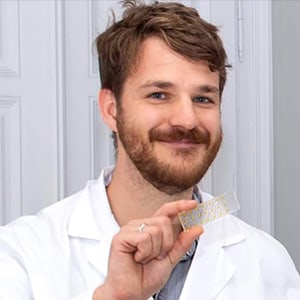
"The introduction of an Abby will enable us to answer important questions quicker, such as identifying the disease driving mechanism and molecules surrounding osteoarthritis. Moving away from the tedious manual western blotting process, which can take up to two days, and introducing automation will speed up time to data and provide increased sensitivity and accuracy."
Dr. Mario Rothbauer, Postdoc Researcher, Department of Orthopedics and Trauma Surgery, Medical University of Vienna
Read this article to discover how Abby accelerates osteoarthritis research
 Powered by Bioz