
DOI hydrochloride
Tocris Bioscience | Catalog # 2643

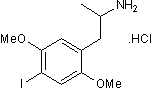
Key Product Details
Description
Alternative Names
Product Description
DOI hydrochloride is a brain penetrant, mixed 5-HT2A/5-HT2C receptor agonist (Ki values are 0.7, 2.4 and 20 nM for 5-HT2A, 5-HT2C and 5-HT2B receptors respectively). Reduces rapid eye movement (REM) and slow wave sleep and increases waking in the rat. Hallucinogenic agent. Acts via 5-HT2A receptors to inhibit the inflammatory effects of tumor necrosis factor (TNF)-α.
Product Specifications for DOI hydrochloride
Molecular Weight
Formula
Storage
Purity
Chemical Name
CAS Number
PubChem ID
InChI Key
SMILES
The technical data provided above is for guidance only. For batch specific data refer to the Certificate of Analysis.
Solubility
| Solvent | Max Conc. mg/mL | Max Conc. mM | |
|---|---|---|---|
| Solubility | |||
| water | 17.88 | 50 |
Preparing Stock Solutions for DOI hydrochloride
The following data is based on the product molecular weight 357.62.
Batch specific molecular weights may vary from batch to batch due to the degree of hydration, which all affect the solvent volumes required to prepare stock solutions.
| Concentration / Solvent Volume / Mass | 1 mg | 5 mg | 10 mg |
|---|---|---|---|
| 0.5 mM | 5.59 mL | 27.96 mL | 55.93 mL |
| 2.5 mM | 1.12 mL | 5.59 mL | 11.19 mL |
| 5 mM | 0.56 mL | 2.80 mL | 5.59 mL |
| 25 mM | 0.11 mL | 0.56 mL | 1.12 mL |
Calculators
Background References
References are publications that support the biological activity of the product. See our Citations tab to view 33 publications citing the usage of this product.
- Yu Serotonin 5-hydroxytryptamine2A receptor activation suppresses tumor necrosis factor-α-induced inflammation with extraordinary potency. J.Pharmacol.Exp.Ther. 2008 PMID: 18708586
- Nelson Comparisons of hallucinogenic phenylisopropylamine binding affinities at cloned human 5-HT2A, 5-HT2B and 5-HT2C receptors. Naunyn-Schmied.Arch.Pharmacol.
- Monti and Jantos Effects of serotonin 5-HT2A/2C receptor agonist DOI and of the selective 5-HT2A or 5-HT2C receptor antagonists EMD 281014 and SB-243213 respectively, on sleep and waking in the rat. Eur.J.Pharmacol. 2006 PMID: 17059817
Product Documents for DOI hydrochloride
Certificate of Analysis
To download a Certificate of Analysis, please enter a lot or batch number in the search box below.
Product Specific Notices for DOI hydrochloride
For research use only
Related Research Areas
Citations for DOI hydrochloride
 Powered by Bioz
Customer Reviews for DOI hydrochloride (2)
Have you used DOI hydrochloride?
Submit a review and receive an Amazon gift card!
$25/€18/£15/$25CAN/¥2500 for a review with an image
$10/€7/£6/$10CAN/¥1110 for a review without an image
Submit a review
Customer Images
-
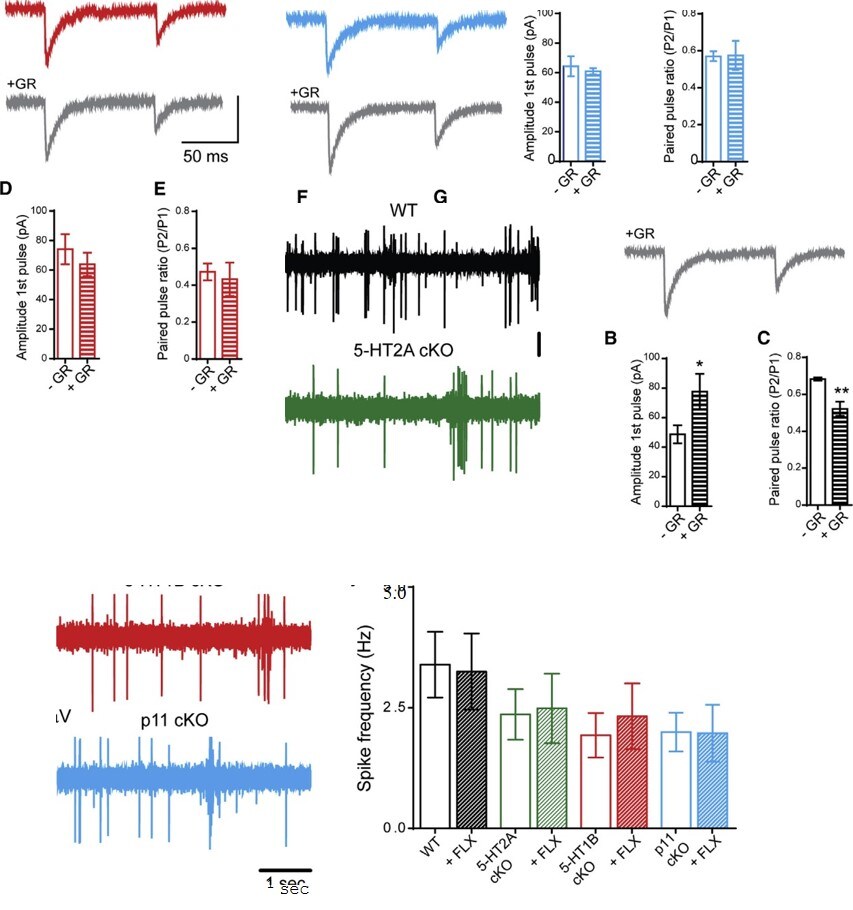
Species: MouseAssay Type: In VivoVerified Customer | Posted 02/03/202020mM DOI hydrochloride

-
Species: MouseAssay Type: In VivoVerified Customer | Posted 08/17/2017I received the product promptly, which is satisfactory in and of itself. In addition, the DOI HCl (>98%) was both pure, and in a form that was convenient for measurement and application. The product was used to determine if non-human animals (in this case, the common mouse) are also capable of receiving hallucinatory/pseud-hallucinatory effects comparable to humans. Tests were based around testing for cognitive, visual, tactile, aural, and gustatory alterations, as well as altered behavioral patterns, not observed in the control group. Tests performed featured experiments (held against behavior of control group) such as: Determining if application of DOI (through careful dissolution in water source) caused altered preference and/or reaction to simulated threats (such as models or pictured of predators), preference regarding food (test group tended to avoid sweet food after consumption during the duration of effects), increase or decrease in sexual behavior (test group showed increased sexual behavior, such as receptivity to intercourse for females and increased mating attempts in males, but decreased competitive/territorial responses to other males), differences in response to auditory cues versus control group (differences noted, but more research required), changes in ability with regards to simple problem-solving versus control (test group showed increased interest and attentiveness to cognitive and sensory stimuli, heightened speed, efficiency, and reflexivity regarding solving simple problems, but agitation or confusion regarding tests involving colors, shapes, sounds, and navigation/stability). Results were promising, but remain inconclusive until more testing and experimentation can be administered. Overall, your product was very satisfactory, and I will certainly continue using your services when needed, and I am more than happy to recommend your services to my colleagues, as well as other biological scientists.
There are no reviews that match your criteria.