
CD302, also known as DCL-1 and CLEC13A, is a 31-36 kDa member of the C-type lectin domain family of proteins. It is expressed on cells involved in phagocytosis, including neutrophils, monocytes, dendritic cells and macrophages. CD302 is suggested to facilitate phagocytosis, and participate in cell adhesion. Mature human CD302 is a 210 amino acid (aa) type I transmembrane glycoprotein. It contains a 146 aa extracellular domain (ECD) (aa 23-168) plus a 43 aa cytoplasmic region. The ECD possesses a C-type lectin domain (aa 32-152) that apparently cannot bind carbohydrate. CD302 has also been detected in dendritic cells as the C-terminal portion of a 215 kDa fusion protein that involves DEC205. CD302 contributes aa 23-232 to the fusion protein. There is one potential alternative start site at Met63. Over aa 23-168, human CD302 shares 82% aa identity with mouse CD302.
Human CD302/CLEC13A PE‑conjugated Antibody
R&D Systems | Catalog # FAB6367P

Key Product Details
Species Reactivity
Applications
Label
Antibody Source
Product Specifications
Immunogen
Asp23-Asn167
Accession # Q81X05
Specificity
Clonality
Host
Isotype
Scientific Data Images for Human CD302/CLEC13A PE‑conjugated Antibody
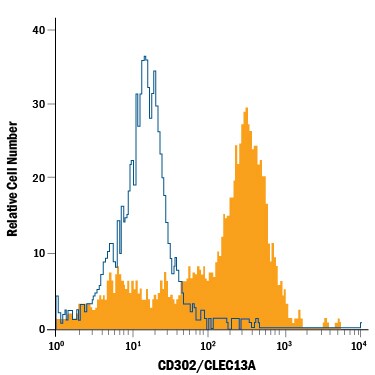
Detection of CD302/CLEC13A in Human Blood Monocytes by Flow Cytometry.
Human peripheral blood monocytes were stained with Mouse Anti-Human CD302/CLEC13A PE-conjugated Monoclonal Antibody (Catalog # FAB6367P, filled histogram) or isotype control antibody (Catalog # IC002P, open histogram). View our protocol for Staining Membrane-associated Proteins.Applications for Human CD302/CLEC13A PE‑conjugated Antibody
Flow Cytometry
Sample: Human peripheral blood monocytes
Spectra Viewer
Plan Your Experiments
Use our spectra viewer to interactively plan your experiments, assessing multiplexing options. View the excitation and emission spectra for our fluorescent dye range and other commonly used dyes.
Spectra Viewer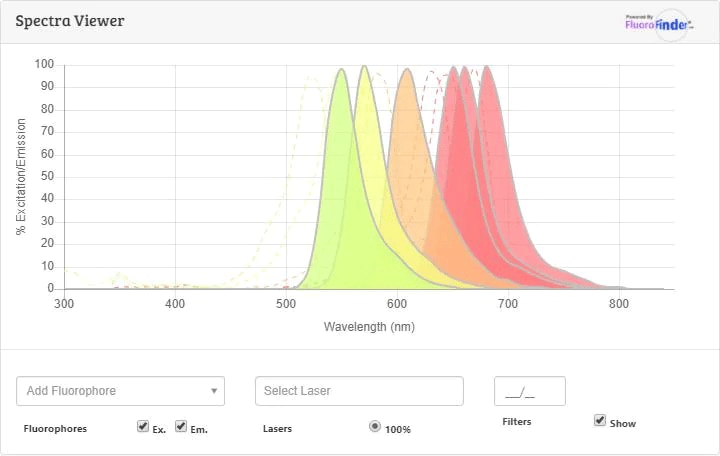
Flow Cytometry Panel Builder
Bio-Techne Knows Flow Cytometry
Save time and reduce costly mistakes by quickly finding compatible reagents using the Panel Builder Tool.
Advanced Features
- Spectra Viewer - Custom analysis of spectra from multiple fluorochromes
- Spillover Popups - Visualize the spectra of individual fluorochromes
- Antigen Density Selector - Match fluorochrome brightness with antigen density

Formulation, Preparation, and Storage
Purification
Formulation
Shipping
Stability & Storage
- 12 months from date of receipt, 2 to 8 °C as supplied.
Background: CD302/CLEC13A
Alternate Names
Gene Symbol
UniProt
Additional CD302/CLEC13A Products
Product Documents for Human CD302/CLEC13A PE‑conjugated Antibody
Certificate of Analysis
To download a Certificate of Analysis, please enter a lot or batch number in the search box below.
Note: Certificate of Analysis not available for kit components.
Product Specific Notices for Human CD302/CLEC13A PE‑conjugated Antibody
For research use only
Related Research Areas
Customer Reviews for Human CD302/CLEC13A PE‑conjugated Antibody
There are currently no reviews for this product. Be the first to review Human CD302/CLEC13A PE‑conjugated Antibody and earn rewards!
Have you used Human CD302/CLEC13A PE‑conjugated Antibody?
Submit a review and receive an Amazon gift card!
$25/€18/£15/$25CAN/¥2500 Yen for a review with an image
$10/€7/£6/$10CAN/¥1110 Yen for a review without an image
Submit a review
Protocols
Find general support by application which include: protocols, troubleshooting, illustrated assays, videos and webinars.
- 7-Amino Actinomycin D (7-AAD) Cell Viability Flow Cytometry Protocol
- Extracellular Membrane Flow Cytometry Protocol
- Flow Cytometry Protocol for Cell Surface Markers
- Flow Cytometry Protocol for Staining Membrane Associated Proteins
- Flow Cytometry Staining Protocols
- Flow Cytometry Troubleshooting Guide
- Intracellular Flow Cytometry Protocol Using Alcohol (Methanol)
- Intracellular Flow Cytometry Protocol Using Detergents
- Intracellular Nuclear Staining Flow Cytometry Protocol Using Detergents
- Intracellular Staining Flow Cytometry Protocol Using Alcohol Permeabilization
- Intracellular Staining Flow Cytometry Protocol Using Detergents to Permeabilize Cells
- Propidium Iodide Cell Viability Flow Cytometry Protocol
- Protocol for Liperfluo
- Protocol for the Characterization of Human Th22 Cells
- Protocol for the Characterization of Human Th9 Cells
- Protocol: Annexin V and PI Staining by Flow Cytometry
- Protocol: Annexin V and PI Staining for Apoptosis by Flow Cytometry
- Troubleshooting Guide: Fluorokine Flow Cytometry Kits
- View all Protocols, Troubleshooting, Illustrated assays and Webinars