

Human Erythropoietin Quantikine IVD ELISA Kit

Human Erythropoietin Quantikine IVD ELISA Kit
Catalog # Availability Size / Price Qty
DEP00B
Control Products Available

Save 15% on Select RUO Reagents. See Details

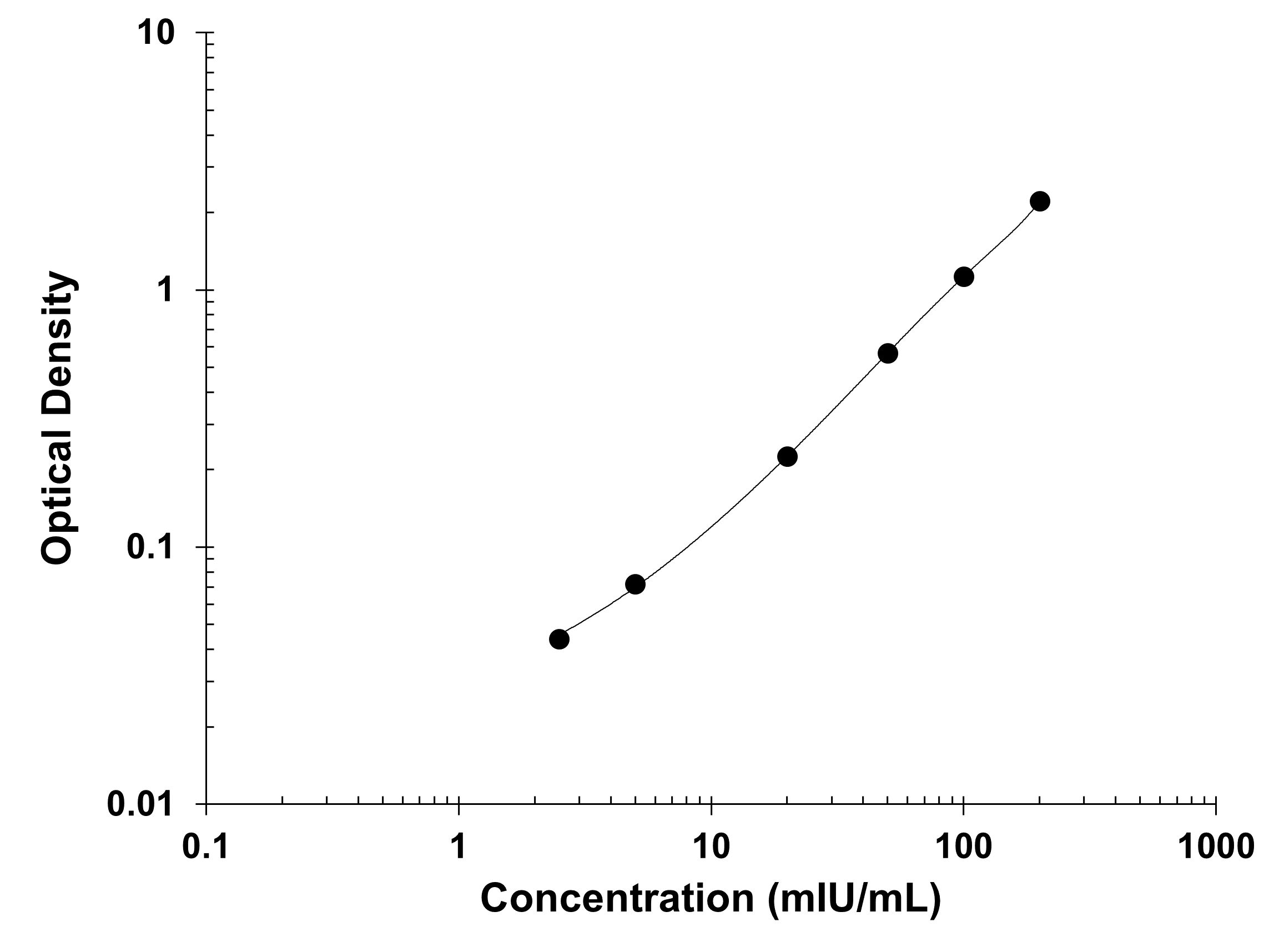
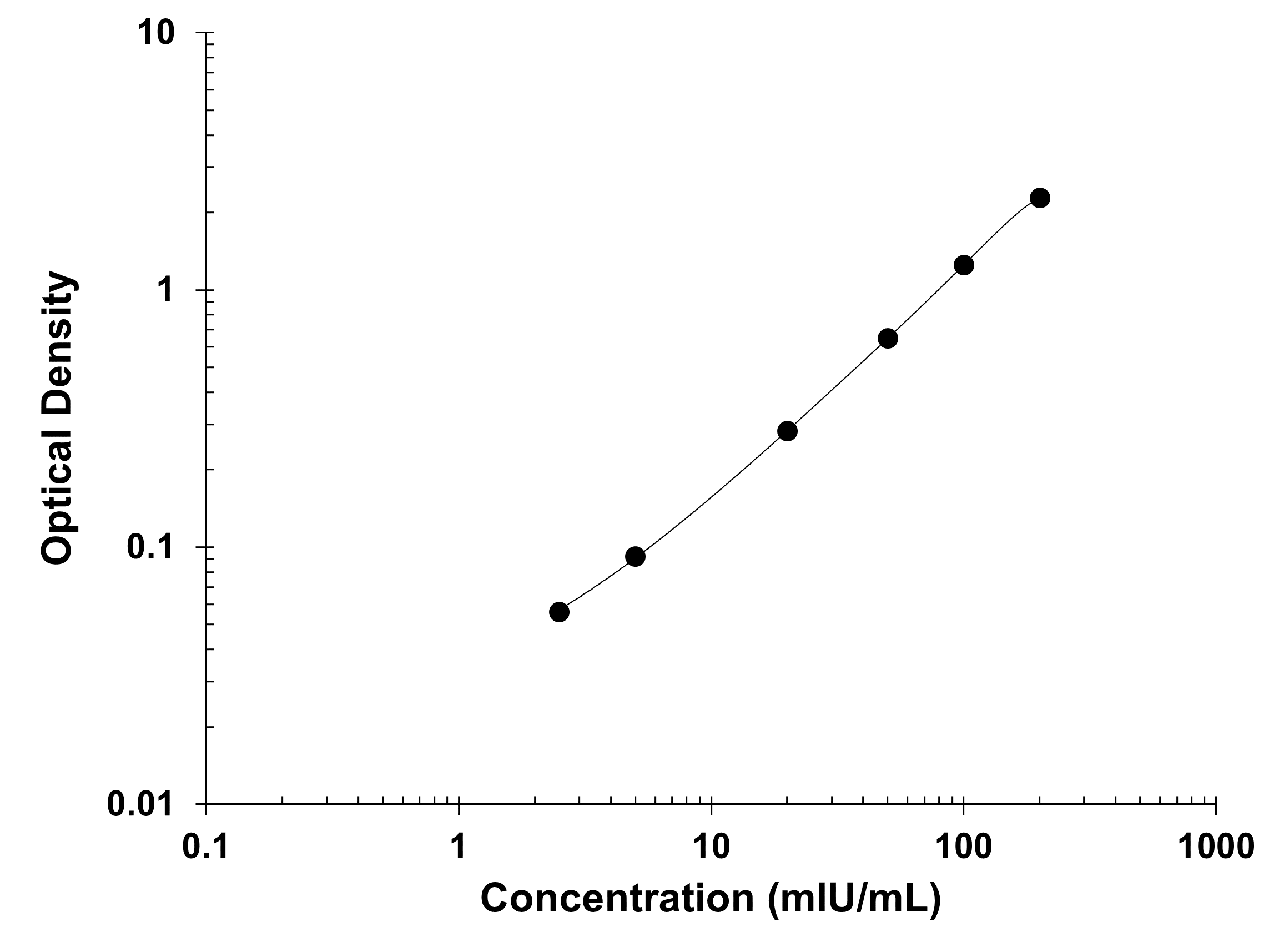
Benchtop Protocol Standard Curve
2 Images
Product Details
FAQs
Supplemental Products
Reviews

Human Erythropoietin Quantikine IVD ELISA Kit Summary

Assay Type
Solid Phase Sandwich ELISA
Format
96-well strip plate
Assay Length
4.5 hours (Benchtop), 2.5 hours (Shaker)
Sample Type & Volume Required Per Well
Serum (100 uL), EDTA Plasma (100 uL)
Sensitivity
0.6 mU/mL
Assay Range
2.5 - 200 mU/mL (Serum, EDTA Plasma)
Specificity
Natural and recombinant human Epo.
Cross-reactivity
< 0.5% cross-reactivity observed with available related molecules.< 50% cross-species reactivity observed with species tested.
Interference
Interference observed with other substances.

Sample Values

Erythropoietin concentrations were obtained from 123 normal individuals from the Minneapolis/St. Paul, Minnesota area. Using the nonparametric method for the analysis of reference values outlined in the NCCLS publication "How to Define, Determine, and Utilize Reference Intervals in the Clinical Laboratory" (NCCLS Document C28-P; Vol. 12, No. 2) the following reference ranges (2.5-97.5 percentile) were established for Epo in serum and EDTA plasma. Each testing laboratory should establish its own normal range.

Epo Normal Ranges 

SerumEDTA plasma
3.3-16.6 mlU/mL3.1-14.9 mlU/mL

Patients suffering from polycythemia rubra vera may have Epo concentrations within the normal range, whereas those suffering from secondary polycythemia may have elevated concentrations of serum Epo (1). Polycythemia rubra vera patients who undergo phlebotomy may have elevated serum Epo concentrations.

Patients suffering from most anemias will present with higher than normal concentrations of serum Epo, whereas those suffering from anemia associated with chronic renal failure may have serum Epo concentrations within the normal range of this assay (2). Anemic patients who receive transfusions may exhibit lower than expected serum Epo concentrations.

Abnormally high concentrations of serum Epo may also be observed in various other pathological states including renal neoplasms, benign tumors, polycystic kidney disease, renal cysts and hydronephrosis (3).

The results of this assay should be used in conjunction with information available from clinical evaluations and other diagnostic procedures.

Product Summary

The Quantikine IVD Human Epo ELISA uses a monoclonal antibody and polyclonal antibody conjugate in a sandwich ELISA format to provide a method that is quicker, more sensitive and more specific than the bioassay. The assay is designed to measure Epo levels in serum or plasma

Recovery

Recovery was estimated by adding recombinant human Epo at three different levels across the range of the assay into six plasma and six serum specimens. Mean percent recoveries are shown in the table below:                                                                                                                                                                   

  Benchtop Protocol Shaker Protocol
Specimen Type Average % Recovery Range Average % Recovery Range
Serum (n=6) 100 84-115 101 96-107
EDTA Plasma (n=6) 99 81-114 96 84-105

Linearity

To assess the linearity of the assay, samples spiked with high concentrations of Epo were serially diluted with Calibrator Diluent to produce samples with values within the dynamic range of the assay.

  Benchtop Protocol Shaker Protocol
Serum EDTA Plasma Serum EDTA Plasma
1:2 Average % of Expected 111 110 105 109
Range (%) 106-118 104-118 99-109 101-117
1:4 Average % of Expected 109 106 102 105
Range (%) 100-123 94-122 94-113 95-119
1:8 Average % of Expected 105 99 96 98
Range (%) 93-123 92-118 89-106 89-114

Product Datasheets

You must select a language.

x

Preparation and Storage

Storage
Store the unopened product at 2 - 8 °C. Do not use past expiration date.

Background: Erythropoietin/EPO

Erythropoietin (Epo) is a 30-kDa, heavily glycosylated protein produced primarily by the kidney. It is the principal factor that regulates erythropoiesis. The production of Epo by kidney cells is increased in response to hypoxia or anemia. The cDNAs for Epo have been cloned from many species. The mature proteins from the various species are highly conserved, exhibiting greater than 80% sequence identity at the amino acid level.

The biological effects of Epo are mediated by the Erythropoietin receptor (Epo R). At the protein sequence level, the human Epo R is approximately 83% identical to the mouse protein. As a result of alternative splicing of the Epo R gene, cDNA clones encoding truncated soluble forms of Epo R have been found. Recombinant soluble Epo R binds Epo with high affinity and is a potent Epo antagonist.

Entrez Gene IDs:
2056 (Human); 13856 (Mouse); 24335 (Rat)
Alternate Names:
ECYT5; EP; EPO; epoetin; Erythropoietin; MGC138142; MVCD2

FAQs

No product specific FAQs exist for this product, however you may

View all ELISA FAQs
Loading...

Reviews for Human Erythropoietin Quantikine IVD ELISA Kit

There are currently no reviews for this product. Be the first to review Human Erythropoietin Quantikine IVD ELISA Kit and earn rewards!

Have you used Human Erythropoietin Quantikine IVD ELISA Kit?

Submit a review and receive an Amazon gift card.

$25/€18/£15/$25CAN/¥75 Yuan/¥2500 Yen for a review with an image

$10/€7/£6/$10 CAD/¥70 Yuan/¥1110 Yen for a review without an image

Submit a Review
