
Quantikine High Sensitivity ELISA Kits
Quantikine™ High Sensitivity ELISA Kits are complete, ready-to-use immunoassays designed for highly sensitive protein quantification in biological samples when very low levels of the target analyte are expected. Many of our high sensitivity assays can detect analytes in the femtogram per milliliter range, making them particularly valuable for studying early immune responses, rare cell populations, low-abundance biomarkers, or other applications where target protein concentrations are expected to be extremely low.
By leveraging signal amplification strategies, Quantikine High Sensitivity ELISAs provide exceptional sensitivity and reproducibility for the reliable quantification of low-abundance cytokines, chemokines, growth factors, and other protein biomarkers across a wide range of research applications.
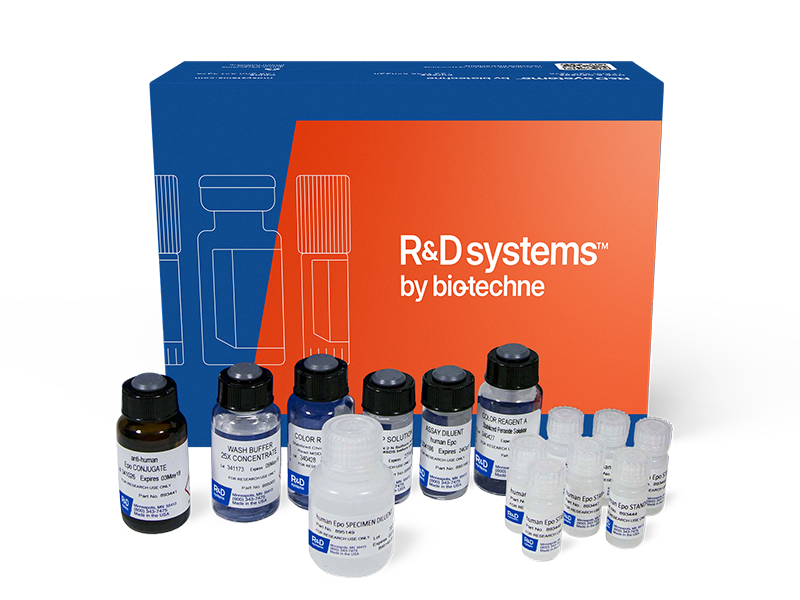
New to Quantikine High Sensitivity ELISAs? Browse our FAQs below for answers to common questions about assay principles, target analytes, compatible sample types, and assay performance.
Quantikine High Sensitivity ELISA Kit Features
- Detect ultra-low levels of protein biomarkers using specialized signal amplification strategies
- Complete ready-to-use sandwich ELISA kits containing all required assay reagents
- Extensively tested for accuracy, specificity, reproducibility, and lot-to-lot consistency
- Comprehensive performance data provided, including sensitivity, recovery, linearity, inter- and intra-assay precision, and sample value data
- Colorimetric detection
Compatible Sample Types
Depending on the assay, Quantikine High Sensitivity ELISA Kits can be used with a variety of sample types, including:
- Serum
- Plasma
- Cell culture supernatants
Compatible sample types vary by analyte and kit. Refer to the product-specific datasheet for validated sample types, dilution recommendations, and assay performance data.
Signal Amplification Strategies Used in Quantikine High Sensitivity ELISA Kits
Quantikine High Sensitivity ELISA Kits use specialized signal amplification strategies to enable the sensitive detection and quantification of low-abundance biomarkers. Depending on the assay, signal amplification is achieved using either an alkaline phosphatase-based amplification system (Figure 1) or a polymeric streptavidin-HRP amplification system (Figure 2). Please refer to the product datasheet for kit-specific information.
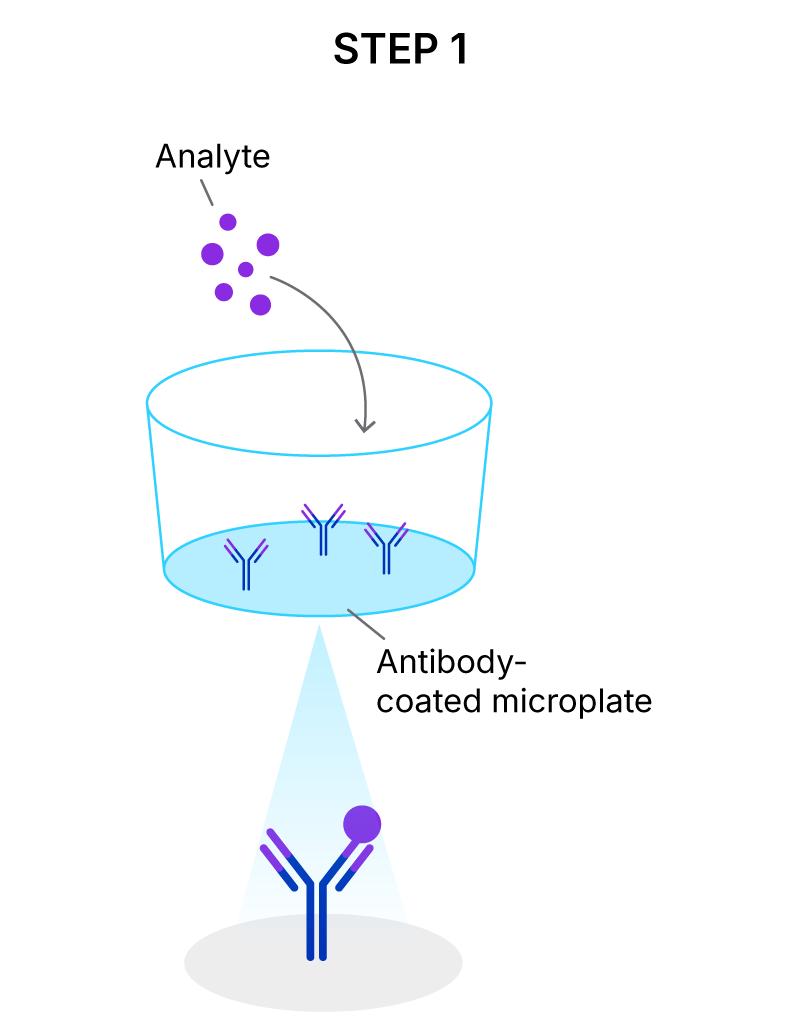
Figure 1. A microplate pre-coated with capture antibody is provided. Samples or standards are added, and any analyte present is bound by the immobilized antibody. Unbound materials are washed away.
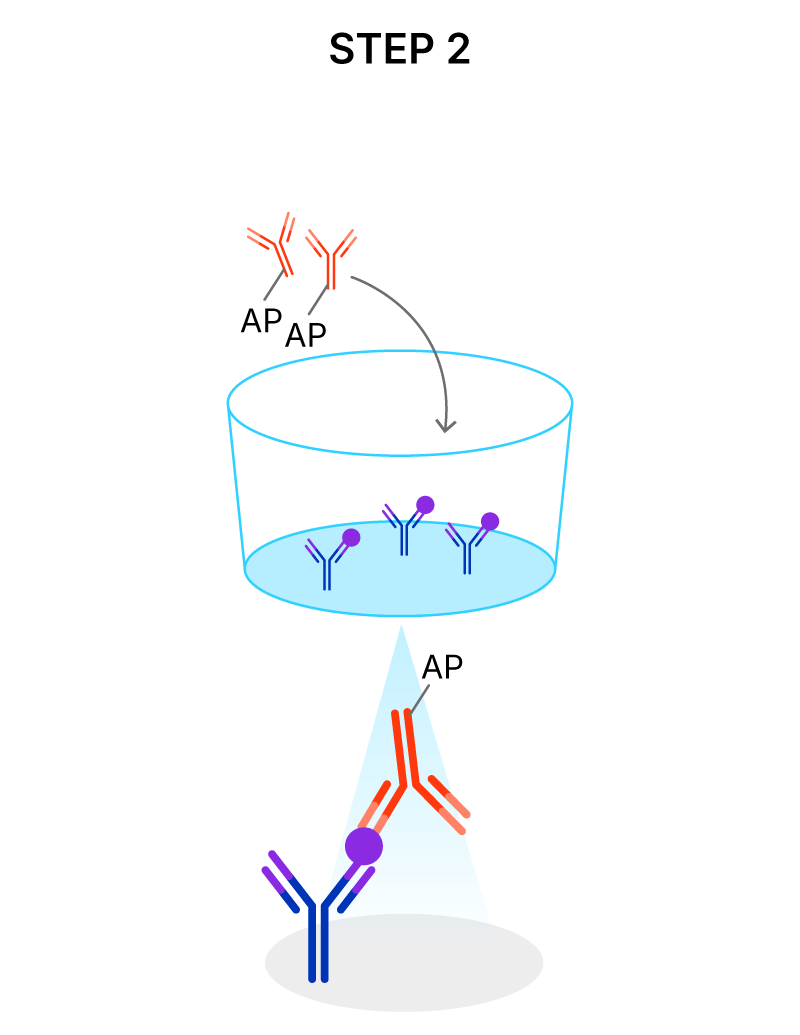
A second Alkaline Phosphatase (AP)-labeled antibody (detection antibody) is added and binds to the captured analyte. Unbound detection antibody is washed away.
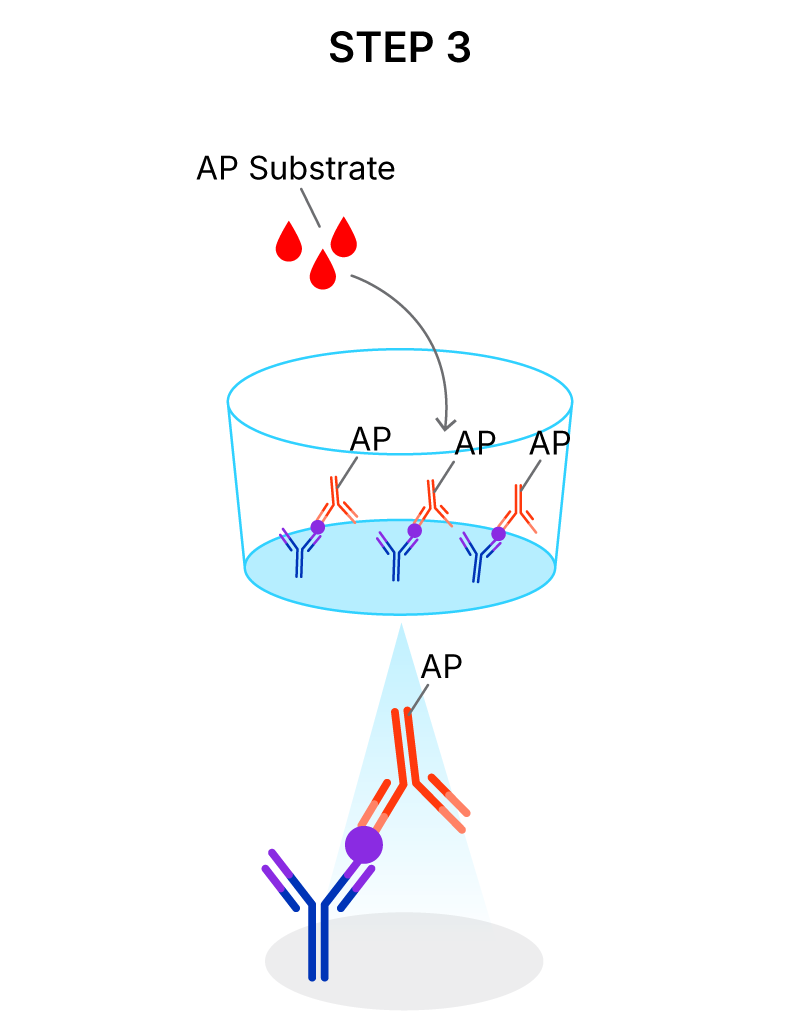
NADPH substrate solution is added and a rose color develops. Plates are NOT washed.
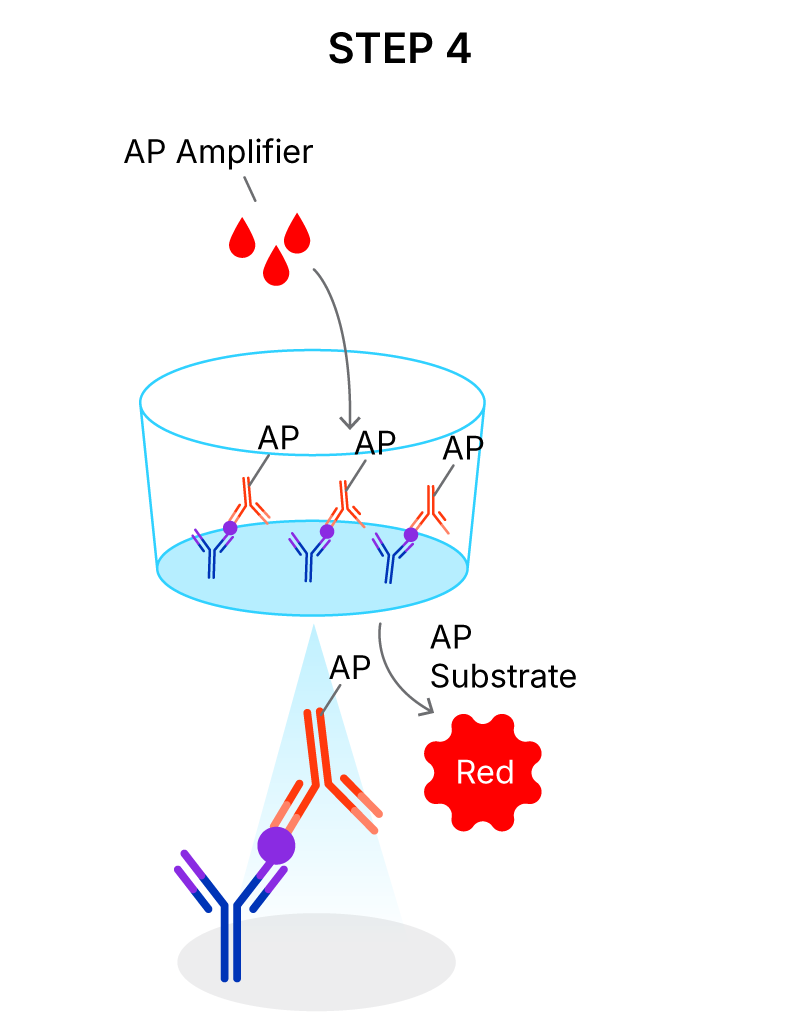
Amplifier solution is added and the rose color deepens to a red color in proportion to the amount of analyte present in the sample. Stop solution is added (color remains red) and the absorbance of the color at 490 nm is measured.

Quantikine High Sensitivity ELISA Kits Using Alkaline Phosphatase-Based Amplification
Quantikine High Sensitivity ELISA Kit Assay Principle Using a Streptavidin-HRP Polymer Amplification System
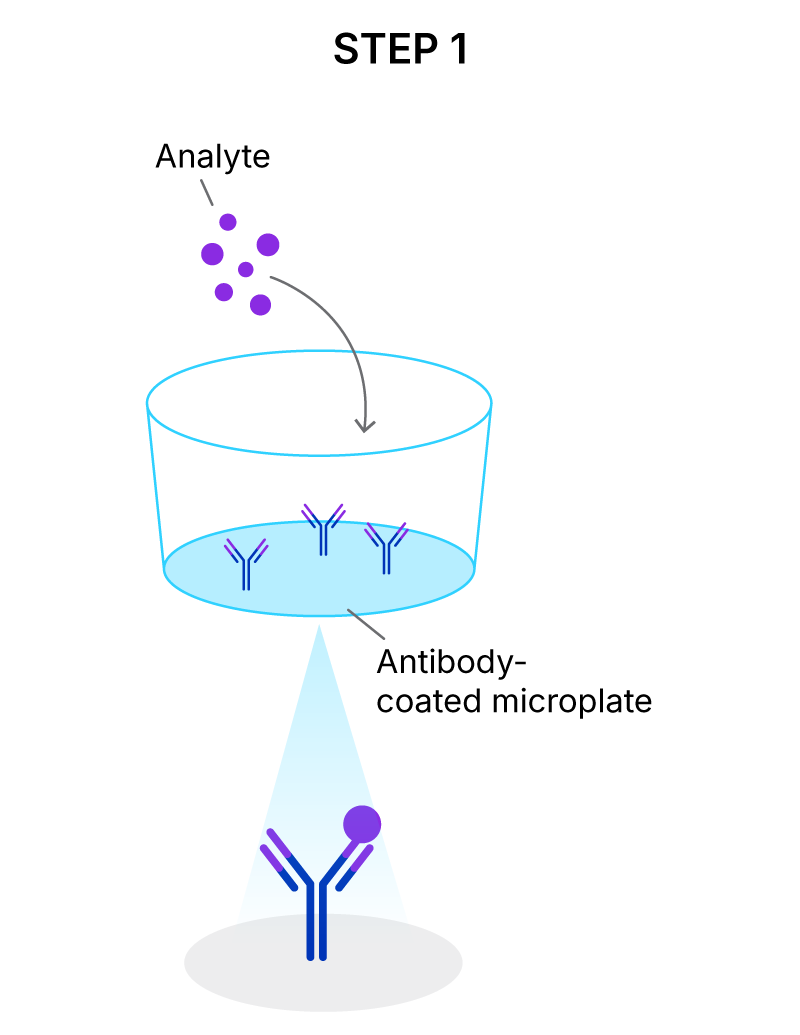
Figure 2. A microplate pre-coated with capture antibody is provided. Samples or standards are added, and any analyte present is bound by the immobilized antibody. Unbound materials are washed away.
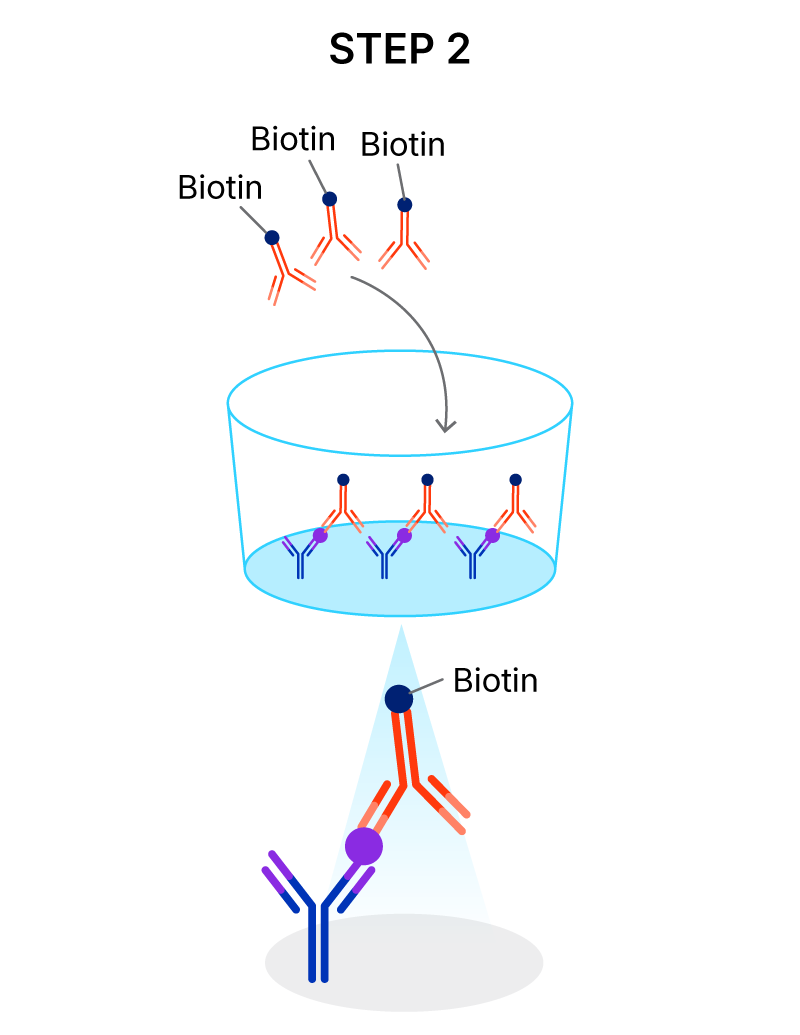
A second Biotin-labeled antibody (detection antibody) is added and binds to the captured analyte. Unbound detection antibody is washed away.
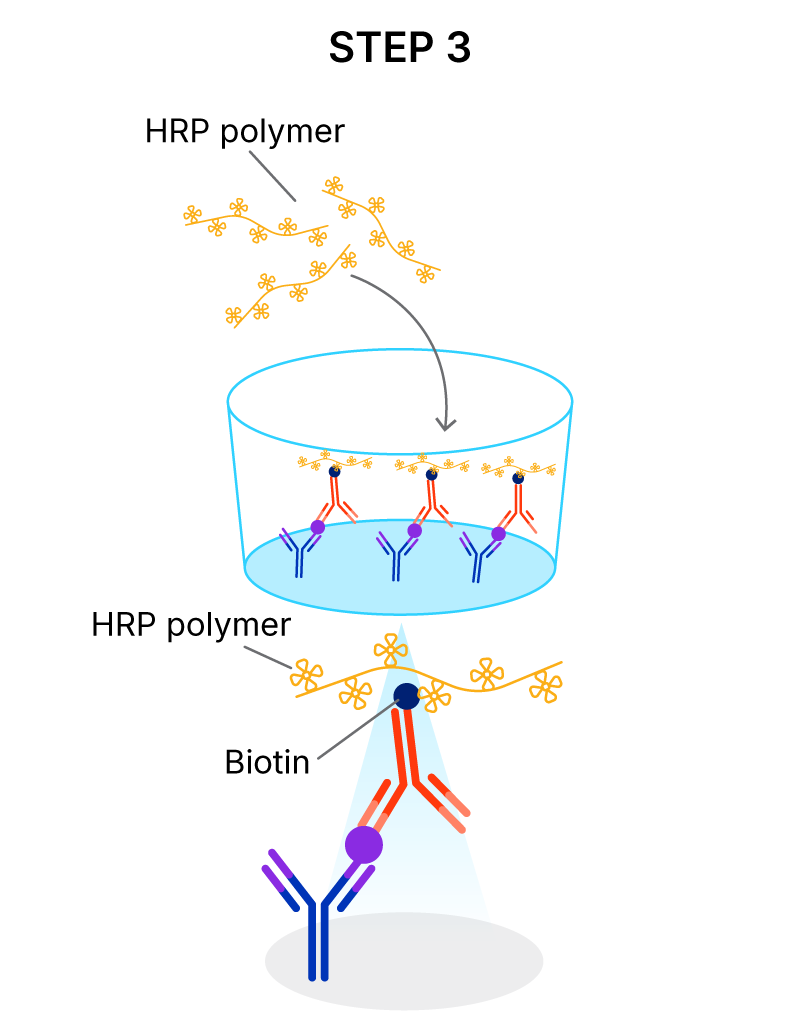
Streptavidin-HRP Polymer is used to bind to the detection antibody. Unbound streptavidin-HRP is washed away.
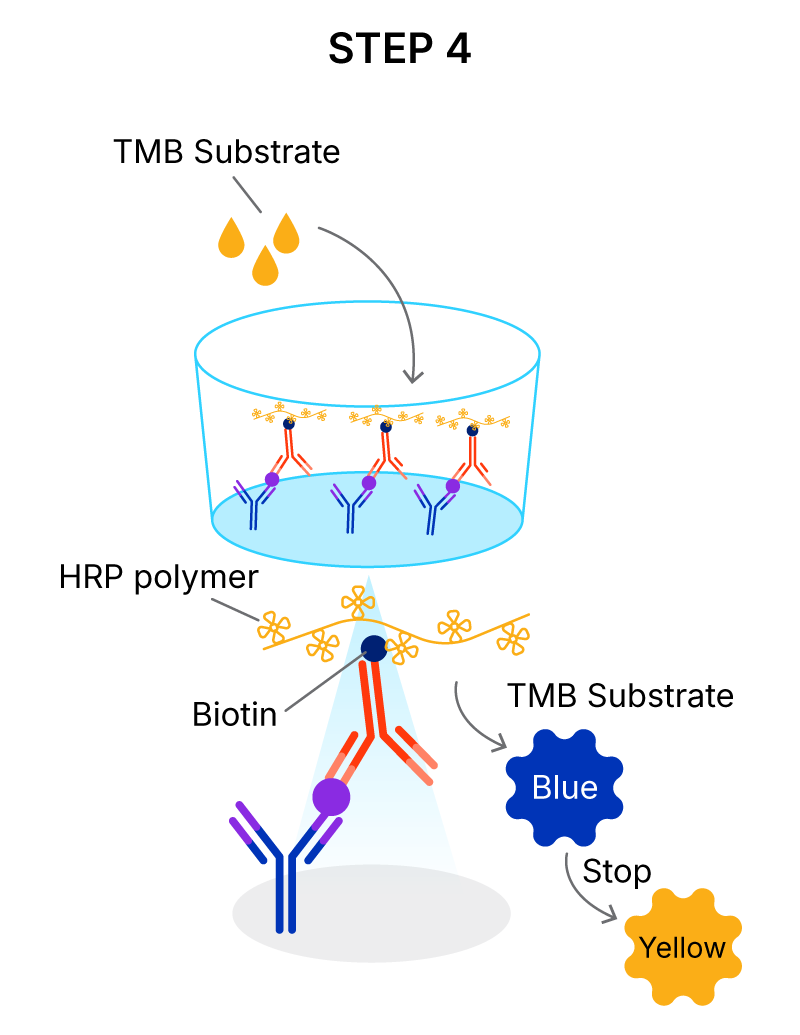
Tetramethylbenzidine (TMB) substrate solution is added to the wells and a blue color develops in proportion to the amount of analyte present in the sample. Color development is stopped turning the color in the wells to yellow. The absorbance of the color at 450 nm is measured.

Quantikine High Sensitivity ELISA Kits Using Polymeric Streptavidin-HRP Amplification with TMB Substrate
- Human CTLA-4 Quantikine HS ELISA Kit
- Human G-CSF Quantikine HS ELISA Kit
- Human Granzyme B Quantikine HS ELISA Kit
- Human IFN-gamma Quantikine HS ELISA Kit
- Human IFN-alpha2 Quantikine HS ELISA Kit
- Human IL-1 beta/IL-1F2 Quantikine HS ELISA Kit
- Human IL-2 Quantikine HS ELISA Kit
- Human IL-6 Quantikine HS ELISA Kit
- Human IL-17 Quantikine HS ELISA Kit
- Human TNF-alpha Quantikine HS ELISA
- Mouse IL-1 beta/IL-1F2 Quantikine HS ELISA Kit
- Mouse IL-17 Quantikine HS ELISA Kit
- Mouse TNF-alpha Quantikine HS ELISA Kit
Kit Contents
Kit contents may vary slightly. Please refer to product-specific inserts for a complete list of contents for each individual assay.
- Pre-Coated 96-Well Microplate
- Conjugated Detection Antibody
- Calibrated Immunoassay Standard
- Assay Diluent
- Calibrator Diluent(s)
- Wash Buffer
- Substrate and Substrate Diluent or Color Reagent A and B
- Amplifier and Amplifier Diluent or Streptavidin Polymer-HRP and Streptavidin Polymer-HRP Diluent
- Stop Solution
- Plate Sealers
High sensitivity cytokine measurement is often critical for evaluating CAR-T cell activation and supporting studies of CAR-T cell persistence and safety. Quantikine High Sensitivity ELISA Kits can be used to quantify cytokines associated with therapeutic activity and cytokine release syndrome (CRS), helping researchers characterize cellular responses and monitor treatment-related immune effects.
Monitoring immune responses often requires measuring cytokines and other biomarkers present at concentrations below the reliable detection limits of standard ELISAs. Quantikine High Sensitivity ELISA Kits enable accurate quantification of low-level immune mediators, supporting studies that track immune responses over time and the detection of early changes associated with immune activation, immune regulation, inflammation, infection, vaccination, or therapeutic intervention.
Many autoimmune and inflammatory disorders are driven by dysregulated cytokine signaling and chronic immune activation. Quantikine High Sensitivity ELISA Kits support studies of inflammatory pathways and immune regulation by enabling the sensitive measurement of protein biomarkers associated with disease onset, progression, flare activity, and response to treatment.
Vaccine-induced immune responses are often accompanied by subtle changes in cytokine and immune biomarker expression that may be difficult to detect using conventional ELISAs. Quantikine High Sensitivity ELISA Kits enable reliable quantification of low-abundance immune mediators, supporting studies of vaccine immunogenicity, immune activation, response kinetics, and biomarker evaluation throughout vaccine development and clinical research.
Successful biomarker development requires reproducible quantification of candidate biomarkers across diverse patient cohorts, study populations, and longitudinal time points. Quantikine High Sensitivity ELISA Kits provide the sensitivity and consistency needed to support biomarker validation and translational research studies, enabling the confirmation of disease-associated proteins, evaluation of their relationship to disease state and progression, and assessment of pharmacodynamic responses to therapeutic intervention.
ELISA Best Practices Poster

Discover the top 10 best practices and techniques that can help even the experienced ELISA user get the most from their assay.
IFN-γ in Cytokine Release Syndrome
Read this application note to discover how high-sensitivity IFN-γ detection can provide early insights into cytokine release syndrome.
Compact ELISA Plate Reader

Save space and costs with Simple Reader™, a compact, cost-effective plate reader offering precise results.
A Quantikine High Sensitivity ELISA (enzyme-linked immunosorbent assay) is an ultra-sensitive quantitative sandwich immunoassay developed by R&D Systems for the measurement of very low concentrations of specific protein biomarkers. Like a standard Quantikine ELISA, the assay uses analyte-specific capture and detection antibodies to generate a measurable signal proportional to the amount of target protein present. However, Quantikine High Sensitivity ELISA Kits incorporate signal amplification technologies that allow many of our assays to detect analytes at femtogram-per-milliliter concentrations, making them ideal for measuring low-abundance cytokines, chemokines, growth factors, and other biomarkers that may be difficult to detect with conventional ELISAs.
R&D Systems antibodies and recombinant proteins are at the core of every Quantikine High Sensitivity ELISA Kit. Manufactured and tested in-house for consistent quality and performance, these critical assay components help ensure accurate and reliable protein quantification across a range of research applications.
Quantikine High Sensitivity ELISA Kits use a sandwich immunoassay format in which a capture antibody immobilized on a microtiter plate binds to the target analyte. A second analyte-specific detection antibody forms an antibody-analyte-antibody complex. Depending on the assay, signal amplification is achieved using either an alkaline phosphatase-based amplification system or a polymeric streptavidin-HRP amplification system, enabling reliable detection of proteins present at extremely low concentrations.
Quantikine High Sensitivity ELISA Kits quantify protein concentrations by comparing the absorbance values of unknown samples to a standard curve generated using known concentrations of the target analyte. The concentration of the analyte in each sample is then determined by interpolation from the standard curve within the assay's validated range.
Quantikine High Sensitivity ELISA Kits are available for the measurement of cytokines, chemokines, growth factors, immune checkpoint proteins, inflammatory mediators, and other biomarkers that may occur at low concentrations and require highly sensitive detection. Available targets include human IFN-α2, IFN-γ, TNF-α, IL-1β, IL-2, IL-4, IL-6, IL-7, IL-8/CXCL8, IL-10, IL-12 p70, IL-17, GM-CSF, G-CSF, CTLA-4, Granzyme B, PlGF, and FGF basic and mouse IL-1β, IL-17, and TNF-α.
Quantikine High Sensitivity ELISA Kits are designed to quantify low-abundance proteins in a variety of biological samples. Depending on the assay, validated sample types may include serum, plasma, cell culture supernatants, and other sample matrices. Researchers should consult the product-specific datasheet for validated sample types and sample preparation recommendations.
Quantikine High Sensitivity ELISA Kits combine ultra-low level protein detection with the convenience of a complete, ready-to-use assay format. Each assay undergoes rigorous validation and quality testing to characterize sensitivity, specificity, reproducibility, and lot-to-lot consistency, helping ensure accurate quantitative protein measurement. Comprehensive performance specifications and protocol documentation are provided, making these kits an ideal choice for researchers studying low-abundance biomarkers that may be difficult to detect using conventional ELISAs.
Quantikine High Sensitivity ELISA Kits are designed to detect proteins at extremely low concentrations, with many assays capable of femtogram-per-milliliter sensitivity. The exact sensitivity, detection limit, and assay range vary by target and are reported in the product-specific datasheet.
Both Quantikine ELISAs and Quantikine High Sensitivity ELISAs use a sandwich ELISA format and are supplied as complete, ready-to-use kits for quantitative protein measurement. Quantikine High Sensitivity ELISAs incorporate specialized signal amplification strategies that enable detection of substantially lower analyte concentrations, often at femtogram-per-milliliter levels, making them ideal for measuring low-abundance proteins and biomarkers that may be difficult to detect with conventional ELISAs.
Looking for other ELISA assay formats, targets, or brands? View All ELISA Kits, including Novus kits here.