
Human ISG15/UCRP Antibody (851701)
R&D Systems | Catalog # A-830

Scientific images may be resized, cropped, or adjusted for brightness or contrast for presentation purposes. These updates are limited to presentation and do not affect the underlying scientific interpretation of the data. Where available, additional source data may be provided upon request.
Key Product Details
Species Reactivity
Validated:
Cited:
Applications
Validated:
Cited:
Label
Antibody Source
Product Specifications
Immunogen
Accession # P05161
Specificity
Clonality
Host
Isotype
Scientific Data Images for Human ISG15/UCRP Antibody (851701)
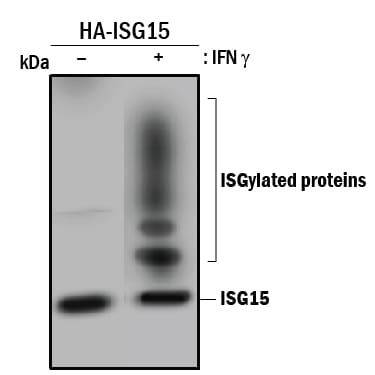
Immunoprecipitation of Human ISG15/UCRP.
A549 cells transfected with HA-ISG15 were treated briefly with IFN gamma or carrier only. 500 µg of cell lysates were subjected to immunoprecipitation (IP) with 20 µg A-830 using Protein G Sepharose. IP’d material was resolved on reducing SDS-PAGE gels and Western Blots were developed using PVDF membranes and anti-HA epitope (R&D Systems MAB060) at 0.5 µg/ml followed by HRP-labeled anti-mouse (R&D Systems # HAF007) secondary antibody at 1:2000 dilution. Free (unconjugated) HA-ISG15 was visualized in both treated and untreated cells, while ISGylated proteins were clearly recovered (IP’d) from the interferon-treated cell lysates.Applications for Human ISG15/UCRP Antibody (851701)
Immunoprecipitation
Western Blot
Sample: A549 cells transfected with HA-ISG15 treated with IFN-gamma
Reviewed Applications
Read 2 reviews rated 5 using A-830 in the following applications:
Formulation, Preparation, and Storage
Purification
Formulation
Shipping
Stability & Storage
Background: ISG15/UCRP
Long Name
Alternate Names
Gene Symbol
UniProt
Additional ISG15/UCRP Products
Product Documents for Human ISG15/UCRP Antibody (851701)
Certificate of Analysis
To download a Certificate of Analysis, please enter a lot or batch number in the search box below.
Note: Certificate of Analysis not available for kit components.
Product Specific Notices for Human ISG15/UCRP Antibody (851701)
* Contains <0.1% Sodium Azide, which is not hazardous at this concentration according to GHS classifications. Refer to SDS for additional information and handling instructions.
For research use only
Related Research Areas
Citations for Human ISG15/UCRP Antibody (851701)
 Powered by Bioz
Customer Reviews for Human ISG15/UCRP Antibody (851701) (2)
Have you used Human ISG15/UCRP Antibody (851701)?
Submit a review and receive an Amazon gift card!
$25/€18/£15/$25CAN/¥2500 for a review with an image
$10/€7/£6/$10CAN/¥1110 for a review without an image
Submit a review
Customer Images
-
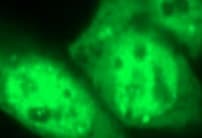
Application: Immunocytochemistry/ImmunofluorescenceSample Tested: Human embryonic kidney 293T cellsSpecies: HumanVerified Customer | Posted 09/30/2021

-
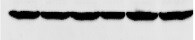
Application: Western BlotSample Tested: HT1080 human fibrosarcoma cell lineSpecies: HumanVerified Customer | Posted 08/05/2021
There are no reviews that match your criteria.
Protocols
Find general support by application which include: protocols, troubleshooting, illustrated assays, videos and webinars.
- Cellular Response to Hypoxia Protocols
- Immunoprecipitation Protocol
- R&D Systems Quality Control Western Blot Protocol
- Troubleshooting Guide: Western Blot Figures
- Western Blot Conditions
- Western Blot Protocol
- Western Blot Protocol for Cell Lysates
- Western Blot Troubleshooting
- Western Blot Troubleshooting Guide
- View all Protocols, Troubleshooting, Illustrated assays and Webinars