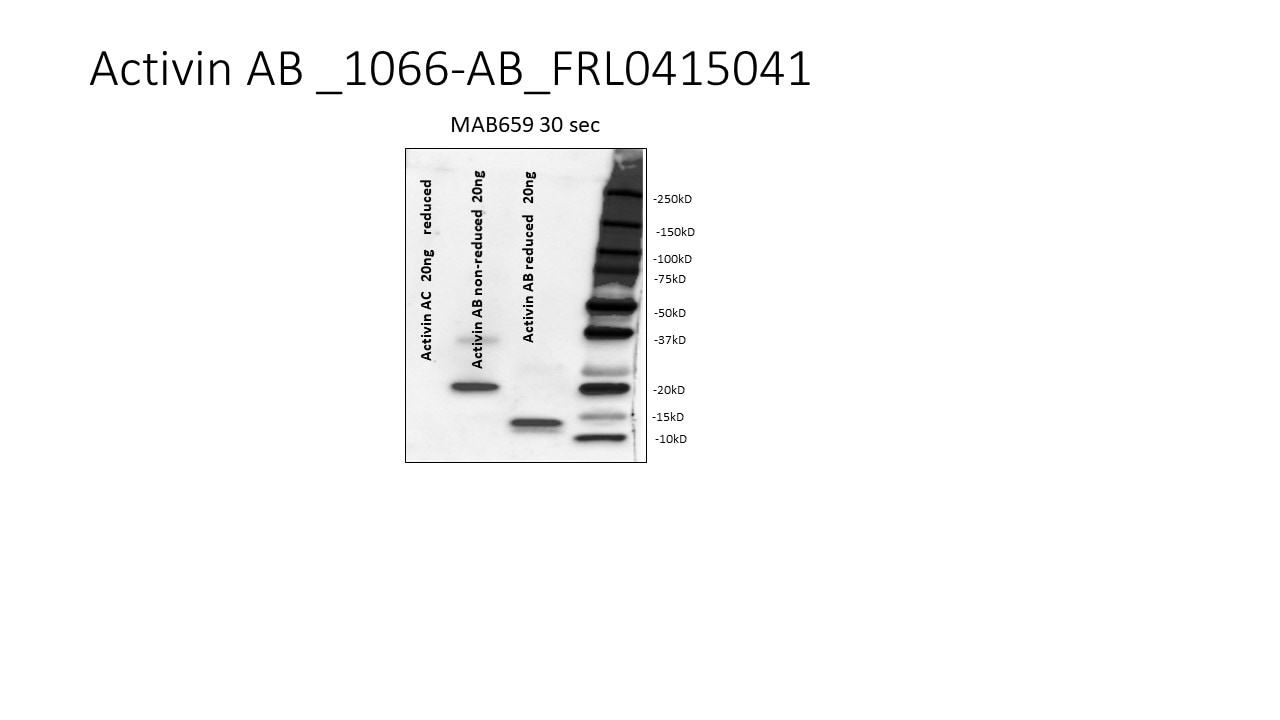
Activins, members of the TGF-beta superfamily, are disulfide-linked dimeric proteins that were originally purified from gonadal fluids as proteins that stimulated pituitary follicle stimulating hormone (FSH) release. Activin proteins have since been shown to have a wide range of biological activities including: mesoderm induction, neural cell differentiation, bone remodeling, hematopoiesis and roles in reproductive physiology. Activins are produced as precursor proteins with an amino-terminal propeptide that is cleaved to release the carboxy-terminal bioactive ligands. Activins are homodimers or heterodimers of the various beta subunit isoforms. Five beta subunits (mammalian beta A, beta B, beta C, beta E and Xenopus beta D) have been cloned. The nomenclature reflects the subunit composition of the proteins: Activin A ( beta A - beta A), Activin B ( beta B - beta B), and Activin AB ( beta A - beta B). Activin A, Activin B, and Activin AB are present in gonadal tissues and are biologically active proteins. However, little is known about the contribution of the other beta subunits to Activin formation and function since knock-outs of beta C and beta E in mice do not exhibit a phenotype.
At the amino acid sequence level, the mature human beta A subunit is 100% identical to mouse beta A, while the mature human and mouse beta B subunits share 98% identity. The mature beta A and beta B subunits share less than 80% amino acid identity. Mice with targeted mutations of beta A, beta B, or both genes do not show mesodermal defects, indicating Activin is not involved in mesoderm formation in mammals as it is in Xenopus. Also, the double homozygous mutants have the whole spectrum of defects associated with either mutation alone, suggesting that Activin beta A and beta B do not compensate for one another, nor do they have overlapping functions. Similar to other TGF-beta family members, Activins exert their biological activities through binding to the heterodimeric complex composed of two membrane spanning serine-threonine kinases designated type I and type II. Activin binds directly to ACT RII, the complex then associates with ACT RI and initiates signaling through the SMADs.
 Powered by Bioz