
DDR1, also known as CAK, CD167a, RTK6, and TrkE, is a 120 - 140 kDa type I transmembrane glycoprotein that belongs to the discoidin-like domain containing subfamily of receptor tyrosine kinases (1, 2). Mature human DDR2 consists of a 398 amino acid (aa) extracellular domain (ECD) that includes the discoidin-like domain, a 27 aa transmembrane segment, and a 470 aa cytoplasmic region with a tyrosine kinase domain (3). Within the ECD, human DDR1 shares 53% aa sequence identity with human DDR2 and 93% with mouse and rat DDR1. DDR1 is expressed on epithelial tissues, activated monocytes and neutrophils, and in several cancers (2, 4). Compared to isoform DDR1b, DDR1a lacks 37 aa’s that include a Shc-interacting NPxY motif in the cytoplasmic juxtamembrane region (5). Two additional kinase deficient splice forms are expressed in colon cancer (6). The discoidin-like domain mediates binding to collagens I - V (1, 7, 8). DDR1 selectively recognizes the triple helical structure of collagen (7, 8). It is expressed on the cell surface as a dimer which can include different isoforms (5, 9). DDR1 oligomerization enhances collagen binding and also modulates collagen fibrillogenesis (10, 11). The transmembrane segment contains a leucine zipper and GxxxG motif, but neither is exclusively required for dimerization (9). Collagen binding induces prolonged autophosphorylation, including the NPxY motif (7, 8). Collagen binding also results in the proteolytic cleavage of a tyrosine phosphorylated 60 kDa C-terminal fragment (CTF), and a 60 kDa ECD fragment (12, 13). TIMP3 and TAPI-1 inhibit shedding of the ECD fragment but not the CTF (12). Overexpression of DDR1a promotes MMP-2 activation and results in an increased invasiveness of a glioblastoma cell line; DDR1b does not (14).
Recombinant Human DDR1 Fc Chimera Protein, CF
R&D Systems | Catalog # 2396-DR


Loading...
Key Product Details
- R&D Systems NS0-derived Recombinant Human DDR1 Fc Chimera Protein (2396-DR)
- Quality control testing to verify active proteins with lot specific assays by in-house scientists
- All R&D Systems proteins are covered with a 100% guarantee
Source
NS0
Accession Number
Structure / Form
Disulfide-linked homodimer
Applications
Binding Activity
Loading...
Product Specifications
Source
Mouse myeloma cell line, NS0-derived human DDR1 protein
| Human DDR1 (Asp21 - Thr416) Accession # Q5ST11 |
IEGRMD | Human IgG1 (Pro100 - Lys330) |
| N-terminus | C-terminus |
Purity
>85%, by SDS-PAGE under reducing conditions and visualized by silver stain.
Endotoxin Level
<0.01 EU per 1 μg of the protein by the LAL method.
N-terminal Sequence Analysis
Asp21
Predicted Molecular Mass
70.5 kDa (monomer)
SDS-PAGE
90-95 kDa, reducing conditions
Activity
Measured by its ability to bind Collagen I in a functional ELISA. Leitinger, B. (2003) J. Biol. Chem. 278:16761.
Immobilized Collagen I at 10 µg/mL (100 µL/well) can bind rhDDR1 with an apparent KD <10 nM.
Optimal dilutions should be determined by each laboratory for each application.
Immobilized Collagen I at 10 µg/mL (100 µL/well) can bind rhDDR1 with an apparent KD <10 nM.
Optimal dilutions should be determined by each laboratory for each application.
Reviewed Applications
Read 1 review rated 4 using 2396-DR in the following applications:
Formulation, Preparation, and Storage
2396-DR
| Formulation | Lyophilized from a 0.2 μm filtered solution in PBS. |
| Reconstitution | Reconstitute at 100 μg/mL in sterile PBS.
Loading...
|
| Shipping | The product is shipped at ambient temperature. Upon receipt, store it immediately at the temperature recommended below. |
| Stability & Storage | Use a manual defrost freezer and avoid repeated freeze-thaw cycles.
|
Calculators
Background: DDR1
References
- Vogel, W.F. et al. (2006) Cell. Signal. 18:1108.
- Yoshimura, T. et al. (2005) Immunologic Res. 31:219.
- Perez, J.L. et al. (1994) Oncogene 9:211.
- Laval, S. et al. (1994) Cell Growth Differ. 5:1173.
- Perez, J.L. et al. (1996) Oncogene 12:1469.
- Alves, F. et al. (2001) FASEB J. 15:1321.
- Shrivastava, A. et al. (1997) Mol. Cell 1:25.
- Vogel, W. et al. (1997) Mol. Cell 1:13.
- Nordeen, N.A. et al. (2006) J. Biol. Chem. 281:22744.
- Leitinger, B. (2003) J. Biol. Chem. 278:16761.
- Agarwal, G. et al. (2007) J. Mol. Biol. 367:443.
- Slack, B.E. et al. (2006) J. Cell Biochem. 98:672.
- Vogel, W.F. et al. (2001) FEBS Lett. 514:175.
- Ram, R. et al. (2006) J. Neurooncol. 76:239.
Long Name
Discoidin Domain Receptor 1
Alternate Names
CAK, CD167a, RTK6, TrkE
Entrez Gene IDs
780 (Human)
Gene Symbol
DDR1
UniProt
Additional DDR1 Products
Product Documents for Recombinant Human DDR1 Fc Chimera Protein, CF
Certificate of Analysis
To download a Certificate of Analysis, please enter a lot or batch number in the search box below.
Note: Certificate of Analysis not available for kit components.
Product Specific Notices for Recombinant Human DDR1 Fc Chimera Protein, CF
For research use only
Related Research Areas
Citations for Recombinant Human DDR1 Fc Chimera Protein, CF
 Powered by Bioz
Customer Reviews for Recombinant Human DDR1 Fc Chimera Protein, CF (1)
4 out of 5
1 Customer Rating
Have you used Recombinant Human DDR1 Fc Chimera Protein, CF?
Submit a review and receive an Amazon gift card!
$25/€18/£15/$25CAN/¥2500 for a review with an image
$10/€7/£6/$10CAN/¥1110 for a review without an image
Submit a review
Customer Images
Showing
1
-
1 of
1 review
Showing All
Filter By:
-
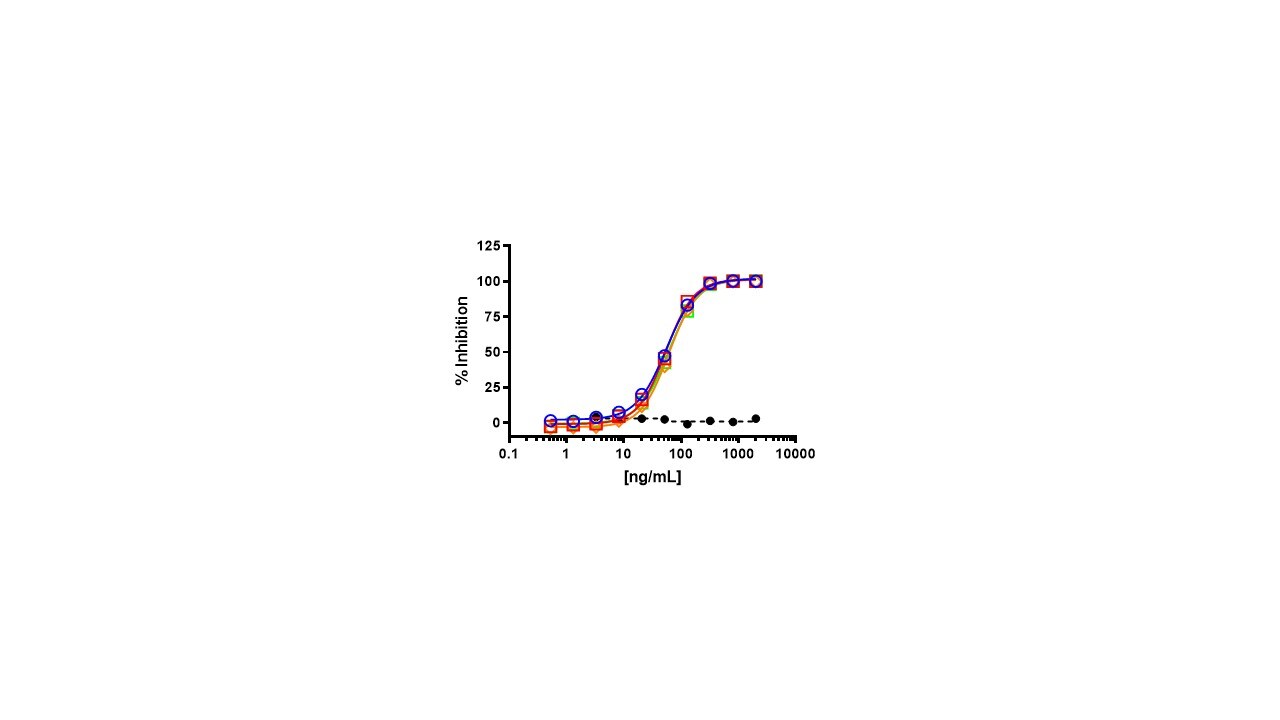
Application: Binding assay/Protein-protein interactionVerified Customer | Posted 08/25/2022

There are no reviews that match your criteria.
Loading...