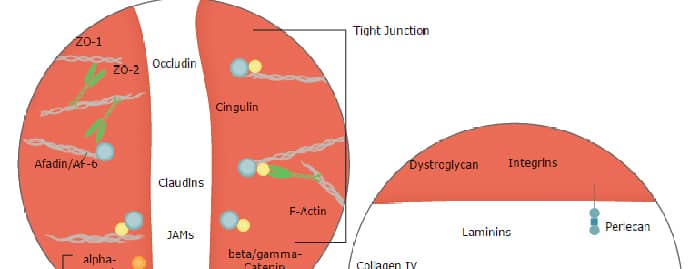
Fibronectin, encoded by the FN1 gene, is a large modular glycoprotein that is found as a polymeric fibrillar network in the extracellular matrix (ECM) and as soluble disulfide-linked dimeric protomers in plasma and other body fluids. The protein subunit is made up of three types of homologous structural repeats termed FN type I, type II, and type III repeats. Multiple isoforms of the protein formed by alternative splicing at numerous sites, resulting in insertions of extra type III domains (EDA and ECB) or parts of the variable type III connecting segment (V/IIICS), have been identified. Fibronectin is a ligand for fibrin, heparin, chondroitin sulfate, collagen/gelatin, and many integrin receptors. It is involved in multiple cellular processes including cell adhesion/migration, blood clotting, morphogenesis, tissue repair, and cell signaling. Fibronectin functions are mediated by the insoluble polymeric fibrils in the ECM. Conversion of the non-functional soluble fibronectin to fibronectin fibrils in the ECM is tightly regulated. The process is initiated by binding of fibronectin to cell surface integrins, resulting in conformational changes and exposure of cryptic epitopes necessary for polymerization (1, 2).
The recombinant human FN1.2 contains the first 7 FN type III domains (III1 - 7). III1 binds weakly to heparin and is thought to be important for self association and fibril formation. The recombinant human FN1.2 does not contain the known tripeptide RGD domain.
 Powered by Bioz