Recombinant Human MD-2 Protein

R&D Systems | Catalog # 1787-MD

R&D Systems
Loading...

Key Product Details

  • R&D Systems E. coli-derived Recombinant Human MD-2 Protein (1787-MD)
  • Quality control testing to verify active proteins with lot specific assays by in-house scientists
  • All R&D Systems proteins are covered with a 100% guarantee

Source

E. coli

Accession Number

Applications

Binding Activity
Loading...

Product Specifications

Source

E. coli-derived human MD2 protein
Met Human MD-2
(Glu17 - Asn160)
Accession # BAA78717
IEGRGGGSGGGSGGGS 10-His tag
N-terminus C-terminus

Purity

>90%, by SDS-PAGE under reducing conditions and visualized by silver stain.

Endotoxin Level

<0.10 EU per 1 μg of the protein by the LAL method.

N-terminal Sequence Analysis

Met

Predicted Molecular Mass

19.2 kDa (monomer)

Activity

Measured by its binding ability in a functional ELISA.
When recombinant human TLR-4 is Immobilized at 2 µg/mL (100 µL/well), the concentration of rhMD-2 that produces 50% optimal binding response is found to be approximately 0.03-0.15 µg/mL.

Reviewed Applications

Read 1 review rated 4 using 1787-MD in the following applications:

Formulation, Preparation, and Storage

Carrier Free
What does CF mean?

CF stands for Carrier Free (CF). We typically add Bovine Serum Albumin (BSA) as a carrier protein to our recombinant proteins. Adding a carrier protein enhances protein stability, increases shelf-life, and allows the recombinant protein to be stored at a more dilute concentration. The carrier free version does not contain BSA.

What formulation is right for me?

In general, we advise purchasing the recombinant protein with BSA for use in cell or tissue culture, or as an ELISA standard. In contrast, the carrier free protein is recommended for applications, in which the presence of BSA could interfere.

Carrier: 1787-MD
Formulation Lyophilized from a 0.2 μm filtered solution in Acetonitrile and TFA with BSA as a carrier protein.
Reconstitution

Reconstitute at 100 μg/mL in sterile PBS containing at least 0.1% human or bovine serum albumin.

Shipping The product is shipped at ambient temperature. Upon receipt, store it immediately at the temperature recommended below.
Stability & Storage Use a manual defrost freezer and avoid repeated freeze-thaw cycles.
  • 12 months from date of receipt, -20 to -70 °C as supplied.
  • 1 month, 2 to 8 °C under sterile conditions after reconstitution.
  • 3 months, -20 to -70 °C under sterile conditions after reconstitution.
Carrier Free: 1787-MD/CF
Formulation Supplied as a 0.2 μm filtered solution in Acetonitrile and TFA.
Shipping The product is shipped with dry ice or equivalent. Upon receipt, store it immediately at the temperature recommended below.
Stability & Storage Use a manual defrost freezer and avoid repeated freeze-thaw cycles.
  • 12 months from date of receipt, -20 to -70 °C as supplied.
  • 1 month, 2 to 8 °C under sterile conditions after opening.
  • 3 months, -20 to -70 °C under sterile conditions after opening.

Calculators

The reconstitution calculator allows you to quickly calculate the volume of a reagent to reconstitute your vial. Simply enter the mass of reagent and the target concentration and the calculator will determine the rest.

=
÷

Background: MD2

MD-2, also known as lymphocyte antigen 96 and ESOP-1, is a secreted glycoprotein that shares conserved cysteine residues and significant sequence similarity (23%) with MD-1. The gene of human MD-2 encodes a 160 amino acid residue (aa) precursor protein with a 16 aa signal peptide and a 144 aa mature protein, which contains 2 N‑glycosylation sites (1). Recombinant secreted MD‑2 has been found to exist as disulfide-linked dimers and oligomers (2).

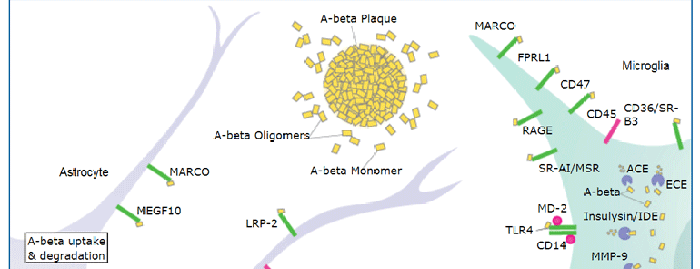
Both MD-1 and MD-2 are accessory molecules that associate with the extracellular leucine-rich repeats (LRR) of Toll-like receptor (TLR) family members, which are type I transmembrane receptors that regulate innate immune responses to microbial pathogens (3, 4). MD-1 binds to RP105 on B cells and macrophages to form the signaling receptor complex for lipopolysaccharide (LPS), a constituent of the outer membrane of Gram-negative bacteria. Similarly, MD-2 interacts with TLR-4 to form the heteromeric receptor that confers LPS responsiveness. MD-2 also associates with TLR-2, albeit with less avidity, to confer responsiveness to cell wall components from both Gram-positive and Gram-negative bacteria. MD-1 and MD-2 are also required for the correct targeting of the TLRs to the cell surface. Although MD-2 glycosylation is not crucial for its surface expression and interaction with TLR-4, it is required for LPS binding and signaling (5).

References

  1. Shimazu, R. et al. (1999) J. Exp. Med. 189:1777.
  2. Visintin, A. et al. (2001) Proc. Natl. Acad. Sci. USA 98:12156.
  3. Nagai, Y. et al. (2002) Nature Immunology 3:667.
  4. Akashi, S. et al. (2003) J. Exp. Med. 198:1035.
  5. Correia, J. and R. Ulevitch (2002) J. Biol. Chem. 277:1845.

Long Name

Myeloid Differentiation Protein 2/Lymphocyte Antigen 96

Alternate Names

ESOP-1, LY96, MD-2

Entrez Gene IDs

23643 (Human); 17087 (Mouse); 102118398 (Cynomolgus Monkey)

Gene Symbol

LY96

UniProt

Additional MD2 Products

Product Documents for Recombinant Human MD-2 Protein

Certificate of Analysis

To download a Certificate of Analysis, please enter a lot or batch number in the search box below.

Note: Certificate of Analysis not available for kit components.

Product Specific Notices for Recombinant Human MD-2 Protein

For research use only

Related Research Areas

Citations for Recombinant Human MD-2 Protein

Customer Reviews for Recombinant Human MD-2 Protein (1)

4 out of 5
1 Customer Rating
5 Stars
0%
4 Stars
100%
3 Stars
0%
2 Stars
0%
1 Stars
0%

Have you used Recombinant Human MD-2 Protein?

Submit a review and receive an Amazon gift card!

$25/€18/£15/$25CAN/¥2500 Yen for a review with an image

$10/€7/£6/$10CAN/¥1110 Yen for a review without an image

Submit a review
Amazon Gift Card

Customer Images


Showing  1 - 1 of 1 review Showing All
Filter By:
  • Recombinant Human MD-2 Protein
    Name: Anonymous
    Application: Binding assay/Protein-protein interaction
    Verified Customer | Posted 03/29/2021
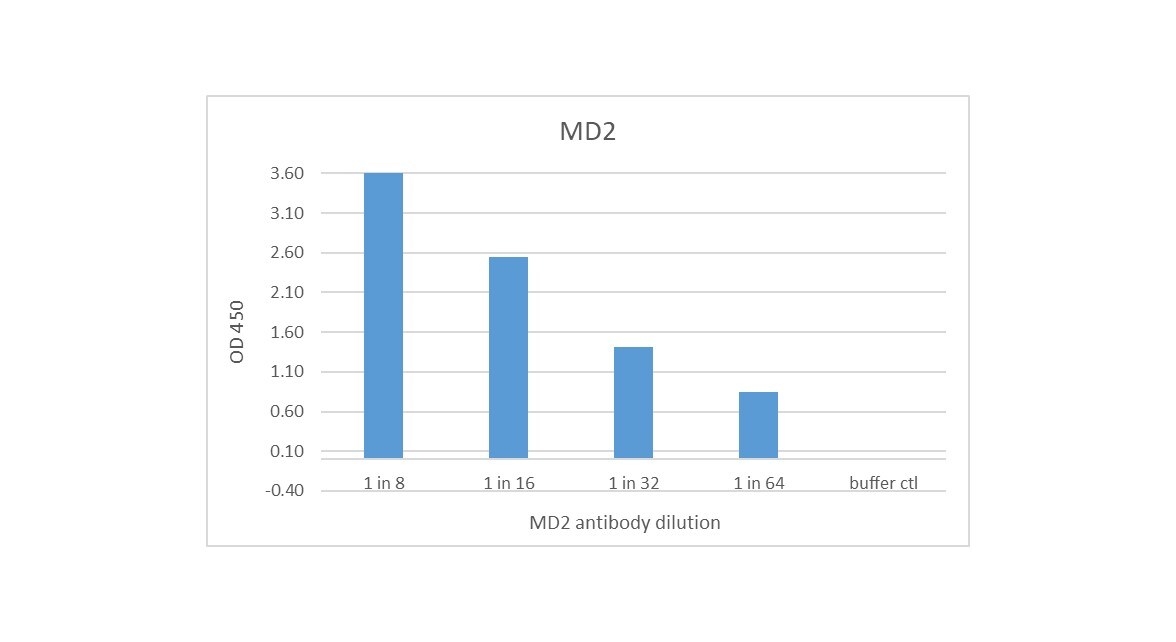
    we use this protein to see interactions with MD2 antibody, it has a very good affinity towards MD2 monoclonal antibody in direct ELISA.
    Recombinant Human MD-2 Protein 1787-MD

There are no reviews that match your criteria.

Showing  1 - 1 of 1 review Showing All

FAQs

No product specific FAQs exist for this product.

View all FAQs for Proteins and Enzymes