Recombinant Mouse ACE Protein, CF

R&D Systems | Catalog # 1513-ZN

R&D Systems
Loading...

Key Product Details

  • R&D Systems NS0-derived Recombinant Mouse ACE Protein (1513-ZN)
  • Quality control testing to verify active proteins with lot specific assays by in-house scientists
  • All R&D Systems proteins are covered with a 100% guarantee

Source

NS0

Accession Number

Structure / Form

Recombinant Mouse ACE is prone to proteolytic cleavage at C-terminus. The predominant form of the purified protein lacks the His tag.

Applications

Enzyme Activity
Loading...

Product Specifications

Source

Mouse myeloma cell line, NS0-derived mouse ACE/CD143 protein
Leu35-Gln1264, with a C-terminal 10-His tag

Purity

>95%, by SDS-PAGE under reducing conditions and visualized by silver stain.

Endotoxin Level

<1.0 EU per 1 μg of the protein by the LAL method.

N-terminal Sequence Analysis

Leu35

Predicted Molecular Mass

143 kDa

SDS-PAGE

160 kDa, under reducing conditions.

Activity

Measured by its ability to cleave the fluorogenic peptide substrate, Mca-RPPGFSAFK(Dnp)-OH (Catalog # ES005).
The specific activity is > 500 pmol/min/µg, as measured under the described conditions.

Formulation, Preparation, and Storage

1513-ZN
Formulation Supplied as a 0.2 μm filtered solution in Tris and NaCl.
Shipping The product is shipped with dry ice or equivalent. Upon receipt, store it immediately at the temperature recommended below.
Stability & Storage Use a manual defrost freezer and avoid repeated freeze-thaw cycles.
  • 6 months from date of receipt, -20 to -70 °C as supplied.
  • 3 months, -20 to -70 °C under sterile conditions after opening.

Background: ACE/CD143

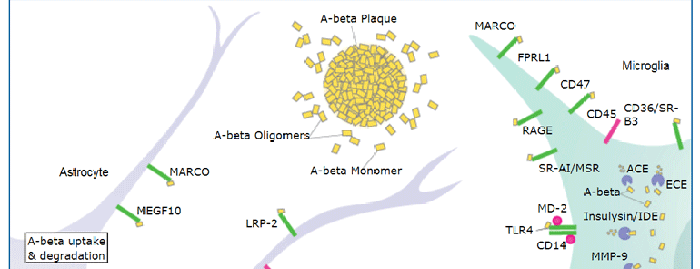
ACE (also known as peptidyl-dipetidase A) is a zinc metallopeptidase important for blood pressure control and water and salt metabolism (1). It cleaves the C-terminal dipeptide from angiotensin I to produce the potent vasopressor octapeptide angiotensin II and inactivates bradykinin by the sequential removal of two C-terminal dipeptides. In addition to the two physiological substrates, ACE cleaves C-terminal dipeptides from various oligopeptides with a free C-terminus. Because of its location and specificity, ACE plays additional roles in immunity, reproduction and neuropeptide regulation. For example, ACE degrades Alzheimer amyloid beta -peptide (A beta ), retards A beta aggregation, deposition, fibril formation, and inhibits cytotoxicity (2).

ACE is a type I membrane protein and exists in two isoforms (1). Somatic ACE, found in endothelial, epithelial and neuronal cells, comprises two highly similar catalytic domains called N- and C-domains. Germinal ACE, found exclusively in the testes, comprises a single catalytic domain identical to the C-domain of somatic ACE except for an N-terminal 67 residue germinal ACE-specific sequence. Physiological functions of the two tissue-specific isozymes are not interchangeable (3). For example, sperm-specific expression of the germinal ACE, not the somatic ACE, in ACE knockout male mice restored fertility.

Soluble ACE is present in many biological fluids, such as serum, seminal fluid, amniotic fluid and cerebrospinal fluid (1). The soluble ACE is derived from the membrane forms by actions of secretases or sheddases. The identities of the secretases have not been revealed, although they belong to the family of zinc metallopeptidases (4, 5).

References

  1. Corvol, P. et al. (2004) in Handbook of Proteolytic Enzymes (Barrett, A.J. et al., eds.) p. 332, Academic Press, San Diego.
  2. Hu, J. et al. (2001) J. Biol. Chem. 276:47863.
  3. Kessler, S.P. et al. (2000) J. Biol. Chem. 275:26259.
  4. Eyries, M. et al. (2001) J. Biol. Chem. 276:5525.
  5. Alfalah, M. et al. (2001) J. Biol. Chem. 276:21105.

Long Name

Angiotensin I Converting Enzyme

Alternate Names

CD143, DCP1, Kininase II

Entrez Gene IDs

1636 (Human); 11421 (Mouse)

Gene Symbol

ACE

UniProt

Additional ACE/CD143 Products

Product Documents for Recombinant Mouse ACE Protein, CF

Certificate of Analysis

To download a Certificate of Analysis, please enter a lot or batch number in the search box below.

Note: Certificate of Analysis not available for kit components.

Product Specific Notices for Recombinant Mouse ACE Protein, CF

For research use only

Citations for Recombinant Mouse ACE Protein, CF

Customer Reviews for Recombinant Mouse ACE Protein, CF

There are currently no reviews for this product. Be the first to review Recombinant Mouse ACE Protein, CF and earn rewards!

Have you used Recombinant Mouse ACE Protein, CF?

Submit a review and receive an Amazon gift card!

$25/€18/£15/$25CAN/¥2500 Yen for a review with an image

$10/€7/£6/$10CAN/¥1110 Yen for a review without an image

Submit a review
Amazon Gift Card

Protocols

View specific protocols for Recombinant Mouse ACE Protein, CF (1513-ZN):

Materials
  • Assay Buffer: 50 mM MES, pH 6.5
  • Recombinant Mouse ACE (rmACE) (Catalog # 1513-ZN)
  • Substrate: MCA-Arg-Pro-Pro-Gly-Phe-Ser-Ala-Phe-Lys(DNP)-OH (Catalog # ES005)
  • F16 Black Maxisorp Plate (Nunc, Catalog # 475515)
  • Fluorescent Plate Reader (Model: SpectraMax Gemini EM by Molecular Devices) or equivalent
  1. Dilute rmACE to 0.5 ng/µL in Assay Buffer.
  2. Dilute Substrate to 20 µM in Assay Buffer.
  3. Load 50 µL of 0.5 ng/µL rmACE in a black well plate, and start the reaction by adding 50 µL of 20 µM Substrate. Include a Substrate Blank containing Assay Buffer in place of rmACE.
  4. Read at excitation and emission wavelengths of 320 nm and 405 nm (top read), respectively, in kinetic mode for 5 minutes.
  5. Calculate specific activity:

     Specific Activity (pmol/min/µg) =

Adjusted Vmax* (RFU/min) x Conversion Factor** (pmol/RFU)
amount of enzyme (µg)

     *Adjusted for Substrate Blank
     **Derived using calibration standard MCA-Pro-Leu-OH (Bachem, Catalog # M-1975).

Per Well:

  • rmACE: 0.025 µg
  • Substrate: 10 µM

FAQs for Recombinant Mouse ACE Protein, CF

Showing  1 - 1 of 1 FAQ Showing All
  • Q: Is ACE-1 the same as ACE?

    A: Yes. ACE-1 is used as an alternative name, but not as commonly as ACE and CD143.

Showing  1 - 1 of 1 FAQ Showing All
View all FAQs for Proteins and Enzymes