Recombinant Mouse Galectin-7 Protein, CF

Discontinued Product

1304-GA/CF has been discontinued.
View all Galectin-7 products.
R&D Systems Recombinant Proteins and Enzymes
1 Image
Product Details
Citations (1)
FAQs
Reviews (1)

Recombinant Mouse Galectin-7 Protein, CF Summary

Product Specifications

Purity
>97%, by SDS-PAGE under reducing conditions and visualized by silver stain.
Endotoxin Level
<0.10 EU per 1 μg of the protein by the LAL method.
Activity
Measured by its ability to agglutinate human red blood cells. Hadari, Y.R. et al. (2000) J. Cell Sci. 113:2385. The ED50 for this effect is 1-6 µg/mL.
Source
E. coli-derived mouse Galectin-7 protein
Ser2-Phe136
Accession #
N-terminal Sequence
Analysis
Ser2
Predicted Molecular Mass
15 kDa

Product Datasheets

You must select a language.

x

1304-GA/CF (carrier free)

Carrier Free

What does CF mean?

CF stands for Carrier Free (CF). We typically add Bovine Serum Albumin (BSA) as a carrier protein to our recombinant proteins. Adding a carrier protein enhances protein stability, increases shelf-life, and allows the recombinant protein to be stored at a more dilute concentration. The carrier free version does not contain BSA.

What formulation is right for me?

In general, we advise purchasing the recombinant protein with BSA for use in cell or tissue culture, or as an ELISA standard. In contrast, the carrier free protein is recommended for applications, in which the presence of BSA could interfere.

1304-GA/CF

Formulation Lyophilized from a 0.2 μm filtered solution in PBS and Betamercaptoethanol.
Reconstitution Reconstitute at 200 μg/mL in sterile PBS.
Shipping The product is shipped with polar packs. Upon receipt, store it immediately at the temperature recommended below.
Stability & Storage: Use a manual defrost freezer and avoid repeated freeze-thaw cycles.
  • 12 months from date of receipt, -20 to -70 °C as supplied.
  • 3 months, 2 to 8 °C under sterile conditions after reconstitution.
Reconstitution Calculator

Reconstitution Calculator

The reconstitution calculator allows you to quickly calculate the volume of a reagent to reconstitute your vial. Simply enter the mass of reagent and the target concentration and the calculator will determine the rest.

=
÷

Background: Galectin-7

The galectins constitute a large family of carbohydrate-binding proteins with specificity for N-acetyl-lactosamine-containing glycoproteins. At least 14 mammalian galectins, which share structural similarities in their carbohydrate recognition domains (CRD), have been identified. The galectins have been classified into the prototype galectins (-1, -2, -5, -7, -10, -11, -13, -14), which contain one CRD and exist either as a monomer or a noncovalent homodimer; the chimera galectins (Galectin-3) containing one CRD linked to a nonlectin domain; and the tandem-repeat galectins (-4, -6, -8, -9, -12) consisting of two CRDs joined by a linker peptide. Galectins lack a classical signal peptide and can be localized to the cytosolic compartments where they have intracellular functions. However, via one or more as yet unidentified non-classical secretory pathways, galectins can also be secreted to function extracellularly. Individual members of the galectin family have different tissue distribution profiles and exhibit subtle differences in their carbohydrate-binding specificities. Each family member may preferentially bind to a unique subset of cell-surface glycoproteins (1 - 4).

Mouse Galectin-7 is a prototype monomeric galectin. It is expressed in stratified epithelia and is significantly down-regulated in squamous cell carcinomas. Galectin-7 is a pro-apoptotic protein that is highly induced by the tumor suppressor protein p53. It functions intracellularly upstream of JNK activation to enhance cytochrome c release during apoptosis (5). Galectin-7 may also be involved in cell-cell and cell-matrix interactions and exogenous galectin has been found to accelerate the re-epithelialization of wounds (6).

References
  1. Rabinovich, A. et al. (2002) TRENDS in Immunol. 23:313.
  2. Rabinovich, A. et al. (2002) J. Leukocyte Biology 71:741.
  3. Hughes, R.C. (2002) Biochimie 83:667.
  4. R&D Systems’ Cytokine Bulletin, Summer, 2002.
  5. Kuwabara, I. et al. (2002) J. Biol. Chem. 277:3487.
  6. Cao, Z. et al. (2002) J. Biol. Chem. 277:42299.
Entrez Gene IDs
3963 (Human); 16858 (Mouse)
Alternate Names
GAL7; Gal-7; galectin 7; Galectin7; Galectin-7; HKL-14; lectin, galactoside-binding, soluble, 7; LGALS7; LGALS7A; p53-induced gene 1 protein; PI7; PIG1; TP53I1

Citation for Recombinant Mouse Galectin-7 Protein, CF

R&D Systems personnel manually curate a database that contains references using R&D Systems products. The data collected includes not only links to publications in PubMed, but also provides information about sample types, species, and experimental conditions.

1 Citation: Showing 1 - 1

  1. A novel function for galectin-7: promoting tumorigenesis by up-regulating MMP-9 gene expression.
    Authors: Demers M, Magnaldo T, St-Pierre Y
    Cancer Res., 2005-06-15;65(12):5205-10.
    Species: Mouse
    Sample Types: Whole Cells
    Applications: Bioassay

FAQs

No product specific FAQs exist for this product, however you may

View all Proteins and Enzyme FAQs

Reviews for Recombinant Mouse Galectin-7 Protein, CF

Average Rating: 4 (Based on 1 Review)

5 Star
0%
4 Star
100%
3 Star
0%
2 Star
0%
1 Star
0%

Have you used Recombinant Mouse Galectin-7 Protein, CF?

Submit a review and receive an Amazon gift card.

$25/€18/£15/$25CAN/¥75 Yuan/¥2500 Yen for a review with an image

$10/€7/£6/$10 CAD/¥70 Yuan/¥1110 Yen for a review without an image

Submit a Review

Filter by:


Recombinant Mouse Galectin-7 Protein, CF
By Anonymous on 10/26/2015

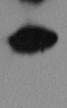
This was used as a positive control for study and is specific. The band is detected by galectin-7 polyclonal antibody.