
Leo System






Leo Provides High-throughput Quantitative Western Analysis
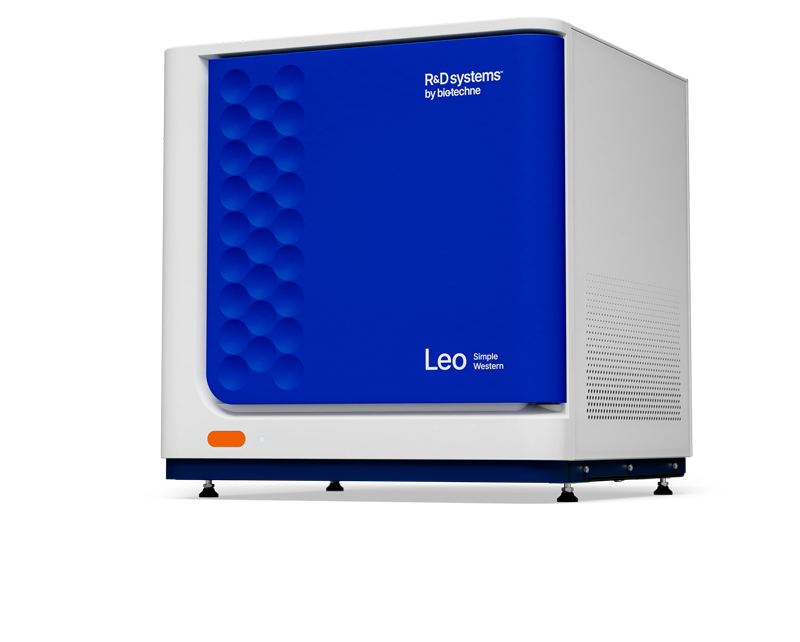
The Leo™ System, powered by Simple Western™ Technology, is a high-throughput, fully automated capillary western platform. Leo provides reproducible protein detection and both relative and absolute quantitation with exceptional efficiency. Its automated workflow processes up to 100 capillaries per run, expanding your experimental capacity and generating reliable, quantitative results in as little as 3 hours.
How Does Leo Work?
Leo, built on proven and trusted Simple Western technology, processes up to 96 samples in a single run, with a processing time of 3 hours, greatly increasing experimental throughput and enabling larger experiments for analytical grade protein quantification. Get the quantitative capabilities of immunoassays with the size resolution and specificity of westerns. Leo offers flexibility with the ability to utilize 1-4 capillary cartridges to run 25-100 capillaries per run. Each well can be resampled up to 4 times and analyzed in a separate capillary, thus avoiding any concerns with carryover of samples from a prior sampling. With chemiluminescence and fluorescence multiplex, RePlex, and resampling, Leo can detect up to 24 protein targets per sample. Invest confidently in one instrument that meets your needs through the full drug development process.
Highlights
Take a Virtual Tour of Leo
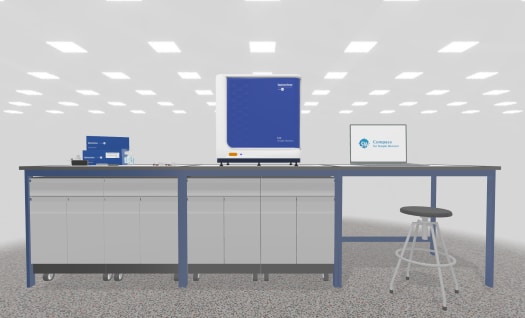
Explore Leo for free with an immersive 3D experience and navigate Leo's features at your own pace in a virtual environment.
Meet Dr. Alexandre Lucas
Hear directly from Dr. Lucas and discover how Leo is changing the way researchers analyze proteins.
How Can Leo Help You?
Accelerating Results with Efficiency and Flexibility
Leo helps you get more done in less time—with the capacity to run up to 100 capillaries in as little as 3 hours. Just load your samples, press Start, and come back to fully analyzed results. No manual steps. No washing plates or membranes. Just pipette, run, and done.
Leo also gives you the flexibility to run only what you need. Whether you're processing a small study or a high-throughput experiment, you can choose to use 1, 2, 3, or all 4 capillary cartridges. This lets you scale your throughput without wasting reagents or waiting to accumulate 96 samples—so you have complete control over how each run fits your workflow.
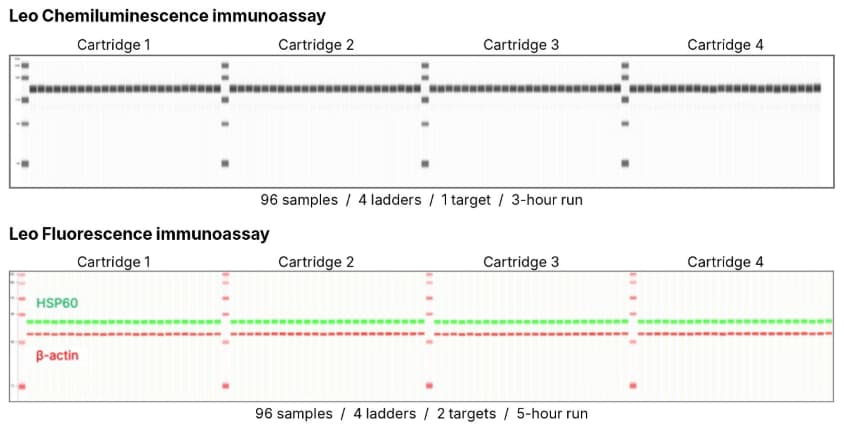
Figure, Right: Leo accommodates up to four cartridges per run, each processing 25 capillaries, for a total capacity of up to 100 capillaries in a single automated run. This configuration enables up to four molecular weight ladders and 96 unique samples per experiment. Complete run times are as little as 3 hours for chemiluminescence detection, or approximately 5 hours for fluorescence detection (NIR and IR), allowing high sample throughput within a single working day.
Large Experimental Size for High Precision Quantitation
Leo can accommodate up to 96 sample experiments in a single high-precision run, providing enough room for large standard curves, replicates, calibrators, QC samples, and test samples.
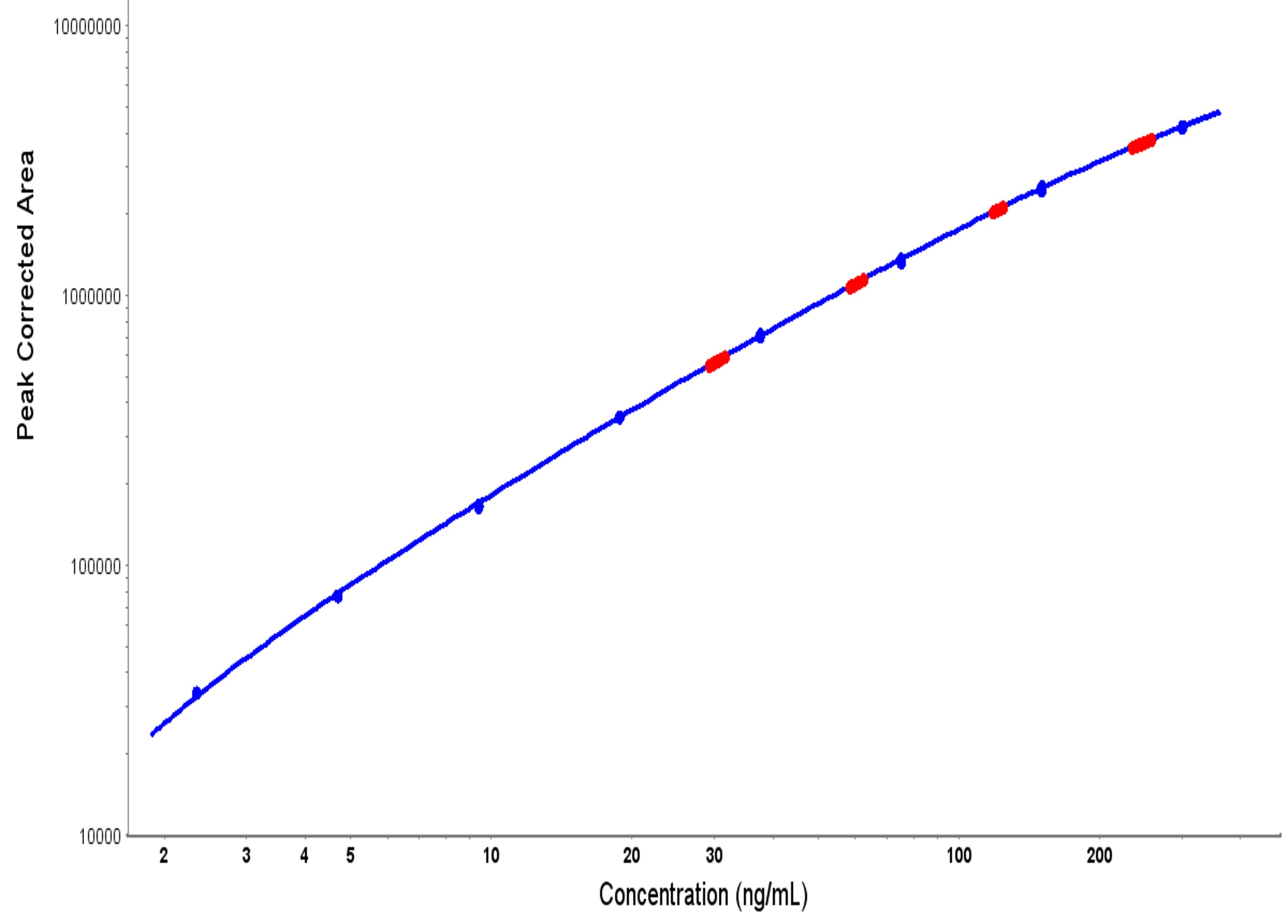
In addition, you can put your standard curve on any of Leo’s 4 cartridges and use the remaining 3 to quantify your samples with confidence. Recovery values within the standard 80–120% range expected for bioanalytical method validation can be obtained for well-optimized assays.
Figure, Right: This plot shows an overlay of the data points for the reference samples from all four cartridges (shown in red) on the standard curve from Cartridge 1 after enabling cartridge correction. The sample data points align very well with each other, confirming that a standard curve on a single cartridge can be used for accurate and precise quantitation on Leo.
Consistent Results Across Instruments for Streamlined Collaboration
Leo delivers highly consistent results across multiple instruments, ensuring data comparability and reliability regardless of the instrument used. It allows for better comparison across different locations, ensuring instrument variability does not influence results. This is particularly important for large-scale collaborative studies, clinical trials, and other applications where data consistency is paramount.
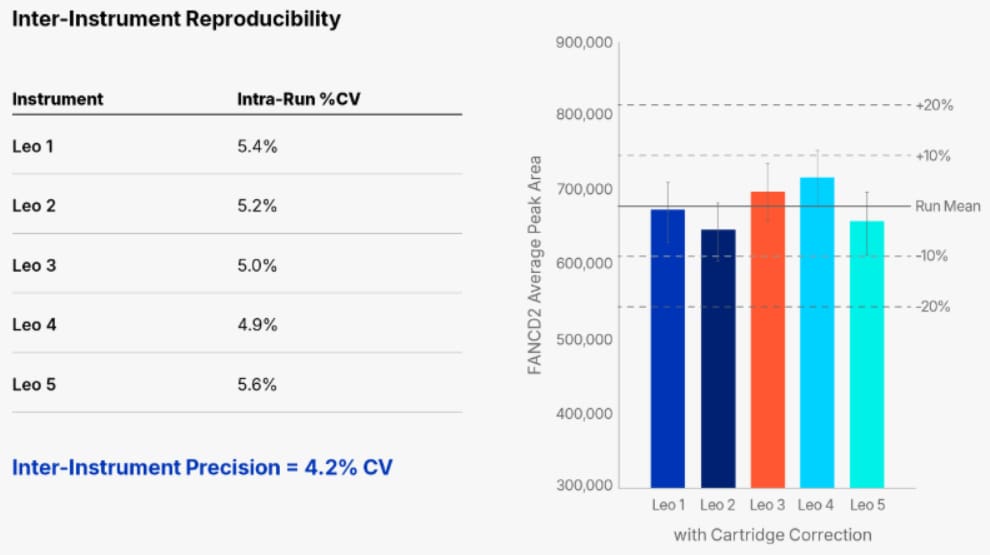
Figure, Above: Inter-instrument reproducibility supporting cross-site assay transferability.
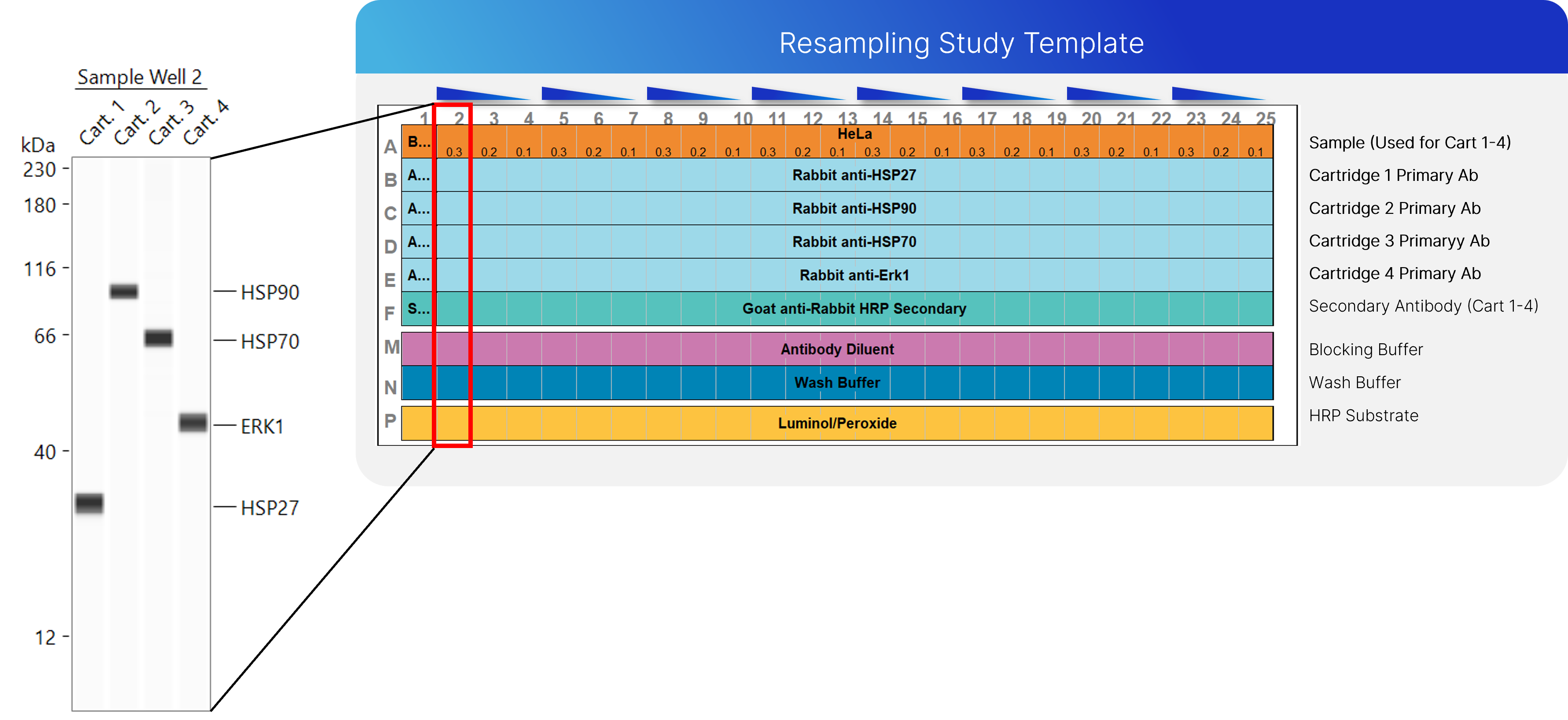
Figure, Above: A single row of samples was loaded onto the sample plate, consisting of eight replicates each of HeLa lysates at 0.3, 0.2, and 0.1 mg/mL, for a total of 24 samples
Detect Low-Abundance Targets Through Down to Low Picogram Sensitivity
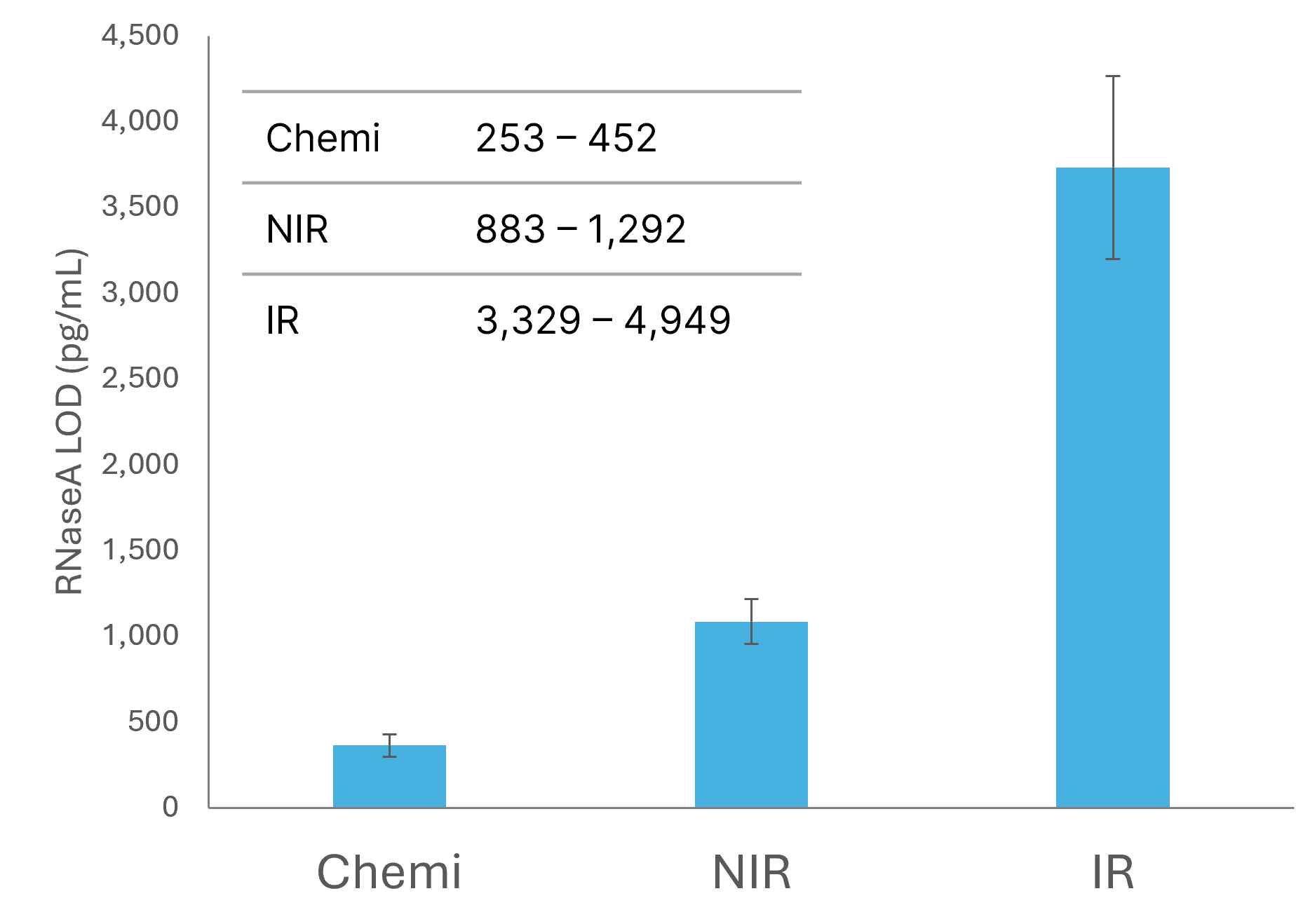
High sensitivity is essential for many applications in biological research, and Leo enables the detection of proteins down to pg/mL levels, which can be critical to measure low abundance protein biomarkers or targets for therapeutic intervention.
Figure, Right: Leo demonstrates low hundreds of picogram to low nanogram per milliliter sensitivity, depending on the detection channel used.
Broad 3-4 Log Dynamic Range Enables Multiplexing of High and Low Signal Target
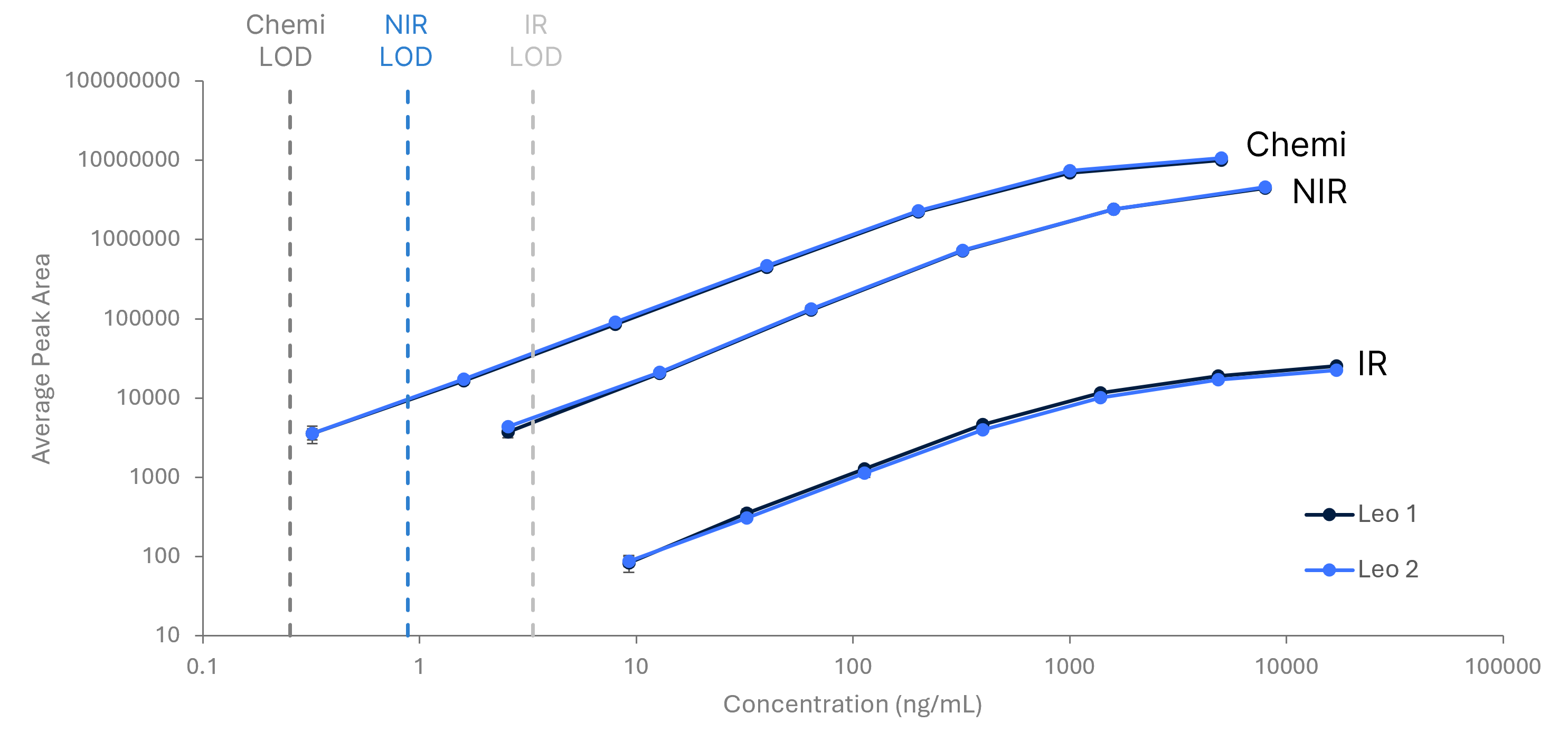
A broad dynamic range is crucial for accurately quantifying proteins in applications where protein levels can vary significantly, such as biomarker discovery. Leo offers a broad 3-4 log dynamic range across three detection channels, which enables you to confidently quantify multiple proteins in a single sample, reducing sample preparation complexity and improving efficiency in high-throughput workflows.
Figure, Right: RNaseA was detected across all three Leo detection channels—chemiluminescence, NIR, and IR. A 5-fold serial dilution series was prepared, spanning concentrations from the ug/mL range down to the low pg/mL range. Two Leo instruments were run in parallel using the same lot of reagents, plates, and cartridges.
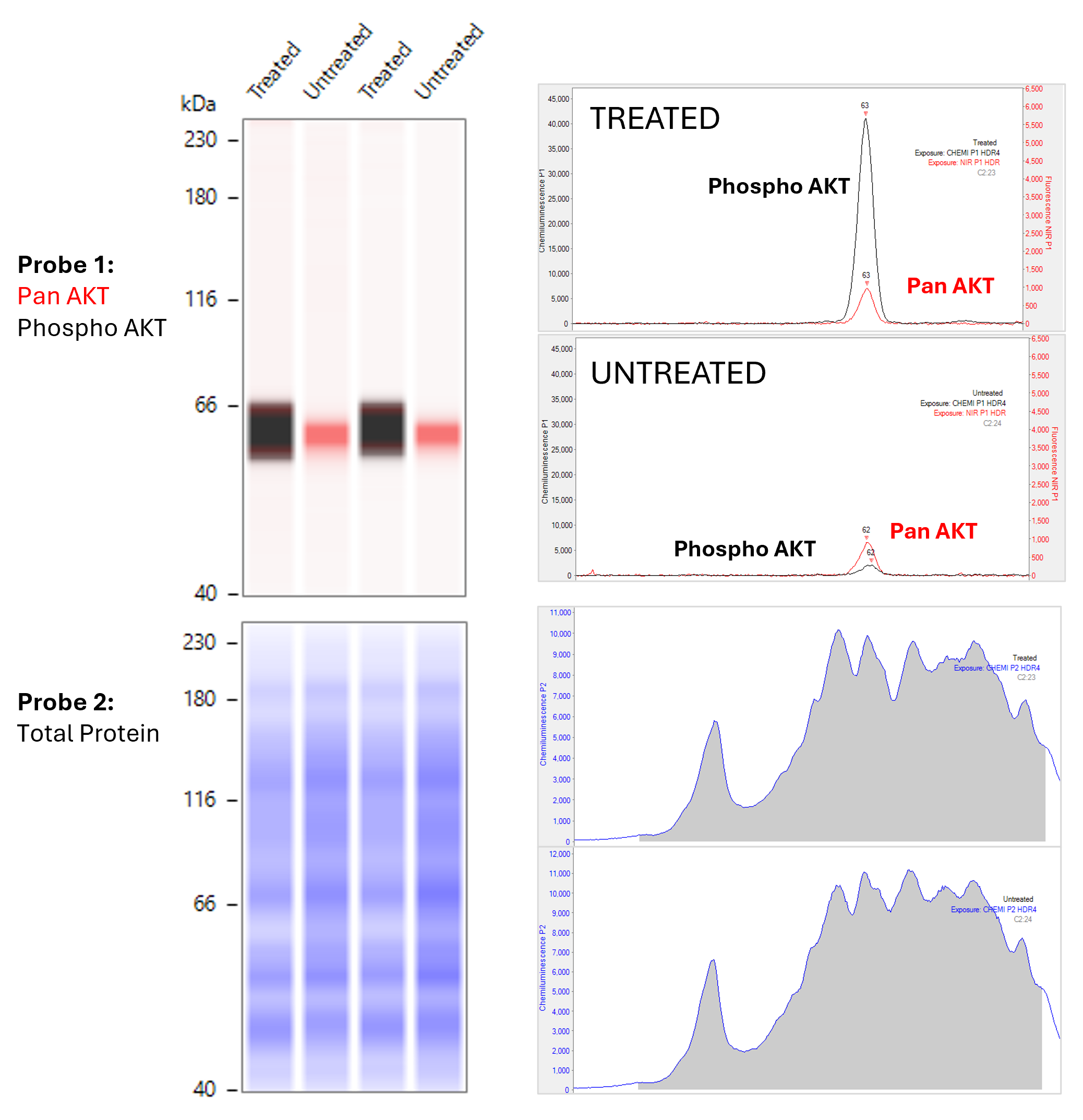
Normalization with Total Protein Using RePlex
Total protein normalization is critical for reliable protein quantification because it corrects for differences in total protein load and is not subject to biological variation that can occur with common housekeeping proteins. Normalizing immunoassay data by total protein ensures your results are both accurate and reliable. Total protein normalization on Leo is available with both chemiluminescence and fluorescence immunoassays– giving you greater flexibility, no matter the expression level of your target.
Figure, Right: Immunoassay and total protein detection performed in a single capillary. AKT phosphorylation in Jurkat lysates untreated or treated with Calyculin A. PhosphoAKT and panAKT were detected in Probe 1 using chemiluminescence and NIR fluorescence, respectively, while total protein signal was detected in Probe 2.

Instrument Specifications
| Runtime | 3 hours or 5 hours with RePlex or Fluorescent Detection |
| Capillaries Per Run | Up to 100 |
| Samples Per Run | Up to 96 |
| Volume Required | 3 µL |
| Sample Cooling | No |
| Detection | Chemiluminescence and Fluorescence (NIR & IR) |
| RePlex | Yes |
| Weight | 136 kg / 300 lbs |
| Dimensions (H x W x D) | 0.75 m x 0.70 m x 0.73 m / 2.5’ x 2.3’ x 2.4’ |
| Power | US/CAN 120 V AC, 60 Hz, 5.0 amps China 220 V AC, 50 Hz, 2.7 amps Europe 230 V AC, 50 Hz, 2.6 amps Japan 100 V AC, 50/60 Hz, 6.0 amps |
| Operating Temperature | 18–23 °C |
| Operating Relative Humidity (non-condensing) | 20–60 °C |
Representative Performance Data
| Chemiluminescence Immunoassay | Total Protein with Chemiluminescent | Fluorescence Immunoassay | |
| Precision | Intra-assay Peak Area CV | <15%1 | <15%1 | <15%1 |
| Inter-assay Peak Area CV | <15%2 | N/A | <15%2 | |
| Intra-assay Quantitation CV | <10%3 | N/A | <20% | |
| Inter-run Quantitation CV | <10%3 | N/A | N/A | |
| Inter-instrument Quantitation CV | <10%3 | N/A | N/A | |
| Sensitivity | Limit of Detection | Low pg | ng | High pg |
| Dynamic Range | 3-4 logs | 2-3 logs | 3-4 logs | |
| Size Range | Molecular weight (MW) ladder ranges from 2-440 kDa | |||
| Sizing CV | <10% | |||
| Resolution (± Difference in MW) | ± 10% for MW >20KDa ± 15-20% for MW <20KDa | |||
| Sample Required | 0.3-1.2 µg+ | 0.3-1.2 µg+ | 2-4 µg+ | |
Representative performance data for well characterized assays using split samples, same lots of reagents, plates, and cartridges for each experiment.
1Based on model assay system with signal to noise ratio > 250, n= 96, Leo uses cartridge correction.
2 Based on model assay system, signal to noise ratio >250, n=3, Leo uses cartridge correction.
3 %CV of calculated concentration generated using a standard curve for all samples above LLOQ. Leo uses cartridge correction.
+ Sample required per capillary @ 3µL/capillary


Webinars
Watch the replay of the latest Leo virtual event, where we introduce new fluorescence-based detection capabilities on Leo, expanding the system’s utility for protein analysis
This webinar provides data on Leo's chemiluminescence performance, including throughput, sensitivity, dynamic range, assay transferability, and key application areas such as CGT, TPD, and MOA studies.
This webinar will provide a first look at Leo’s fluorescence performance using multiple assay models. Data highlights include precision, sensitivity, dynamic range, platform comparability, and workflow flexibility for multiplexed detection.
In this webinar, we show how Leo has the potential to transform western blots into quantitative bioanalytical methods suitable for adoption for robust quantitative measures of protein expression, ranging from gene therapy potency to targeted protein degradation studies.
Watch the replay of the Leo launch event to explore how Leo can meet your needs and reach your next milestone faster, from discovery through analytical development to commercialization.
Application Notes
What Happened When Leo Met the Cell and Gene Therapy Experts?
Hear firsthand from customers who experienced the Leo at #ASGCT2025. In this video, they share their impressions and highlight how Leo is transforming protein analysis with its innovative features and unmatched throughput and precision.
 Powered by Bioz