
Gene Editing and Cell Line Development
Gentle, Fluorescence Enabled Single Cell Sorting for Improved Genome Engineering Efficiency
Precision genome engineering technologies, such as CRISPR, are driving new insights into biology and our understanding of disease while also creating new paradigms for treating patients. Development of cell lines with specific gene edits are increasingly being generated for both academic and industrial pharma/biotech projects. Development of an engineered cell line is a resource intensive process that can take at least 8 weeks or longer and often requires multiple attempts. After CRISPR transfection conditions are optimized, single cell cloning and colony characterization are required to generate stable, genetically isogenic populations. This process is inefficient with legacy tools and techniques such as FACS and Limiting Dilution pipetting.
Limiting Dilution
- Highly variable
- Manual & Slow
- Mostly empty wells
- No fluorescence selection (viability or labeled proteins)
Fluorescence-activated Cell Sorting (FACS)
- High degree of training required
- Instruments slow to set up & shutdown
- Lower cell survival for sensitive cell types
- Difficult to maintain sterility and prevent sample carryover
The Pala Single Cell Sorter and Dispenser was developed for improving single cell cloning efficiency and throughput.
Benefits include:
- High viability for engineered and fragile cell types (stem cells, primary cells)
- Accurate single cell dispensing of gene-edited cell line development
- Fast plate processing in 96 or 384 well format, in as little as 2 min/plate
- Easy to use software and low maintenance requirements
- Compact, bench-friendly design for easy tissue-culture integration
- Up to 11 fluorescence channels using 2 excitation lasers (405/488 or 488/561)
Single Cell Cloning with the Pala Single Cell Sorter and Dispenser
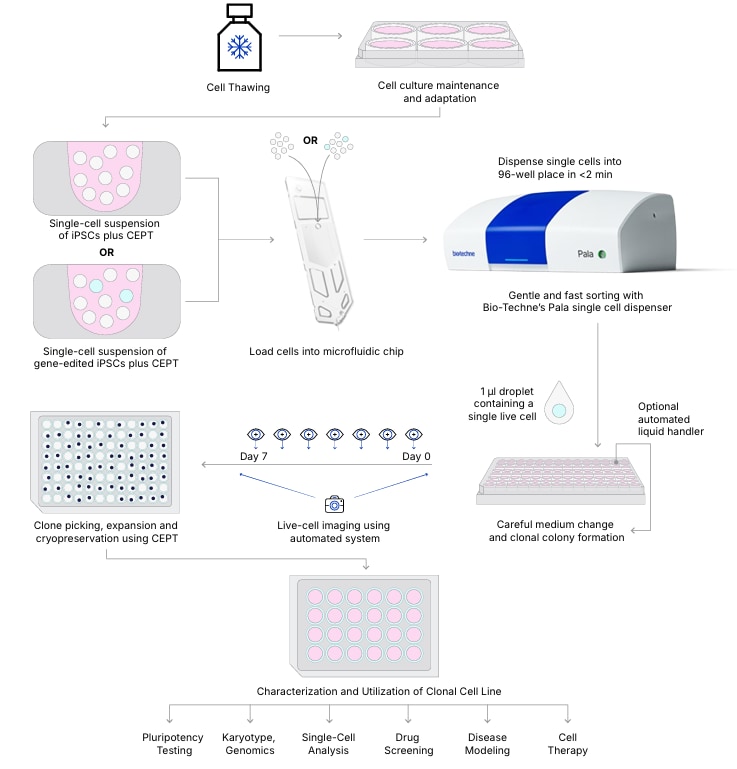
High Single Cell Dispensing Accuracy
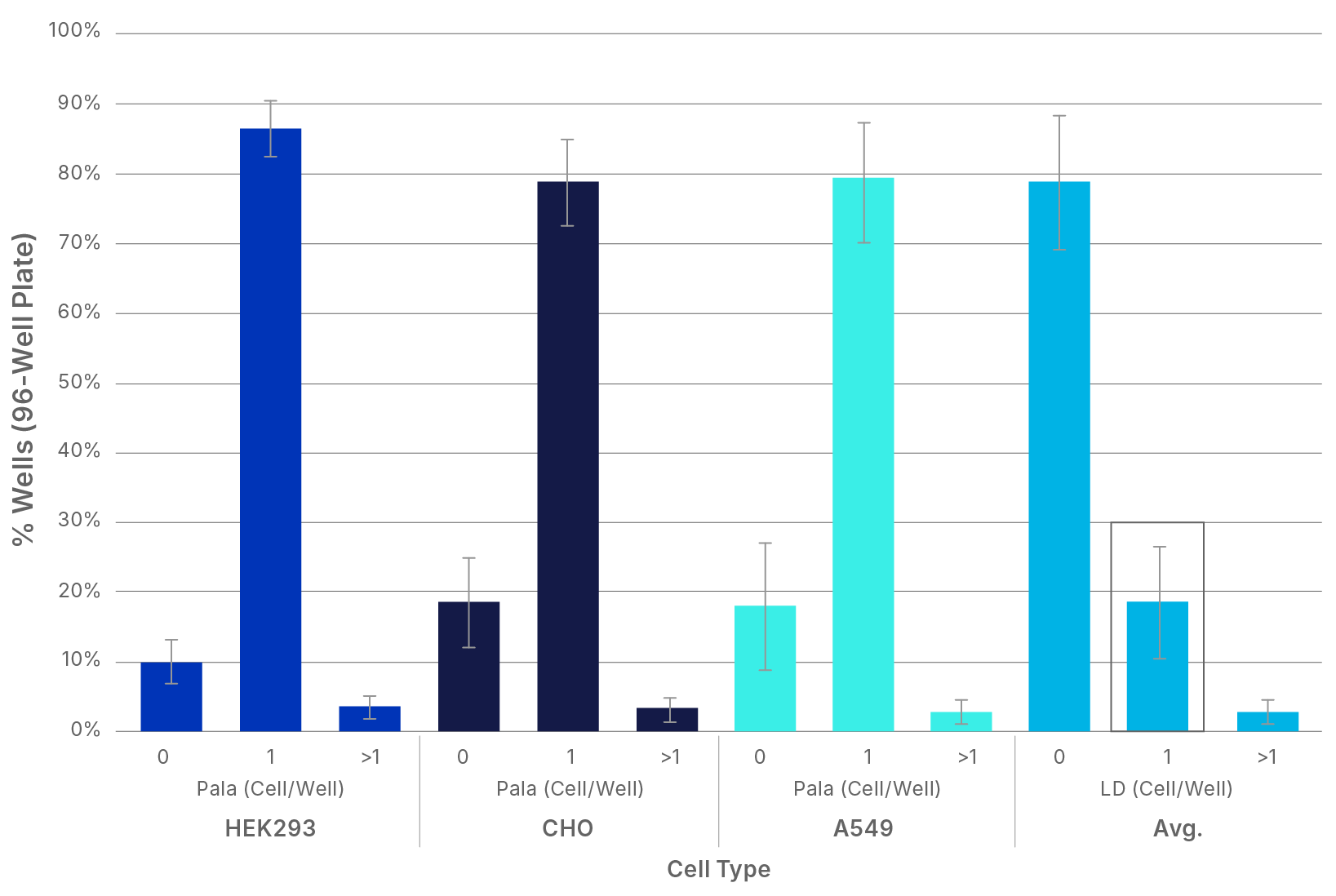
Single cell dispensing accuracy (1 cell/well) as determined by plate-based imaging. HEK293, CHO, and A549 were dispensed with Pala or Limiting Dilution pipetting (~60 x 96 well plates). For simplicity, Limiting Dilution data is displayed as an average across all cell lines.
iPSC Dispensing Accuracy
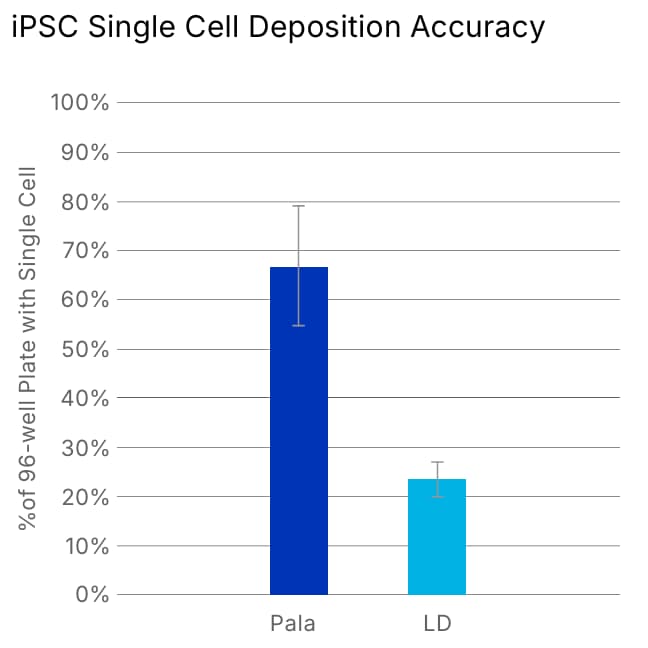
Single cell dispensing accuracy (1 cell/well) as determined by plate-based imaging. Data is a compilation of two iPSC lines.
Pala Derived iPSC Clones are Healthy and Maintain Stemness
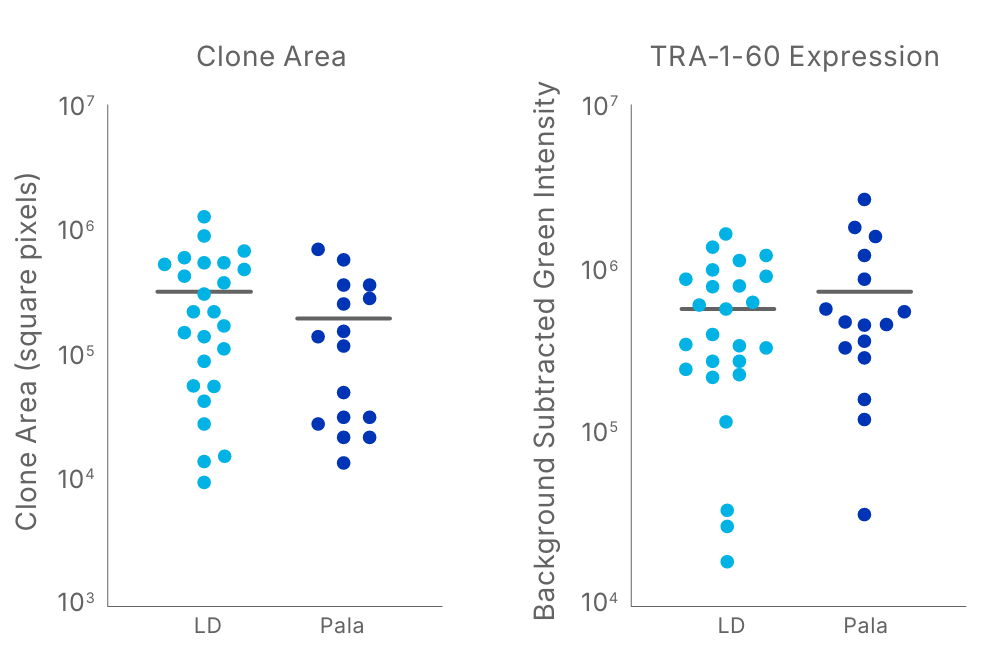
Clone area and stemness marker expression of Pala derived clones compared to Limiting Dilution derived clones. Similar profiles demonstrate Pala's gentle sorting profile.
Advancement in iPSC Cell Line Development & Cloning Workshop
Watch for:
- Best practices and techniques for growing, maintaining, and passaging iPSC cell lines for gene editing and stable cell line generation
- Experimental optimization conditions and approaches for achieving successful gene editing outcomes in iPSCs
- Methods for single cell cloning and verification of cell clonality for stable cell line generation
- Tools and technologies to support end-to-end workflows for iPSC culture, differentiation, and stable cell line development
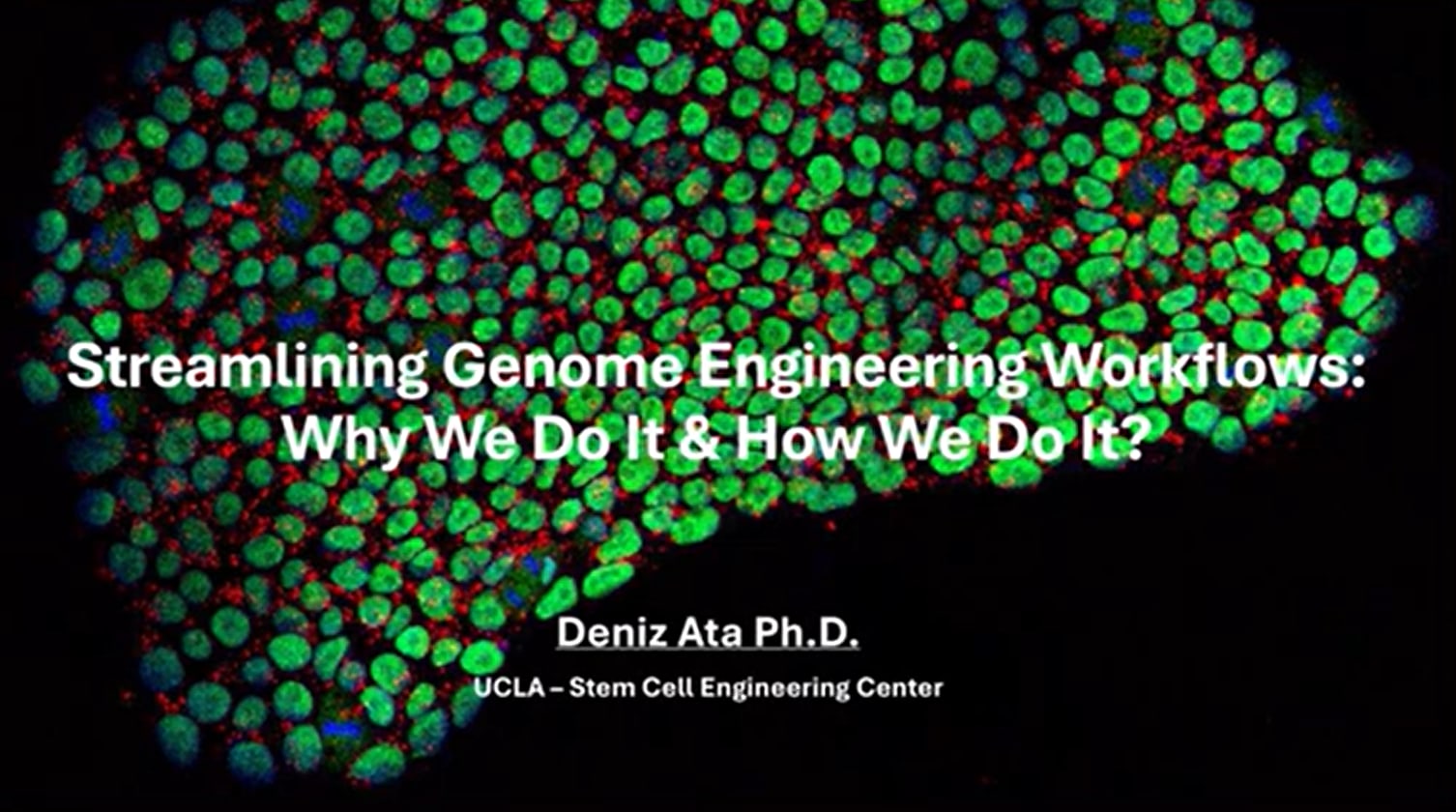
A workshop was held at UCLA Human Stem Cell and Genome Engineering Center, focusing on the latest advancements in iPSC cell line development and cloning. The event featured a demonstration of the Pala Single Cell Sorter and Dispenser technology, showcasing its enhanced efficiency and success in single-cell cloning of iPSCs.
Related Products
| Product | Catalog Number |
|---|---|
| Pala Cell Sorter and Single Cell Dispenser | NI006/NI007 |
| Single Cell Microfluidic Cartridge Kit | NC003 |
Resources
CRISPR-Edited Cell Line Development Workflow Improvements
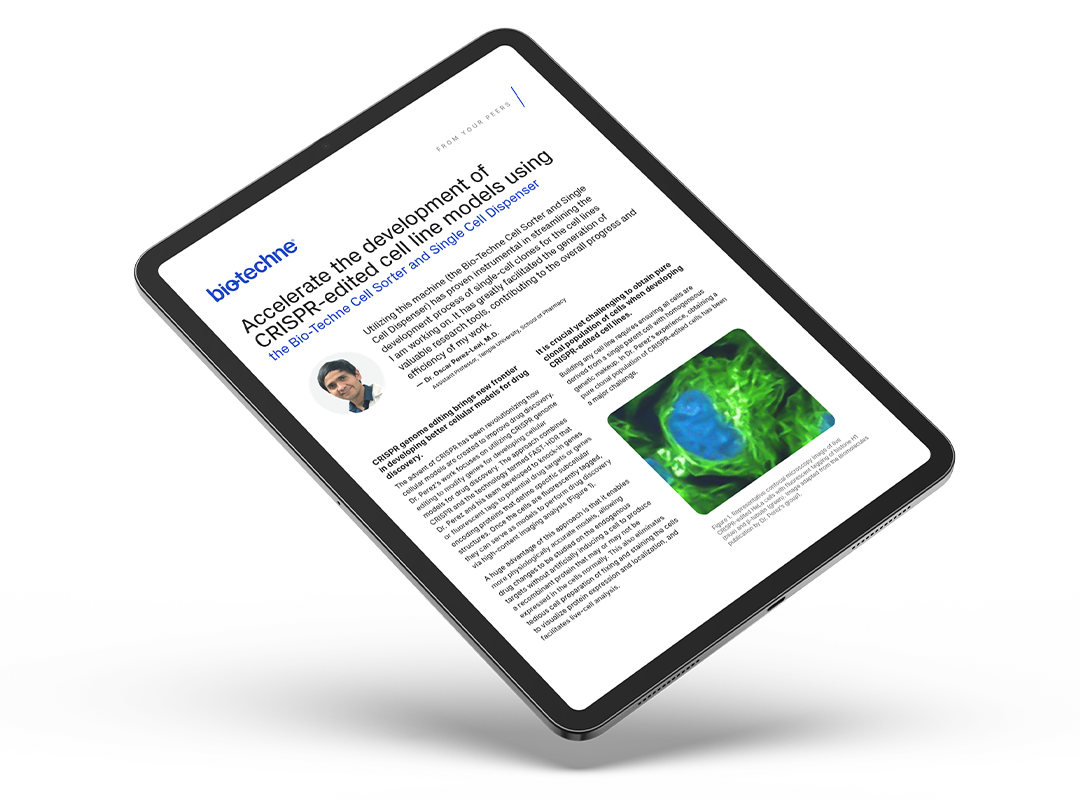
Dr. Oscar Perez-Leal of Temple University explains how obtaining a pure clonal population of CRISPR-edited cells is critical yet challenging, and how the Pala Single Cell Dispenser was instrumental in streamlining and accelerating the development of cell models.
Empower CRISPR cell engineering with innovative single cell sorting
Discover how scientists are using Pala Single Cell Dispenser to empower single cell cloning to generate CRISPR-edited cell lines. Discover the key role that single cell sorting and isolation can play in your cell engineering workflow for a wide range of applications from cell biology, to drug discovery and future cell therapy.
Automated Single Cell Cloning for a golden age of cell line development
Pala Single Cell Dispenser overcomes several challenges presented by traditional techniques to make it easier to achieve high-quality clones available for downstream analysis.