Best Seller

Human FGF-19 Quantikine ELISA

R&D Systems | Catalog # DF1900

R&D Systems
Loading...

Key Product Details

Assay Length

4.5 hours

Sample Type & Volume Required Per Well

Cell Culture Supernates (100 µL), Serum (100 µL), EDTA Plasma (100 µL), Heparin Plasma (100 µL)

Sensitivity

3.35 pg/mL

Assay Range

15.6-1000 pg/mL (Cell Culture Supernates, Serum, EDTA Plasma, Heparin Plasma)
Loading...

Product Summary for Human FGF-19 Quantikine ELISA

The Quantikine Human FGF-19 Immunoassay is a 4.5 hour solid-phase ELISA designed to measure human FGF-19 in cell culture supernates, serum, and plasma. It contains E. coli-expressed recombinant human FGF-19 and has been shown to accurately quantitate the recombinant factor. Results obtained using natural human FGF-19 showed linear curves that were parallel to the standard curves obtained using the Quantikine kit standards. These results indicate that this kit can be used to determine relative mass values for naturally occurring human FGF-19.

Product Specifications

Assay Type

Solid Phase Sandwich ELISA

Format

96-well strip plate

Measurement

Quantitative ELISA

Detection Method

Colorimetric - 450nm (TMB)

Conjugate

HRP

Species

Human

Specificity

Natural and recombinant human FGF-19

Cross-reactivity

< 0.5% cross-reactivity observed with available related molecules. < 50% cross-species reactivity observed with species tested.

Interference

No significant interference observed with available related molecules.

Sample Values

Serum/Plasma - Samples from apparently healthy volunteers were evaluated for the presence of human FGF-19 in this assay. No medical histories were available for the donors used in this study.

Sample TypeMean (pg/mL)Range (pg/mL)Standard Deviation (pg/mL)
Serum (n=36)18931-554125
EDTA plasma (n=36)17928-546118
Heparin plasma (n=36)18329-545122

Cell Culture Supernates:
Human peripheral blood cells (1 x 10⁶ cells/mL) were cultured in DMEM supplemented with 5% fetal bovine serum, 5 μM beta -mercaptoethanol, 2 mM L-glutamine, 100 U/mL penicillin, and 100 μg/mL streptomycin sulfate. Cells were cultured unstimulated or stimulated with 10 μg/mL PHA. Aliquots of the cell culture supernates were removed and assayed for levels of human FGF-19. No detectable levels were observed.

COLO 205 human colon adenocarcinoma cells were cultured in RPMI 1640 supplemented with 10% fetal bovine serum and 2 mM L-glutamine. An aliquot of the cell culture supernate was removed on day three, assayed for human FGF-19, and measured 17,072 pg/mL.

HT-29 human colon adenocarcinoma cells were cultured with McCoy's 5a media supplemented with 10% fetal bovine serum until confluent. Aliquots of the cell culture supernate were removed, assayed for human FGF-19, and measured 5714 pg/mL. 

精度

Intra-Assay Precision (Precision within an assay) Three samples of known concentration were tested on one plate to assess intra-assay precision.

Inter-Assay Precision (Precision between assays) Three samples of known concentration were tested in separate assays to assess inter-assay precision.

Cell Culture Supernates, EDTA Plasma, Heparin Plasma, Serum

Intra-Assay Precision Inter-Assay Precision
Sample 1 2 3 1 2 3
n 20 20 20 40 40 40
Mean (pg/mL) 113 346 689 119 349 700
Standard Deviation 7.26 15.7 24.8 6.46 19.3 31.7
CV% 6.4 4.5 3.6 5.5 5.5 4.5

Recovery for Human FGF-19 Quantikine ELISA

The recovery of FGF-19 spiked to levels throughout the range of the assay in various matrices was evaluated.

Sample Type Average % Recovery Range %
Cell Culture Media (n=4) 104 93-109
EDTA Plasma (n=4) 94 85-101
Heparin Plasma (n=4) 92 89-95
Serum (n=4) 95 88-100

Linearity

To assess the linearity of the assay, samples containing or spiked with high concentrations of FGF-19 were serially diluted with the Calibrator Diluent to produce samples with values within the dynamic range of the assay.

Human FGF-19 ELISA Linearity

Scientific Data Images for Human FGF-19 Quantikine ELISA

Human FGF-19 ELISA Standard Curve

Human FGF-19 ELISA Standard Curve

Preparation and Storage

Shipping

The product is shipped at ambient temperature. Upon receipt, store it immediately at the temperature recommended below.

Stability & Storage

Store the unopened product at 2 - 8 °C. Do not use past expiration date.

Background: FGF-19

The Fibroblast Growth Factor (FGF) family consists of at least 22 highly conserved proteins and are found in many species ranging from C. elegans and Drosophila to humans (1). FGFs are heparin-binding growth factors with a core 120 amino acid (aa) FGF domain that allows for a common tertiary structure. In general, FGFs are expressed during embryonic development and in restricted adult tissues. They act on cells of mesodermal and neuroectodermal origin to regulate diverse physiologic functions including angiogenesis, cell growth, pattern formation, metabolic regulation, cell migration, neurotrophic effects, and tissue repair (2). The activities of the FGF family are mediated by four receptors, FGF R1 through FGF R4 (2). The receptors are transmembrane proteins with a tyrosine kinase domain and are thought to act as classical receptor tyrosine kinases. FGF R5/FGF RL1 has also been described, but lacks the kinase domain and signaling capability (3). 
Human FGF-19 cDNA predicts a 251 aa precursor protein with a 22 aa signal peptide and a 229 aa secreted mature protein with no potential N-linked glycosylation sites (4, 5). It shares approximately 50% aa sequence identity with mouse and rat FGF-15 and 62% aa sequence identity with chicken FGF-19 (4-6). Unlike most FGFs, which bind to and activate more than one FGF receptor, FGF-19 appears to bind only FGF R4 (5). Receptor binding is capable of activating MAP Kinase and inducing the Prolactin promoter (7). FGF-19 has two putative disulfide bonds, one of which is conserved in the FGF family (8). Uniquely, it also has an extended loop structure that may affect heparan sulfate binding (8). 
The functional roles of FGF-19 continue to be elucidated and include developmental, metabolic, and tumorigenic activities. During chick embryogenesis, FGF-19 has been shown to act synergistically with Wnt-8c to initiate inner ear development (6). However, the mouse FGF-19 ortholog, FGF-15, is not required for this activity (9). FGF-19 is also expressed in the embryonic chicken eye where it may play a role in lens development (10). Questions regarding the functions of human FGF-19 have been addressed using ectopic expression. Transgenic over-expression of human FGF-19 in mice results in tumor formation, increased energy expenditure, decreased adiposity, and a resistance to weight gain in response to a high fat diet (11, 12). Similar affects have been observed in mice treated intravenously with recombinant FGF-19 (13).

Long Name

Fibroblast Growth Factor 19

Alternate Names

FGF19

Entrez Gene IDs

9965 (Human)

Gene Symbol

FGF19

Additional FGF-19 Products

Product Documents for Human FGF-19 Quantikine ELISA

Certificate of Analysis

To download a Certificate of Analysis, please enter a lot or batch number in the search box below.

Note: Certificate of Analysis not available for kit components.

Product Specific Notices for Human FGF-19 Quantikine ELISA

For research use only

⚠ WARNING: This product can expose you to chemicals including N,N-Dimethylforamide, which is known to the State of California to cause cancer. For more information, go to www.P65Warnings.ca.gov.

Related Research Areas

Citations for Human FGF-19 Quantikine ELISA

Customer Reviews for Human FGF-19 Quantikine ELISA (4)

5 out of 5
4 Customer Ratings
5 Stars
100%
4 Stars
0%
3 Stars
0%
2 Stars
0%
1 Stars
0%

Have you used Human FGF-19 Quantikine ELISA?

Submit a review and receive an Amazon gift card!

$25/€18/£15/$25CAN/¥2500 Yen for a review with an image

$10/€7/£6/$10CAN/¥1110 Yen for a review without an image

Submit a review
Amazon Gift Card
Showing  1 - 44 reviews Showing All
Filter By:
  • Human FGF-19 Quantikine ELISA
    Name: Anonymous
    Sample Tested: Serum
    Verified Customer | Posted 11/25/2022
  • Human FGF-19 Quantikine ELISA Kit
    Name: Anonymous
    Sample Tested: 2120Ep human embryonal carcinoma cell line
    Verified Customer | Posted 12/01/2017
  • Human FGF-19 Quantikine ELISA Kit
    Name: Jessica Fernando
    Sample Tested: EDTA Plasma
    Verified Customer | Posted 10/23/2017
    solid assay
  • Human FGF-19 Quantikine ELISA Kit
    Name: Mousumi Chaudhury
    Sample Tested: pig serum
    Verified Customer | Posted 09/30/2016
    it was quick, easy and clear result. standards gave well standard curve, quite sensitive

There are no reviews that match your criteria.

Showing  1 - 44 reviews Showing All

Protocols

View specific protocols for Human FGF-19 Quantikine ELISA (DF1900):

Refer to the product for complete assay procedure.

Bring all reagents and samples to room temperature before use. It is recommended that all samples, standards, and controls be assayed in duplicate.
  1.   Prepare all reagents, standard dilutions, and samples as directed in the product insert.
  2.   Remove excess microplate strips from the plate frame, return them to the foil pouch containing the desiccant pack, and reseal.

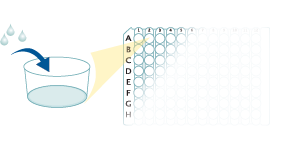
  3. 100 µL Assay Diluent
  4.   Add 100 µL of Assay Diluent to each well.

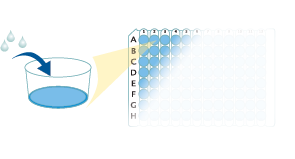
  5. 100 µL Standard, Control, or Sample
  6.   Add 100 µL of Standard, control, or sample to each well. Cover with a plate sealer, and incubate at room temperature for 2 hours.
  7.   Aspirate each well and wash, repeating the process 3 times for a total of 4 washes.

  8. 200 µL Conjugate
  9.   Add 200 µL of Conjugate to each well. Cover with a new plate sealer, and incubate at room temperature for 2 hours.
  10.   Aspirate and wash 4 times.

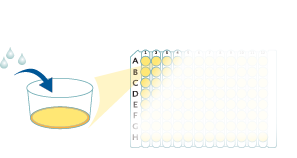
  11. 200 µL Substrate Solution
  12.   Add 200 µL Substrate Solution to each well. Incubate at room temperature for 30 minutes. PROTECT FROM LIGHT.

  13. 50 µL Stop Solution
  14.   Add 50 µL of Stop Solution to each well. Read at 450 nm within 30 minutes. Set wavelength correction to 540 nm or 570 nm.

Find general support by application which include: protocols, troubleshooting, illustrated assays, videos and webinars.

FAQs

No product specific FAQs exist for this product.

View all FAQs for ELISA Kits