
Bromodeoxyuridine/BrdU Antibody (BRD/1539R)
Novus Biologicals | Catalog # NBP3-07317

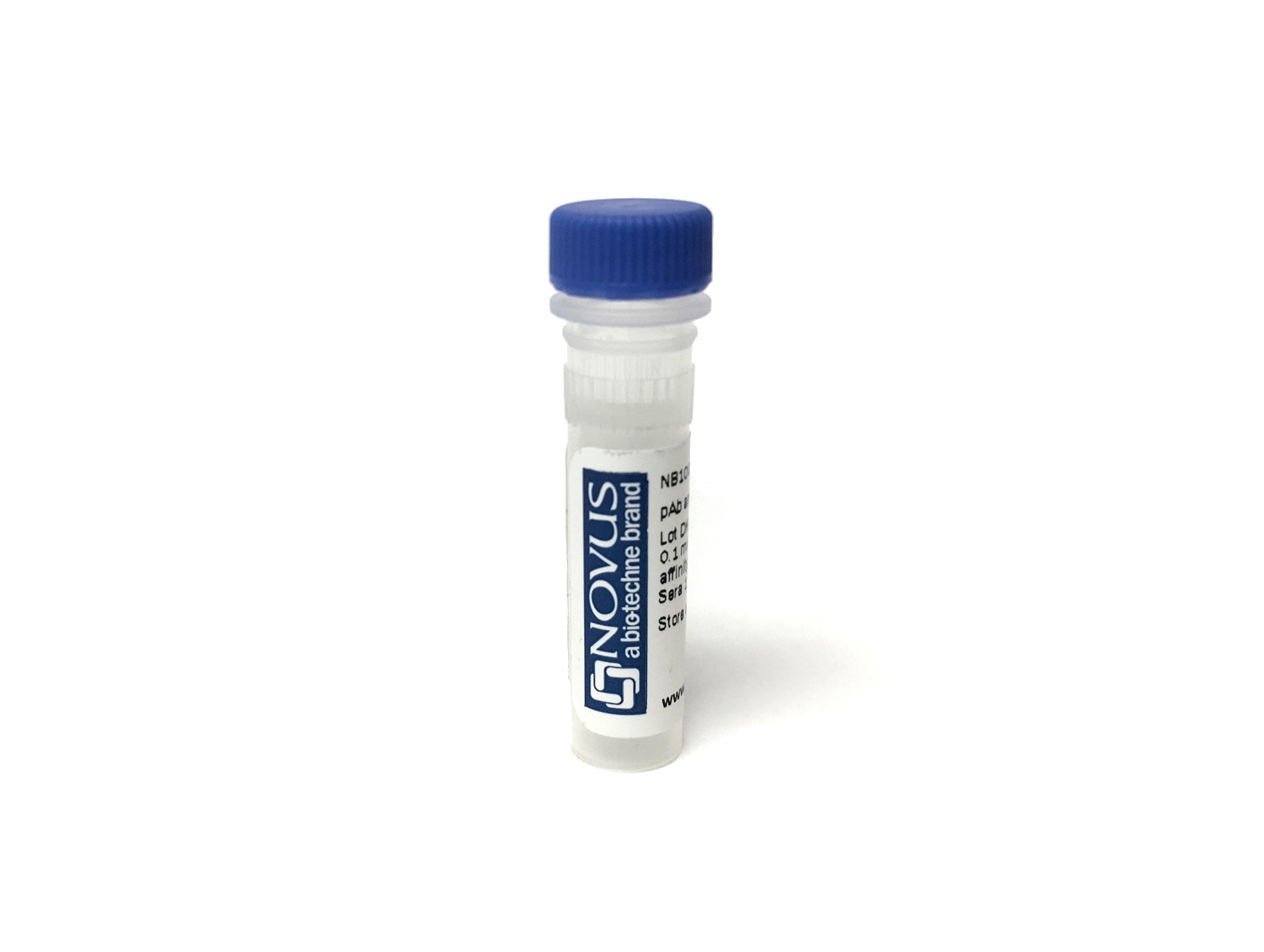
Key Product Details
Species Reactivity
Applications
Label
Antibody Source
Product Specifications
Immunogen
Localization
Marker
Specificity
Clonality
Host
Isotype
Theoretical MW
Disclaimer note: The observed molecular weight of the protein may vary from the listed predicted molecular weight due to post translational modifications, post translation cleavages, relative charges, and other experimental factors.
Description
Antibody with azide - store at 2 to 8C.
Applications for Bromodeoxyuridine/BrdU Antibody (BRD/1539R)
ELISA
Optimal dilution for a specific application should be determined.
Formulation, Preparation, and Storage
Purification
Formulation
Preservative
Concentration
Shipping
Stability & Storage
Background: Bromodeoxyuridine/BrdU
Alternate Names
Additional Bromodeoxyuridine/BrdU Products
Product Documents for Bromodeoxyuridine/BrdU Antibody (BRD/1539R)
Certificate of Analysis
To download a Certificate of Analysis, please enter a lot or batch number in the search box below.
Product Specific Notices for Bromodeoxyuridine/BrdU Antibody (BRD/1539R)
This product is for research use only and is not approved for use in humans or in clinical diagnosis. Primary Antibodies are guaranteed for 1 year from date of receipt.
Related Research Areas
Customer Reviews for Bromodeoxyuridine/BrdU Antibody (BRD/1539R)
There are currently no reviews for this product. Be the first to review Bromodeoxyuridine/BrdU Antibody (BRD/1539R) and earn rewards!
Have you used Bromodeoxyuridine/BrdU Antibody (BRD/1539R)?
Submit a review and receive an Amazon gift card!
$25/€18/£15/$25CAN/¥2500 for a review with an image
$10/€7/£6/$10CAN/¥1110 for a review without an image
Submit a review
Protocols
Find general support by application which include: protocols, troubleshooting, illustrated assays, videos and webinars.
- ELISA Sample Preparation & Collection Guide
- ELISA Troubleshooting Guide
- How to Run an R&D Systems DuoSet ELISA
- How to Run an R&D Systems Quantikine ELISA
- How to Run an R&D Systems Quantikine™ QuicKit™ ELISA
- Quantikine HS ELISA Kit Assay Principle, Alkaline Phosphatase
- Quantikine HS ELISA Kit Principle, Streptavidin-HRP Polymer
- Sandwich ELISA (Colorimetric) – Biotin/Streptavidin Detection Protocol
- Sandwich ELISA (Colorimetric) – Direct Detection Protocol
- Troubleshooting Guide: ELISA
- View all Protocols, Troubleshooting, Illustrated assays and Webinars
FAQs for Bromodeoxyuridine/BrdU Antibody (BRD/1539R)
-
Q: I have been using your BrdU antibody for some time now and saw that you have discontinued it. I was wondering if you had any alternative antibodies that would also work? it is antibody NB500-169 lot# 1706-5
A:
We recommend this product: NB500-235