
Rabbit CGRP1 ELISA Kit (Colorimetric)
Novus Biologicals | Catalog # NBP3-50073

Loading...
Key Product Details
Sensitivity
18.75 pg/mL
Assay Range
31.25 - 2000 pg/mL
Loading...
Product Specifications
Assay Type
Sandwich ELISA
Kit Type
ELISA Kit (Colorimetric)
Species
Rabbit
Description
Assay Length: 3 h 30 min
Precision
Intra-Assay Precision (Precision within an assay) CV% < 10
Inter-Assay Precision (Precision between assays) CV% < 10
Recovery for Rabbit CGRP1 ELISA Kit (Colorimetric)
Recovery
80 - 120%
Linearity
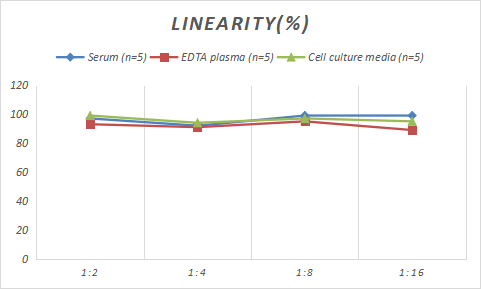
Scientific Data Images for Rabbit CGRP1 ELISA Kit (Colorimetric)
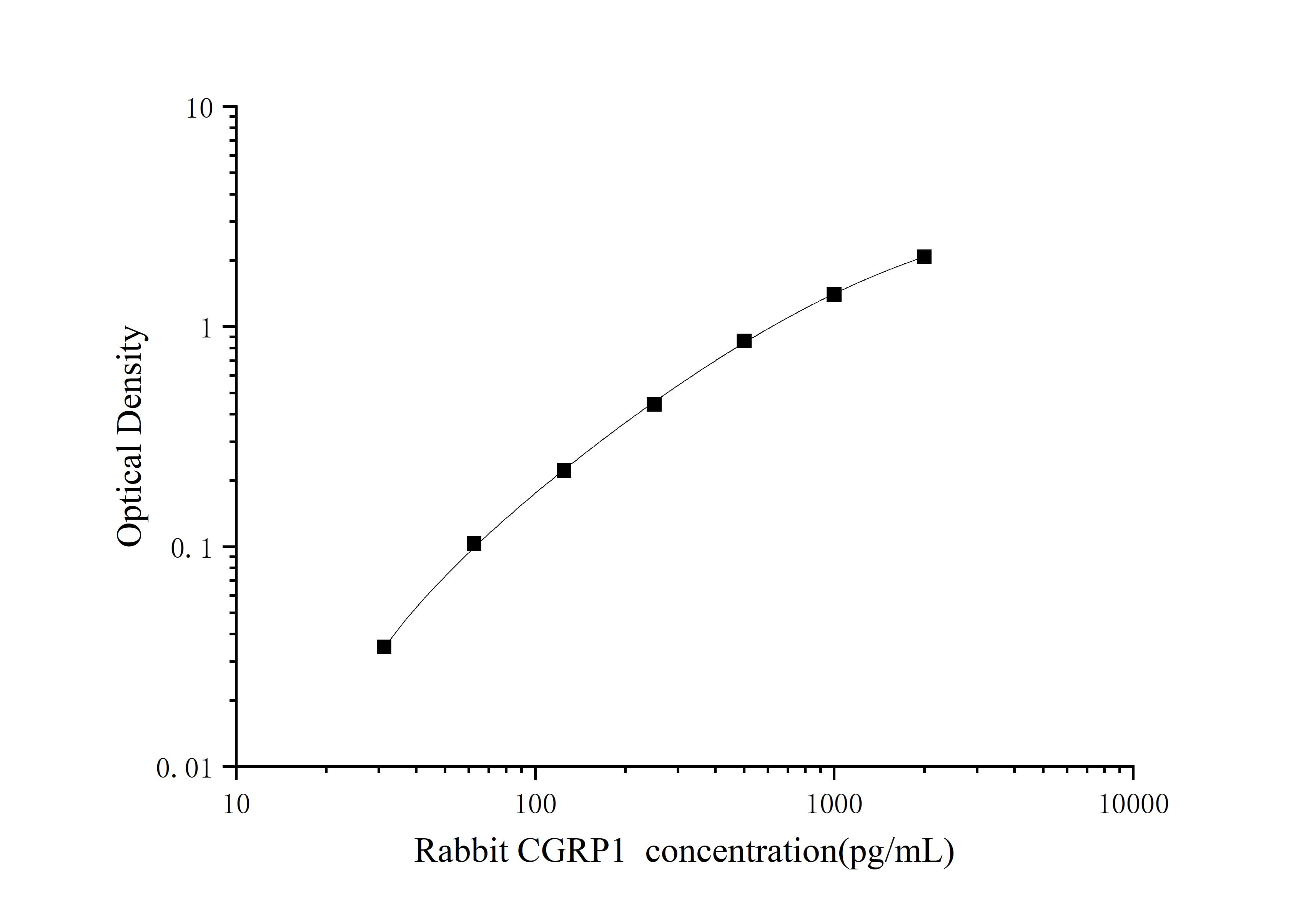
ELISA: Rabbit CGRP1 ELISA Kit (Colorimetric) [NBP3-50073]
Standard Curve Reference.Kit Contents for Rabbit CGRP1 ELISA Kit (Colorimetric)
- Biotinylated Detection Ab Diluent
- Certificate of Analysis
- Concentrated Biotinylated Detection Ab (100x)
- Concentrated HRP Conjugate (100x)
- Concentrated Wash Buffer (25x)
- HRP Conjugate Diluent
- Micro ELISA Plate (Dismountable)
- Plate Sealer
- Product Description
- Reference Standard
- Reference Standard & Sample Diluent
- Stop Solution
- Substrate Reagent
Preparation and Storage
Shipping
The product is shipped with polar packs. Upon receipt, store it immediately at the temperature recommended below.
Stability & Storage
Storage of components varies. See protocol for specific instructions.
Background: CGRP1
Signaling of CGRP and its receptor are involved in vasodilation, neurogenic inflammation, and peripheral sensitization of nociceptors, all of which relate to migraine pathophysiology (2-3). Studies have found that CGRP is both released during migraines and can also induce migraines (3-5). Under normal conditions CGRP levels are typical and neurotransmission is relative; however, migraine triggers including light and sound can increase CGRP levels, enhance neurotransmission, and alter the pain and sensory aversions associated with migraines (2). Given its role, CGRP and its receptor have been the target of many migraine therapeutics including small molecule agonists called gepants and monoclonal antibodies (3-5). Ubrogepant and Rimegepant, two small molecule CGRP receptor agonists, have been FDA approved while another agonist, Atogepant, is ongoing in clinical trials (3,5). Additionally, four monoclonal antibodies against either CGRP or its receptor that are used to block signaling have been FDA approved: Eptinezumab, Fremanezumab, Galcanezumab, and Erenumab (3-5).
References
1. Russell, F. A., King, R., Smillie, S. J., Kodji, X., & Brain, S. D. (2014). Calcitonin gene-related peptide: physiology and pathophysiology. Physiological reviews, 94(4), 1099-1142. https://doi.org/10.1152/physrev.00034.2013
2. Russo A. F. (2015). Calcitonin gene-related peptide (CGRP): a new target for migraine. Annual review of pharmacology and toxicology, 55, 533-552. https://doi.org/10.1146/annurev-pharmtox-010814-124701
3. Wattiez, A. S., Sowers, L. P., & Russo, A. F. (2020). Calcitonin gene-related peptide (CGRP): role in migraine pathophysiology and therapeutic targeting. Expert opinion on therapeutic targets, 24(2), 91-100. https://doi.org/10.1080/14728222.2020.1724285
4. Deen, M., Correnti, E., Kamm, K., Kelderman, T., Papetti, L., Rubio-Beltran, E., Vigneri, S., Edvinsson, L., Maassen Van Den Brink, A., & European Headache Federation School of Advanced Studies (EHF-SAS) (2017). Blocking CGRP in migraine patients - a review of pros and cons. The journal of headache and pain, 18(1), 96. https://doi.org/10.1186/s10194-017-0807-1
5. de Vries, T., Villal0n, C. M., & MaassenVanDenBrink, A. (2020). Pharmacological treatment of migraine: CGRP and 5-HT beyond the triptans. Pharmacology & therapeutics, 211, 107528. https://doi.org/10.1016/j.pharmthera.2020.107528
Long Name
Calcitonin Gene Related Peptide I
Alternate Names
a-CGRP, alpha-CGRP, CGRP 1, CGRP alpha, CGRP I
Gene Symbol
CALCA
Additional CGRP1 Products
Product Documents for Rabbit CGRP1 ELISA Kit (Colorimetric)
Certificate of Analysis
To download a Certificate of Analysis, please enter a lot or batch number in the search box below.
Product Specific Notices for Rabbit CGRP1 ELISA Kit (Colorimetric)
This product is for research use only and is not approved for use in humans or in clinical diagnosis. ELISA Kits are guaranteed for 6 months from date of receipt.
Customer Reviews for Rabbit CGRP1 ELISA Kit (Colorimetric)
There are currently no reviews for this product. Be the first to review Rabbit CGRP1 ELISA Kit (Colorimetric) and earn rewards!
Have you used Rabbit CGRP1 ELISA Kit (Colorimetric)?
Submit a review and receive an Amazon gift card!
$25/€18/£15/$25CAN/¥2500 for a review with an image
$10/€7/£6/$10CAN/¥1110 for a review without an image
Submit a review
Protocols
Find general support by application which include: protocols, troubleshooting, illustrated assays, videos and webinars.
- ELISA Sample Preparation & Collection Guide
- ELISA Troubleshooting Guide
- How to Run an R&D Systems DuoSet ELISA
- How to Run an R&D Systems Quantikine ELISA
- How to Run an R&D Systems Quantikine™ QuicKit™ ELISA
- Quantikine HS ELISA Kit Assay Principle, Alkaline Phosphatase
- Quantikine HS ELISA Kit Principle, Streptavidin-HRP Polymer
- Sandwich ELISA (Colorimetric) – Biotin/Streptavidin Detection Protocol
- Sandwich ELISA (Colorimetric) – Direct Detection Protocol
- Troubleshooting Guide: ELISA
- View all Protocols, Troubleshooting, Illustrated assays and Webinars
Loading...