
Ly-6G/Ly-6C Antibody (1A8) [Biotin]
Novus Biologicals | Catalog # FAB10371B

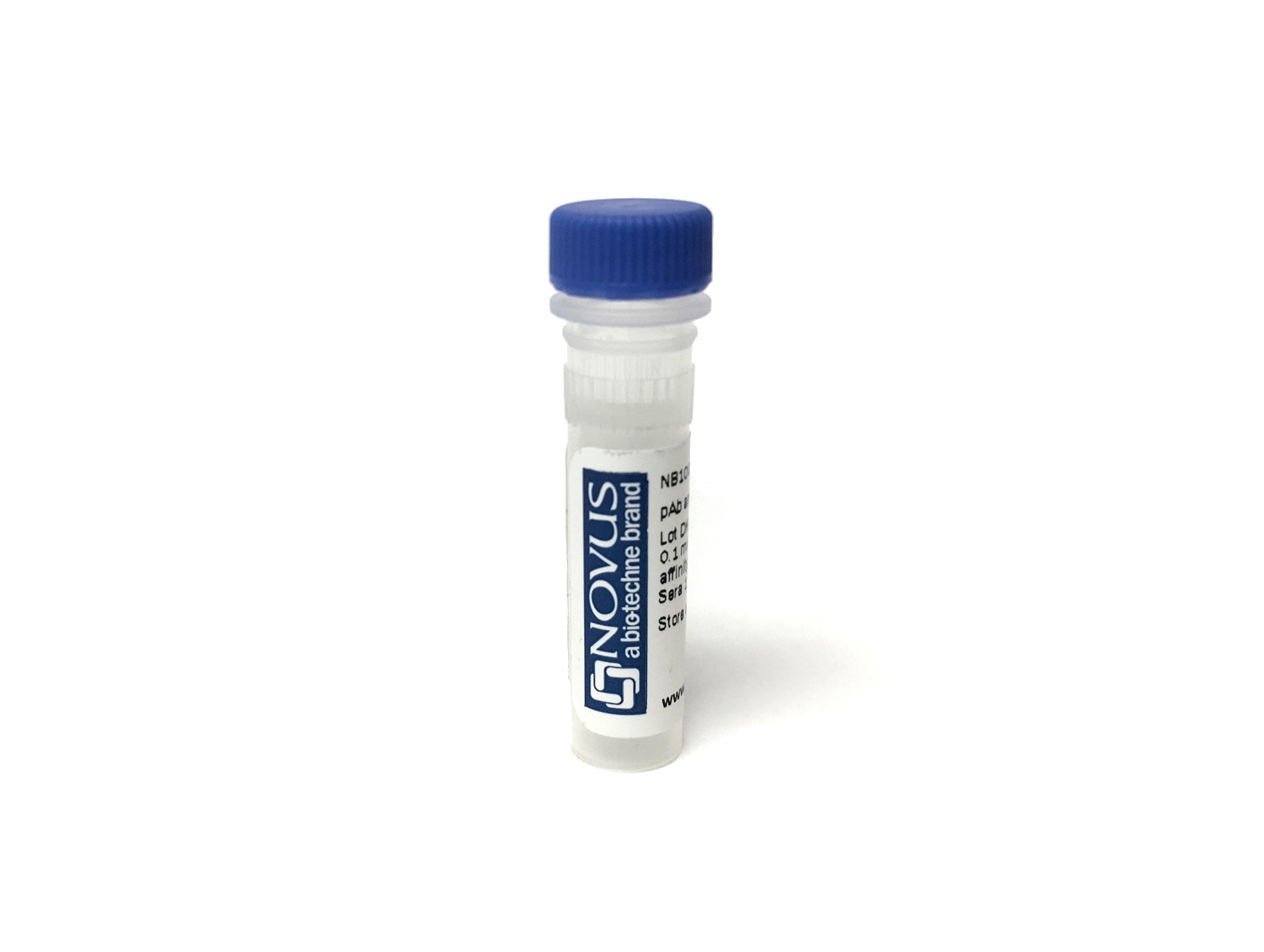
Key Product Details
Species Reactivity
Mouse
Applications
Flow Cytometry, CyTOF-ready
Label
Biotin
Antibody Source
Monoclonal Rat IgG2B Clone # 1A8
Loading...
Product Specifications
Immunogen
Ly-6G transfected EL-4J cell line
Accession # P35461
Accession # P35461
Specificity
Detects mouse Ly-6G in Flow Cytometry.
Clonality
Monoclonal
Host
Rat
Isotype
IgG2B
Description
This conjugate is made on demand and is not held in inventory. Each order represents a unique lot. All conjugates are generated using validated conjugation protocols and meet strict degree of labeling (F/P) specifications; additional information is available upon request. The antibody concentration is provided on the individual product label.
For specialized conjugation needs, like large quantities, specific concentrations, and defined F/P ratios, bulk and custom antibody conjugation services are available.
For specialized conjugation needs, like large quantities, specific concentrations, and defined F/P ratios, bulk and custom antibody conjugation services are available.
Applications for Ly-6G/Ly-6C Antibody (1A8) [Biotin]
Application
Recommended Usage
CyTOF-ready
Optimal dilutions of this antibody should be experimentally determined.
Flow Cytometry
Optimal dilutions of this antibody should be experimentally determined.
Application Notes
Recommended applications are based on validated applications from the unconjugated base product FAB10371. This conjugated antibody is not kept in inventory and is made to order using validated conjugation protocols.
Flow Cytometry Panel Builder
Bio-Techne Knows Flow Cytometry
Save time and reduce costly mistakes by quickly finding compatible reagents using the Panel Builder Tool.
Advanced Features
- Spectra Viewer - Custom analysis of spectra from multiple fluorochromes
- Spillover Popups - Visualize the spectra of individual fluorochromes
- Antigen Density Selector - Match fluorochrome brightness with antigen density

Formulation, Preparation, and Storage
Purification
Protein A or G purified from hybridoma culture supernatant
Formulation
PBS
Preservative
0.05% Sodium Azide
Concentration
Please see the vial label for concentration. If unlisted please contact technical services.
Shipping
The product is shipped with polar packs. Upon receipt, store it immediately at the temperature recommended below.
Stability & Storage
Store at 4C in the dark.
Background: Ly-6G (Gr-1)
Expression of Ly-6G and Ly-6C, along with other lineage markers, help define specific cell types (2,4). For example, mouse myeloid derived suppressor cells (MDSCs), which play a role in inflammation and tumor development, are further subdivided into granulocytic (G-MDSCs) or monocytic (Mo-MDSCs) (4). Mo-MDSCs express Ly-6Chi along with CD11b, but are negative for Ly-6G, whereas G-MDSCs express Ly-6Clo/int,Ly-6Ghi, and CD11b (4).
The monoclonal antibody RB6-8C5 first identified granulocyte-differentiation antigen (Gr-1) which is primarily expressed on the surface of neutrophils and immature myeloid cells, and to a lesser extent on lymphocytes and macrophages (1). Gr-1 expression increases as neutrophils mature but remains is stably expressed in monocytes (1). The RB6-8C5 reacts with both Ly-6G and Ly-6C, whereas 1A8 antibody is specific for Ly-6G (1). Antibodies against Ly-6G, such as RB6-8C5 and 1A8, are commonly used to identify a role for neutrophils in mouse models of disease as they are efficient for quickly depleting neutrophils (1). RB6-8C5, however, also targets and depletes Ly-6Chi monocytes in addition to other Ly-6G-expressing cells (1).
References
1. Lee, P. Y., Wang, J. X., Parisini, E., Dascher, C. C., & Nigrovic, P. A. (2013). Ly6 family proteins in neutrophil biology. Journal of leukocyte biology. https://doi.org/10.1189/jlb.0113014
2. Bamezai A. (2004). Mouse Ly-6 proteins and their extended family: markers of cell differentiation and regulators of cell signaling. Archivum immunologiae et therapiae experimentalis.
3. Loughner, C. L., Bruford, E. A., McAndrews, M. S., Delp, E. E., Swamynathan, S., & Swamynathan, S. K. (2016). Organization, evolution and functions of the human and mouse Ly6/uPAR family genes. Human genomics. https://doi.org/10.1186/s40246-016-0074-2
4. Kong, Y. Y., Fuchsberger, M., Xiang, S. D., Apostolopoulos, V., & Plebanski, M. (2013). Myeloid derived suppressor cells and their role in diseases. Current medicinal chemistry. https://doi.org/10.2174/0929867311320110006
Long Name
A Myeloid Differentiation Antigen
Alternate Names
Gr-1
Additional Ly-6G (Gr-1) Products
Product Documents for Ly-6G/Ly-6C Antibody (1A8) [Biotin]
Certificate of Analysis
To download a Certificate of Analysis, please enter a lot or batch number in the search box below.
Product Specific Notices for Ly-6G/Ly-6C Antibody (1A8) [Biotin]
This product is for research use only and is not approved for use in humans or in clinical diagnosis. Primary Antibodies are guaranteed for 1 year from date of receipt.
Customer Reviews for Ly-6G/Ly-6C Antibody (1A8) [Biotin]
There are currently no reviews for this product. Be the first to review Ly-6G/Ly-6C Antibody (1A8) [Biotin] and earn rewards!
Have you used Ly-6G/Ly-6C Antibody (1A8) [Biotin]?
Submit a review and receive an Amazon gift card!
$25/€18/£15/$25CAN/¥2500 for a review with an image
$10/€7/£6/$10CAN/¥1110 for a review without an image
Submit a review
Protocols
Find general support by application which include: protocols, troubleshooting, illustrated assays, videos and webinars.
- 7-Amino Actinomycin D (7-AAD) Cell Viability Flow Cytometry Protocol
- Extracellular Membrane Flow Cytometry Protocol
- Flow Cytometry Protocol for Cell Surface Markers
- Flow Cytometry Protocol for Staining Membrane Associated Proteins
- Flow Cytometry Staining Protocols
- Flow Cytometry Troubleshooting Guide
- Intracellular Flow Cytometry Protocol Using Alcohol (Methanol)
- Intracellular Flow Cytometry Protocol Using Detergents
- Intracellular Nuclear Staining Flow Cytometry Protocol Using Detergents
- Intracellular Staining Flow Cytometry Protocol Using Alcohol Permeabilization
- Intracellular Staining Flow Cytometry Protocol Using Detergents to Permeabilize Cells
- Propidium Iodide Cell Viability Flow Cytometry Protocol
- Protocol for Liperfluo
- Protocol for the Characterization of Human Th22 Cells
- Protocol for the Characterization of Human Th9 Cells
- Protocol: Annexin V and PI Staining by Flow Cytometry
- Protocol: Annexin V and PI Staining for Apoptosis by Flow Cytometry
- Troubleshooting Guide: Fluorokine Flow Cytometry Kits
- View all Protocols, Troubleshooting, Illustrated assays and Webinars
Loading...