
Otubain-2 Antibody (OTI11B3)
Novus Biologicals | Catalog # NBP2-03223

![Western Blot: Otubain-2 Antibody (OTI11B3) [NBP2-03223]](https://resources.rndsystems.com/images/products/Otubain-2-Antibody-11B3-Western-Blot-NBP2-03223-img0008.jpg "Western Blot: Otubain-2 Antibody (OTI11B3) [NBP2-03223]")
Scientific images may be resized, cropped, or adjusted for brightness or contrast for presentation purposes. These updates are limited to presentation and do not affect the underlying scientific interpretation of the data. Where available, additional source data may be provided upon request.
Key Product Details
Species Reactivity
Applications
Label
Antibody Source
Product Specifications
Immunogen
Clonality
Host
Isotype
Theoretical MW
Disclaimer note: The observed molecular weight of the protein may vary from the listed predicted molecular weight due to post translational modifications, post translation cleavages, relative charges, and other experimental factors.
Scientific Data Images for Otubain-2 Antibody (OTI11B3)
Western Blot: Otubain-2 Antibody (OTI11B3) [NBP2-03223]
Western Blot: Otubain-2 Antibody (11B3) [NBP2-03223] - Analysis of extracts (35ug) from 9 different cell lines by using anti-Otubain-2 monoclonal antibody.![Flow Cytometry: Otubain-2 Antibody (OTI11B3) [NBP2-03223]](https://resources.rndsystems.com/images/products/Otubain-2-Antibody-11B3-Flow-Cytometry-NBP2-03223-img0004.jpg "Flow Cytometry: Otubain-2 Antibody (OTI11B3) [NBP2-03223]")
Flow Cytometry: Otubain-2 Antibody (OTI11B3) [NBP2-03223]
Flow Cytometry: Otubain-2 Antibody (11B3) [NBP2-03223] - HEK293T cells transfected with either overexpression plasmid (Red) or empty vector control plasmid (Blue) were immunostained by anti-Otubain-2 Antibody, and then analyzed by flow cytometry.![Western Blot: Otubain-2 Antibody (OTI11B3) [NBP2-03223]](https://resources.rndsystems.com/images/products/Otubain-2-Antibody-11B3-Western-Blot-NBP2-03223-img0005.jpg "Western Blot: Otubain-2 Antibody (OTI11B3) [NBP2-03223]")
Western Blot: Otubain-2 Antibody (OTI11B3) [NBP2-03223]
Western Blot: Otubain-2 Antibody (11B3) [NBP2-03223] - HEK293T cells were transfected with the pCMV6-ENTRY control (Left lane) or pCMV6-ENTRY OTUB2 (Right lane) cDNA for 48 hrs and lysed. Equivalent amounts of cell lysates (5 ug per lane) were separated by SDS-PAGE and immunoblotted with anti-OTUB2.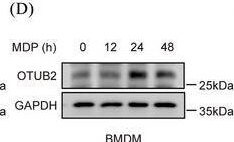
Western Blot: Otubain-2 Antibody (OTI11B3) [NBP2-03223] -
OTUB2 enhances MDP‐induced cytokine production in macrophages. (A, B) Representative OTUB2 (red) and F4/80 (green) immunofluorescence staining of colon samples from humans (A) and mice (B). Scale bar = 100 um. (C, D) BMDM isolated from C57BL/6 mice were stimulated with 500 ng/mL LPS (C) or 200 ng/mL L18‐MDP (D) for indicated periods of time. OTUB2 protein levels were then analysed by Western blot. (E) BMDM isolated from C57BL/6 mice were stimulated with 200 ng/mL L18‐MDP for indicated periods of time. The relative mRNA levels of Otub2 were determined by qRT‐PCR. Data are presented as the relative increase over untreated control samples. (F) RAW264.7 cells were stimulated with 200 ng/mL L18‐MDP for indicated periods of time. OTUB2 protein levels were then analysed by Western blot. (G–K) BMDMs isolated from Otub2+/+ and Otub2–/– mice were stimulated with 200 ng/mL L18‐MDP for 3 h or left untreated. The relative expression of Ilb (G), Il6 (H), Tnf (I), Cxcl2 (J) and Cxcl10 (K) mRNA was determined by qRT‐PCR. Data are presented as the relative increase over untreated control samples. Data in E and G–K are displayed as mean +/- SEM. *p <.05, **p <.01, ***p <.001. Image collected and cropped by CiteAb from the following open publication (https://pubmed.ncbi.nlm.nih.gov/39358938), licensed under a CC-BY license. Not internally tested by Novus Biologicals.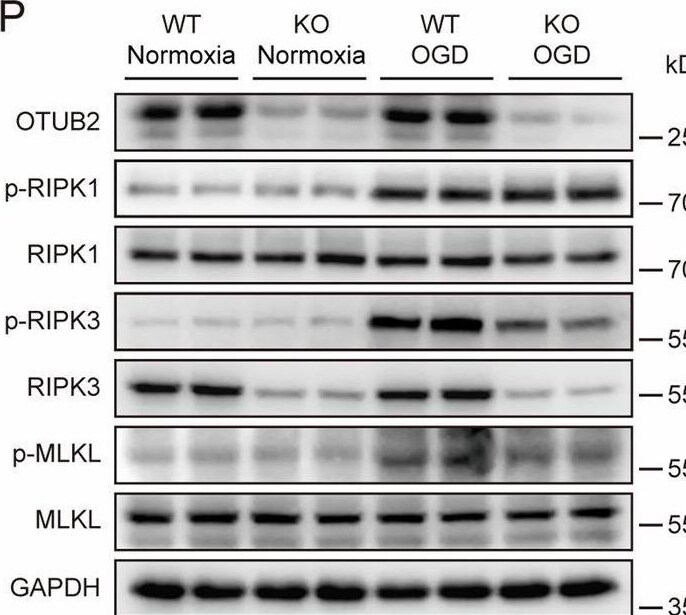
Western Blot: Otubain-2 Antibody (OTI11B3) [NBP2-03223] -
OTUB2 deficiency ameliorates RIPK3-mediated neuronal necroptosis.(A–G) Four hours after MCAO, the ischemic cerebral hemisphere was analyzed by Western blot with indicated antibodies. Representative immunoblots (A) as well as relative quantification of p-RIPK1 (B), p-RIPK3 (C), p-MLKL (D), RIPK1 (E), RIPK3 (F), and MLKL (G) are shown. Two-way ANOVA, n = 3/group, biological replicates. (H, I) Four hours after MCAO, the ischemic penumbra was analyzed by immunofluorescence with indicated antibodies. Representative images (H) and percentages of p-MLKL+ neurons (I) are shown. Scale bar, 100 μm. Unpaired Student’s t test, n = 3/group, biological replicates. (J–L) Four hours after MCAO, the relative transcription of Il1b (J), Il6 (K), and Tnf (L) in the ischemic cerebral hemisphere was determined by qRT-PCR. Unpaired Student’s t test, n = 3–5/group, biological replicates. (M, N) Representative TTC staining (M) and percentages of cerebral infarct volume (N) on day 1 after MCAO. Unpaired Student’s t test, n = 5/group, biological replicates. (O) Otub2+/+ and Otub2−/− HT22 cells were subjected to OGD for 6 h followed by reoxygenation for 12 h in the presence or absence of Nec-1 (50 μM). Cell viability was measured by CCK-8 test. Two-way ANOVA, n = 10/group, biological replicates. (P) Otub2+/+ and Otub2−/− HT22 cells were subjected to OGD for 6 h followed by reoxygenation for 12 h. Whole-cell lysates were analyzed by Western blot with indicated antibodies. (Q) After OGD treatment for 6 h followed by reoxygenation for 12 h, Otub2+/+ and Otub2−/− HT22 cells were analyzed by immunofluorescence with indicated antibodies. Scale bar, 20 μm. Data in (B–G, I, J–L, N, O) show the mean +/- SEM. Source data are available online for this figure. Image collected and cropped by CiteAb from the following open publication (https://pubmed.ncbi.nlm.nih.gov/40021931), licensed under a CC-BY license. Not internally tested by Novus Biologicals.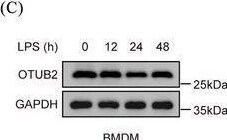
Western Blot: Otubain-2 Antibody (OTI11B3) [NBP2-03223] -
OTUB2 enhances MDP‐induced cytokine production in macrophages. (A, B) Representative OTUB2 (red) and F4/80 (green) immunofluorescence staining of colon samples from humans (A) and mice (B). Scale bar = 100 um. (C, D) BMDM isolated from C57BL/6 mice were stimulated with 500 ng/mL LPS (C) or 200 ng/mL L18‐MDP (D) for indicated periods of time. OTUB2 protein levels were then analysed by Western blot. (E) BMDM isolated from C57BL/6 mice were stimulated with 200 ng/mL L18‐MDP for indicated periods of time. The relative mRNA levels of Otub2 were determined by qRT‐PCR. Data are presented as the relative increase over untreated control samples. (F) RAW264.7 cells were stimulated with 200 ng/mL L18‐MDP for indicated periods of time. OTUB2 protein levels were then analysed by Western blot. (G–K) BMDMs isolated from Otub2+/+ and Otub2–/– mice were stimulated with 200 ng/mL L18‐MDP for 3 h or left untreated. The relative expression of Ilb (G), Il6 (H), Tnf (I), Cxcl2 (J) and Cxcl10 (K) mRNA was determined by qRT‐PCR. Data are presented as the relative increase over untreated control samples. Data in E and G–K are displayed as mean +/- SEM. *p <.05, **p <.01, ***p <.001. Image collected and cropped by CiteAb from the following open publication (https://pubmed.ncbi.nlm.nih.gov/39358938), licensed under a CC-BY license. Not internally tested by Novus Biologicals.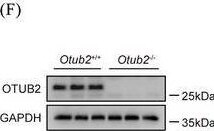
Western Blot: Otubain-2 Antibody (OTI11B3) [NBP2-03223] -
Colonic expression OTUB2 is downregulated in colitis. (A) Representative immunohistochemical staining of OTUB2 in control and UC colon samples. Scale bar = 50 um. (B) Representative immunohistochemical staining of OTUB2 in colon samples from control and DSS‐treated C57BL/6 mice. Control mice received regular drinking water. Mice in the DSS group were given 2% DSS for 8 days, followed by regular drinking water for 2 days. Scale bar = 50 um. (C, D) Representative immunoblots (C) and relative quantification (D) of OTUB2 protein in colon samples from control and DSS‐treated C57BL/6 mice. (E) Relative mRNA levels of Otub2 in colon samples from control and DSS‐treated C57BL/6 mice were analysed by qRT‐PCR. (F) Western blot analysis of OTUB2 protein abundance in colon samples from Otub2+/+ and Otub2–/– mice. (G) The representative image (left) and length (right) of colons from Otub2+/+ and Otub2–/– mice. (H, I) Representative H&E (H) and PAS/AB (I) staining of colons from Otub2+/+ and Otub2–/– mice. Scale bar = 50 um. Data in D, E and G are shown as mean +/- SEM. ns, no significant difference. *p <.05, **p <.01. Image collected and cropped by CiteAb from the following open publication (https://pubmed.ncbi.nlm.nih.gov/39358938), licensed under a CC-BY license. Not internally tested by Novus Biologicals.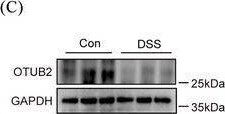
Western Blot: Otubain-2 Antibody (OTI11B3) [NBP2-03223] -
Colonic expression OTUB2 is downregulated in colitis. (A) Representative immunohistochemical staining of OTUB2 in control and UC colon samples. Scale bar = 50 um. (B) Representative immunohistochemical staining of OTUB2 in colon samples from control and DSS‐treated C57BL/6 mice. Control mice received regular drinking water. Mice in the DSS group were given 2% DSS for 8 days, followed by regular drinking water for 2 days. Scale bar = 50 um. (C, D) Representative immunoblots (C) and relative quantification (D) of OTUB2 protein in colon samples from control and DSS‐treated C57BL/6 mice. (E) Relative mRNA levels of Otub2 in colon samples from control and DSS‐treated C57BL/6 mice were analysed by qRT‐PCR. (F) Western blot analysis of OTUB2 protein abundance in colon samples from Otub2+/+ and Otub2–/– mice. (G) The representative image (left) and length (right) of colons from Otub2+/+ and Otub2–/– mice. (H, I) Representative H&E (H) and PAS/AB (I) staining of colons from Otub2+/+ and Otub2–/– mice. Scale bar = 50 um. Data in D, E and G are shown as mean +/- SEM. ns, no significant difference. *p <.05, **p <.01. Image collected and cropped by CiteAb from the following open publication (https://pubmed.ncbi.nlm.nih.gov/39358938), licensed under a CC-BY license. Not internally tested by Novus Biologicals.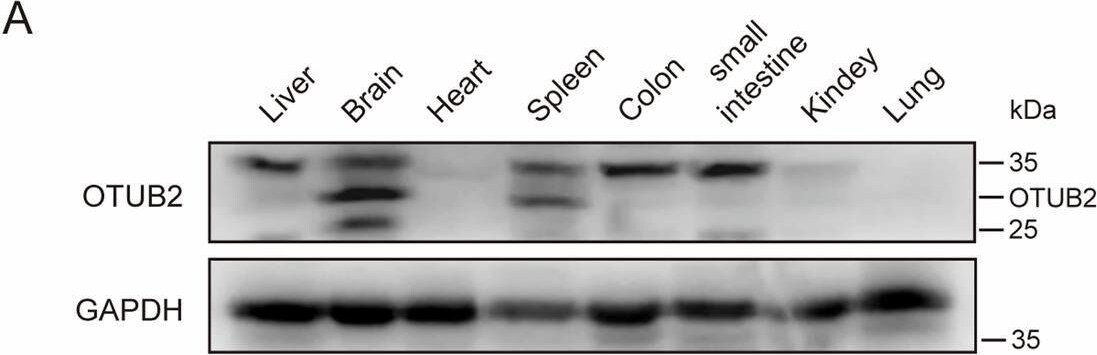
Western Blot: Otubain-2 Antibody (OTI11B3) [NBP2-03223] -
OTUB2 deficiency attenuates MCAO-induced cerebral injury.(A) OTUB2 expression in indicated organs of C57BL/6 mice was determined by Western blot. (B) OTUB2 expression in the brain of Otub2+/+ and Otub2−/− mice was analyzed by Western blot (left panel). The right panel shows the relative quantification normalized to GAPDH. Unpaired Student’s t test, n = 6/group, biological replicates. (C, D) Brains of 8-week-old male Otub2+/+ and Otub2−/− mice were analyzed by H&E (C) and Nissl (D) staining. (E) After MCAO surgery, cerebral infarct size was analyzed by TTC staining. (F) Cerebral infarct volume was calculated based on TTC staining. Two-way ANOVA, n = 5/group, biological replicates. (G–K) Neurological function was evaluated by mNSS test (G), rotarod test (H), corner turning test (I), and adhesive removal test (J, K). Two-way ANOVA, n = 5–8/group, biological replicates. Data in (B, F, G–K) show the mean +/- SEM. Source data are available online for this figure. Image collected and cropped by CiteAb from the following open publication (https://pubmed.ncbi.nlm.nih.gov/40021931), licensed under a CC-BY license. Not internally tested by Novus Biologicals.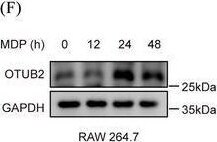
Western Blot: Otubain-2 Antibody (OTI11B3) [NBP2-03223] -
OTUB2 enhances MDP‐induced cytokine production in macrophages. (A, B) Representative OTUB2 (red) and F4/80 (green) immunofluorescence staining of colon samples from humans (A) and mice (B). Scale bar = 100 um. (C, D) BMDM isolated from C57BL/6 mice were stimulated with 500 ng/mL LPS (C) or 200 ng/mL L18‐MDP (D) for indicated periods of time. OTUB2 protein levels were then analysed by Western blot. (E) BMDM isolated from C57BL/6 mice were stimulated with 200 ng/mL L18‐MDP for indicated periods of time. The relative mRNA levels of Otub2 were determined by qRT‐PCR. Data are presented as the relative increase over untreated control samples. (F) RAW264.7 cells were stimulated with 200 ng/mL L18‐MDP for indicated periods of time. OTUB2 protein levels were then analysed by Western blot. (G–K) BMDMs isolated from Otub2+/+ and Otub2–/– mice were stimulated with 200 ng/mL L18‐MDP for 3 h or left untreated. The relative expression of Ilb (G), Il6 (H), Tnf (I), Cxcl2 (J) and Cxcl10 (K) mRNA was determined by qRT‐PCR. Data are presented as the relative increase over untreated control samples. Data in E and G–K are displayed as mean +/- SEM. *p <.05, **p <.01, ***p <.001. Image collected and cropped by CiteAb from the following open publication (https://pubmed.ncbi.nlm.nih.gov/39358938), licensed under a CC-BY license. Not internally tested by Novus Biologicals.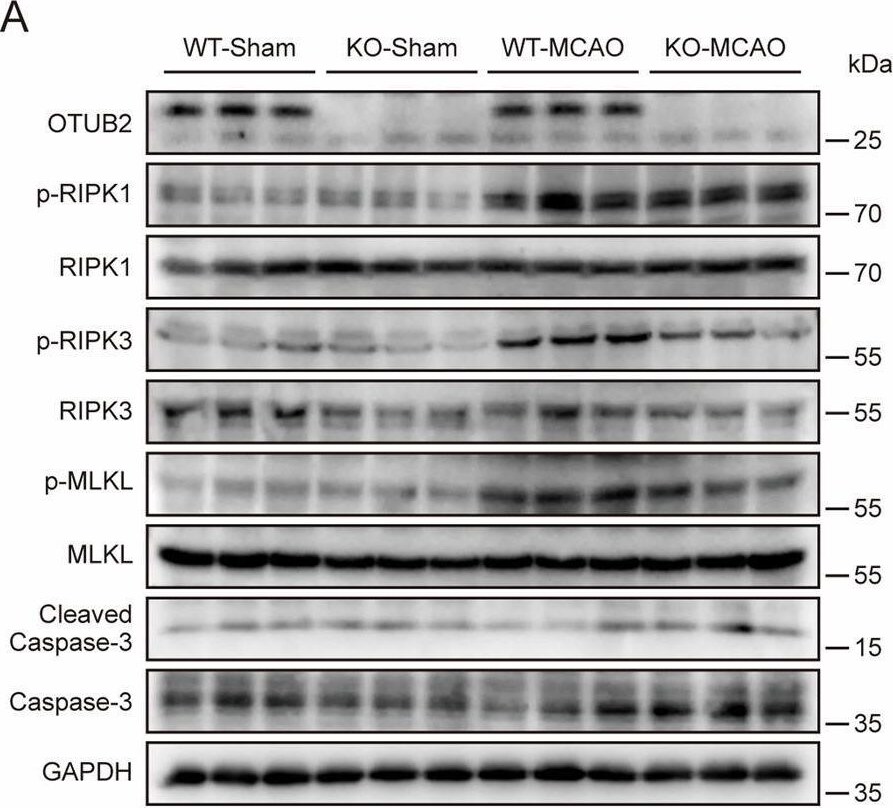
Western Blot: Otubain-2 Antibody (OTI11B3) [NBP2-03223] -
OTUB2 deficiency ameliorates RIPK3-mediated neuronal necroptosis.(A–G) Four hours after MCAO, the ischemic cerebral hemisphere was analyzed by Western blot with indicated antibodies. Representative immunoblots (A) as well as relative quantification of p-RIPK1 (B), p-RIPK3 (C), p-MLKL (D), RIPK1 (E), RIPK3 (F), and MLKL (G) are shown. Two-way ANOVA, n = 3/group, biological replicates. (H, I) Four hours after MCAO, the ischemic penumbra was analyzed by immunofluorescence with indicated antibodies. Representative images (H) and percentages of p-MLKL+ neurons (I) are shown. Scale bar, 100 μm. Unpaired Student’s t test, n = 3/group, biological replicates. (J–L) Four hours after MCAO, the relative transcription of Il1b (J), Il6 (K), and Tnf (L) in the ischemic cerebral hemisphere was determined by qRT-PCR. Unpaired Student’s t test, n = 3–5/group, biological replicates. (M, N) Representative TTC staining (M) and percentages of cerebral infarct volume (N) on day 1 after MCAO. Unpaired Student’s t test, n = 5/group, biological replicates. (O) Otub2+/+ and Otub2−/− HT22 cells were subjected to OGD for 6 h followed by reoxygenation for 12 h in the presence or absence of Nec-1 (50 μM). Cell viability was measured by CCK-8 test. Two-way ANOVA, n = 10/group, biological replicates. (P) Otub2+/+ and Otub2−/− HT22 cells were subjected to OGD for 6 h followed by reoxygenation for 12 h. Whole-cell lysates were analyzed by Western blot with indicated antibodies. (Q) After OGD treatment for 6 h followed by reoxygenation for 12 h, Otub2+/+ and Otub2−/− HT22 cells were analyzed by immunofluorescence with indicated antibodies. Scale bar, 20 μm. Data in (B–G, I, J–L, N, O) show the mean +/- SEM. Source data are available online for this figure. Image collected and cropped by CiteAb from the following open publication (https://pubmed.ncbi.nlm.nih.gov/40021931), licensed under a CC-BY license. Not internally tested by Novus Biologicals.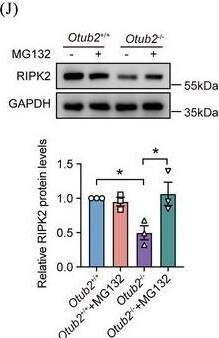
Western Blot: Otubain-2 Antibody (OTI11B3) [NBP2-03223] -
OTUB2 enhances MDP‐induced signalling by inhibiting the proteasomal degradation of RIPK2. (A) After stimulation with 200 ng/mL L18‐MDP for indicated periods of time, BMDMs derived from Otub2+/+ and Otub2–/– mice were lysed and analysed by Western blot with indicated antibodies. Densitometric quantification is shown in the figure. (B) Schematic diagram of MDP‐induced signalling. (C) The protein abundance of NOD2, RIPK2 and XIAP in Otub2+/+ and Otub2–/– BMDMs was determined by Western blot. (D–F) The relative protein levels of NOD2 (D), XIAP (E) and RIPK2 (F) in Otub2+/+ and Otub2–/– BMDMs. (G) The relative mRNA levels of Ripk2 in Otub2+/+ and Otub2–/– BMDMs were determined by qRT‐PCR. (H) RAW264.7 cells were transfected with FLAG‐Vector or FLAG‐OTUB2 plasmids for 24 h. Thereafter, cells were lysed and analysed by Western blot with indicated antibodies. (I) After treatment with 20 ng/mL CHX for indicated periods of time, BMDMs isolated from Otub2+/+ and Otub2–/– mice were lysed and analysed by Western blot with indicated antibodies. (J, K) BMDMs isolated from Otub2+/+ and Otub2–/– mice were treated with 20 uM MG132 (J) or 50 uM CQ (K) for 6 h or left untreated. Whole Cell lysates were analysed by Western blot with indicated antibodies. Representative immunoblots (upper panel) and quantification (lower panel) are shown. Data in D–G, J and K are shown as mean +/- SEM. ns, no significant difference. *p <.05, **p <.01. Image collected and cropped by CiteAb from the following open publication (https://pubmed.ncbi.nlm.nih.gov/39358938), licensed under a CC-BY license. Not internally tested by Novus Biologicals.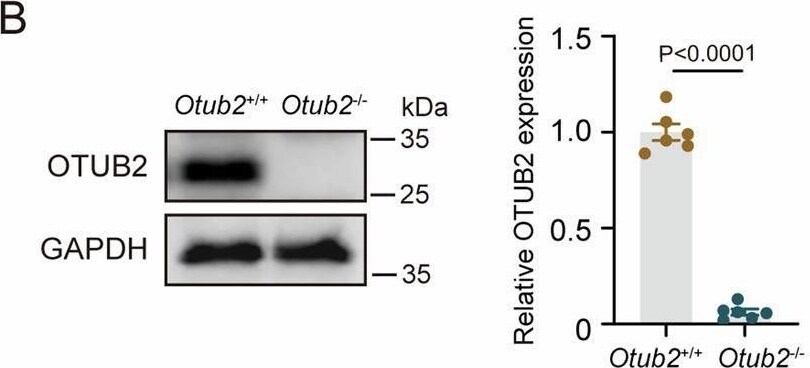
Western Blot: Otubain-2 Antibody (OTI11B3) [NBP2-03223] -
OTUB2 deficiency attenuates MCAO-induced cerebral injury.(A) OTUB2 expression in indicated organs of C57BL/6 mice was determined by Western blot. (B) OTUB2 expression in the brain of Otub2+/+ and Otub2−/− mice was analyzed by Western blot (left panel). The right panel shows the relative quantification normalized to GAPDH. Unpaired Student’s t test, n = 6/group, biological replicates. (C, D) Brains of 8-week-old male Otub2+/+ and Otub2−/− mice were analyzed by H&E (C) and Nissl (D) staining. (E) After MCAO surgery, cerebral infarct size was analyzed by TTC staining. (F) Cerebral infarct volume was calculated based on TTC staining. Two-way ANOVA, n = 5/group, biological replicates. (G–K) Neurological function was evaluated by mNSS test (G), rotarod test (H), corner turning test (I), and adhesive removal test (J, K). Two-way ANOVA, n = 5–8/group, biological replicates. Data in (B, F, G–K) show the mean +/- SEM. Source data are available online for this figure. Image collected and cropped by CiteAb from the following open publication (https://pubmed.ncbi.nlm.nih.gov/40021931), licensed under a CC-BY license. Not internally tested by Novus Biologicals.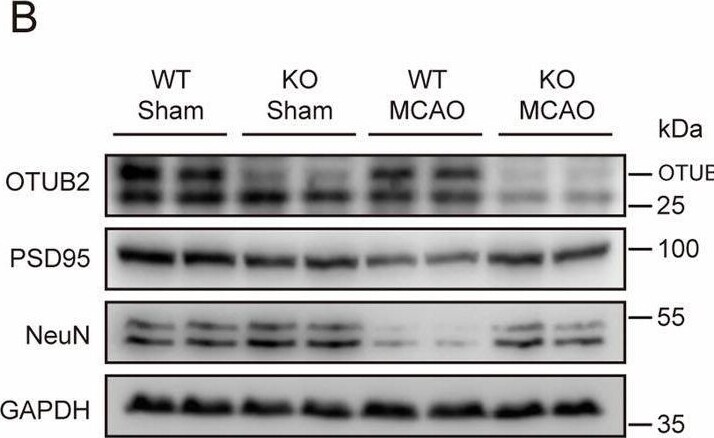
Western Blot: Otubain-2 Antibody (OTI11B3) [NBP2-03223] -
OTUB2 deficiency diminishes MCAO-induced neuronal loss and neuroinflammation.(A) Representative immunofluorescence staining of OTUB2 (red) and NeuN (green) in the brain of C57BL/6 mice. Scale bar, 20 μm. (B) On day 2 after MCAO, the ischemic cerebral hemisphere of Otub2+/+ and Otub2−/− mice was analyzed by Western blot with indicated antibodies. (C, D) The relative expression of NeuN (C) and PSD95 (D) was quantified after normalization to GAPDH. Unpaired Student’s t test, n = 4/group, biological replicates. (E, F) Representative immunofluorescence staining (E) and quantification (F) of NeuN+ cells in the ischemic penumbra on day 2 after MCAO. Scale bar, 100 μm. Unpaired Student’s t test, n = 5/group, biological replicates. (G) Representative immunofluorescence staining of Iba1+ cells in the ischemic penumbra on day 2 after MCAO. Scale bar, 100 μm. (H) Representative z-stack images of Iba1+ cells in the ischemic penumbra on day 2 after MCAO. Scale bar, 5 μm. (I–M) Forty-eight hours after MCAO, the relative transcription of Il1b (I), Il6 (J), Tnf (K), Ccl2 (L), and Cxcl10 (M) in the ischemic cerebral hemisphere was determined by qRT-PCR. Mann–Whitney U test (I) and Unpaired Student’s t test (J–M), n = 5–7/group, biological replicates. Data in (C, D, I–M) show the mean +/- SEM. Source data are available online for this figure. Image collected and cropped by CiteAb from the following open publication (https://pubmed.ncbi.nlm.nih.gov/40021931), licensed under a CC-BY license. Not internally tested by Novus Biologicals.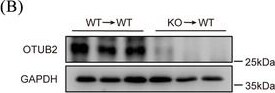
Western Blot: Otubain-2 Antibody (OTI11B3) [NBP2-03223] -
Deficiency of OTUB2 in haematopoietic cells exacerbates DSS‐induced colitis. (A) Experimental flowchart for bone marrow transplantation. (B) Eight weeks after bone marrow transplantation, OTUB2 expression in splenocytes of Otub2+/+ mice receiving bone marrow from Otub2+/+ (WT→WT) and Otub2–/– (KO→WT) mice was analysed by Western blot. (C, D) The chimeric mice were fed drinking water containing 2% DSS for 8 days, and then given normal drinking water for 2 days. Body weight (C) and disease activity index (D) were recorded daily (n = 7/group). (E, F) The representative image (E) and length (F) of colons from chimeric mice on day 10 after DSS treatment. (G and H) Histology score (G) as well as representative H&E and PAS/AB staining (H) of colons from chimeric mice on day 10 after DSS treatment. Scale bar = 50 um. Data in C, D, F and G are shown as mean +/- SEM. *p <.05, **p <.01, ***p <.001. Image collected and cropped by CiteAb from the following open publication (https://pubmed.ncbi.nlm.nih.gov/39358938), licensed under a CC-BY license. Not internally tested by Novus Biologicals.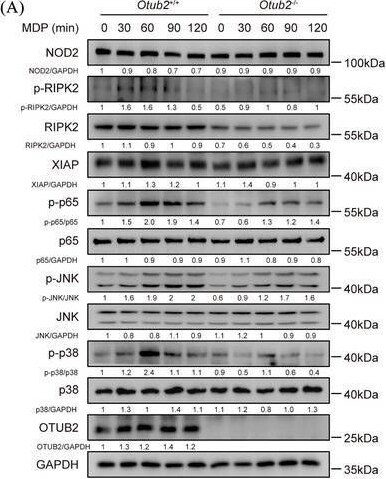
Western Blot: Otubain-2 Antibody (OTI11B3) [NBP2-03223] -
OTUB2 enhances MDP‐induced signalling by inhibiting the proteasomal degradation of RIPK2. (A) After stimulation with 200 ng/mL L18‐MDP for indicated periods of time, BMDMs derived from Otub2+/+ and Otub2–/– mice were lysed and analysed by Western blot with indicated antibodies. Densitometric quantification is shown in the figure. (B) Schematic diagram of MDP‐induced signalling. (C) The protein abundance of NOD2, RIPK2 and XIAP in Otub2+/+ and Otub2–/– BMDMs was determined by Western blot. (D–F) The relative protein levels of NOD2 (D), XIAP (E) and RIPK2 (F) in Otub2+/+ and Otub2–/– BMDMs. (G) The relative mRNA levels of Ripk2 in Otub2+/+ and Otub2–/– BMDMs were determined by qRT‐PCR. (H) RAW264.7 cells were transfected with FLAG‐Vector or FLAG‐OTUB2 plasmids for 24 h. Thereafter, cells were lysed and analysed by Western blot with indicated antibodies. (I) After treatment with 20 ng/mL CHX for indicated periods of time, BMDMs isolated from Otub2+/+ and Otub2–/– mice were lysed and analysed by Western blot with indicated antibodies. (J, K) BMDMs isolated from Otub2+/+ and Otub2–/– mice were treated with 20 uM MG132 (J) or 50 uM CQ (K) for 6 h or left untreated. Whole Cell lysates were analysed by Western blot with indicated antibodies. Representative immunoblots (upper panel) and quantification (lower panel) are shown. Data in D–G, J and K are shown as mean +/- SEM. ns, no significant difference. *p <.05, **p <.01. Image collected and cropped by CiteAb from the following open publication (https://pubmed.ncbi.nlm.nih.gov/39358938), licensed under a CC-BY license. Not internally tested by Novus Biologicals.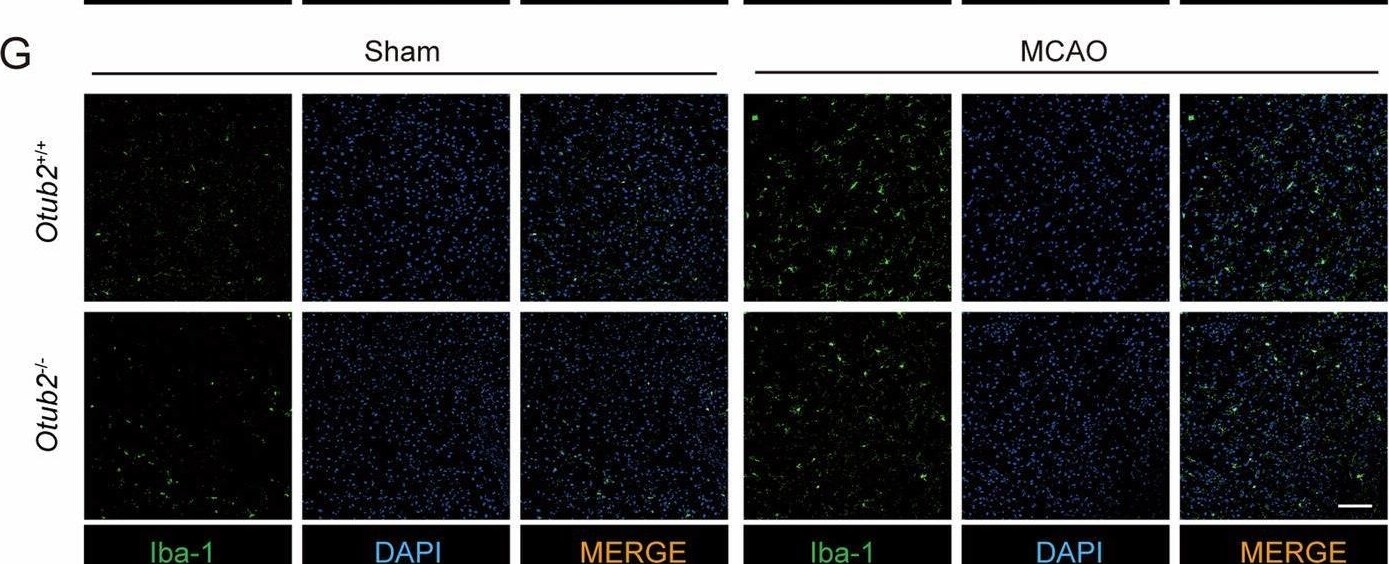
Immunocytochemistry/ Immunofluorescence: Otubain-2 Antibody (OTI11B3) [NBP2-03223] -
OTUB2 deficiency diminishes MCAO-induced neuronal loss and neuroinflammation.(A) Representative immunofluorescence staining of OTUB2 (red) and NeuN (green) in the brain of C57BL/6 mice. Scale bar, 20 μm. (B) On day 2 after MCAO, the ischemic cerebral hemisphere of Otub2+/+ and Otub2−/− mice was analyzed by Western blot with indicated antibodies. (C, D) The relative expression of NeuN (C) and PSD95 (D) was quantified after normalization to GAPDH. Unpaired Student’s t test, n = 4/group, biological replicates. (E, F) Representative immunofluorescence staining (E) and quantification (F) of NeuN+ cells in the ischemic penumbra on day 2 after MCAO. Scale bar, 100 μm. Unpaired Student’s t test, n = 5/group, biological replicates. (G) Representative immunofluorescence staining of Iba1+ cells in the ischemic penumbra on day 2 after MCAO. Scale bar, 100 μm. (H) Representative z-stack images of Iba1+ cells in the ischemic penumbra on day 2 after MCAO. Scale bar, 5 μm. (I–M) Forty-eight hours after MCAO, the relative transcription of Il1b (I), Il6 (J), Tnf (K), Ccl2 (L), and Cxcl10 (M) in the ischemic cerebral hemisphere was determined by qRT-PCR. Mann–Whitney U test (I) and Unpaired Student’s t test (J–M), n = 5–7/group, biological replicates. Data in (C, D, I–M) show the mean +/- SEM. Source data are available online for this figure. Image collected and cropped by CiteAb from the following open publication (https://pubmed.ncbi.nlm.nih.gov/40021931), licensed under a CC-BY license. Not internally tested by Novus Biologicals.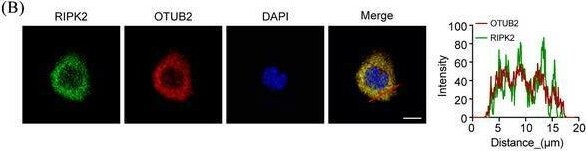
Immunocytochemistry/ Immunofluorescence: Otubain-2 Antibody (OTI11B3) [NBP2-03223] -
OTUB2 interacts with RIPK2 to mediate K48 deubiquitination. (A) BMDM lysates were immunoprecipitated with anti‐OTUB2 antibody. Immunoprecipitated proteins and cell lysates were analysed by Western blot with indicated antibodies. (B) Subcellular distribution of OTUB2 (red) and RIPK2 (green) in BMDMs was examined by immunofluorescence. Scale bar = 5 um. (C, D) NIH/3T3 cells were co‐transfected with FLAG‐OTUB2 and HIS‐MYC‐RIPK2 plasmids for 24 h. Whole‐cell lysates were immunoprecipitated with anti‐FLAG (C) or anti‐MYC (D) antibodies. Immunoprecipitated proteins and cell lysates were analysed by Western blot with the indicated antibodies. (E) BMDMs were treated with 20 uM MG132 for 6 h before lysis. Proteins were immunoprecipitated from whole‐cell lysates with anti‐RIPK2 antibody and analysed by Western blot. (F, G) Schematic diagram (F) and representative immunoblots (G) of the in vitro deubiquitination assay. (H) Schematic diagram of the OTUB2 active site and the C51S mutant construct. (I, J) NIH/3T3 cells were transfected with the indicated plasmids for 24 h, followed by treatment with 20 uM MG132 for 6 h. Proteins were immunoprecipitated from whole‐cell lysates with anti‐MYC antibody and analysed by Western blot. (K) NIH/3T3 cells were transfected with the indicated plasmids for 24 h. Whole‐cell lysates were analysed by Western blot with the indicated antibodies. Image collected and cropped by CiteAb from the following open publication (https://pubmed.ncbi.nlm.nih.gov/39358938), licensed under a CC-BY license. Not internally tested by Novus Biologicals.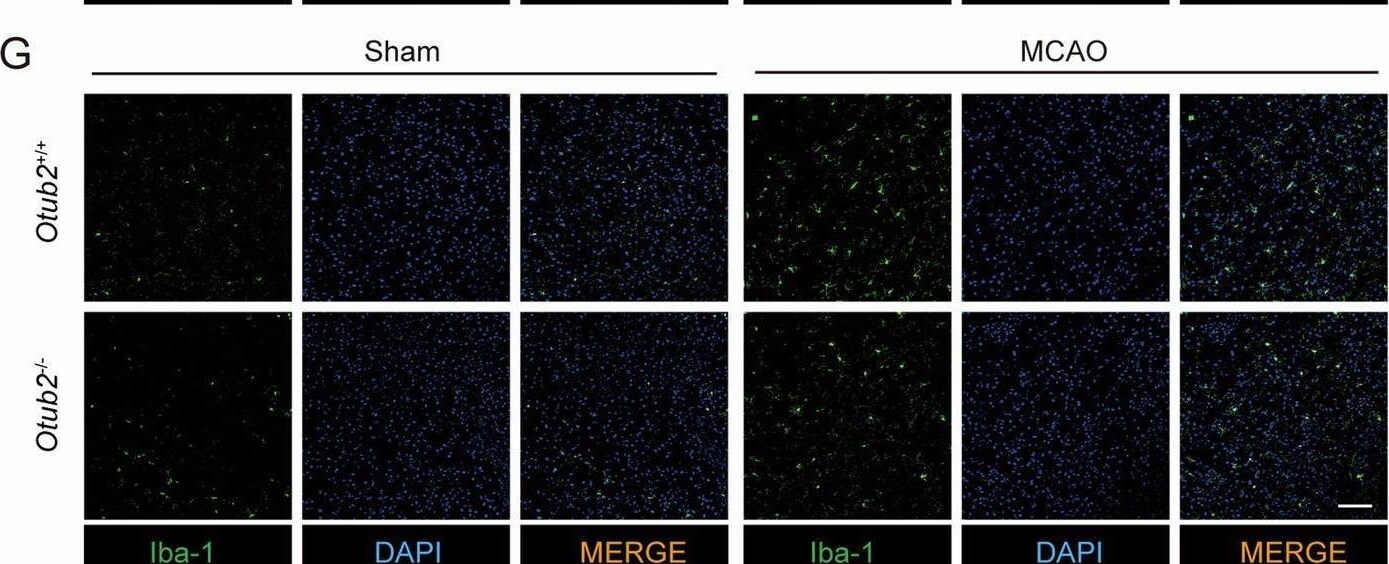
Immunocytochemistry/ Immunofluorescence: Otubain-2 Antibody (OTI11B3) [NBP2-03223] -
OTUB2 deficiency diminishes MCAO-induced neuronal loss and neuroinflammation.(A) Representative immunofluorescence staining of OTUB2 (red) and NeuN (green) in the brain of C57BL/6 mice. Scale bar, 20 μm. (B) On day 2 after MCAO, the ischemic cerebral hemisphere of Otub2+/+ and Otub2−/− mice was analyzed by Western blot with indicated antibodies. (C, D) The relative expression of NeuN (C) and PSD95 (D) was quantified after normalization to GAPDH. Unpaired Student’s t test, n = 4/group, biological replicates. (E, F) Representative immunofluorescence staining (E) and quantification (F) of NeuN+ cells in the ischemic penumbra on day 2 after MCAO. Scale bar, 100 μm. Unpaired Student’s t test, n = 5/group, biological replicates. (G) Representative immunofluorescence staining of Iba1+ cells in the ischemic penumbra on day 2 after MCAO. Scale bar, 100 μm. (H) Representative z-stack images of Iba1+ cells in the ischemic penumbra on day 2 after MCAO. Scale bar, 5 μm. (I–M) Forty-eight hours after MCAO, the relative transcription of Il1b (I), Il6 (J), Tnf (K), Ccl2 (L), and Cxcl10 (M) in the ischemic cerebral hemisphere was determined by qRT-PCR. Mann–Whitney U test (I) and Unpaired Student’s t test (J–M), n = 5–7/group, biological replicates. Data in (C, D, I–M) show the mean +/- SEM. Source data are available online for this figure. Image collected and cropped by CiteAb from the following open publication (https://pubmed.ncbi.nlm.nih.gov/40021931), licensed under a CC-BY license. Not internally tested by Novus Biologicals.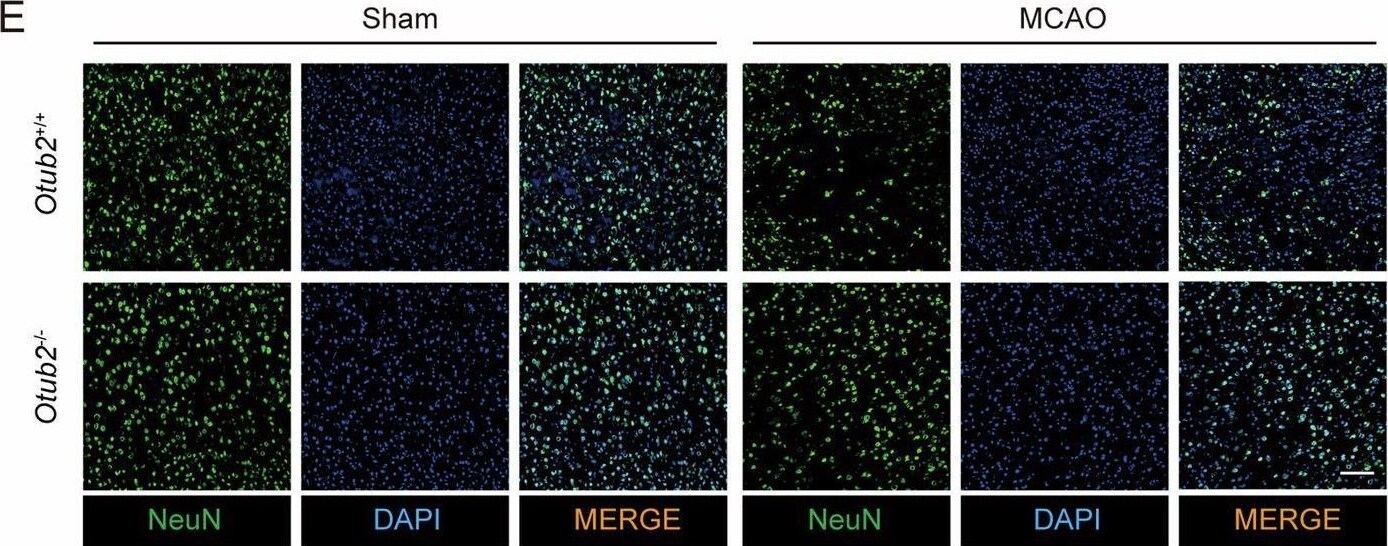
Immunocytochemistry/ Immunofluorescence: Otubain-2 Antibody (OTI11B3) [NBP2-03223] -
OTUB2 deficiency diminishes MCAO-induced neuronal loss and neuroinflammation.(A) Representative immunofluorescence staining of OTUB2 (red) and NeuN (green) in the brain of C57BL/6 mice. Scale bar, 20 μm. (B) On day 2 after MCAO, the ischemic cerebral hemisphere of Otub2+/+ and Otub2−/− mice was analyzed by Western blot with indicated antibodies. (C, D) The relative expression of NeuN (C) and PSD95 (D) was quantified after normalization to GAPDH. Unpaired Student’s t test, n = 4/group, biological replicates. (E, F) Representative immunofluorescence staining (E) and quantification (F) of NeuN+ cells in the ischemic penumbra on day 2 after MCAO. Scale bar, 100 μm. Unpaired Student’s t test, n = 5/group, biological replicates. (G) Representative immunofluorescence staining of Iba1+ cells in the ischemic penumbra on day 2 after MCAO. Scale bar, 100 μm. (H) Representative z-stack images of Iba1+ cells in the ischemic penumbra on day 2 after MCAO. Scale bar, 5 μm. (I–M) Forty-eight hours after MCAO, the relative transcription of Il1b (I), Il6 (J), Tnf (K), Ccl2 (L), and Cxcl10 (M) in the ischemic cerebral hemisphere was determined by qRT-PCR. Mann–Whitney U test (I) and Unpaired Student’s t test (J–M), n = 5–7/group, biological replicates. Data in (C, D, I–M) show the mean +/- SEM. Source data are available online for this figure. Image collected and cropped by CiteAb from the following open publication (https://pubmed.ncbi.nlm.nih.gov/40021931), licensed under a CC-BY license. Not internally tested by Novus Biologicals.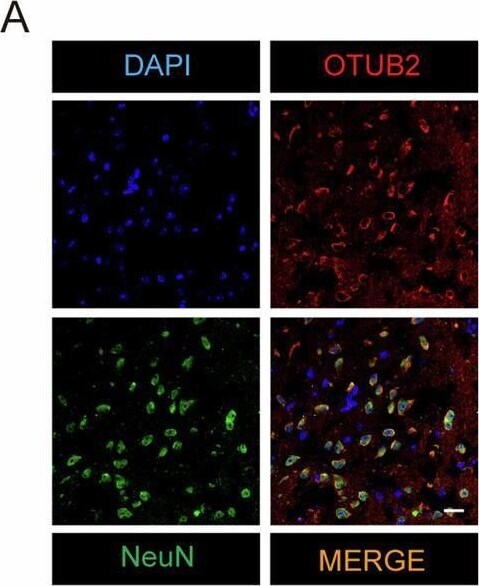
Immunocytochemistry/ Immunofluorescence: Otubain-2 Antibody (OTI11B3) [NBP2-03223] -
OTUB2 deficiency diminishes MCAO-induced neuronal loss and neuroinflammation.(A) Representative immunofluorescence staining of OTUB2 (red) and NeuN (green) in the brain of C57BL/6 mice. Scale bar, 20 μm. (B) On day 2 after MCAO, the ischemic cerebral hemisphere of Otub2+/+ and Otub2−/− mice was analyzed by Western blot with indicated antibodies. (C, D) The relative expression of NeuN (C) and PSD95 (D) was quantified after normalization to GAPDH. Unpaired Student’s t test, n = 4/group, biological replicates. (E, F) Representative immunofluorescence staining (E) and quantification (F) of NeuN+ cells in the ischemic penumbra on day 2 after MCAO. Scale bar, 100 μm. Unpaired Student’s t test, n = 5/group, biological replicates. (G) Representative immunofluorescence staining of Iba1+ cells in the ischemic penumbra on day 2 after MCAO. Scale bar, 100 μm. (H) Representative z-stack images of Iba1+ cells in the ischemic penumbra on day 2 after MCAO. Scale bar, 5 μm. (I–M) Forty-eight hours after MCAO, the relative transcription of Il1b (I), Il6 (J), Tnf (K), Ccl2 (L), and Cxcl10 (M) in the ischemic cerebral hemisphere was determined by qRT-PCR. Mann–Whitney U test (I) and Unpaired Student’s t test (J–M), n = 5–7/group, biological replicates. Data in (C, D, I–M) show the mean +/- SEM. Source data are available online for this figure. Image collected and cropped by CiteAb from the following open publication (https://pubmed.ncbi.nlm.nih.gov/40021931), licensed under a CC-BY license. Not internally tested by Novus Biologicals.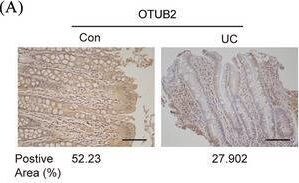
Immunohistochemistry: Otubain-2 Antibody (OTI11B3) [NBP2-03223] -
Colonic expression OTUB2 is downregulated in colitis. (A) Representative immunohistochemical staining of OTUB2 in control and UC colon samples. Scale bar = 50 um. (B) Representative immunohistochemical staining of OTUB2 in colon samples from control and DSS‐treated C57BL/6 mice. Control mice received regular drinking water. Mice in the DSS group were given 2% DSS for 8 days, followed by regular drinking water for 2 days. Scale bar = 50 um. (C, D) Representative immunoblots (C) and relative quantification (D) of OTUB2 protein in colon samples from control and DSS‐treated C57BL/6 mice. (E) Relative mRNA levels of Otub2 in colon samples from control and DSS‐treated C57BL/6 mice were analysed by qRT‐PCR. (F) Western blot analysis of OTUB2 protein abundance in colon samples from Otub2+/+ and Otub2–/– mice. (G) The representative image (left) and length (right) of colons from Otub2+/+ and Otub2–/– mice. (H, I) Representative H&E (H) and PAS/AB (I) staining of colons from Otub2+/+ and Otub2–/– mice. Scale bar = 50 um. Data in D, E and G are shown as mean +/- SEM. ns, no significant difference. *p <.05, **p <.01. Image collected and cropped by CiteAb from the following open publication (https://pubmed.ncbi.nlm.nih.gov/39358938), licensed under a CC-BY license. Not internally tested by Novus Biologicals.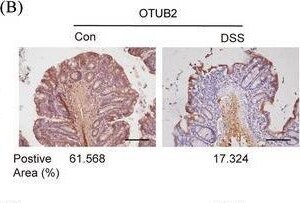
Immunohistochemistry: Otubain-2 Antibody (OTI11B3) [NBP2-03223] -
Colonic expression OTUB2 is downregulated in colitis. (A) Representative immunohistochemical staining of OTUB2 in control and UC colon samples. Scale bar = 50 um. (B) Representative immunohistochemical staining of OTUB2 in colon samples from control and DSS‐treated C57BL/6 mice. Control mice received regular drinking water. Mice in the DSS group were given 2% DSS for 8 days, followed by regular drinking water for 2 days. Scale bar = 50 um. (C, D) Representative immunoblots (C) and relative quantification (D) of OTUB2 protein in colon samples from control and DSS‐treated C57BL/6 mice. (E) Relative mRNA levels of Otub2 in colon samples from control and DSS‐treated C57BL/6 mice were analysed by qRT‐PCR. (F) Western blot analysis of OTUB2 protein abundance in colon samples from Otub2+/+ and Otub2–/– mice. (G) The representative image (left) and length (right) of colons from Otub2+/+ and Otub2–/– mice. (H, I) Representative H&E (H) and PAS/AB (I) staining of colons from Otub2+/+ and Otub2–/– mice. Scale bar = 50 um. Data in D, E and G are shown as mean +/- SEM. ns, no significant difference. *p <.05, **p <.01. Image collected and cropped by CiteAb from the following open publication (https://pubmed.ncbi.nlm.nih.gov/39358938), licensed under a CC-BY license. Not internally tested by Novus Biologicals.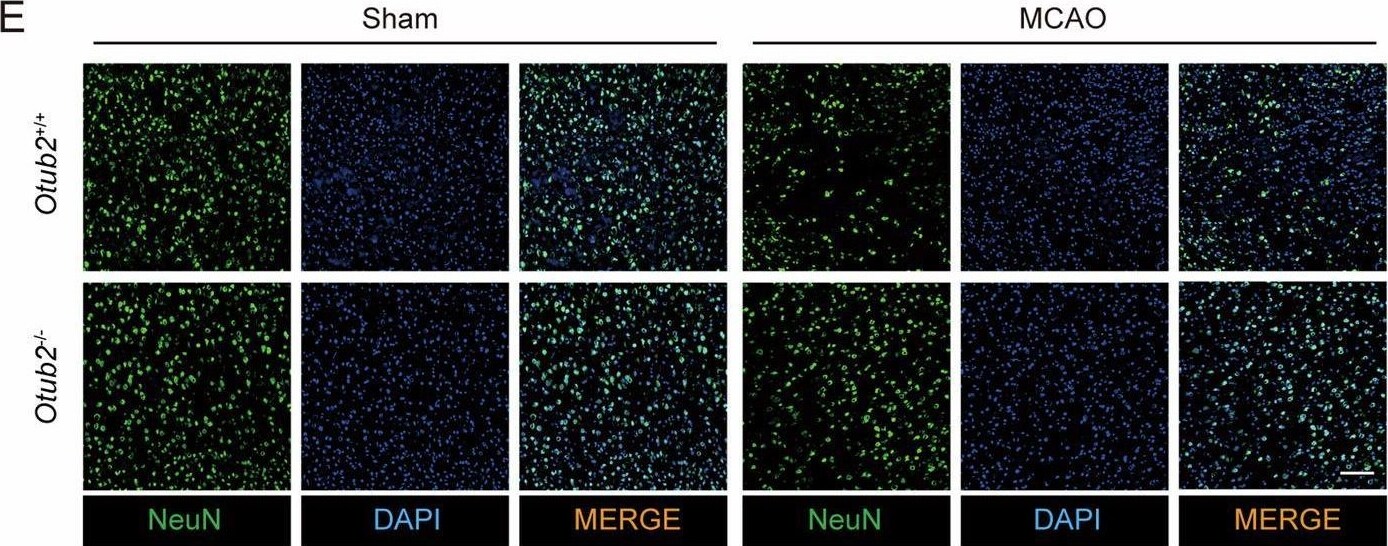
Immunocytochemistry/ Immunofluorescence: Otubain-2 Antibody (OTI11B3) [NBP2-03223] -
OTUB2 deficiency diminishes MCAO-induced neuronal loss and neuroinflammation.(A) Representative immunofluorescence staining of OTUB2 (red) and NeuN (green) in the brain of C57BL/6 mice. Scale bar, 20 μm. (B) On day 2 after MCAO, the ischemic cerebral hemisphere of Otub2+/+ and Otub2−/− mice was analyzed by Western blot with indicated antibodies. (C, D) The relative expression of NeuN (C) and PSD95 (D) was quantified after normalization to GAPDH. Unpaired Student’s t test, n = 4/group, biological replicates. (E, F) Representative immunofluorescence staining (E) and quantification (F) of NeuN+ cells in the ischemic penumbra on day 2 after MCAO. Scale bar, 100 μm. Unpaired Student’s t test, n = 5/group, biological replicates. (G) Representative immunofluorescence staining of Iba1+ cells in the ischemic penumbra on day 2 after MCAO. Scale bar, 100 μm. (H) Representative z-stack images of Iba1+ cells in the ischemic penumbra on day 2 after MCAO. Scale bar, 5 μm. (I–M) Forty-eight hours after MCAO, the relative transcription of Il1b (I), Il6 (J), Tnf (K), Ccl2 (L), and Cxcl10 (M) in the ischemic cerebral hemisphere was determined by qRT-PCR. Mann–Whitney U test (I) and Unpaired Student’s t test (J–M), n = 5–7/group, biological replicates. Data in (C, D, I–M) show the mean +/- SEM. Source data are available online for this figure. Image collected and cropped by CiteAb from the following open publication (https://pubmed.ncbi.nlm.nih.gov/40021931), licensed under a CC-BY license. Not internally tested by Novus Biologicals.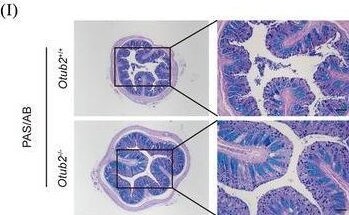
Immunohistochemistry: Otubain-2 Antibody (OTI11B3) [NBP2-03223] -
Colonic expression OTUB2 is downregulated in colitis. (A) Representative immunohistochemical staining of OTUB2 in control and UC colon samples. Scale bar = 50 um. (B) Representative immunohistochemical staining of OTUB2 in colon samples from control and DSS‐treated C57BL/6 mice. Control mice received regular drinking water. Mice in the DSS group were given 2% DSS for 8 days, followed by regular drinking water for 2 days. Scale bar = 50 um. (C, D) Representative immunoblots (C) and relative quantification (D) of OTUB2 protein in colon samples from control and DSS‐treated C57BL/6 mice. (E) Relative mRNA levels of Otub2 in colon samples from control and DSS‐treated C57BL/6 mice were analysed by qRT‐PCR. (F) Western blot analysis of OTUB2 protein abundance in colon samples from Otub2+/+ and Otub2–/– mice. (G) The representative image (left) and length (right) of colons from Otub2+/+ and Otub2–/– mice. (H, I) Representative H&E (H) and PAS/AB (I) staining of colons from Otub2+/+ and Otub2–/– mice. Scale bar = 50 um. Data in D, E and G are shown as mean +/- SEM. ns, no significant difference. *p <.05, **p <.01. Image collected and cropped by CiteAb from the following open publication (https://pubmed.ncbi.nlm.nih.gov/39358938), licensed under a CC-BY license. Not internally tested by Novus Biologicals.Applications for Otubain-2 Antibody (OTI11B3)
Flow Cytometry
Western Blot
Flow Cytometry Panel Builder
Bio-Techne Knows Flow Cytometry
Save time and reduce costly mistakes by quickly finding compatible reagents using the Panel Builder Tool.
Advanced Features
- Spectra Viewer - Custom analysis of spectra from multiple fluorochromes
- Spillover Popups - Visualize the spectra of individual fluorochromes
- Antigen Density Selector - Match fluorochrome brightness with antigen density

Formulation, Preparation, and Storage
Purification
Formulation
Preservative
Concentration
Shipping
Stability & Storage
Background: Otubain-2
Long Name
Alternate Names
Entrez Gene IDs
Gene Symbol
Additional Otubain-2 Products
Product Documents for Otubain-2 Antibody (OTI11B3)
Certificate of Analysis
To download a Certificate of Analysis, please enter a lot or batch number in the search box below.
Product Specific Notices for Otubain-2 Antibody (OTI11B3)
This product is for research use only and is not approved for use in humans or in clinical diagnosis. Primary Antibodies are guaranteed for 1 year from date of receipt.
Related Research Areas
Citations for Otubain-2 Antibody (OTI11B3)
 Powered by Bioz
Customer Reviews for Otubain-2 Antibody (OTI11B3)
There are currently no reviews for this product. Be the first to review Otubain-2 Antibody (OTI11B3) and earn rewards!
Have you used Otubain-2 Antibody (OTI11B3)?
Submit a review and receive an Amazon gift card!
$25/€18/£15/$25CAN/¥2500 for a review with an image
$10/€7/£6/$10CAN/¥1110 for a review without an image
Submit a review
Protocols
Find general support by application which include: protocols, troubleshooting, illustrated assays, videos and webinars.
- 7-Amino Actinomycin D (7-AAD) Cell Viability Flow Cytometry Protocol
- Cellular Response to Hypoxia Protocols
- Extracellular Membrane Flow Cytometry Protocol
- Flow Cytometry Protocol for Cell Surface Markers
- Flow Cytometry Protocol for Staining Membrane Associated Proteins
- Flow Cytometry Staining Protocols
- Flow Cytometry Troubleshooting Guide
- Intracellular Flow Cytometry Protocol Using Alcohol (Methanol)
- Intracellular Flow Cytometry Protocol Using Detergents
- Intracellular Nuclear Staining Flow Cytometry Protocol Using Detergents
- Intracellular Staining Flow Cytometry Protocol Using Alcohol Permeabilization
- Intracellular Staining Flow Cytometry Protocol Using Detergents to Permeabilize Cells
- Propidium Iodide Cell Viability Flow Cytometry Protocol
- Protocol for Liperfluo
- Protocol for the Characterization of Human Th22 Cells
- Protocol for the Characterization of Human Th9 Cells
- Protocol: Annexin V and PI Staining by Flow Cytometry
- Protocol: Annexin V and PI Staining for Apoptosis by Flow Cytometry
- R&D Systems Quality Control Western Blot Protocol
- Troubleshooting Guide: Fluorokine Flow Cytometry Kits
- Troubleshooting Guide: Western Blot Figures
- Western Blot Conditions
- Western Blot Protocol
- Western Blot Protocol for Cell Lysates
- Western Blot Troubleshooting
- Western Blot Troubleshooting Guide
- View all Protocols, Troubleshooting, Illustrated assays and Webinars
Associated Pathways
