
Our Heat Stable FGF basic has been engineered for thermostability and maintains its activity at 37℃ when compared to wild-type. Heat-stable FGF basic can enhance the flexibility and efficiency of cell culture by reducing the need for frequent media changes.
Best Seller
Recombinant Human FGF basic Heat Stable Protein, CF
R&D Systems | Catalog # BT-FGFBHS
Analyzed by SEC-MALS

Animal-free (Catalog # BT-FGFBHS-AFL) and GMP (Catalog # BT-FGFBHS-GMP) versions of the heat stable form of Recombinant Human FGF basic are also available.
Loading...
Key Product Details
- R&D Systems E. coli-derived Recombinant Human FGF basic Heat Stable Protein (BT-FGFBHS)
- Quality control testing to verify active proteins with lot specific assays by in-house scientists
- All R&D Systems proteins are covered with a 100% guarantee
Source
E. coli
Accession Number
Applications
Bioactivity
Loading...
Product Specifications
Source
E. coli-derived human FGF basic/FGF2/bFGF protein
Ala135-Ser288 (with modifications)
Ala135-Ser288 (with modifications)
Purity
>95%, by SDS-PAGE with quantitative densitometry by Coomassie® Blue Staining.
Endotoxin Level
<0.10 EU per 1 μg of the protein by the LAL method.
N-terminal Sequence Analysis
Ala135 & Ala136
Predicted Molecular Mass
17 kDa
SDS-PAGE
16-19 kDa, under reducing conditions.
Activity
Measured in a cell proliferation assay using NR6R‑3T3 mouse fibroblast cells. Raines, E.W. et al. (1985) Methods Enzymol. 109:749.
The ED50 for this effect is 0.0500-0.600 ng/mL.
The ED50 for this effect is 0.0500-0.600 ng/mL.
Reviewed Applications
Read 1 review rated 4 using BT-FGFBHS in the following applications:
Scientific Data Images for Recombinant Human FGF basic Heat Stable Protein, CF
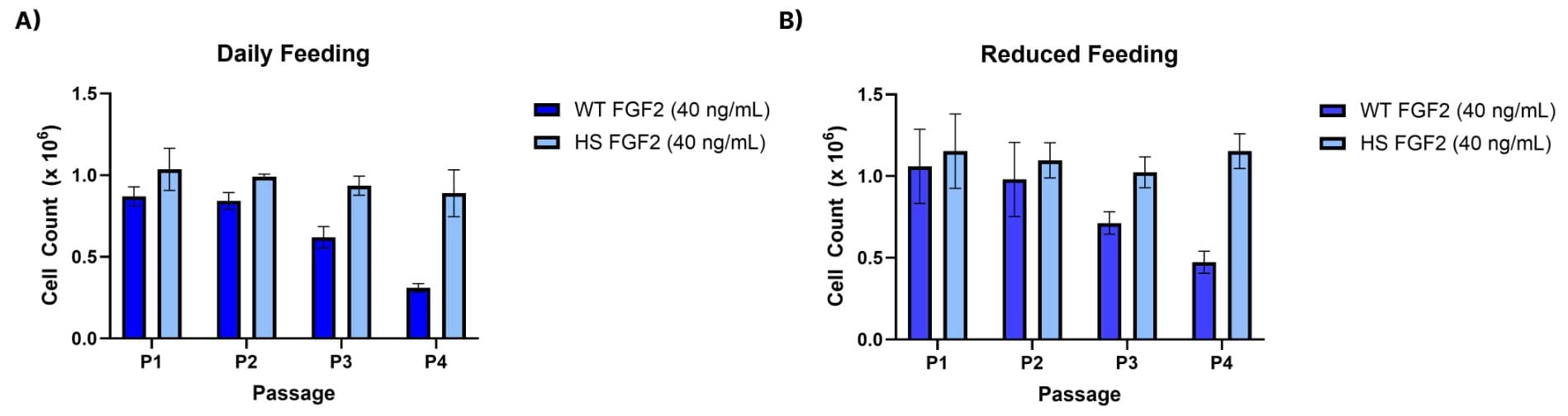
Higher iPSC fold expansion is observed with rhFGFb Heat Stable compared to wild type rhFGFb for daily and reduced feeding at 40 ng/mL.
Human iPSCs were cultured for four passages in a commercial iPSC Expansion media containing 40 ng/mL of either rhFGFb Heat Stable (BT-FGFBHS) or wild type rhFGFb, Animal-Free (BT-FGFB-AFL). Media exchanges were performed following two feeding schedules. A). a daily feed schedule or B). a reduced feed schedule, where cells were double fed twice per week. Cells were plated at 5000 cells/cm2 in a 6-well dish coated with Cultrex Ultimatrix (BME001-05). For each schedule, all conditions were passaged once either group reached ~60-70% confluency and counts were performed using a Cellaca™ High-Throughput Cell Counter. Count of each passage is shown comparing WT vs HS FGFb in both the A) daily feed or B) reduced feed schedule.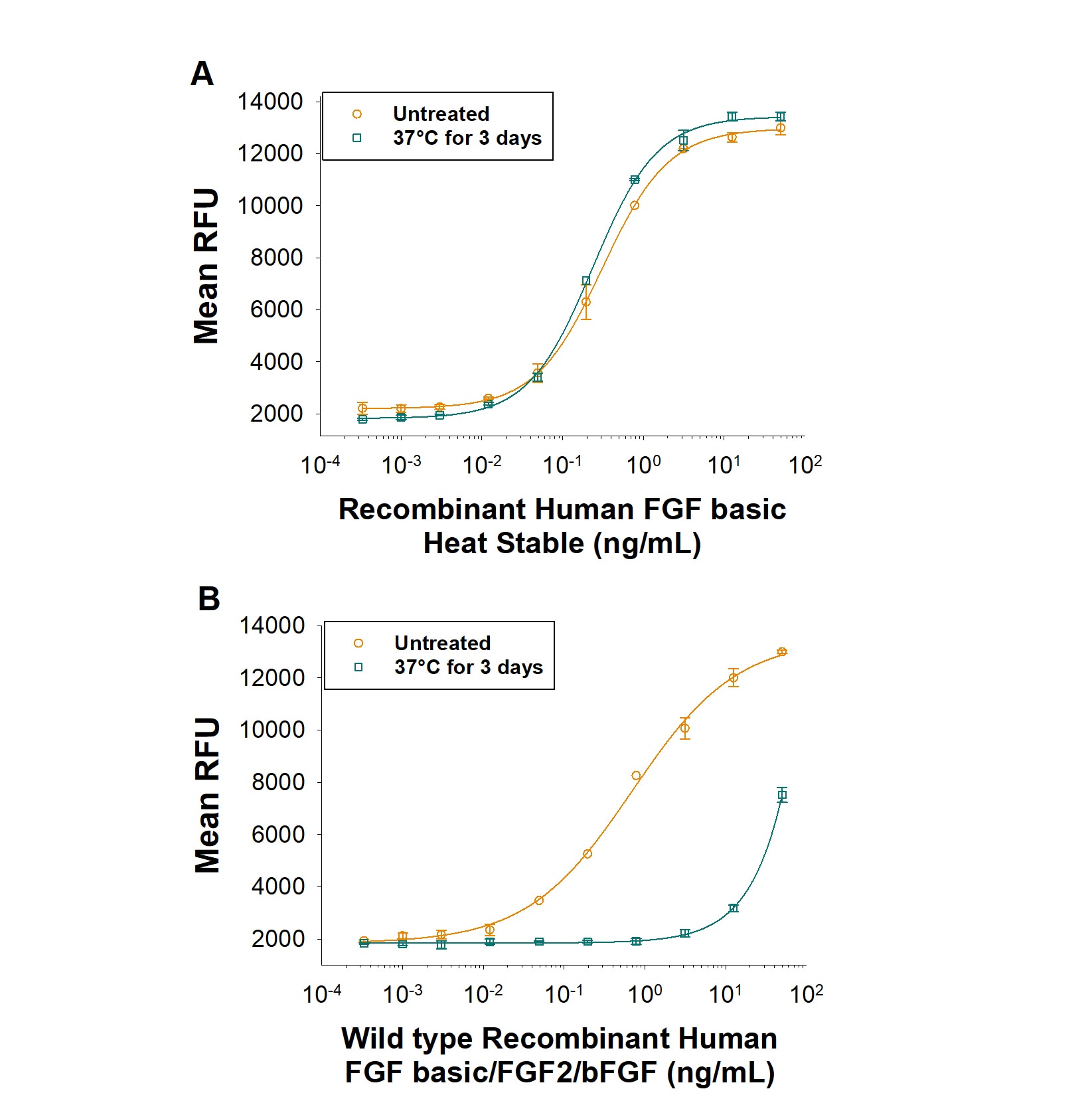
Recombinant Human FGF basic Heat Stable Protein, CF Bioactivity.
Recombinant Human FGF basic Heat Stable Protein induces NR6R 3T3 mouse fibroblast cell proliferation. (A) Recombinant Human FGF basic Heat Stable Protein (Catalog # BT-FGFBHS) or (B) wild type (WT) Recombinant Human FGF basic/FGF2/bFGF Proteins were untreated or incubated at 37°C for 3 days in media. Human FGF basic Heat Stable (HS) retained similar activity to the untreated HS protein indicating that the HS protein has increased thermal stability. In contrast, WT Recombinant Human FGF basic/FGF2/bFGF Protein significantly lost activity suggesting less thermal stability.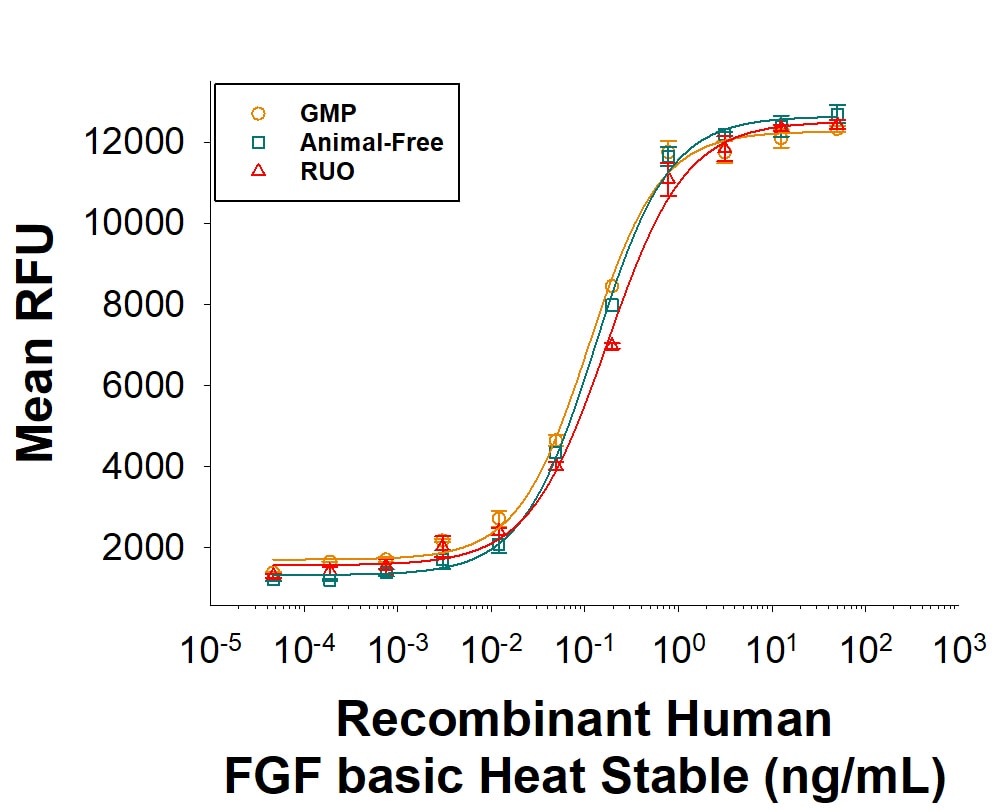
Equivalent Bioactivity of GMP, Animal-Free, and RUO grades of Recombinant Human FGF basic Heat Stable proteins.
Equivalent bioactivity of GMP (BT-FGFBHS-GMP), Animal-Free (BT-FGFBHS-AFL) and RUO (Catalog # BT-FGFBHS) grades of Recombinant Human FGF basic Heat Stable proteins as measured in a cell proliferation assay using NR6R-3T3 mouse fibroblast cells (orange, green, red, respectively).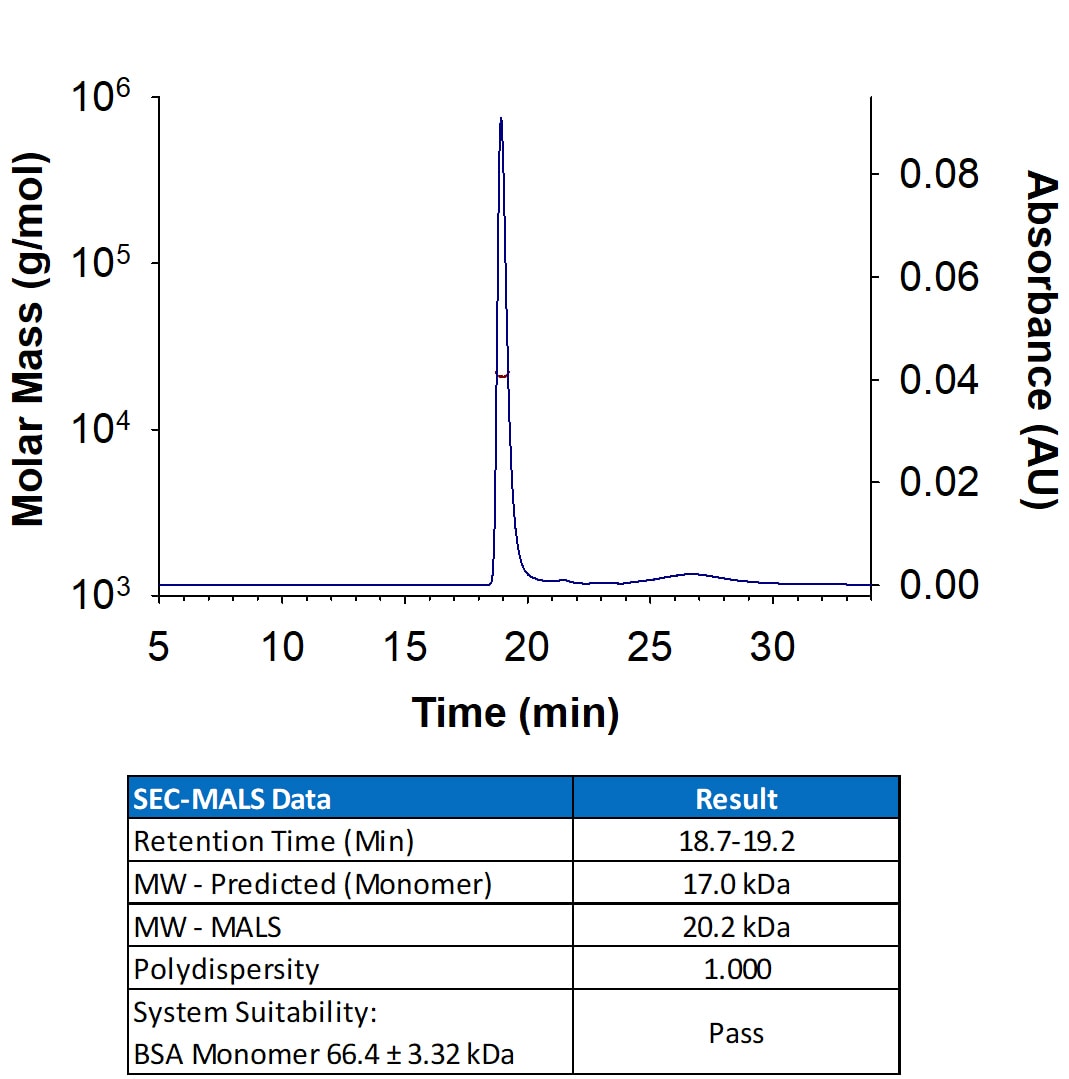
Recombinant Human FGF basic Heat Stable Protein SEC-MALS.
Recombinant Human FGF basic Heat Stable (Catalog # BT-FGFBHS ) has a molecular weight (MW) of 20.2 kDa as analyzed by SEC-MALS, suggesting that this protein is a monomer.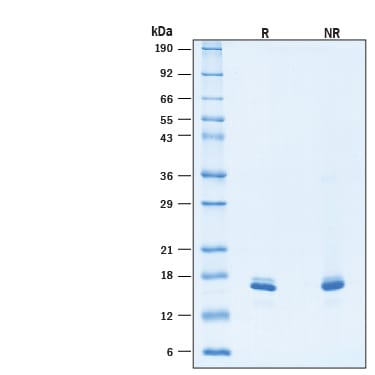
Recombinant Human FGF basic Heat Stable Protein SDS-PAGE.
2 μg/lane of Recombinant Human FGF basic Heat Stable Protein (Catalog # BT-FGFBHS) was resolved with SDS-PAGE under reducing (R) and non-reducing (NR) conditions and visualized by Coomassie® Blue staining, showing bands at 16-19 kDa, under reducing conditions.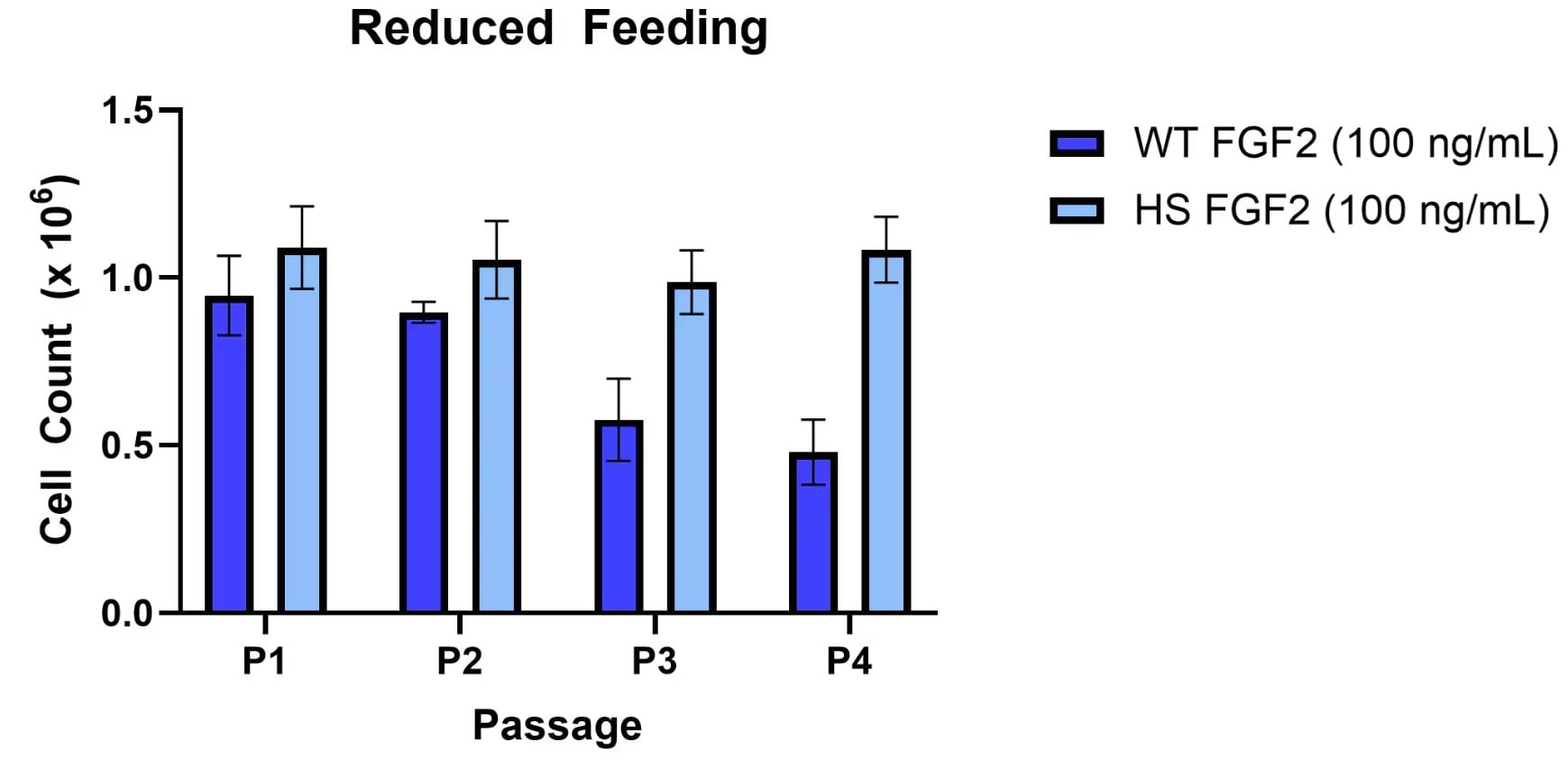
Higher concentration of wild type rhFGFb does not rescue iPSC fold expansion with reduced feeding.
Human iPSCs were cultured for four passages in a commercial iPSC Expansion media containing 100 ng/mL of either rhFGFb Heat Stable (BT-FGFBHS) or wild type rhFGFb, Animal-Free (BT-FGFB-AFL). Media exchanges were performed following a reduced feed schedule, where cells were double fed twice per week. Cells were plated at 5000 cells/cm2 in a 6-well dish coated with Cultrex Ultimatrix (BME001-05). Cells were passaged at ~60-70% confluency and counts were performed using a Cellaca™ High-Throughput Cell Counter. Count of each passage is shown comparing WT vs HS FGFb.Formulation, Preparation, and Storage
BT-FGFBHS
| Formulation | Lyophilized from a 0.2 μm filtered solution in HEPES and Sodium Sulfate with Trehalose. |
| Reconstitution | Reconstitute 10 μg size at 100 μg/mL in sterile deionized water. Reconstitute all the other sizes at 500 μg/mL in sterile deionized water. |
| Shipping | The product is shipped at ambient temperature. Upon receipt, store it immediately at the temperature recommended below. |
| Stability & Storage | Use a manual defrost freezer and avoid repeated freeze-thaw cycles.
|
Calculators
Background: FGF basic/FGF2/bFGF
Long Name
Fibroblast Growth Factor basic
Alternate Names
bFGF, FGF-2, FGF2, HBGF-2, Prostatropin
Gene Symbol
FGF2
UniProt
Additional FGF basic/FGF2/bFGF Products
Product Documents for Recombinant Human FGF basic Heat Stable Protein, CF
Certificate of Analysis
To download a Certificate of Analysis, please enter a lot or batch number in the search box below.
Note: Certificate of Analysis not available for kit components.
Product Specific Notices for Recombinant Human FGF basic Heat Stable Protein, CF
Produced under license from Enantis s.r.o.
For research use only
Related Research Areas
Customer Reviews for Recombinant Human FGF basic Heat Stable Protein, CF (1)
4 out of 5
1 Customer Rating
Have you used Recombinant Human FGF basic Heat Stable Protein, CF?
Submit a review and receive an Amazon gift card!
$25/€18/£15/$25CAN/¥2500 for a review with an image
$10/€7/£6/$10CAN/¥1110 for a review without an image
Submit a review
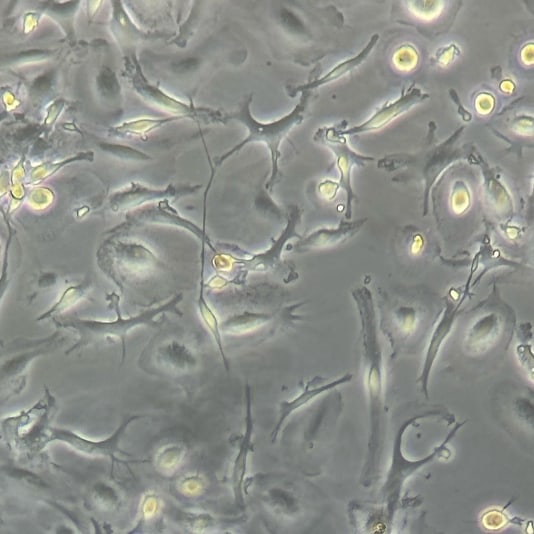
Customer Images
Showing
1
-
1 of
1 review
Showing All
Filter By:
-
Application: In vitro bioactivity in cell cultureVerified Customer | Posted 07/06/2025

There are no reviews that match your criteria.


