

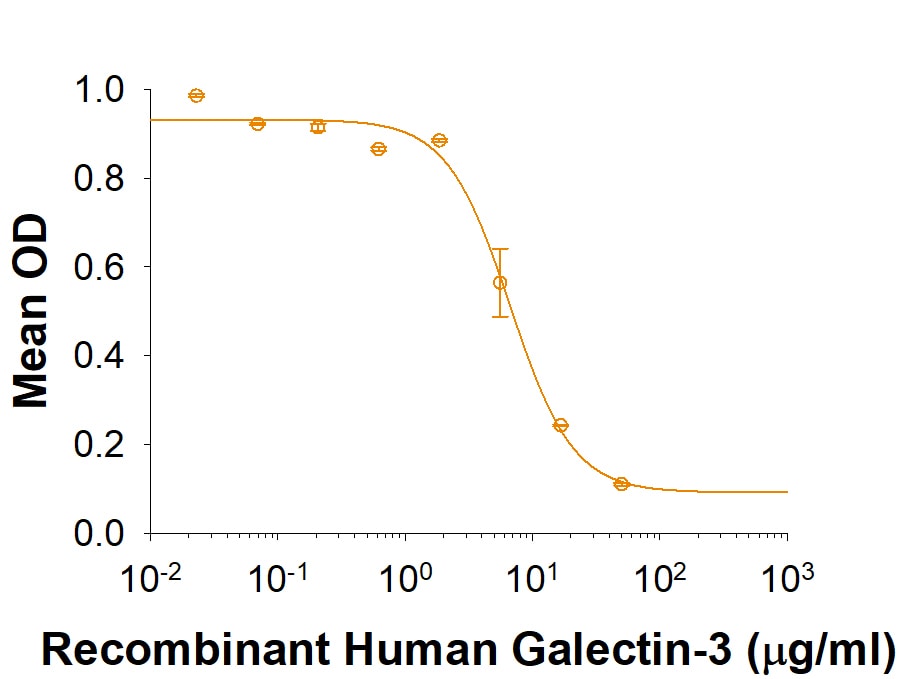
Human Galectin-3, also known as Mac-2, L29, CBP35, and epsilon BP, is classified as a chimeric member of the Galectin superfamily and contains one carbohydrate recognition domain (CRD) linked to a nonlectin domain (1, 2). Mature human Galectin-3 shares 78% and 79% amino acid (aa) sequence identity with mouse and rat Galectin-3, respectively. Human Galectin-3 is a 26 kDa protein that can be nuclear, cytoplasmic, or secreted (3, 4). Nuclear Galectin-3 can modulate gene expression, while cytosolic Galectin-3 can inhibit apoptosis and can participate in exocytosis, Caveolin-mediated endocytosis, and macrophage-mediated clearance of apoptotic cells (5-7). Extracellular Galectin-3 has been shown to form high-order oligomers that promote the crosslinking of cell surface oligosacchraides as well as integrin-dependent cell adhesion and apoptosis (8-11). Galectin-3 contributes to the innate immune response against Candida albicans and Streptococcus pneumoniae, and it can facilitate acute inflammatory responses via neutrophil activation and opsonization, macrophage recruitment, and mast cell activation (12-14). Galectin-3 can also contribute to chronic inflammation and fibrosis (15). It is implicated in neuroinflammatory disorders of the central nervous system, cardiac fibrosis, and heart failure, as well as tumor growth, progression, and metastasis (16-18).
 Powered by Bioz
