
USP1 (Ubiquitin-Specific-processing Protease 1, also known as Ubiquitin carboxyl-terminal hydrolase 1) is a deubiquitinating enzyme of the C19 peptidase family and functions as a negative regulator of the Fanconi Anemia pathway. Reported substrates of USP1 include monoubiquitinated FANCD2 and monoubiquitinated PCNA. USP1 plays important roles in DNA damage responses and cancer-related processes, and inhibiting the function of this deubiquitinase sensitizes some cancer cells to chemotherapy. Alone, USP1 is nearly completely inactive and requires a protein binding partner, UAF1 (USP1-Associated Factor 1, also known as WD Repeat-containing protein 48 or WDR48) to stimulate its deubiquitinase activity. In addition to the naturally occurring substates listed above, the USP1/UAF1 complex has been demonstrated to cleave K6, K33, and K63-linked polyubiquitin chains. This product is manufactured by combining His6-USP1 and His6-UAF1 at a 1:1 mass ratio.
Recombinant Human His6-USP1/His6-UAF1 Complex Protein, CF
R&D Systems | Catalog # E-568


Key Product Details
- R&D Systems Sf 21 (baculovirus)-derived Recombinant Human His6-USP1/His6-UAF1 Complex Protein (E-568)
- Quality control testing to verify active proteins with lot specific assays by in-house scientists
- All R&D Systems proteins are covered with a 100% guarantee
Source
Accession Number
Applications
Product Specifications
Source
Met1 - Leu785 (Gly670Ala, Gly671Ala) with a C-terminal 6-His tag (USP1), Met1 - Thr677 with a C-terminal 6-His tag (UAF1)
Purity
Predicted Molecular Mass
Activity
Reviewed Applications
Read 1 review rated 5 using E-568 in the following applications:
Formulation, Preparation, and Storage
E-568
| Formulation | Supplied as a 0.2 μm filtered solution in HEPES, NaCl, TCEP and Glycerol. |
| Shipping | The product is shipped with dry ice or equivalent. Upon receipt, store it immediately at the temperature recommended below. |
| Stability & Storage | Use a manual defrost freezer and avoid repeated freeze-thaw cycles.
|
Background: USP1/UAF1 Complex
References
- Cohn, M.A., et al. (2009) J. Biol. Chem. 284: 5343.
- Huang, T.T., et al. (2006) Nat. Cell Biol. 8: 339.
- Joo, H-Y., et al. (2011) Biol. Chem. 286: 7190.
- Moretti, J., et al. (2012) J. Biol. Chem. 287: 29429.
- Williams, S.A, et al. (2011) Cell 146: 918.
Long Name
Entrez Gene IDs
Gene Symbol
UniProt
Additional USP1/UAF1 Complex Products
Product Documents for Recombinant Human His6-USP1/His6-UAF1 Complex Protein, CF
Certificate of Analysis
To download a Certificate of Analysis, please enter a lot or batch number in the search box below.
Note: Certificate of Analysis not available for kit components.
Product Specific Notices for Recombinant Human His6-USP1/His6-UAF1 Complex Protein, CF
For research use only
Related Research Areas
Citations for Recombinant Human His6-USP1/His6-UAF1 Complex Protein, CF
 Powered by Bioz
Customer Reviews for Recombinant Human His6-USP1/His6-UAF1 Complex Protein, CF (1)
Have you used Recombinant Human His6-USP1/His6-UAF1 Complex Protein, CF?
Submit a review and receive an Amazon gift card!
$25/€18/£15/$25CAN/¥2500 for a review with an image
$10/€7/£6/$10CAN/¥1110 for a review without an image
Submit a review
Customer Images
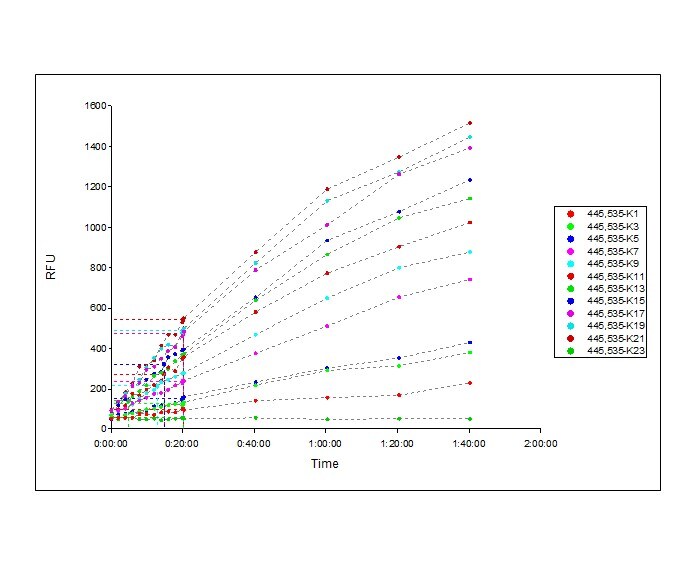
-
Application: Enzymatic activity in vitroVerified Customer | Posted 04/29/2019

There are no reviews that match your criteria.
FAQs for Recombinant Human His6-USP1/His6-UAF1 Complex Protein, CF
-
Q: Is the Recombinant Human His6‑USP1/His6‑UAF1 Complex Protein (Catalog # E‑568) held together by a disulfide bond?
A: No, E‑568 is not held together by a disulfide bond. Instead, the complex consists of two separate recombinant proteins (USP1 and UAF1) that associate non‑covalently to form a functional heterodimer. As stated in the Background section of the datasheet, the complexed proteins are supplied at a 1:1 mass ratio.