
TRAIL (TNF-related apoptosis-inducing ligand), also known as APO-2 ligand, is a type II transmembrane protein with a carboxy-terminal extracellular domain which exhibits homology to other TNF family members. In the new TNF superfamily nomenclature, TRAIL is referred to as TNFSF10. Human TRAIL cDNA encodes a 281 amino acid (aa) residue protein with an amino-terminal intracellular domain of 17 residues and a predicted internal hydrophobic domain between residues 18 and 38. The extracellular carboxy-terminal domain contains a potential N-linked glycosylation site at amino acid residue 109. Among TNF family members, TRAIL is most homologous to FAS ligand, sharing 28% amino acid sequence identity in their extracellular domains. Mouse TRAIL has also been cloned. The human TRAIL shares 65% amino acid sequence identity with mouse TRAIL and is active on mouse cells. Both membrane bound and soluble TRAIL have been shown to induce rapid apoptosis of many transformed cell lines. Like most TNF family members, the bioactive TRAIL exists as a homotrimer. TRAIL transcripts have been shown to be constitutively expressed in a variety of human tissues. A family of TRAIL receptors, including two receptors that tranduce the apoptotic signals and two TRAIL decoy receptors that function to antagonize TRAIL-induced apoptosis, have been identified (1 - 3). Osteoprotegerin has been identified as a fifth TRAIL receptor (4).
Recombinant Human TRAIL/TNFSF10 Protein
R&D Systems | Catalog # 375-TL


Key Product Details
- R&D Systems NS0-derived Recombinant Human TRAIL/TNFSF10 Protein (375-TL)
- Quality control testing to verify active proteins with lot specific assays by in-house scientists
- All R&D Systems proteins are covered with a 100% guarantee
Source
Accession Number
Structure / Form
Applications
Product Specifications
Source
Thr95-Gly281, with an N-terminal Met and 6-His tag
Purity
Endotoxin Level
N-terminal Sequence Analysis
Predicted Molecular Mass
SDS-PAGE
Activity
The ED50 for this effect is 4-12 ng/mL.
The apoptotic effect of soluble trimeric rhTRAIL can be enhanced by oligimerization of the soluble rhTRAIL through the use of a cross-linking antibody Mouse Anti-polyHistidine Monoclonal Antibody (Catalog # MAB050). The ED50 for this effect is 1-4 ng/mL.
Note: This is one of multiple forms available for this protein. Check R&D Systems' website, www.RnDSystems.com, for a complete listing of the variants.
Reviewed Applications
Read 2 reviews rated 5 using 375-TL in the following applications:
Formulation, Preparation, and Storage
Carrier Free
What does CF mean?CF stands for Carrier Free (CF). We typically add Bovine Serum Albumin (BSA) as a carrier protein to our recombinant proteins. Adding a carrier protein enhances protein stability, increases shelf-life, and allows the recombinant protein to be stored at a more dilute concentration. The carrier free version does not contain BSA.
What formulation is right for me?In general, we advise purchasing the recombinant protein with BSA for use in cell or tissue culture, or as an ELISA standard. In contrast, the carrier free protein is recommended for applications, in which the presence of BSA could interfere.
Carrier: 375-TL
| Formulation | Lyophilized from a 0.2 μm filtered solution in PBS with BSA as a carrier protein. |
| Reconstitution | Reconstitute at 20 μg/mL in sterile PBS containing at least 0.1% human or bovine serum albumin. |
| Shipping | The product is shipped at ambient temperature. Upon receipt, store it immediately at the temperature recommended below. |
| Stability & Storage | Use a manual defrost freezer and avoid repeated freeze-thaw cycles.
|
Carrier Free: 375-TL/CF
| Formulation | Lyophilized from a 0.2 μm filtered solution in PBS. |
| Reconstitution | Reconstitute at 100 μg/mL in sterile PBS. |
| Shipping | The product is shipped at ambient temperature. Upon receipt, store it immediately at the temperature recommended below. |
| Stability & Storage | Use a manual defrost freezer and avoid repeated freeze-thaw cycles.
|
Calculators
Background: TRAIL/TNFSF10
References
- Golstein, P. (1997) Current Biology 7:R750.
- Wiley, S.R. et al. (1995) Immunity 3:673.
- Pitti, R.M. et al. (1996) J. Biol. Chem. 271:12687.
- Emery, J. et al. (1998) J. Biol. Chem. 273:14363.
Long Name
Alternate Names
Gene Symbol
UniProt
Additional TRAIL/TNFSF10 Products
Product Documents for Recombinant Human TRAIL/TNFSF10 Protein
Certificate of Analysis
To download a Certificate of Analysis, please enter a lot or batch number in the search box below.
Note: Certificate of Analysis not available for kit components.
Product Specific Notices for Recombinant Human TRAIL/TNFSF10 Protein
For research use only
Citations for Recombinant Human TRAIL/TNFSF10 Protein
 Powered by Bioz
Customer Reviews for Recombinant Human TRAIL/TNFSF10 Protein (2)
Have you used Recombinant Human TRAIL/TNFSF10 Protein?
Submit a review and receive an Amazon gift card!
$25/€18/£15/$25CAN/¥2500 for a review with an image
$10/€7/£6/$10CAN/¥1110 for a review without an image
Submit a review
Customer Images
-
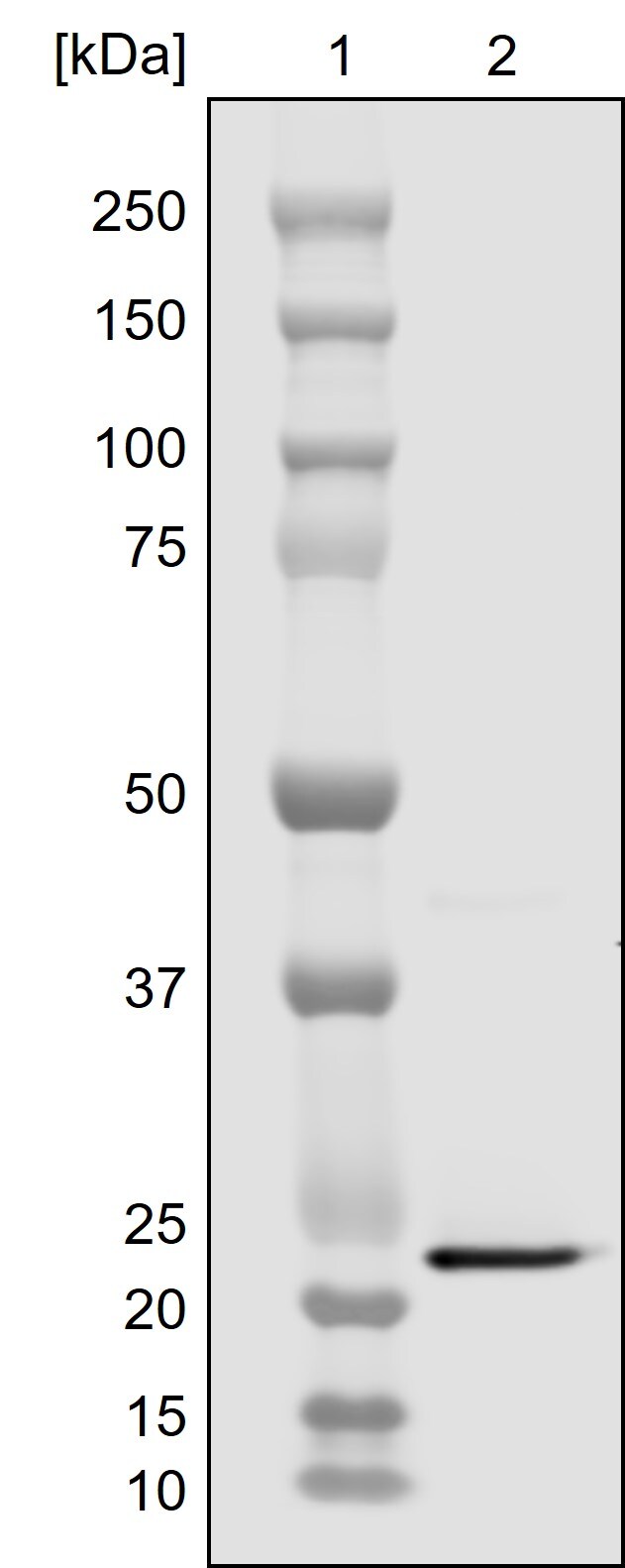
Application: Western Blot ControlVerified Customer | Posted 06/01/2018Lane 1: Marker [kDa]. Lane 2: 100ng Recombinant Human TRAIL/TNFSF10 Protein.Stained with mouse anti-human TRAIL (III6F; 1ug/mL) overnight at 4C, followed by IRdye 680 goat anti-mouse secondary (Licor#926-68070; 1:10,000).

-
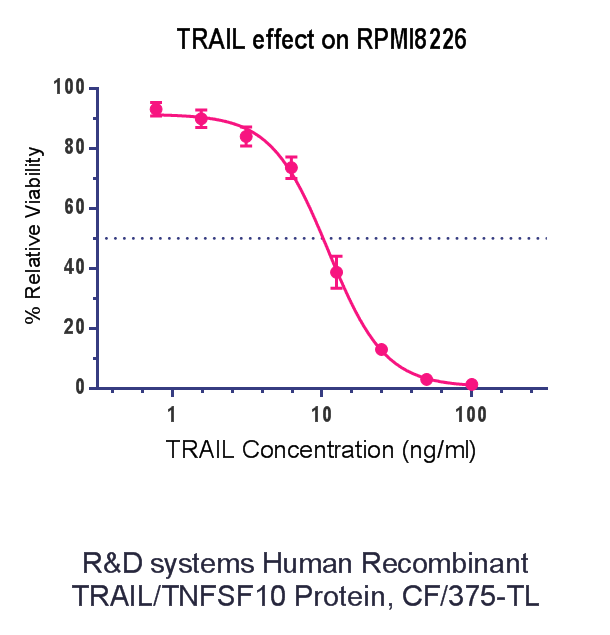
Application: Cell Viability AssayVerified Customer | Posted 07/21/2016Cell Viability Assay by Promega Cell Titer Fluor
There are no reviews that match your criteria.
FAQs for Recombinant Human TRAIL/TNFSF10 Protein
-
Q:
This protein datasheet indicates I need to use a cross-linking antibody, Catalog # MAB050, for biological activity. What is this antibody and is it really necessary?
A: The antibody is directed against a 6x histidine repeat and is recommended for use as a cross-linker of proteins with 6x his-tag. Crosslinking is often used for proteins that require receptor trimerization and can result greater biological activity. R&D Systems Quality Control tests the performance of these proteins in the presence of the cross-linking antibody. Therefore, it is necessary to use this antibody when trying to achieve the same level of specific activity described in the datasheet.
Associated Pathways

