
Consecutive histidine residues (usually 6 to 10 in length) are often inserted into the amino acid sequences of recombinant proteins. The resulting His-tagged proteins can be detected or purified by using anti-polyHis antibodies.
Best Seller
His Tag Antibody (AD1.1.10)
R&D Systems | Catalog # MAB050

Scientific images may be resized, cropped, or adjusted for brightness or contrast for presentation purposes. These updates are limited to presentation and do not affect the underlying scientific interpretation of the data. Where available, additional source data may be provided upon request.
Key Product Details
Species Reactivity
Validated:
Multi-Species
Cited:
Human, Mouse, Rat, Bacteria, Bacteria - Mycobacterium smegmatis, Bacteria - Streptococcus suis, Bovine, Cynomolgus Monkey, E. coli, Guinea Pig, Hamster, Insect, Primate, Primate - Cercopithecus aethiops (African Green Monkey), Rabbit, Recombinant Protein, Transgenic Bacteria, Transgenic Mouse, Virus, Yeast
Applications
Validated:
Western Blot, Flow Cytometry, Simple Western, Immunoaffinity Purification, CyTOF-ready
Cited:
Immunohistochemistry, Western Blot, ELISA, Neutralization, Flow Cytometry, Immunocytochemistry, Immunoprecipitation, RNA immunoprecipitation, Affinity Purification, Binding Assay, Bioassay, Co-IP, Cross-linking, ELISA (Capture), ELISA (detection), ELISA Capture, ELISA Detection, ELISA Development, ELISA Development (Capture), Microarray, Epitope Mapping, Functional Assay, Knockdown, Surface Plasmon Resonance (SPR, Surface Plasmon Resonance, Surface Plasmon Resonance (SPR)
Label
Unconjugated
Antibody Source
Monoclonal Mouse IgG1 Clone # AD1.1.10
Loading...
Product Specifications
Immunogen
His-tagged peptide
Specificity
Detects proteins containing accessible consecutive histidine regions. The antibody detects His tags localized at the amino- or carboxyl‑terminus.
Clonality
Monoclonal
Host
Mouse
Isotype
IgG1
Endotoxin Level
<0.20 EU per 1 μg of the antibody by the LAL method.
Scientific Data Images for His Tag Antibody (AD1.1.10)
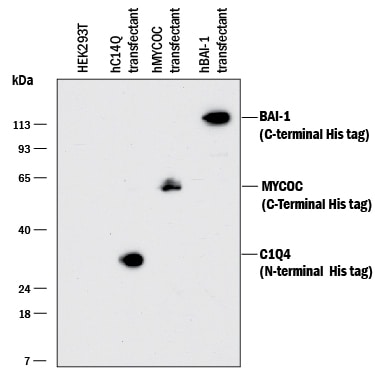
Detection of His Tag by Western Blot.
Western blot shows lysates of HEK293 human embryonic kidney cell line either non-transfected or transfected with His-tagged human CIQ4 and human MYCOC and CHO Chinese hamster ovary cell line transfected with His-tagged human BAI-1. PVDF membrane was probed with 0.2 µg/mL of Mouse Anti-His Tag Monoclonal Antibody (Catalog # MAB050) followed by HRP-conjugated Anti-Mouse IgG Secondary Antibody (Catalog # HAF018). Specific bands were detected for His Tag at approximately 32, 65, and 120 kDa (as indicated). This experiment was conducted under reducing conditions and using Immunoblot Buffer Group 1.
Detection of His Tag in HEK293 Human Cell Line Transfected with His-tagged Proteins by Flow Cytometry.
HEK293 human embryonic kidney cell line transfected with His-tagged proteins was stained with Mouse Anti-His Tag Monoclonal Antibody (Catalog # MAB050, filled histogram) or isotype control antibody (Catalog # MAB002, open histogram), followed by Phycoerythrin-conjugated Anti-Mouse IgG Secondary Antibody (Catalog # F0102B). To facilitate intracellular staining, cells were fixed with Flow Cytometry Fixation Buffer (Catalog # FC004) and permeabilized with Flow Cytometry Permeabilization/Wash Buffer I (Catalog # FC005).
SARS-Cov-2 Spike 1 His tag protein binding to ACE-2-transfected Human Cell Line is detected by His tag Antibody.
Recombinant SARS-Cov-2 Spike 1 His-tagged protein (10522-CV) binds to HEK293 human embryonic kidney cell line transfected with recombinant human ACE-2 and was detected with Mouse Anti-His Allophycocyanin-conjugated Monoclonal Antibody (IC050A, filled histogram). No staining was observed in the absence of protein (open histogram). Staining was performed using our Staining Membrane-Associated Proteins protocol.
Detection of His Tag by Simple WesternTM.
Simple Western lane view shows lysates of CHO Chinese hamster ovary cell line transfected with His-tagged human S1P4/EDG-6, loaded at 0.5 mg/mL. A specific band was detected for His-tagged S1P4/EDG-6 at approximately 75 kDa (as indicated) using 10 µg/mL of Mouse Anti-His Tag Monoclonal Antibody (Catalog # MAB050). This experiment was conducted under reducing conditions and using the 12-230 kDa separation system.Applications for His Tag Antibody (AD1.1.10)
Application
Recommended Usage
CyTOF-ready
Ready to be labeled using established conjugation methods. No BSA or other carrier proteins that could interfere with conjugation.
Flow Cytometry
0.25 µg/106 cells
Sample: HEK293 human embryonic kidney cell line transfected with His-tagged proteins and SARS-Cov-2 Spike 1 His tag protein binding to ACE-2-transfected Human Cell Line
Sample: HEK293 human embryonic kidney cell line transfected with His-tagged proteins and SARS-Cov-2 Spike 1 His tag protein binding to ACE-2-transfected Human Cell Line
Immunoaffinity Purification
Immobilized anti-His antibody can be used to affinity purify proteins containing exposed His tags. The column capacity must be determined for each individual His-tagged protein.
Simple Western
10 µg/mL
Sample: CHO Chinese hamster ovary cell line transfected with His-tagged Human S1P4/EDG-6
Sample: CHO Chinese hamster ovary cell line transfected with His-tagged Human S1P4/EDG-6
Western Blot
0.2 µg/mL
Sample: HEK293 human embryonic kidney cell line and CHO Chinese hamster ovary cell line transfected with His-tagged proteins
Sample: HEK293 human embryonic kidney cell line and CHO Chinese hamster ovary cell line transfected with His-tagged proteins
Reviewed Applications
Read 14 reviews rated 4.8 using MAB050 in the following applications:
Flow Cytometry Panel Builder
Bio-Techne Knows Flow Cytometry
Save time and reduce costly mistakes by quickly finding compatible reagents using the Panel Builder Tool.
Advanced Features
- Spectra Viewer - Custom analysis of spectra from multiple fluorochromes
- Spillover Popups - Visualize the spectra of individual fluorochromes
- Antigen Density Selector - Match fluorochrome brightness with antigen density

Formulation, Preparation, and Storage
Purification
Protein A or G purified from hybridoma culture supernatant
Reconstitution
Reconstitute at 0.5 mg/mL in sterile PBS. For liquid material, refer to CoA for concentration.
Loading...
Formulation
Lyophilized from a 0.2 μm filtered solution in PBS with Trehalose. *Small pack size (SP) is supplied either lyophilized or as a 0.2 µm filtered solution in PBS.
Shipping
Lyophilized product is shipped at ambient temperature. Liquid small pack size (-SP) is shipped with polar packs. Upon receipt, store immediately at the temperature recommended below.
Stability & Storage
Use a manual defrost freezer and avoid repeated freeze-thaw cycles.
- 12 months from date of receipt, -20 to -70 °C as supplied.
- 1 month, 2 to 8 °C under sterile conditions after reconstitution.
- 6 months, -20 to -70 °C under sterile conditions after reconstitution.
Calculators
Background: His Tag
Long Name
Histidine Tag
Alternate Names
polyHistidine
Additional His Tag Products
Product Documents for His Tag Antibody (AD1.1.10)
Certificate of Analysis
To download a Certificate of Analysis, please enter a lot or batch number in the search box below.
Note: Certificate of Analysis not available for kit components.
Product Specific Notices for His Tag Antibody (AD1.1.10)
For research use only
Citations for His Tag Antibody (AD1.1.10)
 Powered by Bioz
Customer Reviews for His Tag Antibody (AD1.1.10) (14)
4.8 out of 5
14 Customer Ratings
Have you used His Tag Antibody (AD1.1.10)?
Submit a review and receive an Amazon gift card!
$25/€18/£15/$25CAN/¥2500 for a review with an image
$10/€7/£6/$10CAN/¥1110 for a review without an image
Submit a review
Customer Images

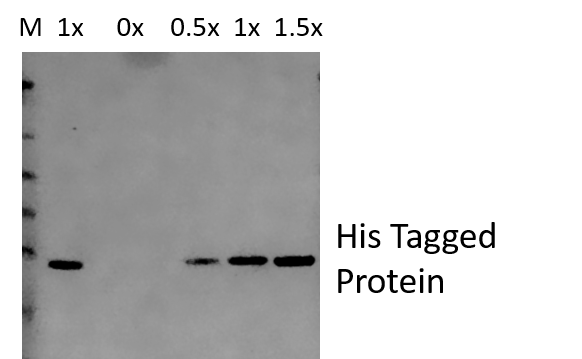
Showing
1
-
5 of
14 reviews
Showing All
Filter By:
-
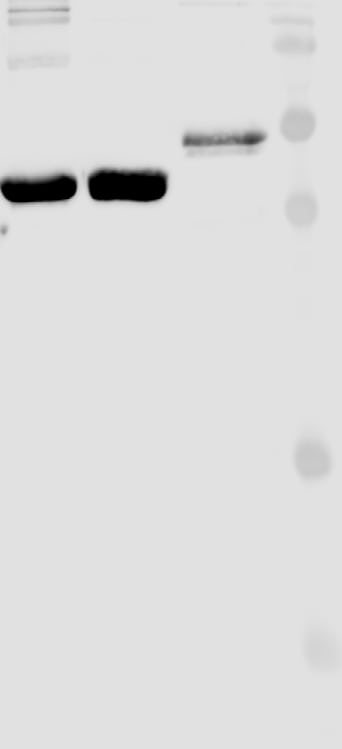
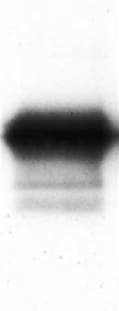
Application: Western BlotSample Tested: Purified proteinSpecies: E. coliVerified Customer | Posted 12/01/2023Used in conjunction with Licor Anti-Mouse secondary, imaged with Typhoon imager

-
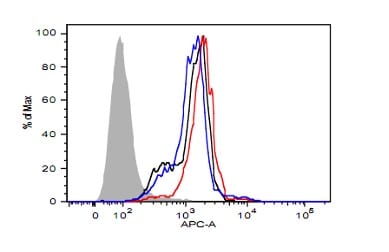
Application: Flow CytometrySample Tested: Recombinant proteinSpecies: MouseVerified Customer | Posted 08/31/2023
-
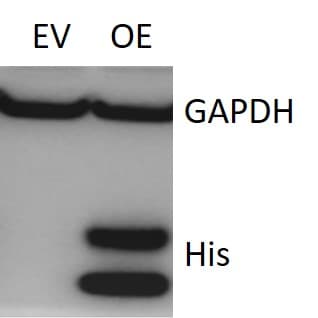
Application: Western BlotSample Tested: 293T human embryonic kidney cell lineSpecies: HumanVerified Customer | Posted 04/06/2022
-
Application: Western BlotSample Tested: HEK293T human embryonic kidney cell lineSpecies: HumanVerified Customer | Posted 10/29/2021
-
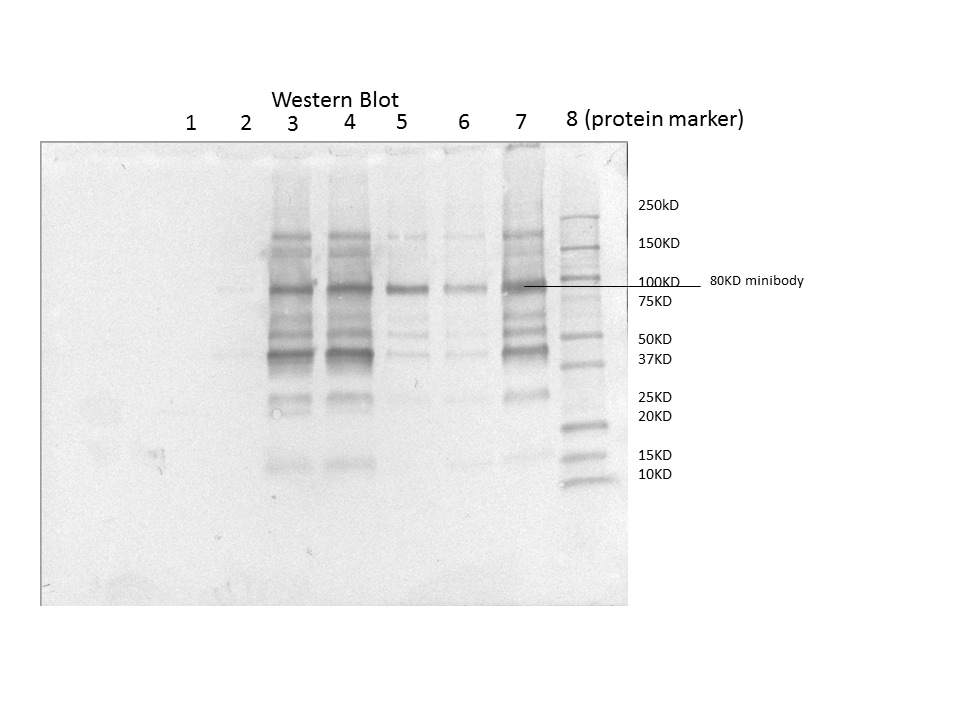
Application: Western BlotSample Tested: Recombinant proteinSpecies: MouseVerified Customer | Posted 08/06/2021
-
Application: ELISASample Tested: HT-2 mouse T cell line and CTLL-2 mouse cytotoxic T cell lineSpecies: MouseVerified Customer | Posted 05/14/2019
-
Application: Flow CytometrySample Tested: 7TD1 mouse hybridoma cell lineSpecies: MouseVerified Customer | Posted 05/07/2019
-
Application: Cell depletionSample Tested: 4T1 mouse breast cancer cell lineSpecies: MouseVerified Customer | Posted 01/11/2019
-
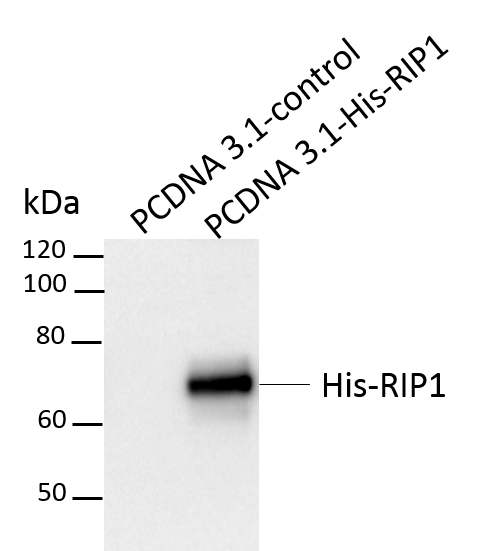
Application: Western BlotSample Tested: 293T human embryonic kidney cell lineSpecies: HumanVerified Customer | Posted 07/23/2018293T cells were transfected with pCDNA 3.1-Control or His-RIP1 for 48h. Total cell lysates were subjected to western blot. PVDF membrane were probed with 1 um/ml Human His Tag Antibody (MAB050). A specific band was detected for His-RIP1 at approximately 75 kDa. This experiment was conducted under reducing conditions
-
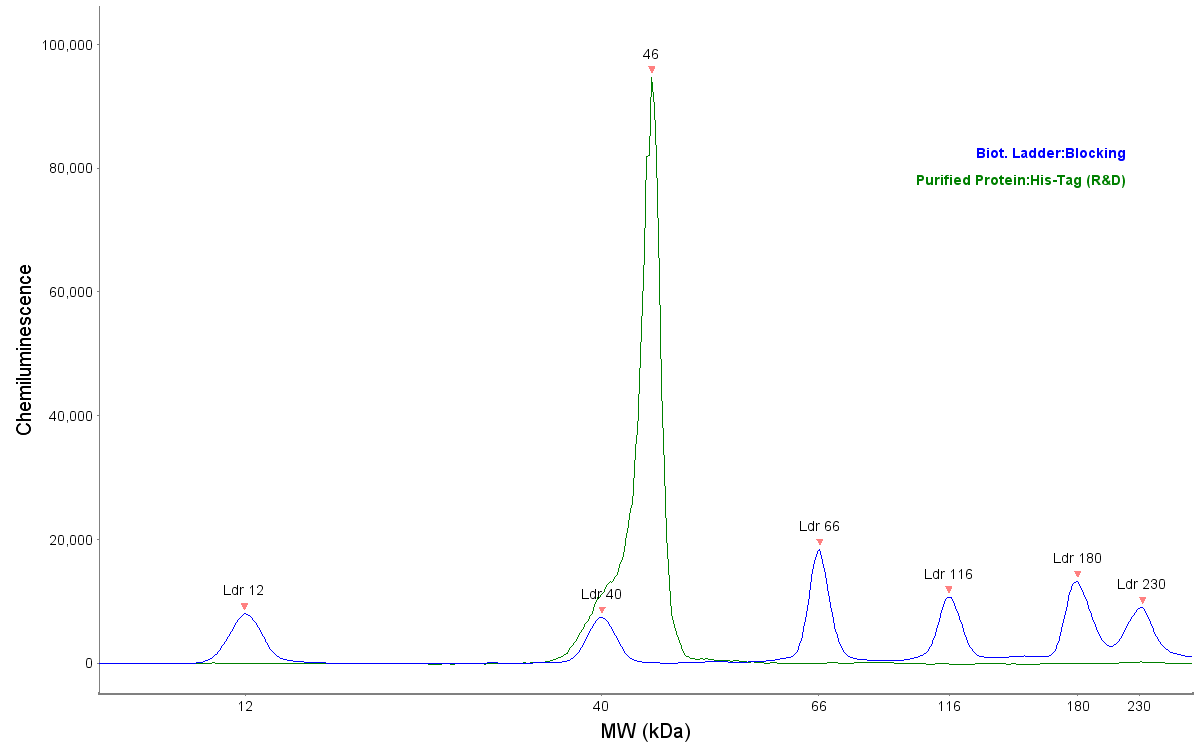
Application: Simple WesternSample Tested: Purified proteinSpecies: HumanVerified Customer | Posted 06/20/2018
-
Application: Western BlotSample Tested: 293T human embryonic kidney cell lineSpecies: MouseVerified Customer | Posted 07/15/2017
-
Application: Western BlotSample Tested: HEK293T human embryonic kidney cell lineSpecies: HumanVerified Customer | Posted 06/28/2016cell lysates transformed
-
Application: Western BlotSample Tested: Recombinant proteinSpecies: HumanVerified Customer | Posted 06/28/2016
-
Application: ELISASample Tested: Human recombinant test antibodySpecies: HumanVerified Customer | Posted 10/26/2015Specificity: Specific<br />Sensitivity: Sensitive<br />Buffer: TBS + Tween + BSA<br />Dilution: used at 2ug/mL
There are no reviews that match your criteria.
Protocols
Find general support by application which include: protocols, troubleshooting, illustrated assays, videos and webinars.
- 7-Amino Actinomycin D (7-AAD) Cell Viability Flow Cytometry Protocol
- Cellular Response to Hypoxia Protocols
- Extracellular Membrane Flow Cytometry Protocol
- Flow Cytometry Protocol for Cell Surface Markers
- Flow Cytometry Protocol for Staining Membrane Associated Proteins
- Flow Cytometry Staining Protocols
- Flow Cytometry Troubleshooting Guide
- Intracellular Flow Cytometry Protocol Using Alcohol (Methanol)
- Intracellular Flow Cytometry Protocol Using Detergents
- Intracellular Nuclear Staining Flow Cytometry Protocol Using Detergents
- Intracellular Staining Flow Cytometry Protocol Using Alcohol Permeabilization
- Intracellular Staining Flow Cytometry Protocol Using Detergents to Permeabilize Cells
- Propidium Iodide Cell Viability Flow Cytometry Protocol
- Protocol for Liperfluo
- Protocol for the Characterization of Human Th22 Cells
- Protocol for the Characterization of Human Th9 Cells
- Protocol: Annexin V and PI Staining by Flow Cytometry
- Protocol: Annexin V and PI Staining for Apoptosis by Flow Cytometry
- R&D Systems Quality Control Western Blot Protocol
- Troubleshooting Guide: Fluorokine Flow Cytometry Kits
- Troubleshooting Guide: Western Blot Figures
- Western Blot Conditions
- Western Blot Protocol
- Western Blot Protocol for Cell Lysates
- Western Blot Troubleshooting
- Western Blot Troubleshooting Guide
- View all Protocols, Troubleshooting, Illustrated assays and Webinars
FAQs for His Tag Antibody (AD1.1.10)
Showing
1
-
3 of
3 FAQs
Showing All
-
Q: Can the His Tag Antibody (MAB050) recognize all His-tagged proteins?
A: MAB050 has been validated specifically for the detection of His-tags localized to the amino- or carboxyl-terminus of a peptide. It is also expected to detect any series of 6 or more histidine residues as long as this epitope is conformationally accessible. For applications utilizing linearized proteins, it is likely that MAB050 will have access to any consecutive histidine regions. If used with protein in its native conformation, there is the potential that the protein will be folded such that the antibody is not able to bind its target.
-
Q:
This protein datasheet indicates I need to use a cross-linking antibody, Catalog # MAB050, for biological activity. What is this antibody and is it really necessary?
A: The antibody is directed against a 6x histidine repeat and is recommended for use as a cross-linker of proteins with 6x his-tag. Crosslinking is often used for proteins that require receptor trimerization and can result greater biological activity. R&D Systems Quality Control tests the performance of these proteins in the presence of the cross-linking antibody. Therefore, it is necessary to use this antibody when trying to achieve the same level of specific activity described in the datasheet.
-
Q: What is the difference between His Tag Antibodies, Catalog #s MAB050 and MAB050R?
A: The primary difference is how the antibodies are produced. Catalog # MAB050R is made using recombinant DNA technology while Catalog # MAB050 is produced from a hybridoma.
-
Q: Can the His Tag Antibody (MAB050) recognize all His-tagged proteins?
A: MAB050 has been validated specifically for the detection of His-tags localized to the amino- or carboxyl-terminus of a peptide. It is also expected to detect any series of 6 or more histidine residues as long as this epitope is conformationally accessible. For applications utilizing linearized proteins, it is likely that MAB050 will have access to any consecutive histidine regions. If used with protein in its native conformation, there is the potential that the protein will be folded such that the antibody is not able to bind its target.
-
Q:
This protein datasheet indicates I need to use a cross-linking antibody, Catalog # MAB050, for biological activity. What is this antibody and is it really necessary?
A: The antibody is directed against a 6x histidine repeat and is recommended for use as a cross-linker of proteins with 6x his-tag. Crosslinking is often used for proteins that require receptor trimerization and can result greater biological activity. R&D Systems Quality Control tests the performance of these proteins in the presence of the cross-linking antibody. Therefore, it is necessary to use this antibody when trying to achieve the same level of specific activity described in the datasheet.
-
Q: What is the difference between His Tag Antibodies, Catalog #s MAB050 and MAB050R?
A: The primary difference is how the antibodies are produced. Catalog # MAB050R is made using recombinant DNA technology while Catalog # MAB050 is produced from a hybridoma.
-
Q: Can the His Tag Antibody (MAB050) recognize all His-tagged proteins?
A: MAB050 has been validated specifically for the detection of His-tags localized to the amino- or carboxyl-terminus of a peptide. It is also expected to detect any series of 6 or more histidine residues as long as this epitope is conformationally accessible. For applications utilizing linearized proteins, it is likely that MAB050 will have access to any consecutive histidine regions. If used with protein in its native conformation, there is the potential that the protein will be folded such that the antibody is not able to bind its target.
-
Q:
This protein datasheet indicates I need to use a cross-linking antibody, Catalog # MAB050, for biological activity. What is this antibody and is it really necessary?
A: The antibody is directed against a 6x histidine repeat and is recommended for use as a cross-linker of proteins with 6x his-tag. Crosslinking is often used for proteins that require receptor trimerization and can result greater biological activity. R&D Systems Quality Control tests the performance of these proteins in the presence of the cross-linking antibody. Therefore, it is necessary to use this antibody when trying to achieve the same level of specific activity described in the datasheet.
-
Q: What is the difference between His Tag Antibodies, Catalog #s MAB050 and MAB050R?
A: The primary difference is how the antibodies are produced. Catalog # MAB050R is made using recombinant DNA technology while Catalog # MAB050 is produced from a hybridoma.
Loading...