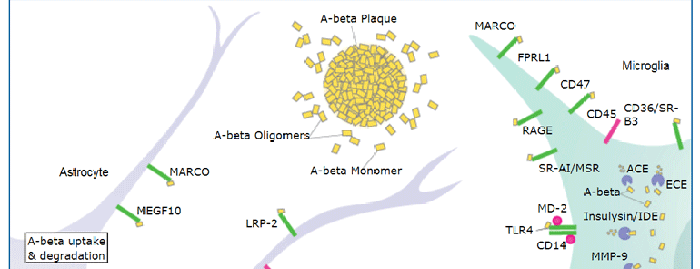
Endothelin-converting enzymes (ECEs) hydrolyze a specific peptide bond of big endothelins to produce active endothelins, some of the most potent vasoconstrictors known (1). ECE-1 is a member of the M13 zinc metallopeptidase family. Other members of the M13 family include thermolysin, neprilysin, Kell, and ECE-2 (2). M13 metallopeptidases can be distinguished from other metallopeptidases by their sensitivity to inhibition by phosphoramidon. ECE-1 is most highly expressed in the cardiovascular endothelium, but is also expressed in some endocrine tissues (3). ECE-1 is known to hydrolyze a variety of bioactive peptides, including bradykinin, neurotensin, angiotensins, and Substance P, with a substrate specificity similar to that of neprilysin (4). ECE-1 displays pronounced pH dependence in its substrate specificity (5). The degradation of Substance P by ECE-1 in endosomes regulates beta -arrestin-dependent ERK-2 signaling to prevent cell death in some neuronal cells (6). Four isoforms of ECE-1 are present in humans and mice, all of which encode a Type II integral membrane protein (7). The four isoforms share a common extracellular catalytic domain, differing in their N-terminal cytoplasmic tail regions. The recombinant mouse ECE-1 transmembrane and cytoplasmic tail domains were replaced with a signal sequence, resulting in the secretion of the soluble catalytic ectodomain.
Recombinant Mouse ECE-1 Protein, CF
R&D Systems | Catalog # 5796-ZN

Loading...
Key Product Details
- R&D Systems CHO-derived Recombinant Mouse ECE-1 Protein (5796-ZN)
- Quality control testing to verify active proteins with lot specific assays by in-house scientists
- All R&D Systems proteins are covered with a 100% guarantee
Source
CHO
Accession Number
Structure / Form
Disulfide-linked dimer
Applications
Enzyme Activity
Loading...
Product Specifications
Source
Chinese Hamster Ovary cell line, CHO-derived mouse ECE-1 protein
Gln89-Trp769, with and N-terminal 6-His tag, Gln89-Trp769
Gln89-Trp769, with and N-terminal 6-His tag, Gln89-Trp769
Purity
>90%, by SDS-PAGE under reducing conditions and visualized by silver stain.
Endotoxin Level
<1.0 EU per 1 μg of the protein by the LAL method.
N-terminal Sequence Analysis
Gln89
Predicted Molecular Mass
78 kDa
SDS-PAGE
90-130 kDa, reducing conditions
Activity
Measured by its ability to cleave the fluorogenic peptide substrate, Mca-RPPGFSAFK(Dnp)-OH (Catalog # ES005).
The specific activity is >2,250 pmol/min/μg, as measured under the described conditions.
The specific activity is >2,250 pmol/min/μg, as measured under the described conditions.
Formulation, Preparation, and Storage
5796-ZN
| Formulation | Supplied as a 0.2 μm filtered solution in Tris, NaCl and ZnCl2. |
| Shipping | The product is shipped with dry ice or equivalent. Upon receipt, store it immediately at the temperature recommended below. |
| Stability & Storage | Use a manual defrost freezer and avoid repeated freeze-thaw cycles.
|
Background: ECE-1
References
- Yanagisawa, M. et al. (1998) Nature 332:411.
- Turner, A.J. et al. (2001) BioEssays 23:261.
- Johnson, G.D. et al. (1999) J. Biol. Chem. 274:4053.
- Cottrell, G.S. et al. (2009) J. Biol. Chem. 284:22411.
- Lindenau, S. et al. (2006) Gene 373:109.
Long Name
Endothelin-converting Enzyme-1
Alternate Names
ECE1
Entrez Gene IDs
1889 (Human)
Gene Symbol
ECE1
UniProt
Additional ECE-1 Products
Product Documents for Recombinant Mouse ECE-1 Protein, CF
Certificate of Analysis
To download a Certificate of Analysis, please enter a lot or batch number in the search box below.
Note: Certificate of Analysis not available for kit components.
Product Specific Notices for Recombinant Mouse ECE-1 Protein, CF
For research use only
Related Research Areas
Customer Reviews for Recombinant Mouse ECE-1 Protein, CF
There are currently no reviews for this product. Be the first to review Recombinant Mouse ECE-1 Protein, CF and earn rewards!
Have you used Recombinant Mouse ECE-1 Protein, CF?
Submit a review and receive an Amazon gift card!
$25/€18/£15/$25CAN/¥2500 for a review with an image
$10/€7/£6/$10CAN/¥1110 for a review without an image
Submit a review
Protocols
View specific protocols for Recombinant Mouse ECE-1 Protein, CF (5796-ZN):
Materials
- Assay Buffer: 50 mM MES, 0.1 M NaCl, pH 6.0
- Recombinant Human ECE-1 (rhECE-1) (Catalog # 5796-ZN)
- Fluorogenic Peptide Substrate V: MCA-Arg-Pro-Pro-Gly-Phe-Ser-Ala-Phe-Lys(DNP)-OH (Catalog # ES005), 2 mM stock in DMSO
- F16 Black Maxisorp Plate (Nunc, Catalog # 475515)
- Fluorescent Plate Reader (Model: SpectraMax Gemini EM by Molecular Devices) or equivalent
- Dilute rmECE-1 to 0.1 µg/mL in Assay Buffer.
- Dilute Substrate to 20 µM in Assay Buffer.
- Load into a black well plate 50 µL of 0.1 µg/mL of rmECE-1, and start the reaction by adding 50 µL of 20 µM Substrate. Include a Substrate Blank containing 50 µL Assay Buffer and 50 µL of 20 µM Substrate.
- Read at excitation and emission wavelengths of 320 nm and 405 nm (top read), respectively, in kinetic mode for 5 minutes.
- Calculate specific activity:
|
Specific Activity (pmol/min/µg) = |
Adjusted Vmax* (RFU/min) x Conversion Factor** (pmol/RFU) |
| amount of enzyme (µg) |
*Adjusted for Substrate Blank
**Derived using calibration standard MCA-Pro-Leu-OH (Bachem, Catalog # M-1975).
Per Well:
- rmECE-1: 5 ng
- Substrate: 10 µM
Loading...
Associated Pathways