
Mouse CCL9/10 (also named MIP-1 gamma and MRP-2) is an 11 kDa, secreted, monomeric polypeptide that belongs to the beta (or CC) intercrine family of chemokines (1‑3). Based on its activity and amino acid (aa) sequence, it is further classified as a member of the NC6 or six cysteine-containing CC subfamily of chemokines (2, 4, 5). This subfamily contains four N-terminally extended chemokines, two human (CCL15 and CCL23) and two mouse (CCL9 and CCL10). Within this subfamily, there are no human-to-rodent interspecies orthologs. Mouse CCL9/10 is synthesized as a 122 aa precursor that contains a 21 aa signal sequence and a 101 aa mature region with six cysteines. As noted, the mature region has an expanded N-terminus relative to other CC family members, and it forms a third intrachain disulfide bond with its two extra cysteines (3‑7). Mouse CCL9/10 is 75% aa identical to rat CCL9/10 (8). Chemokines are known to undergo proteolytic processing to generate multiple isoforms. NC6 chemokines are usually only marginally active at full length, but are converted to highly active forms upon N-terminal truncation. Mature CCL9, in the presence of inflammatory fluids, is naturally truncated by 28, 29 or 30 aa at the N-terminus, generating a highly active, 8 kDa, 71‑73 aa CCR1 ligand. In contrast, other CCR1 ligands, CCL3/MIP-1 alpha and CCL5/RANTES, lose their potency when proteolytically processed. CCL9/10 is constitutively secreted, and circulates as a full‑length molecule. Any onset of inflammation with subsequent enzyme release may act on local NC6 chemokines, generating early, potent leukocyte chemoattractants (5, 7).
Mouse CCL9/10/MIP-1 gamma Antibody
R&D Systems | Catalog # AF463


Scientific images may be resized, cropped, or adjusted for brightness or contrast for presentation purposes. These updates are limited to presentation and do not affect the underlying scientific interpretation of the data. Where available, additional source data may be provided upon request.
Key Product Details
Species Reactivity
Validated:
Cited:
Applications
Validated:
Cited:
Label
Antibody Source
Product Specifications
Immunogen
Gln22-Gln122
Accession # Q3U9T8
Specificity
Clonality
Host
Isotype
Endotoxin Level
Scientific Data Images for Mouse CCL9/10/MIP-1 gamma Antibody
Chemotaxis Induced by CCL9/10/MIP‑1 gamma and Neutral-ization by Mouse CCL9/10/MIP‑1 gamma Antibody.
Recombinant Mouse CCL9/10/MIP-1 gamma (Catalog # 463-MG) chemoattracts the BaF3 mouse pro-B cell line transfected with human CCR1 in a dose-dependent manner (orange line). The amount of cells that migrated through to the lower chemotaxis chamber was measured by Resazurin (Catalog # AR002). Chemotaxis elicited by Recombinant Mouse CCL9/10/MIP-1 gamma (40 ng/mL) is neutralized (green line) by increasing concentrations of Goat Anti-Mouse CCL9/10/ MIP-1 gamma Antigen Affinity-purified Polyclonal Antibody (Catalog # AF463). The ND50 is typically 0.3-1.0 µg/mL.
Mouse CCL9 / 10 / MIP-1 gamma ELISA Standard Curve
Recombinant Mouse CCL9/10/MIP‑1 gamma (Catalog # 463-MG) was serially diluted and captured by Rat Anti-Mouse CCL9/10/MIP‑1 gamma Monoclonal Antibody (Catalog # MAB463) coated on a Clear Polystyrene Microplate (Catalog # DY990). Goat Anti-Mouse CCL9/10/MIP‑1 gamma Antigen Affinity-purified Polyclonal Antibody (Catalog # AF463) was biotinylated and incubated with the protein captured on the plate. Detection of the standard curve was achieved by incubating Streptavidin-HRP (Catalog # DY998)Applications for Mouse CCL9/10/MIP-1 gamma Antibody
Western Blot
Sample: Recombinant Mouse CCL9/10/MIP‑1 gamma (Catalog # 463-MG)
Neutralization
Reviewed Applications
Read 1 review rated 5 using AF463 in the following applications:
Formulation, Preparation, and Storage
Purification
Reconstitution
Reconstitute at 0.2 mg/mL in sterile PBS. For liquid material, refer to CoA for concentration.
Formulation
Shipping
Stability & Storage
- 12 months from date of receipt, -20 to -70 °C as supplied.
- 1 month, 2 to 8 °C under sterile conditions after reconstitution.
- 6 months, -20 to -70 °C under sterile conditions after reconstitution.
Calculators
Background: CCL9/10/MIP-1 gamma
References
- Zlotnik, A. and O. Yoshie (2000) Immunity 12:121.
- Zlotnik, A. et al. (1999) Crit. Rev. Immunol. 19:1
- Mohamadzadeh, M. et al. (1996) J. Immunol. 156:3102.
- Haelens, A. et al. (1996) Immunobiology 195:499.
- Berahovich, R.D. et al. (2005) J. Immunol. 174:7341.
- Youn, B-S. et al. (1995) J. Immunol. 155:2661.
- Poltorak, A.N. et al. (1995) J. Inflamm. 45:207.
Alternate Names
Entrez Gene IDs
Gene Symbol
UniProt
Additional CCL9/10/MIP-1 gamma Products
Product Documents for Mouse CCL9/10/MIP-1 gamma Antibody
Certificate of Analysis
To download a Certificate of Analysis, please enter a lot or batch number in the search box below.
Note: Certificate of Analysis not available for kit components.
Product Specific Notices for Mouse CCL9/10/MIP-1 gamma Antibody
For research use only
Related Research Areas
Citations for Mouse CCL9/10/MIP-1 gamma Antibody
 Powered by Bioz
Customer Reviews for Mouse CCL9/10/MIP-1 gamma Antibody (1)
Have you used Mouse CCL9/10/MIP-1 gamma Antibody?
Submit a review and receive an Amazon gift card!
$25/€18/£15/$25CAN/¥2500 for a review with an image
$10/€7/£6/$10CAN/¥1110 for a review without an image
Submit a review
Customer Images
-
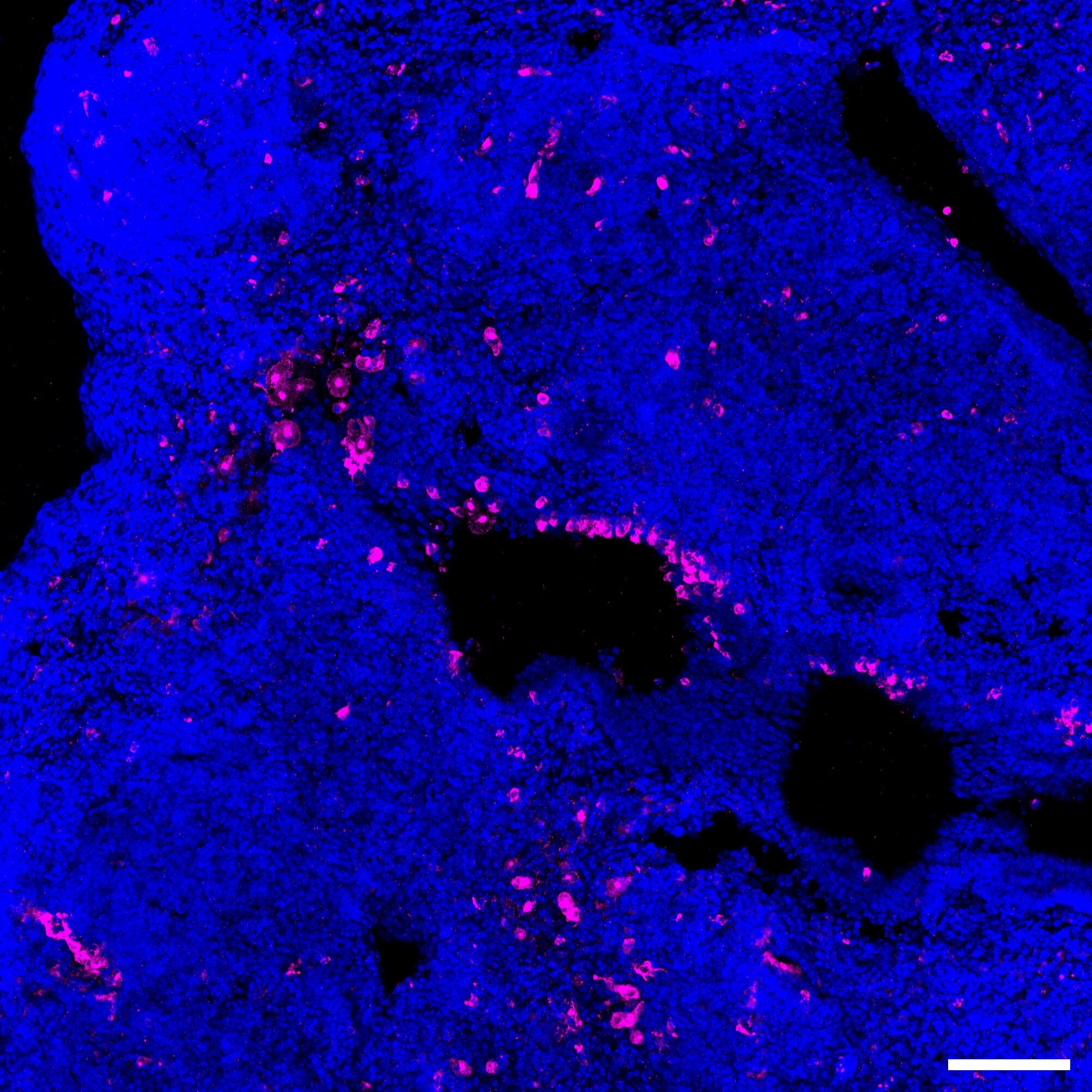
Application: ImmunohistochemistryVerified Customer | Posted 01/09/2024Influenza-treated mouse lung sections were fixed with 4% PFA and stained with anti-CCL9 primary antibody for overnight at 4 degrees Celsius and with Donkey anti-goat Alexa fluor 594 secondary antibody for 1 hr at room temperature.

There are no reviews that match your criteria.
Protocols
Find general support by application which include: protocols, troubleshooting, illustrated assays, videos and webinars.
- Cellular Response to Hypoxia Protocols
- R&D Systems Quality Control Western Blot Protocol
- Troubleshooting Guide: Western Blot Figures
- Western Blot Conditions
- Western Blot Protocol
- Western Blot Protocol for Cell Lysates
- Western Blot Troubleshooting
- Western Blot Troubleshooting Guide
- View all Protocols, Troubleshooting, Illustrated assays and Webinars