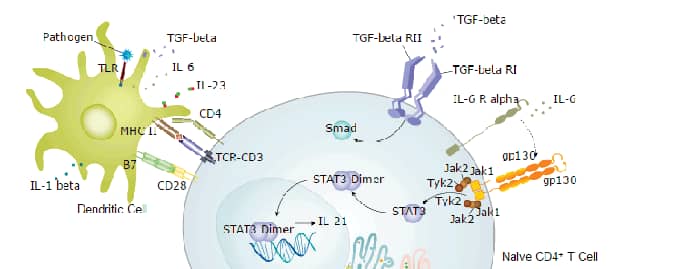
It is widely accepted that T cells require a signal induced by the engagement of the T cell receptor and a “co‑stimulatory” signal(s) through distinct T cell surface molecules for optimal T cell expansion and activation. Members of the B7 superfamily of counter-receptors were identified by their ability to interact with co‑stimulatory molecules found on the surface of T cells. Members of the B7 superfamily include B7-1 (CD80), B7-2 (CD86), B7-H1 (PD-L1), B7-H2 (B7RP-1), B7-H3 and PD-L2 (1). B7-1 is expressed on activated B cells, activated T cells, mature dendritic cells and macrophages (2). T cells express two different receptors capable of binding B7-1, CD28 and CTLA-4. CTLA-4 binds to B7-1 with a 20‑100 fold higher affinity than CD28. Engagement of CD28 by B7-1 increases T cell proliferation and IL-2 production and enhances the immune response (3). In contrast, engagement of CTLA-4 is involved in the down-regulation of the immune response (4). Rat B7-1 is a 320 amino acid (aa) protein containing an extracellular domain, a transmembrane domain and a cytoplasmic domain. Rat and human B7-1 share 47% amino acid identity.


Key Product Details
Species Reactivity
Rat
Applications
Western Blot, Immunocytochemistry
Label
Unconjugated
Antibody Source
Polyclonal Goat IgG
Loading...
Product Specifications
Immunogen
Mouse myeloma cell line NS0-derived recombinant rat B7‑1/CD80
Ile39-Gln248
Accession # AAB60503
Ile39-Gln248
Accession # AAB60503
Specificity
Detects rat B7‑1/CD80 in direct ELISAs and Western blots. In direct ELISAs, approximately 15% cross-reactivity with recombinant mouse (rm) B7-1 is observed, 5% cross-reactivity with recombinant human B7-1 is observed, and less than 1% cross-reactivity with rmB7-H3, recombinant rat B7-2, rmB7-H1, and rmPD-L2 is observed.
Clonality
Polyclonal
Host
Goat
Isotype
IgG
Applications for Rat B7-1/CD80 Antibody
Application
Recommended Usage
Immunocytochemistry
5-15 µg/mL
Sample: Immersion fixed rat splenocytes
Sample: Immersion fixed rat splenocytes
Western Blot
0.1 µg/mL
Sample: Recombinant Rat B7‑1/CD80 Fc Chimera (Catalog # 1214-B7)
Sample: Recombinant Rat B7‑1/CD80 Fc Chimera (Catalog # 1214-B7)
Formulation, Preparation, and Storage
Purification
Antigen Affinity-purified
Reconstitution
Reconstitute at 0.2 mg/mL in sterile PBS. For liquid material, refer to CoA for concentration.
Loading...
Formulation
Lyophilized from a 0.2 μm filtered solution in PBS with Trehalose. *Small pack size (SP) is supplied either lyophilized or as a 0.2 µm filtered solution in PBS.
Shipping
Lyophilized product is shipped at ambient temperature. Liquid small pack size (-SP) is shipped with polar packs. Upon receipt, store immediately at the temperature recommended below.
Stability & Storage
Use a manual defrost freezer and avoid repeated freeze-thaw cycles.
- 12 months from date of receipt, -20 to -70 °C as supplied.
- 1 month, 2 to 8 °C under sterile conditions after reconstitution.
- 6 months, -20 to -70 °C under sterile conditions after reconstitution.
Calculators
Background: B7-1/CD80
References
- Coyle, A.J. and J-C. Gutierrez-Ramos (2001) Nature Immunol. 2:203.
- Azuma, M. et al. (1992) Nature 366:76.
- Gimmi, C.D. et al. (1991) Proc. Natl. Acad. Sci. USA 88:6575.
- Walunas, T.L. et al. (1994) Immunity 1:405.
Alternate Names
B71, CD80
Gene Symbol
CD80
UniProt
Additional B7-1/CD80 Products
Product Documents for Rat B7-1/CD80 Antibody
Certificate of Analysis
To download a Certificate of Analysis, please enter a lot or batch number in the search box below.
Note: Certificate of Analysis not available for kit components.
Product Specific Notices for Rat B7-1/CD80 Antibody
For research use only
Related Research Areas
Customer Reviews for Rat B7-1/CD80 Antibody
There are currently no reviews for this product. Be the first to review Rat B7-1/CD80 Antibody and earn rewards!
Have you used Rat B7-1/CD80 Antibody?
Submit a review and receive an Amazon gift card!
$25/€18/£15/$25CAN/¥2500 for a review with an image
$10/€7/£6/$10CAN/¥1110 for a review without an image
Submit a review
Protocols
Find general support by application which include: protocols, troubleshooting, illustrated assays, videos and webinars.
- Appropriate Fixation of IHC/ICC Samples
- Cellular Response to Hypoxia Protocols
- ClariTSA™ Fluorophore Kits
- Detection & Visualization of Antibody Binding
- ICC Cell Smear Protocol for Suspension Cells
- ICC Immunocytochemistry Protocol Videos
- ICC for Adherent Cells
- Immunocytochemistry (ICC) Protocol
- Immunocytochemistry Troubleshooting
- Immunofluorescence of Organoids Embedded in Cultrex Basement Membrane Extract
- Immunohistochemistry (IHC) and Immunocytochemistry (ICC) Protocols
- Preparing Samples for IHC/ICC Experiments
- Preventing Non-Specific Staining (Non-Specific Binding)
- Primary Antibody Selection & Optimization
- Protocol for VisUCyte™ HRP Polymer Detection Reagent
- Protocol for the Fluorescent ICC Staining of Cell Smears - Graphic
- Protocol for the Fluorescent ICC Staining of Cultured Cells on Coverslips - Graphic
- Protocol for the Preparation and Fluorescent ICC Staining of Cells on Coverslips
- Protocol for the Preparation and Fluorescent ICC Staining of Non-adherent Cells
- Protocol for the Preparation and Fluorescent ICC Staining of Stem Cells on Coverslips
- Protocol for the Preparation of a Cell Smear for Non-adherent Cell ICC - Graphic
- R&D Systems Quality Control Western Blot Protocol
- TUNEL and Active Caspase-3 Detection by IHC/ICC Protocol
- The Importance of IHC/ICC Controls
- Troubleshooting Guide: Western Blot Figures
- Western Blot Conditions
- Western Blot Protocol
- Western Blot Protocol for Cell Lysates
- Western Blot Troubleshooting
- Western Blot Troubleshooting Guide
- View all Protocols, Troubleshooting, Illustrated assays and Webinars